Ended Dec 20
Marcelo Bonevardi
When the Cedar Bar Met the School of the South: Reconsidering Bonevardi
Sep 12 – Dec 20, 2019
More from Marcelo Bonevardi on Gallop
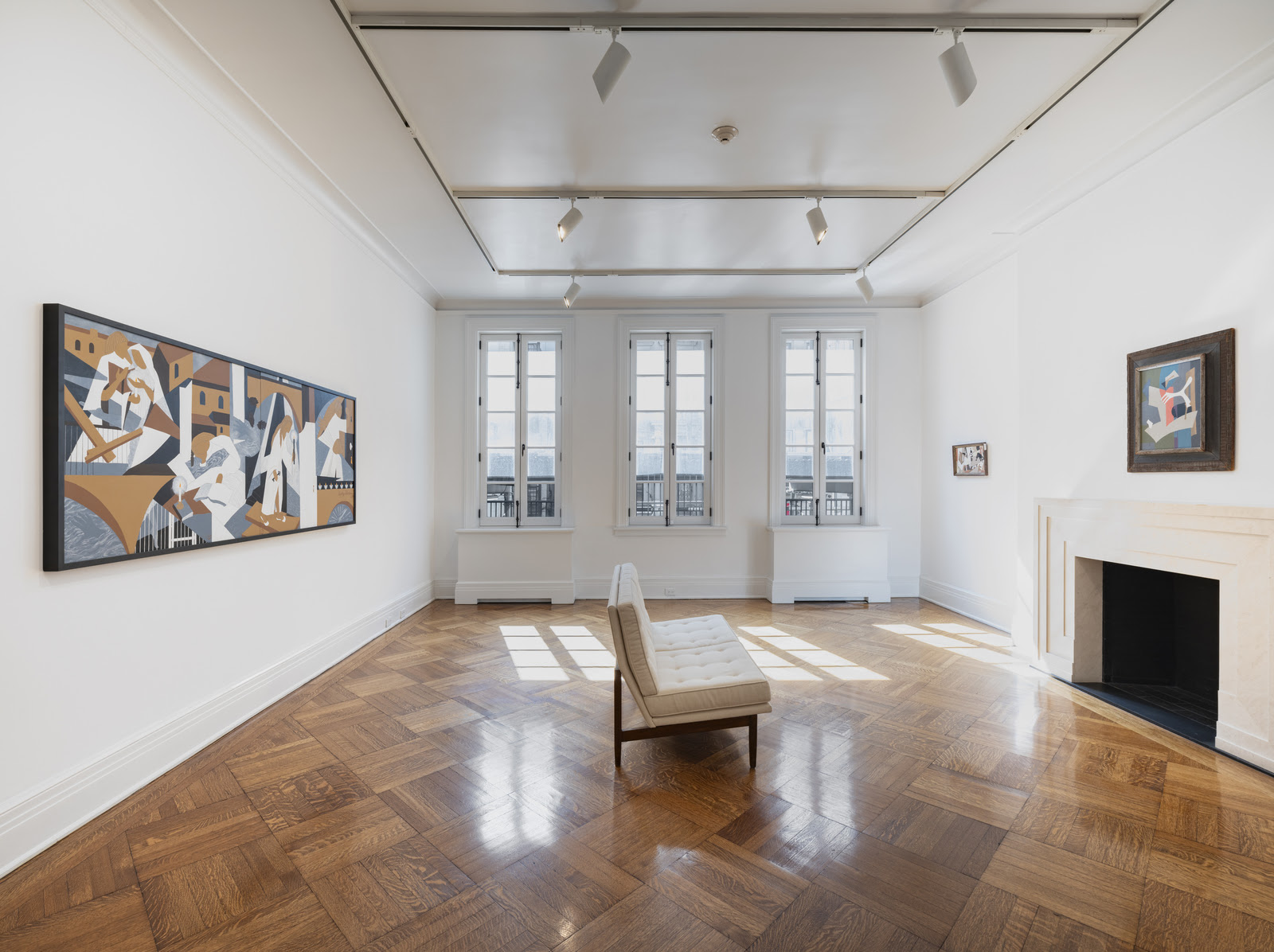
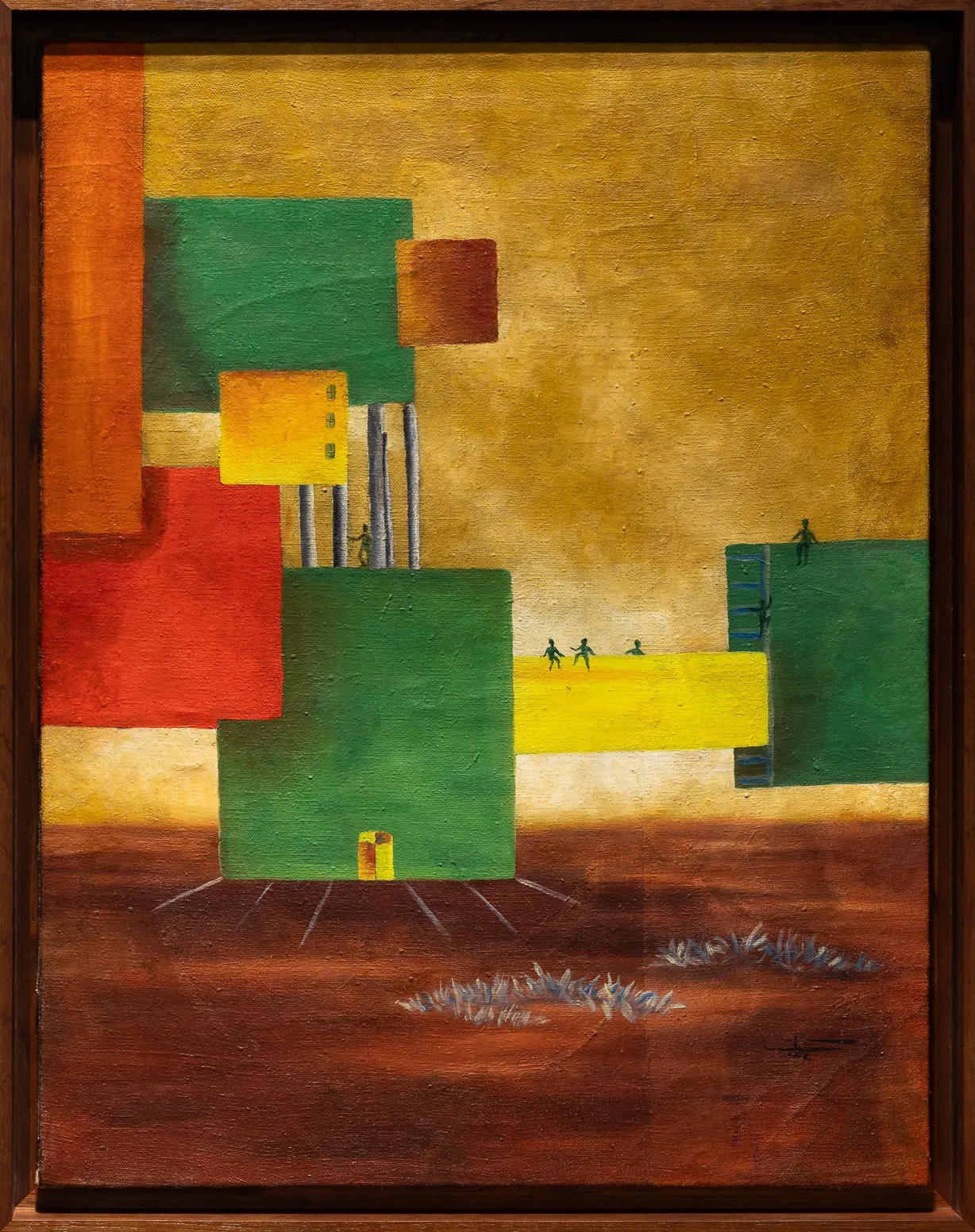
Leon Tovar Gallery is pleased to present When the Cedar Bar Met the School of the South: Reconsidering Bonevardi, the Gallery’s first solo presentation of Marcelo Bonevardi’s enigmatic paintings, drawings, and sculptures.
A full appreciation of Bonevardi’s work must both highlight and celebrate the eclectic range of geographical and cultural references that informed the artist’s hugely syncretic practice. While Bonevardi’s metaphysical cosmopolitanism is often likened to that of his Argentinian compatriot, Jorge Luis Borges, and the great teacher of Constructive Universalism, Joaquín Torres-García, such relationships form only one connection among many others. He indeed shared the desire of these forebears for an art wide in scope, wryly illustrated in his rejection of an “Argentine” lens for viewing his work: “Nationalism has little or nothing to do with ART, and I can’t help but smiling at the thought of the possible, ‘subtle’ connections between Angels and Gauchos.” Bonevardi felt more indebted to the art of Italy, with its Renaissance art and architecture, than to the Argentine cowboys of the Pampas.
Of equivalent but often-overlooked importance, however, was the birthplace of his mature practice: New York. Bonevardi arrived in the city in 1958 after receiving a Guggenheim fellowship and immediately began immersing himself in the currents of the newly christened art-world capital. Eager to develop his painting practice, Bonevardi visited the legendary Cedar Bar—home to aesthetic debates among the New York School of painters—and the artistic community on 10th street. It wasn’t until Bonevardi’s discovery of Joseph Cornell’s boxes at the Whitney Museum of American art, however, that he would begin to develop his principal artistic language: the painted construction. Cornell’s assemblages were critical for Bonevardi in both form and content, proposing an architectonic format in which objects could be collected, estranged, and—consequently—inscribed with new meaning. The painted constructions feature nooks that reference Cornell’s work, and bear a familial resemblance to Robert Rauschenberg’s likewise Cornellian Scatole Personali (1953). The aesthetic of assemblage is shared, but Bonevardi reoriented his practice toward largely different ends. The carved fetishes, instruments, and geometric objects that populate his constructions have no specifically identifiable cultural origin. They appear instead as recently unearthed traces of cultures long past, pointing to Bonevardi’s interest in archaeology and artifacts shared by friend and Torres-García disciple, Gonzalo Fonseca.
Within the layers of strata composing the recent art historical past, Bonevardi’s practice might be uncovered somewhere between New York and the School of the South: The snakelike form in the bottom left region of Two Doors (1968) is a mysterious symbol not unlike those signs that populate Torres-García’s gridded paintings, while the free-floating letter “P” and niched target of Divination Object VI (1963) could very well be a nod to Jasper Johns, whose famous Target with Four Faces (1955) the artist saw on the cover of Art News shortly before embarking to the US. Among many other imminent names of mid-twentieth century North American abstraction, an example from this “Divination Object” series was featured in the private collection of the esteemed gallerist Betty Parsons.
The title of the exhibition, When the Cedar Bar Met the School of the South: Reconsidering Bonevardi, reflects the trajectory of Bonevardi’s early years in New York, while also reiterating the profound syncretism of his artwork. Through the connections they foster between New York City assemblage and the legacy of Torres-García’s Constructivism, Bonevardi’s own constructions become powerful arguments for rethinking the respective
histories of North and South American Modernism. When the Cedar Bar Met the School of the South further integrates Bonevardi into the context of New York by revisiting his major 1980 retrospective at the Center for Inter-American Relations (Now the Americas Society), which opened in New York before traveling through Mexico and South America. Culled from Bonevardi’s oeuvre from the 1960s and early 1970s, many of the seminal paintings to be presented in the Gallery’s exhibition were featured in this important show.
Marcelo Bonevardi was born in Buenos Aries, Argentina, in 1929. He is best known for his painted constructions, which feature hollows and recesses that contain hand-carved objects. Bonevardi split time between Cordoba, Argentina, and New York City, practicing throughout his lifetime until his death in 1994. His art is represented in such prestigious collections as the Museum of Modern Art, New York; the Solomon R. Guggenheim Museum, New York; Museo de Arte Moderno, Buenos Aires; Museo Rufino Tamayo, Mexico City; and the Musée d’art Contemporain de Montréal.