Ended Nov 1
Elliott Jamal Robbins
The Immaterial and the Flesh
Sep 11 – Nov 1, 2020
More from Elliott Jamal Robbins on Gallop
Modern religions are built upon the principle that there are two realms in which all humans concurrently occupy. The flesh, and the immaterial. The flesh refers to that which is experiential, physical, sexual, and flawed by its enslavement of the senses, and therefore illusory. Conversely, the Immaterial is associated with the spiritual, non-corporal, transcendental, and intellectual. The exhibition, The Immaterial and the Flesh, is situated in the space in-between this binary, which positions what is corporal and physically experienced in opposition to the imaginary and invisible; between the real and the unreal. As well, the notion of conflict between the body and what is unseeable, can be felt at every level of the current political climate globally. As headlines around the world reveal social and racial inequities which are heightened by the myriad ecological disasters happening all the time, the coronavirus pandemic provides a backdrop for Robbins’ to consider the implications of the contemporary moment on the body. Through the repetition of a single form, the kneeling figure, the viewer is shown a tapestry of images that seamlessly weave together social criticism, personal narrative, desire, and wish fulfillment.
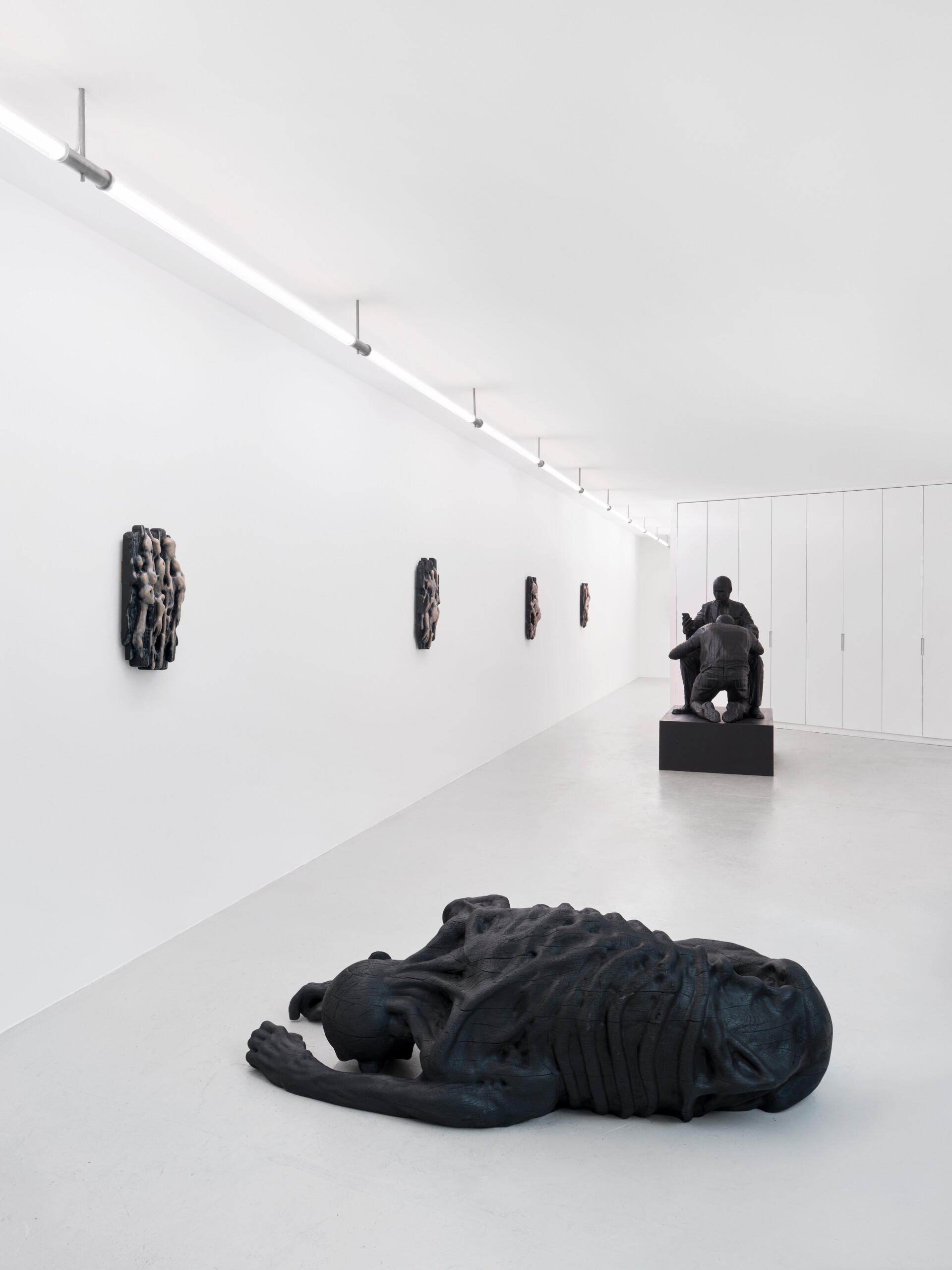
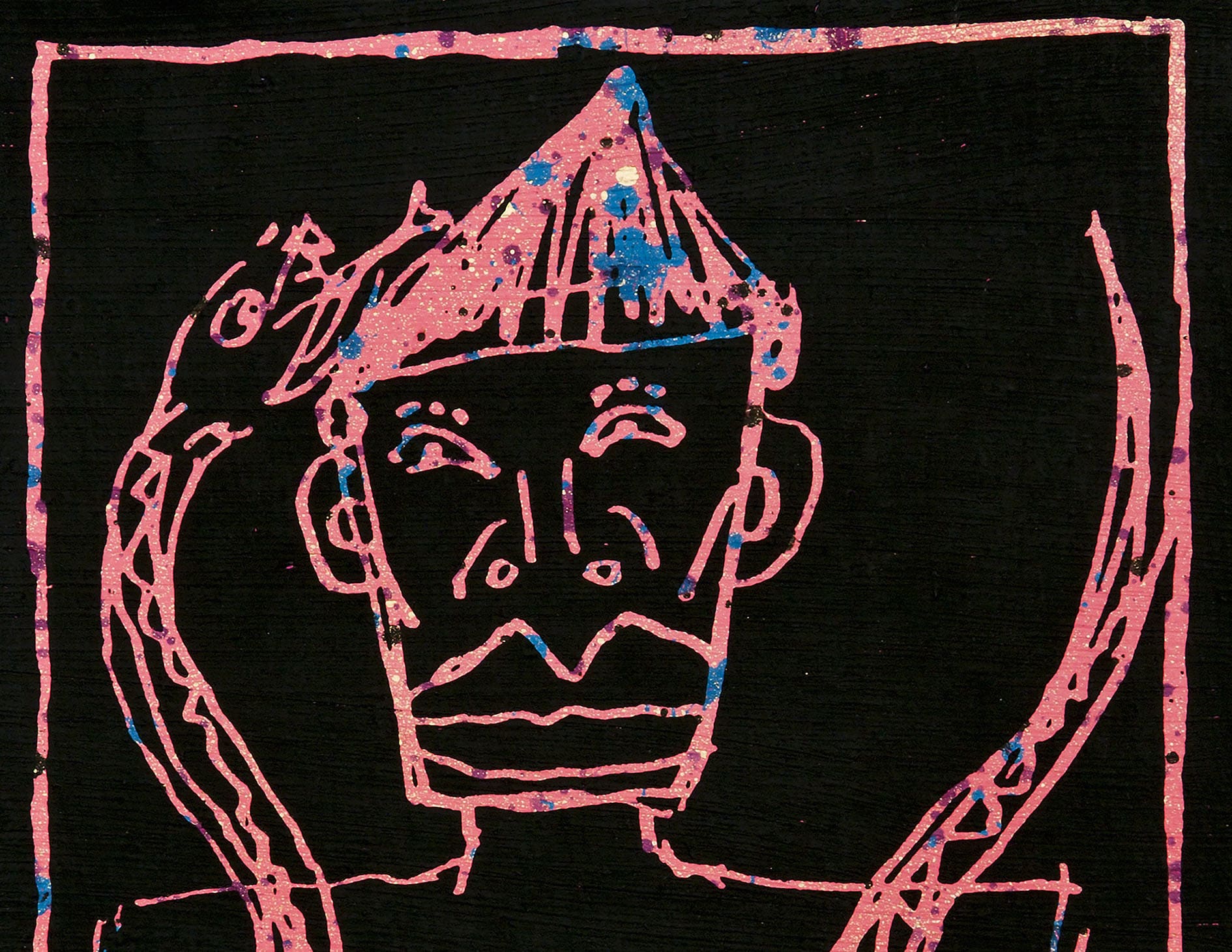
Robbin’s “Votive Figures”, are a group of watercolor paintings showing a figure depicted in a kneeling position. The title of these works is a nod to a practice that can be seen in various cultures, in which a small statue or painting would be commissioned and placed in an altar, either for a god(s) or saint, such as early Sumerian votive statues, or the tradition of Ex-voto painting found in Mexico. The figure also has a formal association with protests by athletes in the United States, that would take a knee during the National Anthem, which would be played before a game. As well, it is a reminder of the recent death of George Floyd, in which a police officer knelt on his neck for 8 minutes and 46 seconds, killing Floyd and sparking what has been an ongoing period of protest around the world against police brutality, and the abuses of state power. Robbins’ Votive Figures aren’t prayer objects in the same way that the Sumerian figurines or the Ex-votos are. Nor do they exactly function as protest images. Rather, the figure in this position becomes a substrate for Robbins to meditate on the intersectional spaces inhabited by this body. These works are simultaneously diaristic, referential of various histories of painting, as well as a loaded reminder of the current political and social climate. The inclusion of a text-based work expands the discourses surrounding representation. Here a viewer is presented with a narrative from the position of someone who must navigate the loss of a loved one while encountering a system that is hostile towards them, recalling the image of someone who has been brought to their knees by forces outside of their control. The animated filmic works of Robbins in this context further demonstrate how representation is performed, where the type, stereotype, symbol, and signifier collide with one another, are conflated, and negate each other via the projected moving picture plane.
The Immaterial and the Flesh marks the first solo exhibition with Elliott Jamal Robbins at Nagel Draxler Kabinett, and the first solo exhibition for the artist outside of the United States of America. Robbins, born 1988 in Oklahoma City, lives and works in Tucson, Arizona.