Ended Mar 5
Alex Carver
Sequence 8: One Work, One or Two Weeks
Feb 10 – Mar 5, 2022
More from Alex Carver on Gallop
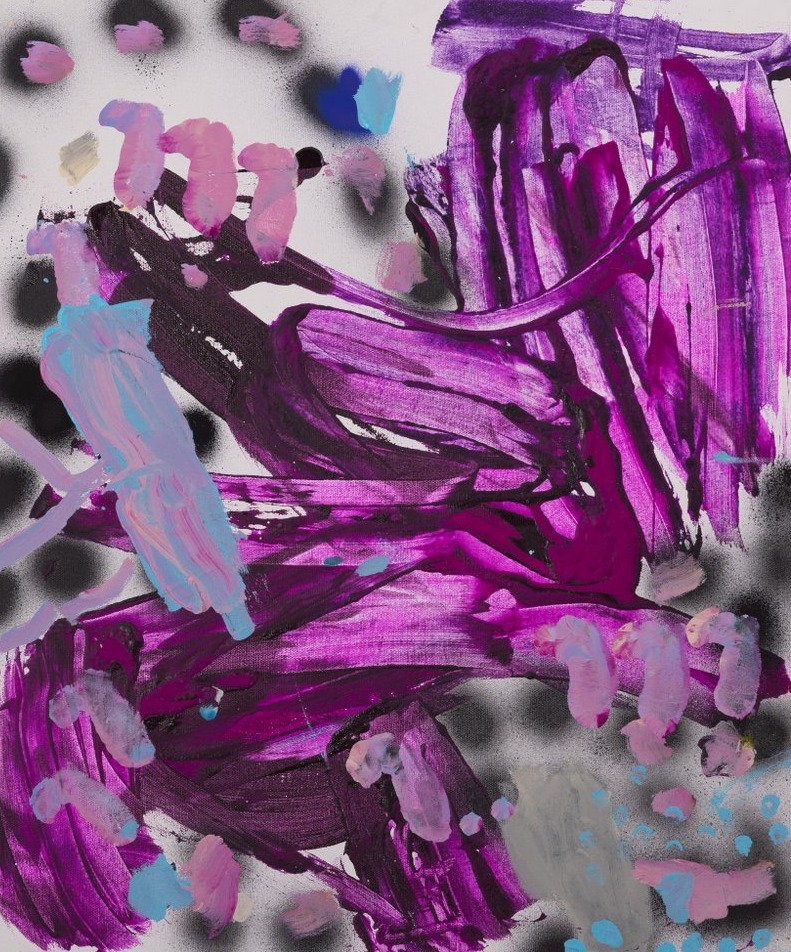
Painting as a primitive form of cultural technology is abundant with all too exploited analogies for the body and its viscera. Often, invoking such a metaphor, contemporary painting is alluded to through anthropomorphic terms such as zombie or cadaver, which may adequately describe the suspension of the medium, situating it between autopsy and undead animism.
In No Altars, a 28,000-year-old steppe bison, a male couple from Pompeii embracing and cast in volcanic ash along with a local horse join a dog and cat from the 16th century which were intentionally mummified and used in folk magic tradition – sealed into the cavities of buildings to ward off evil spirits. Preserved in magnificent and uncanny detail these bodies have been radically transformed by their respective and unique forms of embalming through both natural and human processes. Alex Carver mutates these exquisite corpses again with low relief outlines that are frottaged to canvas with oil paint. The bodies appear in the painterly vortex of No Altars as if fused into the techno-futuristic architectural space of a large CT scanner circular casing. The painting itself becomes a kind of vision machine – not unlike a biomedical tool – a device to penetrate the abstracted bodies suspended in its woven membrane.
No Altars insists on the contemporariness of its figures and their animism. These cadavers are already zombies clawing into the discourse of painting. In more general terms, Carver’s recent works overlay different forms of image production, each of which seems to oscillate, phasing and emerging in the direction of the eye and generating the sensation of one realm of information becoming visible only by way of another. The depicted bog bodies are mummified, high resolution images that the earth itself has produced. Paradoxically, they are preserved in a state of decay, resisting fixity, diagrammatical interpretation and binary distinction.
Recurrent images of plant material take on a special relevance in these paintings, as advanced biomedical grafting techniques now involve the use of plant fibers as the skeletal structure for transplanting and growing new tissue, transfusing natural and technological processes. Through his own layering of machine-stenciled screens, frottage and brushwork, and the combining of scientific precision with the fantastical, Carver’s paintings develop an elusive world of imagery in which dense layers are splintered with negative images, like a vectorized labyrinth, set against a sweeping gesso ground that gathers and binds together the painting’s diverse materials.