Ended Sep 2
Teresa Kutala Firmino
The Owners of the Earth vol. 3: Owelema
Jun 30 – Sep 2, 2023
More from Teresa Kutala Firmino on Gallop
This is terrifying. In the light, far from the dark. Even in crowds when you're not alone. It does not care if you are loved and not shunned. It means nothing that you are supported, heard, seen and celebrated. None of that matters. Nothing can soothe the terror.
There is no boogeyman under the bed. This isn't a ghostly figure lurking in the shadows. It isn't chemical or psychiatric. Neither are we in the presence of a tokoloshe, sent to torment. No, disregard witchcraft. Cancel the exorcist. We are not dealing with demons. The devil is not here. Here: prayers and petitions are left on read. Noted but unresolved. Existing is ridiculous. Very little of it makes sense. This is real life. That thing, the one that persecutes you is ingrained. Inherited. Traveling across bloodlines, into all generations. You are a Black woman. Cling to the fragments of your fantasy.
Guided by magic realism and speculative fiction Teresa Kutala-Firmino processes experienced and testified dreams, dissociations, visions and urges as information, treatment and sustenance from ethereal sources.
An ongoing investigation, Owners of the Earth is informed by a hypothesis suggesting that grief gives Black femmes access to entities and understandings from worlds above and around ours.
Shifting between mythology, theology, indigenous knowledge systems (ancient technologies) and psychology without a hierarchy, the sightings depicted in Owners of the Earth are ambiguous. Almost neutral, the straddling stance between ancestral, extraterrestrial, schizophrenic and divine builds tenuous bridges between them.
The third act, Owners of the Earth Vol III: Owelema documents the arrival of apparitions of repentance informed by guilt, shame and despair. An Umbundu term, Owelema is both a noun and an adjective referring to the lack of light.
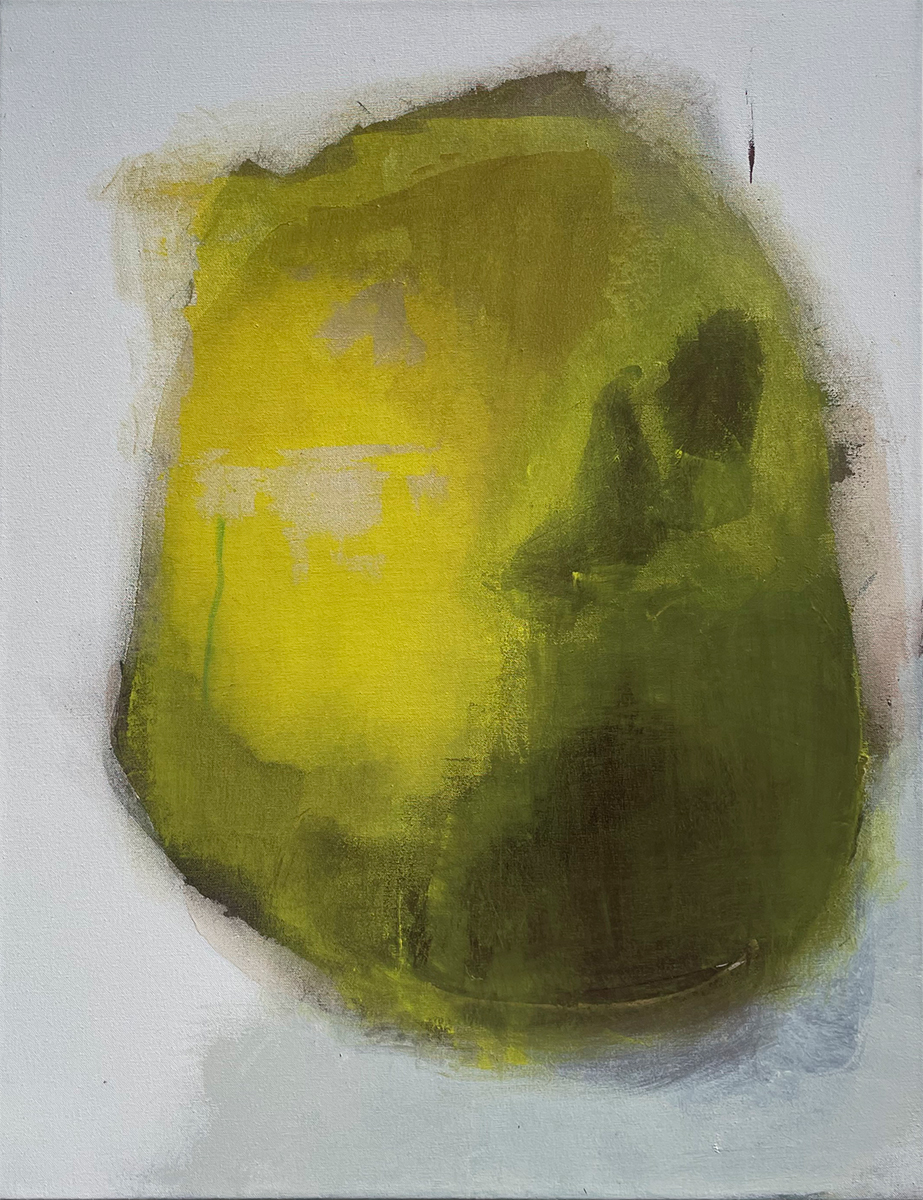
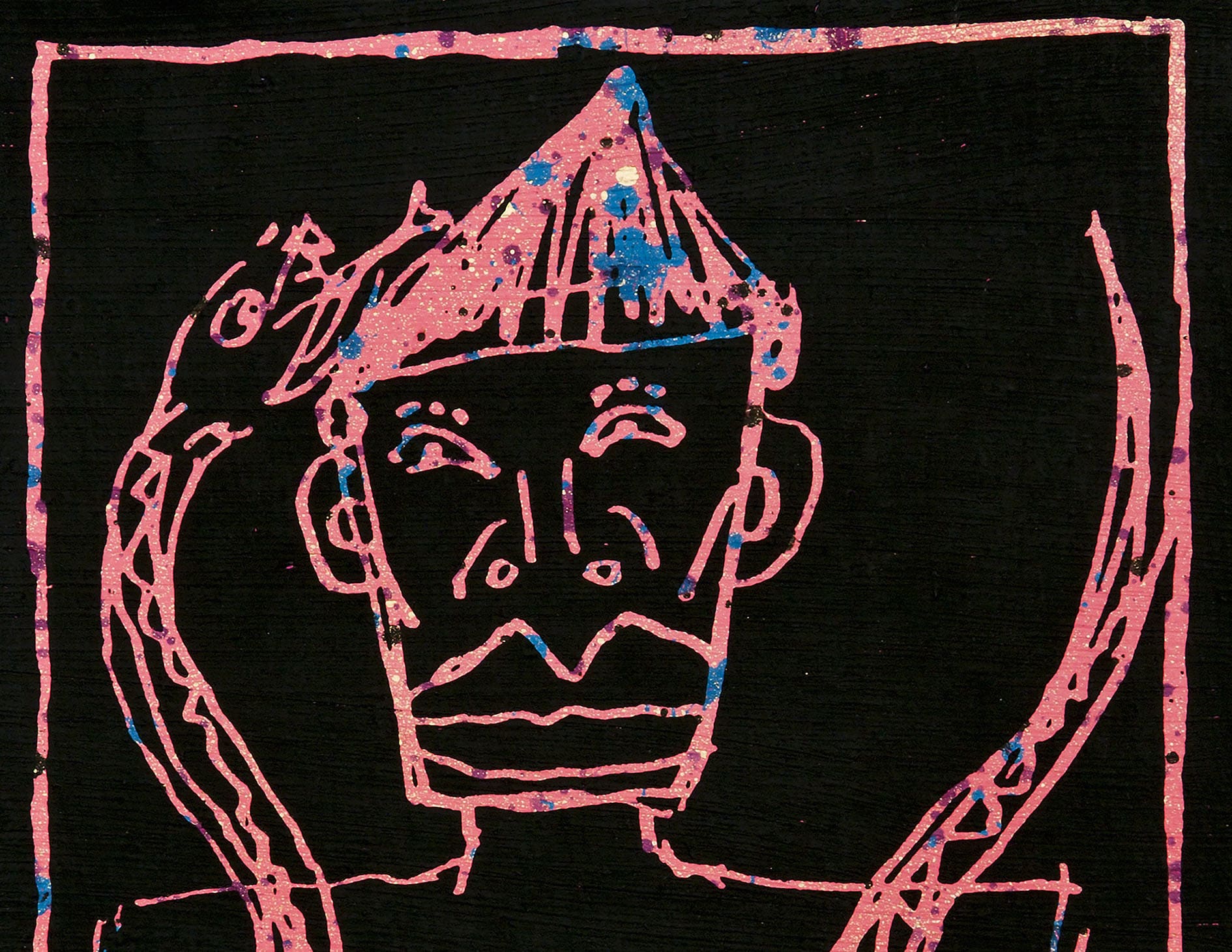
Resuming the colour study observed throughout Owners of the Earth, Owelema is set against a delicate palette of muted browns and hushed pinks to articulate a camouflaging that draws equally from humility and humiliation. Referring to colours that have a low saturation or chroma, muted colours read as safe, familiar, nurturing and disarming. Found in our everyday, muted tones have in recent years come to be markers of modernity, the contemporary, progressive thought and efficiency. Amidst the threat of cancel culture looming over our heads, embracing a muted palette for a time marked by repentance, guilt, shame and despair is an apt way to visualise the incessant call to self-critique and regulate, in order to maintain relevance and avoid being called out.
Obsessed with algorithms, the repetition of characters seen in Owelema, gives Kutala-Firmino the platform to dissect the insistence that we build the patterns that instruct our experiences off and online. Naked and fatigued, these very apparitions refuse to rest their eyes. Perhaps in a state of paranoia induced paralysis, they absorb the narrator's suspicion, allowing her to navigate the outside, in spite of her internal turmoil.
Owelema my dear friend, to say that I have longed for you would be a lie.
For your return is never welcomed
And you arrive uninvited, always
Your gifts are despair
Your offerings are sorrow
My mind denies it but I heard your footsteps outside my window
I heard you weeping behind the walls
For a moment I felt my heart leap
Not out of love
But fear
For you never travel alone
I do not know what you bring this time
Will I survive this time around?
You lay me down by the riverbank
My subconscious cuddles you
For your touch is familiar
Your embrace is comfort
And your presence is home
Sometimes I wish you were twilight so that I could at least get out of this bed
But it has turned into my grave
But your embrace is always consuming
Owelema loosen your grip a little
If I die your memory will be lost
I have so much to live for
Owelema can you hear me?
Release your grip
For the protagonist, darkness is an old friend. An unpleasant yet familiar presence, the menacing terrain does not conjure fear. Instead it's consuming weight offers an opportunity to avoid. A welcomed distraction to the grieving process, Owelema depicts the beauty of stagnance triggered by a shame so gripping, it distracts from opportunities of accountability. It’s easier to be absorbed by Owelema than to confront grief.
Reluctant but not resistant to Owelema’s unpleasant presence, the protagonist rests in the murk’s embrace. A limbo, with an unspecified duration that feels like forever, Owelema presents an opportunity to grieve the old self and monsters, involuntarily shed somewhere between the narrator’s recent awakening and rage. Clinging to the fantasy of recovery, she endures the dejection. An in-between, where death is as far a distance as rebirth, healing feels like the only solace.
—Zaza Hlalethwa