Ended May 25
Alfredo Boulton & Jesús Soto
The Eyes of Venezuela
Apr 11 – May 25, 2024
More from Alfredo Boulton & Jesús Soto on Gallop
Henrique Faria is pleased to present The Eyes of Venezuela, an exhibition featuring the work Alfredo Boulton (1908-1995), a pioneering Venezuelan photographer, intellectual, and a mayor patron of artists, especially Jesús Soto (1923-2005), of whom three important pieces are featured in this exhibition.
Following his recent retrospective at the Getty Research Institute, this exhibition explores Boulton’s vision of Margarita, Venezuela’s largest island in the Caribbean Sea. Through a collection of photographs originally taken in the 1940s, Boulton offers a glimpse into a long-gone era, capturing idyllic landscapes, archeological ruins, colonial architecture, and portraits of the island’s inhabitants. These images not only showcase Boulton’s mastery of composition, light, and visual storytelling, but also his engagement with themes of race, tradition, and modernization in Venezuela.
The series was first exhibited in 1944 at the Museo de Bellas Artes in Caracas. Two years later, several of these images were included at the New Photographers show curated by Nancy and Beaumont Newhall at the Museum of Modern Art, New York and since then have been part of the museum’s collection.
Complementing this exhibition is Boulton’s photobook, La Margarita (1952), considered the first authorial photographic publication in Venezuela. As Michel Otayek describes in the exhibition text: “Carefully designed and printed in photogravure, La Margarita appeared in a small edition of one thousand numbered exemplars. Throughout the book’s pages, Boulton’s photographs are sequenced in correspondence with an extended essay that recounts the history of Margarita, from indigenous antiquity to the present. Early in Boulton’s narrative is the tragic story of Cubagua, a small barren island neighboring Margarita, where Spaniards established Nueva Cádiz, the earliest colonial settlement in present-day Venezuela.”
In 1981, Boulton published a redesigned second edition of his photobook and organized an exhibition of the then recently reprinted and remounted Margarita series at the Museo Francisco Narváez. These unique prints, the only entire set outside of the vintage prints currently in the collection of The Getty Research Institute, are now on view in the gallery space. They are shown on their original display devices, designed by Boulton himself and custom made for that exhibition.
Boulton’s work not only depicts the island’s beauty, but also explores its complex history and transformation from a pearl-diving hub to a modern tourist destination. As Otayek continues: “But by then, Venezuela’s oil riches had changed Margarita Island almost beyond recognition. The so-called “Perla del Caribe” (Caribbean Pearl) had become a vacation and tax-free shopping destination for the middle classes. In the preamble to the revised edition of his photobook, Boulton lamented the island’s transformation into a consumerist mecca: “We have refused to learn how everything can change; how the beauty of a place is destroyed when profit is placed above the innate harmony of a people.”
Boulton’s relationship and friendship with Jesús Soto started in the 1950s. He became an early mentor and supporter of his work throughout his entire career. In his 1973 book titled “Soto”, Alfredo Boulton wrote: “It is of primordial interest to become acquainted with the spiritual and esthetic contour of any artist and to gauche the greater or lesser impact of the environment upon the person (…) It is a fact that Soto, a few months after he arrived in France (1950), made a brief incursion into the field of geometric abstraction but he did not embrace any of the genre conventions (…) Soto did not go to Paris in order to paint like others; he went with his eyes open, so that he could express what his intuition told him must exist beyond the works of the great revolutionaries of painting.”
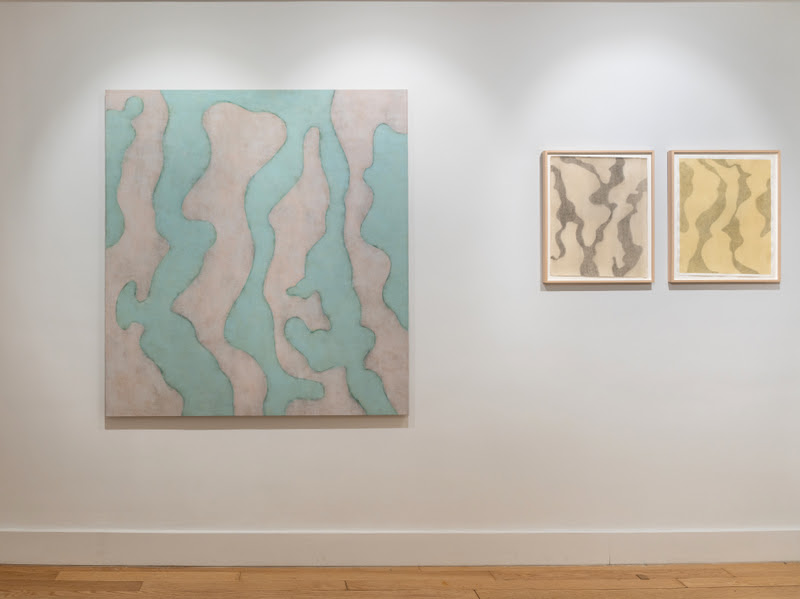
Boulton adds, “the line of research which Soto began in 1951 was based upon the visual representation of movement and was characterized almost from the beginning by the utilization of light.” This was the year in which Soto created Le Petit Jaune (Muralito Amarillo), a seminal early work based on his childhood memories of the reflection of light on the waters ofthe Orinoco river, now on view in this exhibition.
The Eyes of Venezuela connects the pioneering work of Boulton and Soto, two great artists who understood the modernization of a country, creating two great bodies of work having as common inspiration the light their homeland.