
Ended
Pentti Monkkonen
Thames Water
Jan 13 – Feb 3, 2024
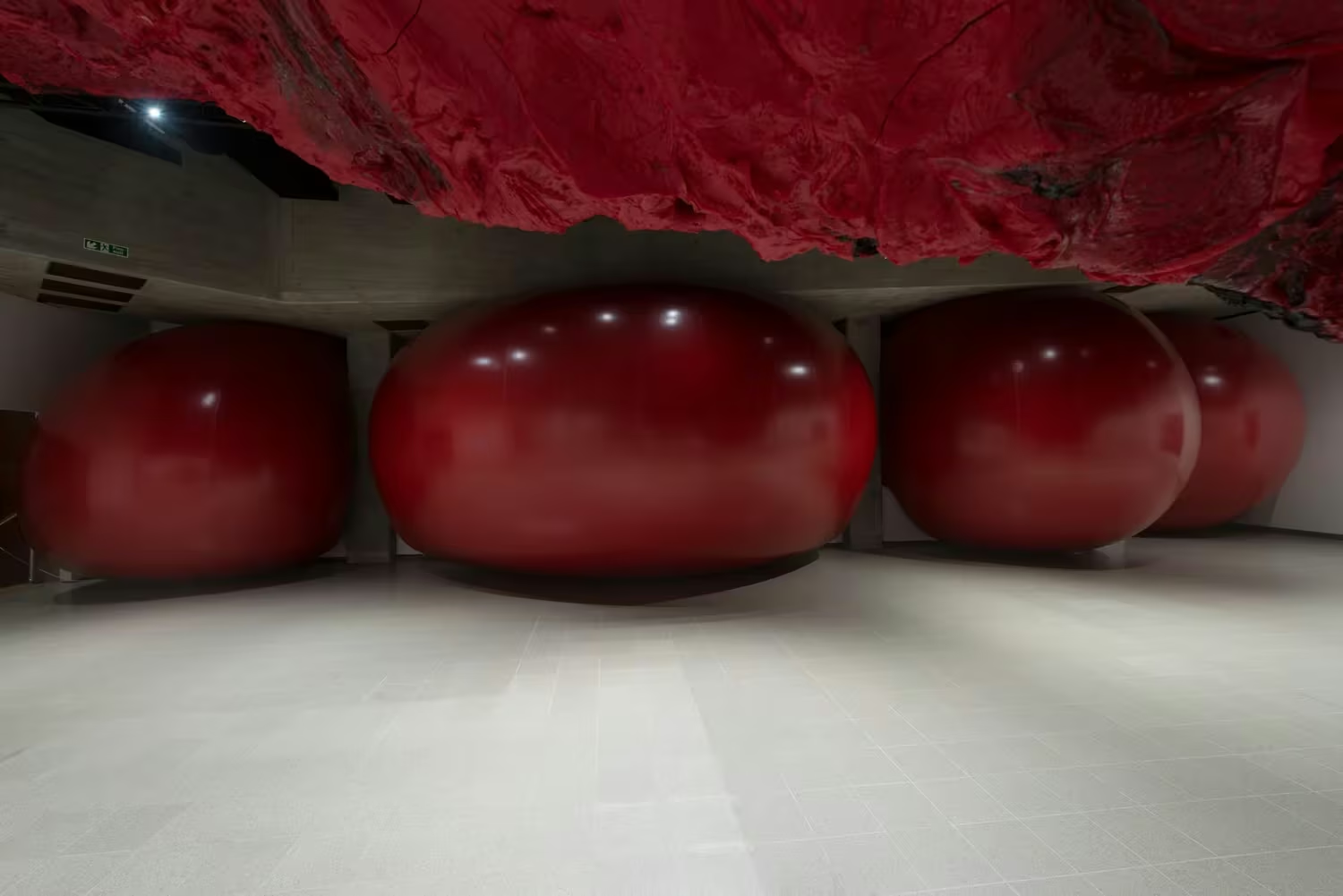
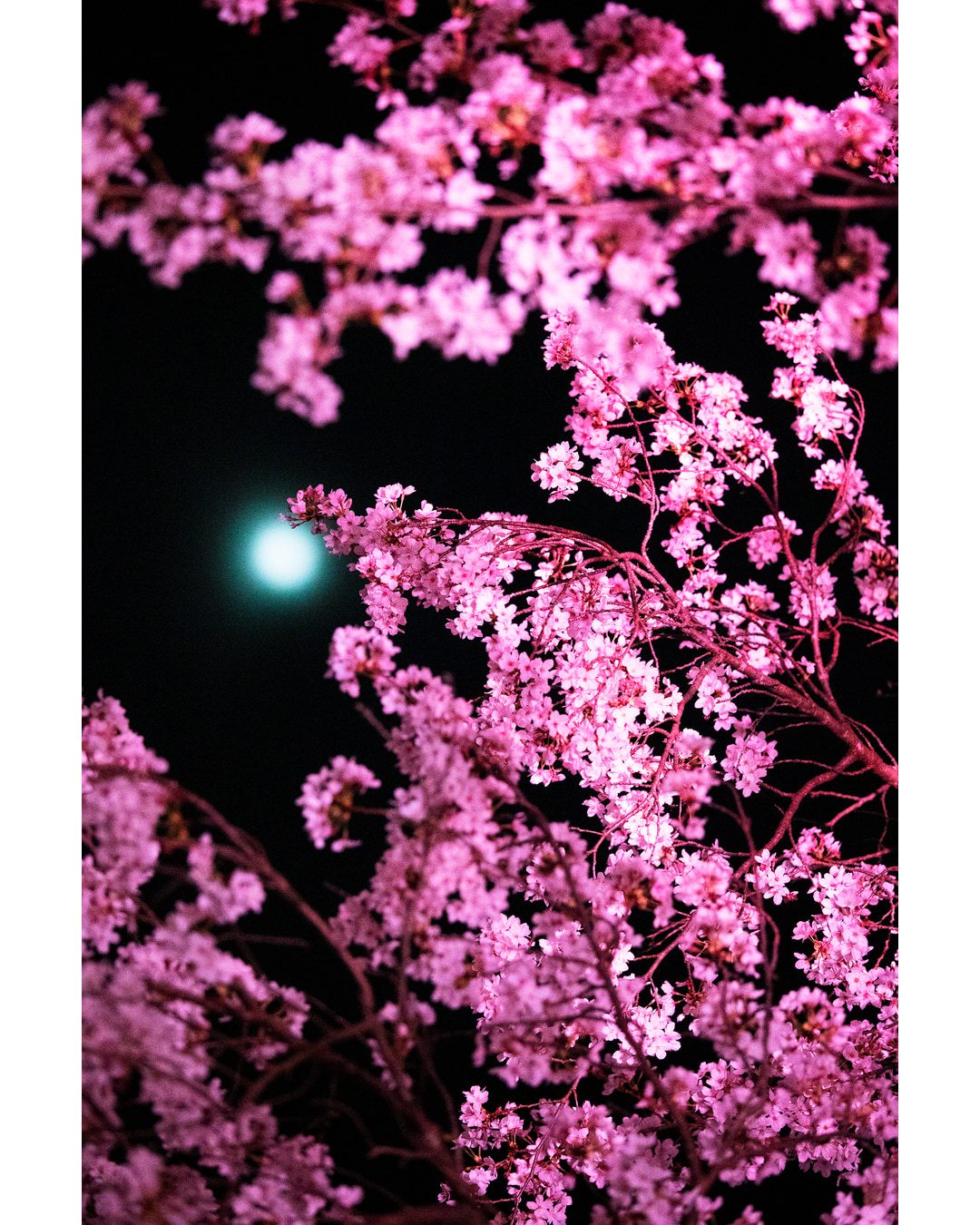
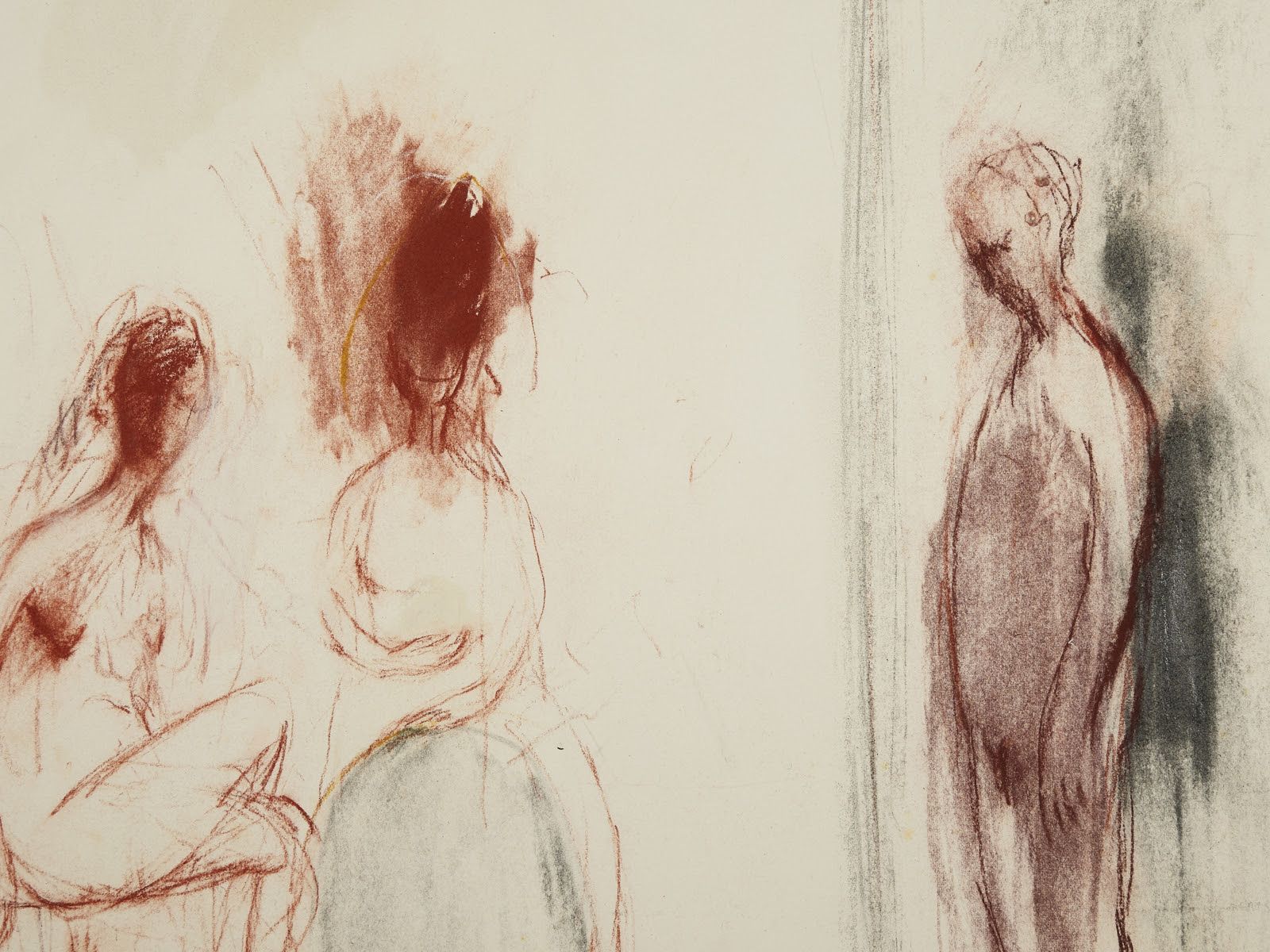
Rob Tufnell presents new works by Pentti Monkkonen.
London has been constructing defensive walls along the Thames to address perennial problems with flooding since the Middle Ages. In the 1830s the artist John Martin proposed the construction of a defensive embankment enclosing a sewage outfall on marshland adjoining the river. In 1847, in an attempt to stop cholera outbreaks in the city all cesspits were closed, drains were covered and an integrated sewage system was created to direct effluent towards the river. The Thames was effectively transformed into an open sewer. From 1852 the engineer Joseph Bazalgette was put in charge of the operation and in 1862 he began constructing something resembling John Martin’s plan. Within the Embankment, alongside the huge sewage pipe designed to move waste downstream was a stretch of what is now the District and Circle Line Underground railway.
On 7 January 1928 the Thames flooded central London. Thick snow in the Cotswold Hills, where the river rises, melted under heavy rain. Water surging downstream met a spring tide elevated by a tropical cyclone in the North Sea and central London was inundated. Large sections of the Thames Embankment collapsed causing 14 people to drown in basement flats while four thousand others lost their homes. The Tate gallery was immersed in filth. Amongst many cultural losses was John Martin's apocalyptic painting of the ‘Destruction of Pompeii and Herculaneum’ (1822).
Another storm surge in 1953 killed 307 people on England’s east coast. 59 drowned in the Thames Estuary but central London largely escaped as the Embankment held. However, the threat of further floods in central London led to the construction of the Thames Barrier that opened in 1982. This retractable wall and 400 other accompanying interventions including embankments, gates, outfalls and pumps were intended to protect London up to the year 2100 but with rising sea levels caused by global warming they are expected to fail within the next 50 years.
Joseph Bazalgette’s great-great-grandson is the television executive Peter Bazalgette who was responsible for the introduction of so-called ‘reality TV’ to Britain. Satirical journalist Victor Lewis-Smith, wrote that Bazalgette had ‘done more to debase television over the past decade than anyone else’. Bazalgette’s commercial success led to his appointment as Chair of the Arts Council of England in 2012. In 2016, after a fixed four-year term, he was replaced at the Arts Council by Nicholas Serota, former Director of the Tate Gallery. Bazalgette then became the Chairman of the British ITV television network (2016- 2022).
Thames Television was a franchise of ITV providing weekday commercial television to Greater London between 1968 and 1993. It was formed from a merger of Associated Rediffusion and the Associated British Picture Corporation. Associated Rediffusion was the first ever commercial television company in Britain and had previously held the franchise for London from the launch of the network in 1955. In 1990 the name and trademark for Associated-Rediffusion Television was acquired by Victor Lewis-Smith for his own production company. At the time Lewis-Smith was also employed as a television critic by the Evening Standard (owned by the parallel Associated Newspapers). Lewis-Smith’s most notable television output (as a writer, presenter and producer) was the weekly satirical ‘TV Offal’ which included a segment mocking television idents.
Thames Water Utilities Ltd (better known as Thames Water), is currently responsible for the supply of clean water and the extraction and management of waste water and sewage in Greater London. Founded in the 17th century as the New River company, supplying clean water to the city it was taken into public ownership in 1906 as the Metropolitan Water Board. Renamed the Thames Water Authority in 1974 it was re-privatised under its current name in 1989. Between 2006 and 2017 it was primarily owned by the Australian investment bank Macquarie who took out £2.2bn in loans against the business and more than tripled the company’s debts to £10.8bn whilst at the same time paid out £2.7bn in dividends to investors. During the same time period Thames Water was fined for dumping 1.4 billion litres of raw sewage into the Thames. Meanwhile around 85% of London’s drinking water was also extracted from the river. The company currently loses on average 602 million litres of drinking water every day (approximately 25% of its total supply) to leaks from poorly maintained pipes. Although a private company its main shareholders are currently Australian, Canadian and Dutch public pension funds and Chinese and Emirati sovereign wealth funds.
This exhibition is Pentti Monkkonen's second at the gallery, following ‘Coin Laundry’ in Venice in 2022.
Pentti Monkkonen (b. Minneapolis 1975) lives and works in Berlin. He graduated from the University of California, Los Angeles in 2004. He has exhibited extensively across Europe and the United States with solo institutional exhibitions at the Hammer Museum, Los Angeles in 2014 and 2000 and group exhibitions at Centre d’art Contemporain, Noisy-le-Sec, 2022; the Hammer Museum, Los Angeles, 2019; the Yuz Museum, Shanghai and Villa du Parc, Centre d’art Contemporain, Annemasse, 2018; Bergen Kunsthall, 2014; Parc Saint Léger, Centre d'Art Contemporain, Pougues-les-Eaux, 2008; East and Peggy Phelps Galleries, Los Angeles, 2008; Prague Biennale, 2007; JCC Gallery of Art, Kansas City and Centrum für Gegenwartskunst, Linz, 2000 and Neuer Aachener Kunstverein, 1998.