
Ended
Travis Fairclough
Casino Pier
Nov 13 – Dec 22, 2025
A grid is shaped by its conditions: a network of distribution, representation, intersection, and data. A system that makes meaning, tailored for use.
Travis Fairclough approaches the grid as a site of contradiction, devotion, transcendence, and rupture. The exhibition Casino Pier interrogates the thresholds of non-objective form through domestic, bureaucratic, historical, and personal perspectives. In this body of work, Fairclough considers how universal systems of the 20th century, whether aesthetic, institutional, moral, or otherwise, are offset, absorbed, and reinterpreted through the conventions of contemporary bureaucratic institutions.
In 2019, the artist began erasing penciled text from a family member's carceral intake form. First, removing the information that directly referred to the personal, such as their name and description, followed by the clerical headings that defined each cell. These redactions eventually resulted in the blank grid of the document, resembling Piet Mondrian's iconic paintings New York City I (1941), and New York City (1942), works known for their non-objective forms and use of primary colors.
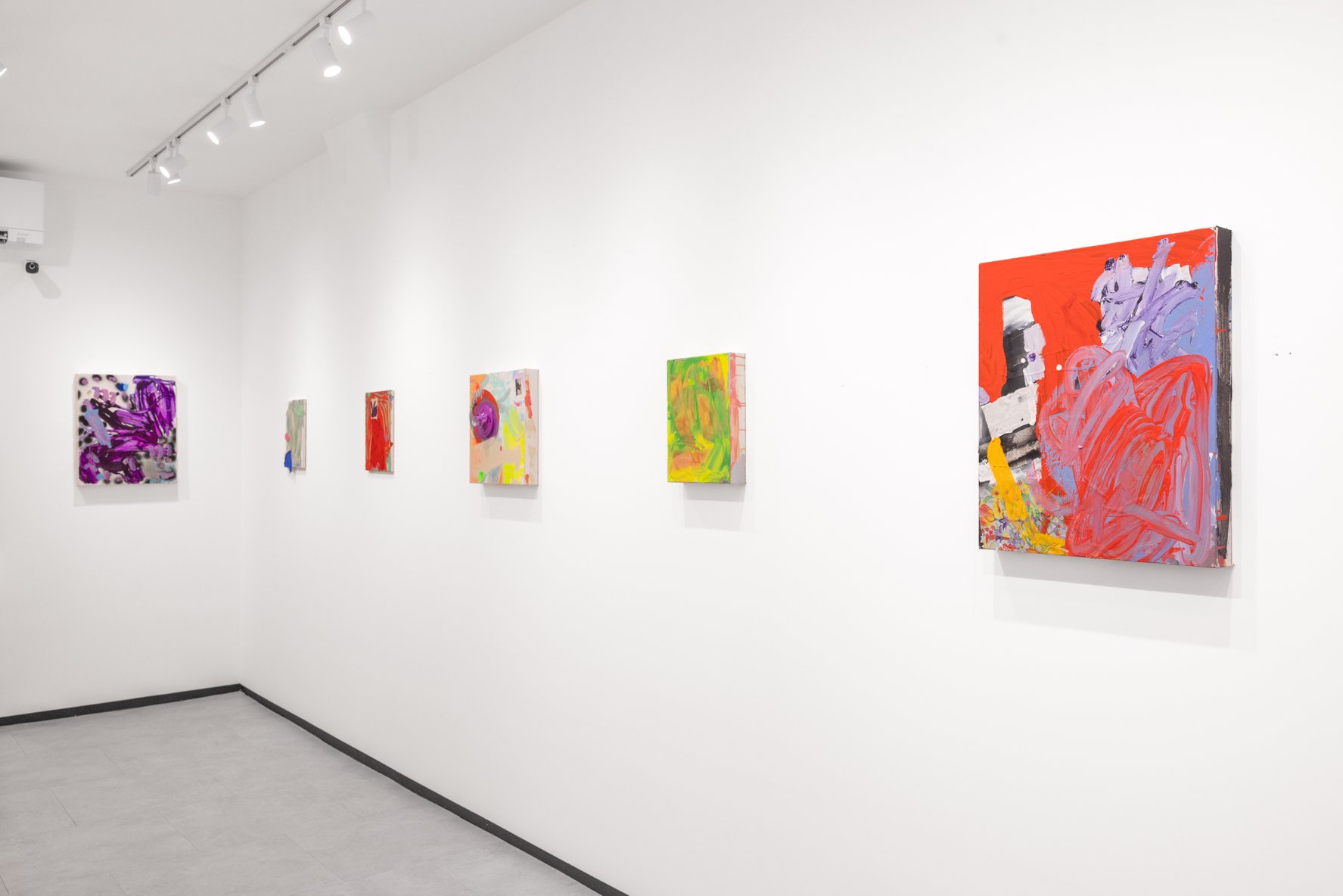
Fairclough's New York City, 1941 (Gate) and New York City, 1942 (Bank) bring together Mondrian's grid of utopian idealism with the administrative grid of the redacted form. In each painting, the artist extends the picture plane beyond Mondrian's original proportions, objectifying the non-objective form into barriers that hold out the fantasy of painting as a window to the world. Fairclough pairs each color in Mondrian's palette with its complementary color to produce a set of "chromatic neutrals." The result is a neutralization of modernist aspiration into an authoritarian device.
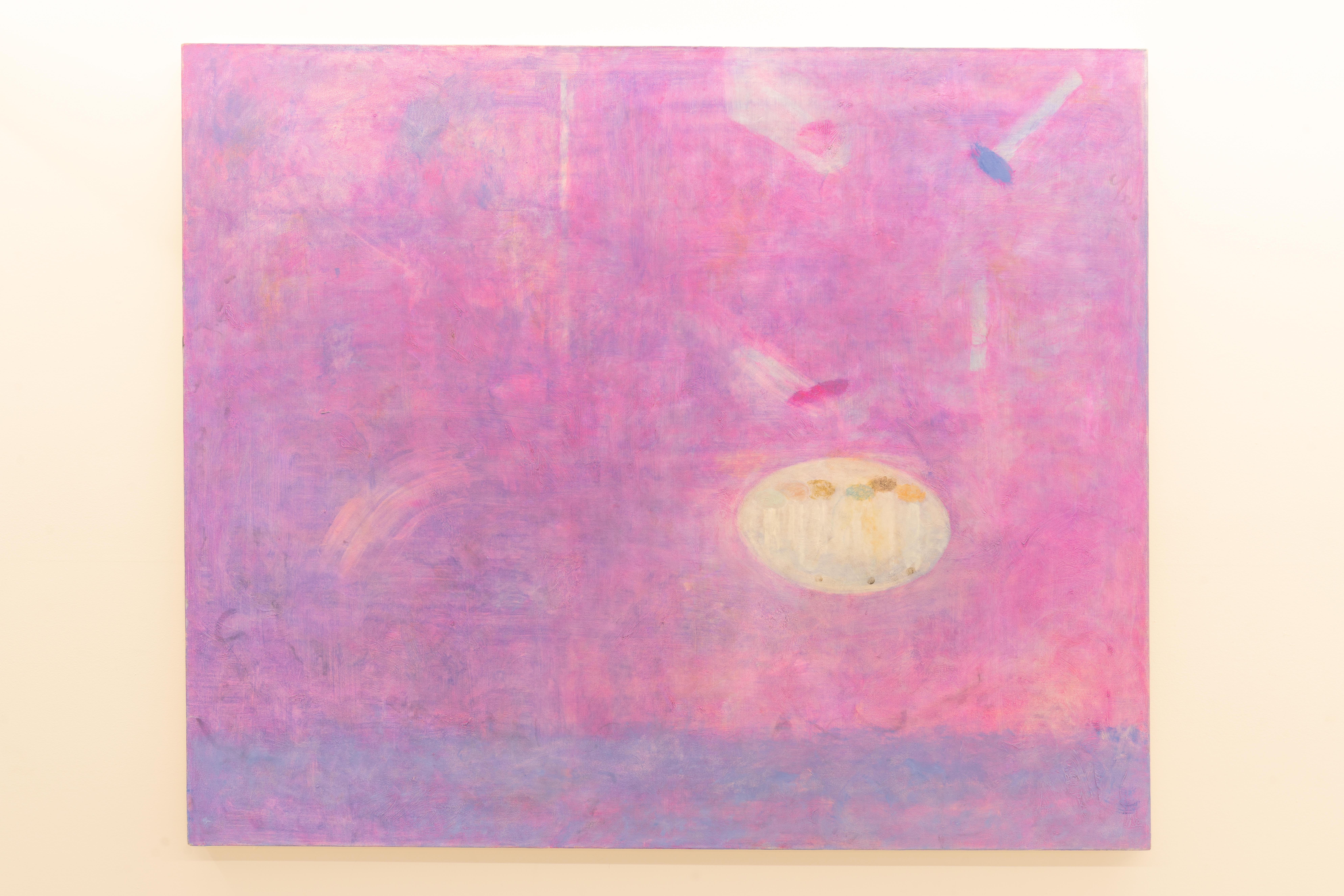
The paintings Planar Table Setting I and Planar Table Setting II continue to question the bounds of non-objective form by incorporating the factuality of their material syntax. Each canvas is composed of sections of different fabrics, worn sheets, stained linen tablecloths, and the frayed corner of a dress shirt, carefully assembled and stretched to form an irregular, monochromatic grid. Made at home, around the dinner table, the works celebrate imprecision and the nature of things made by hand. Set against the rigid grids of New York City, 1941 (Gate) and New York City, 1942 (Bank), Fairclough underlines in these paintings the value of intentionality, of making “one’s best effort”, pointing towards traditions of domestic labor, ritual, and craft.
The gestural compositions of Planar Table Setting I and II are largely made through incidental stains that occurred through the preservation process for the exhibition’s namesake work, Casino Pier, composed of individually preserved oak leaves resting in an ellipse on the gallery floor. For three years, Fairclough soaked hundreds of fallen leaves one by one in tubs of glycerin. This process slowly replaces the water within the veins of each leaf, embalming it to prevent disintegration and faded color. After some time, each leaf was removed and carefully wiped clean of oil, revealing a pliable, vibrant, leather-like surface.
To embalm is to intervene against entropy, a currency for survival that sits between debris and resource, making the body under duress durable enough to withstand the ticker tape of time.
Casino Pier is Fairclough’s first solo exhibition in New York City.
Travis Faircough (b. 1990, Paterson, New Jersey) lives and works in Brooklyn, New York. Fairclough received his MFA from Columbia University in 2021. Recent exhibitions include Elliot Templeton Fine Arts, New York (2025); Andrew Rafacz Gallery, New York (2024); Alyssa Davis Gallery, New York (2022); OCAT, Beijing, China (2022); Gavin Brown’s Enterprise - UncleBrother, Hancock, New York (2021); Ortega y Gasset, New York (2017). In June 2025, he curated the group exhibition Time is A River at Foreign & Domestic. Fairclough has participated in residencies, including Andrea Zittel’s AZ West, California (2019); Abismo Residence, Brazil (2018); Byrdcliffe Arts Colony (Pollock-Krasner Scholarship), Woodstock, New York (2015, 2016).