Ended Nov 19
Ciprian Mureșan
Plague Column
Oct 14 – Nov 19, 2016
More from Ciprian Mureșan on Gallop
Over the last years, Ciprian Mureșan’s work has been revolving around the idea of reconstructing and deconstructing, erasing and rewriting the iconic symbols of contemporary visual culture seen as the knowledge container of our times. This visual reservoir acts as an enormous accumulation of historical layers and images that the artist takes as raw material for his personal reading. This is the case of the series of drawings (that started with a Bas Jan Ader book) in which the artist copies each page of an art catalogue or a magazine on the same sheet of paper, until the images intertwine, and texts intersect creating a different play of meaning. Once he shuffles the original data and renders it both visible and invisible to the viewer, the resulting drawing becomes an “exhausted” flat surface resembling a battleground. The conflict arising from the paradoxical juxtaposition and overlapping turns this artistic endeavour into a veritable “perverse palimpsest” (Roland Barthes).
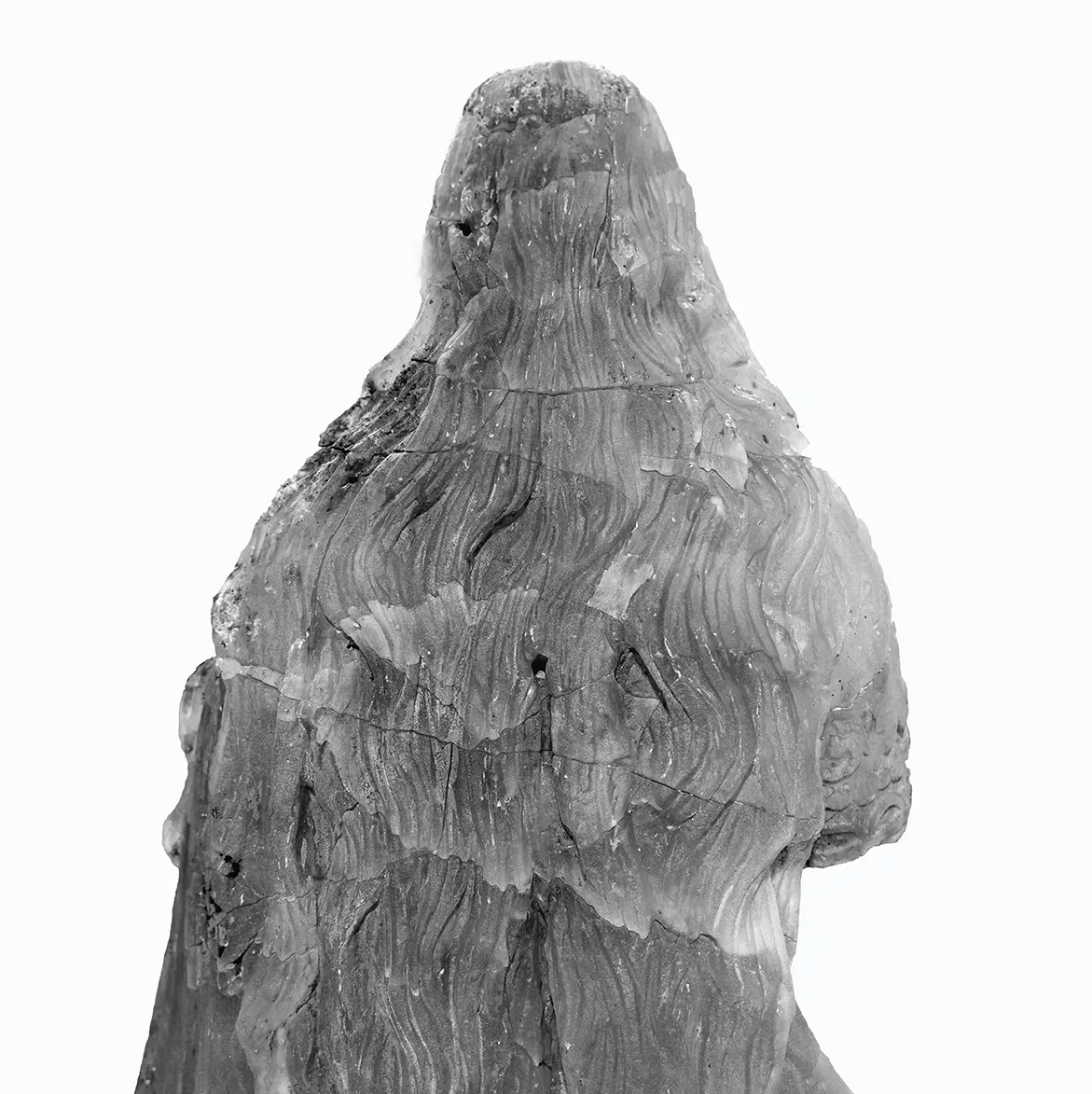
In his most recent work, Plague Column, Mureșan takes a step further this celebration of chaos, turning it into a monument and an installation. Trying to use the same technique of the palimpsest drawings, this time Mureșan mixes together fragments of sculptures previously replicated for the Dead Weights project after the originals belonging to the Art Museum in Cluj. The plaster negative castings are the leftovers of the sculptures used in 2014 as weights for flattening the drying prints depicting The Invisible Clerk by Ilf and Petrov. The new sculptures made of epoxy resin are bound together into an anti-heroic two pieces monument where the human figures and body fragments fade into one another. Hence, the body of the sculpture becomes a giant puzzle in disorder, abstract and eclectic stylistically, mixing together historical personalities like prince of Valachia, Mihai The Brave with an iconic socialist worker, to give just one example.
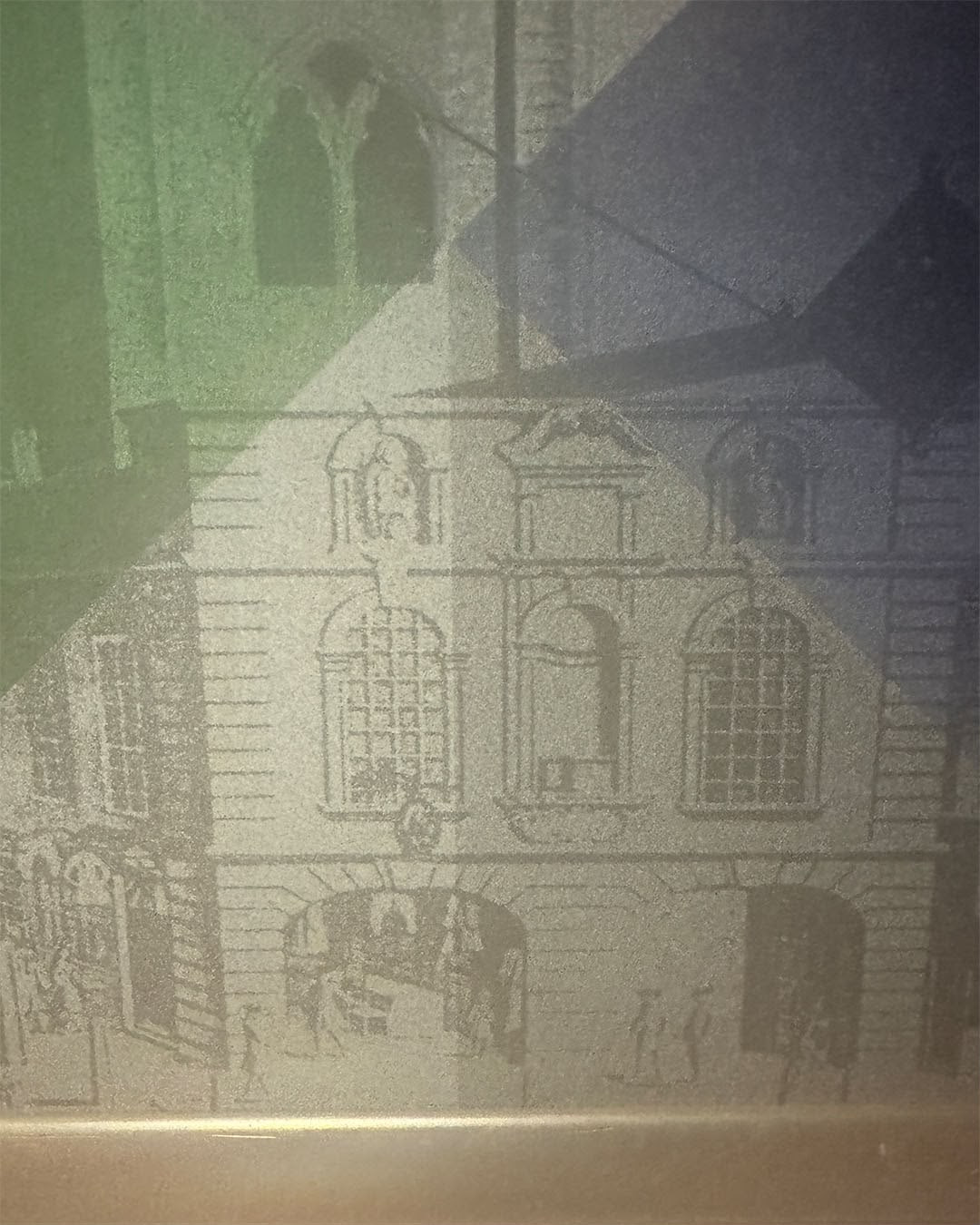
Alongside the “chaos monuments”, Mureșan presents a series of works inspired by the same history of Romanian sculpture. Each sculpture selected from the catalogue of the museum’s colletion is reproduced on paper, transposed into an etching and then transformed into a bronze bas-relief. The three stages of the same visual depiction follow a complex process of producing and reproducing meaning through copying over and over again the same subject until it vanishes. The final point of dissolution is the white on white imprint of the etching and the bronze cast of an emblematic photo with André Cadere carrying his subbversive wooden bar.
In a sense, this show can be seen as an attempt to provoke our visual perception and expectations of coherence from an artistic discourse, while the artist is rewriting in real time over something that is not yet completely erased, but neither assumed as a public discourse. Hence, the title stresses once more the random process of excluding a work of art from the public display and isolating in a storage room, just like the plague randomly picked its victims.