
Ended
Gelsy Verna
Pensée Double
May 9 – Jun 5, 2025
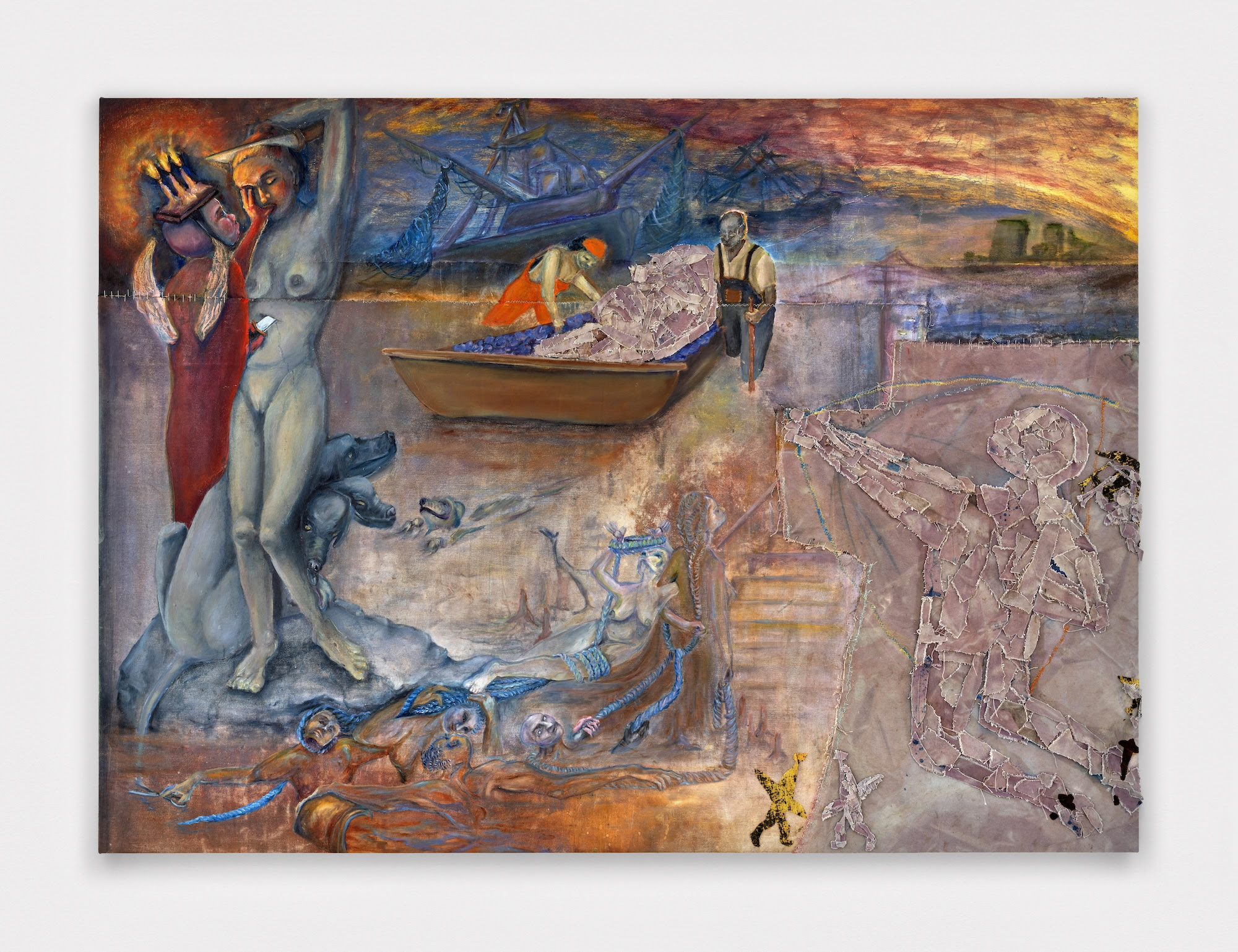
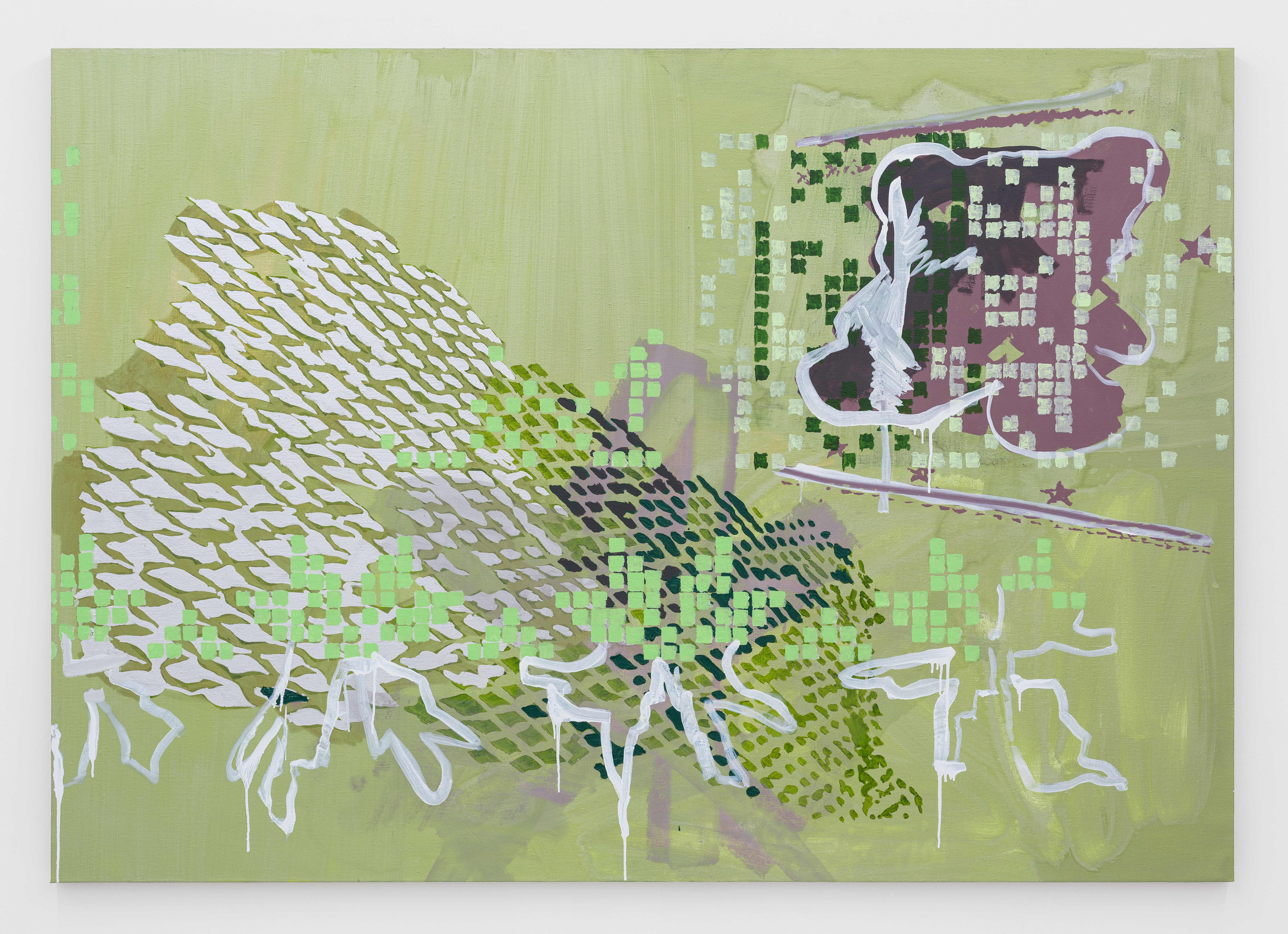
Gelsy Verna produces a broad and deep artistic record of her experience of moving through the world. Through a broad oeuvre of drawings, collages, paintings, prints, and photographs, she reflects on the mutability of images, words, signs and symbols across cultures and between individuals. Verna's is an art of established iconographies, references to spiritual traditions and political histories, but it is also full of secrets, private meanings and inscrutable non-sequiturs. It taps into rich, ancient sources of significance and association, while retaining the intimate, inward quality of a private diary. Insights into the transmigrational currents of the globe might be attributed to a series of relocations—at three years old, her family leaves Haiti for Zaire (now the Democratic Republic of Congo), and just four years later, settles in Montreal, Canada. By adulthood, her identity had already accrued several layers of complexity.
For many years, Verna studies with the intention of joining her radiologist father in the medical field. In the mid-1980s, however, she realizes that her life-calling is in visual art, and her mother—a teacher who always supports her children's musical and artistic education—helps her enroll on a course at the Paris American Academy, in France. She subsequently studies at the School of the Art Institute of Chicago, at Skowhegan, Maine, and at the Hochschule für Bildende Künste in Braunschweig, Germany. All of which is to say that, by the start of her artistic career, she has lived in—and developed a fraught relationship to—more places than many artists do in their entire lives. The artist learns to calibrate her self-presentation according to the codes of each environment she navigates, and to claim her own space within it.
Among the consequences to Verna of her travels is, seemingly, an acute sense of self-awareness as a Black woman existing among predominantly white, colonialist societies. Verna wonders if a person of color can ever be seen as "neutral." On the reverse of her major mixed-media collage Mother, Father, Please Help Me, a centerpiece of this exhibition, is a phrase that appears in many of her works: "People whose bodies are not their own," alluding to the assumptions and expectations placed by hegemonic white societies on dark-skinned people. Another phrase that crops up in her drawings: "You're not the Haitian that I expected."
Verna often declines to date works, so her output commingles together across time, media and series. This seems appropriate, since she develops a methodology of working that propagates connections between images and objects. Often, she installs groups of smaller works together in dense salon-style hangs, encouraging cross-reference and emphasizing repetition. Verna uses the photocopier to generate multiple grounds for drawings, as with a series in which she draws across and between copied grids of drawn dots. Photography is a consistent fixation, for example, Untitled (Red Cup and Figurine) (2006) in which she combines photographs of her home, possessions, her own body and her earlier artworks with new drawings, sometimes done directly on the photographic prints themselves. Several works feature repeated, passport-style photographs of her own head, which she disguises or transforms with marker pens.
Verna is a generous collaborator and dedicated educator (with, among others, Alicia Henry, David Dunlap, John Dilg, José Lerma) and her work, like her life, is thoroughly marked by a willingness to challenge, and be challenged by, the perspectives of others. While in Chicago, she becomes friends with the painter Kerry James Marshall; together they trawl local flea markets and swap meets for artifacts that, like her art, carry their own layers of use and history. A church fan bearing a portrait of Dr Martin Luther King Jr becomes the basis of an ongoing series of photocopy collages (including Mother, Father, Please Help Me), through which she explores the many facets (both actual, speculative and fantastical) of this iconic figure's identity. In some drawings, she experiments by giving King different hairstyles, while in others she appends wildly patterned backgrounds which she photocopies again in order to adorn him in other ways, including—sacrilegiously, maybe—a set of Mickey Mouse ears. In a parallel series, Untitled (Marilyn Monroe Brown Face), Verna colors portraits of Marilyn Monroe with brown skin.
Throughout her life, the artist is drawn to unfixed meanings—indeed, she sometimes sees meanings as unfixed when others do not. This preoccupation leads her to use in her art both symbols and words. The cross, the knife, the snake and the heart are all unstable symbols that reappear in her paintings and drawings. To take just one example seen in Mother, Father, Please Help Me, the snake, which in the Christian West is usually associated with temptation, mendacity and evil, in other traditions represents fertility, wisdom or guardianship. The word "black," Verna notes, often, but not always, has negative connotations. In 1999, Verna is interviewed for a radio program, and recalls her father, the radiologist, showing her the black spots on an X-ray that indicated tumors or disease–areas that, when the X-ray was taken away from the light, would appear white.
One of Verna's innovations is her use of tracing paper or vellum in her collages and drawings, allowing marks made on the back of a drawing to show through on the front, and sometimes obviating a two-sided drawing having either a front or a back at all. The physical qualities of Verna's layered, occluded and patinated work have metaphorical significance too, relating to memory, to history, to selfhood and identity. "The layering demonstrates consciousness," she writes, "the image developing as if a train of thoughts, then rearranged and brought into focus."
Verna translates her exploration of layering and collaging images on paper into subtle and evocative paintings. In works such as Untitled (Girl with Suitcase) (1999), Verna's lightness of touch and confident handling of overlaid images results in a picture of astonishing immediacy. Another painting featuring a suitcase (a recurrent symbol and metaphor in Verna's work) gives this exhibition its title: Pensée Double (1998), which translates as "double thought." The phrase recalls George Orwell's term "doublethink," which denoted hypocritical self-deception in his novel Nineteen Eighty-Four (1949). Verna, however, softens the association, implying instead simply the possibility of holding two contradictory ideas in one's mind at the same, a possibility that she knows, through the experience of her remarkable life, to be a necessary reality.
—Jonathan Griffin