Ended Jul 9
Carolina Fusilier
Imago
Jun 6 – Jul 9, 2025
More from Carolina Fusilier on Gallop
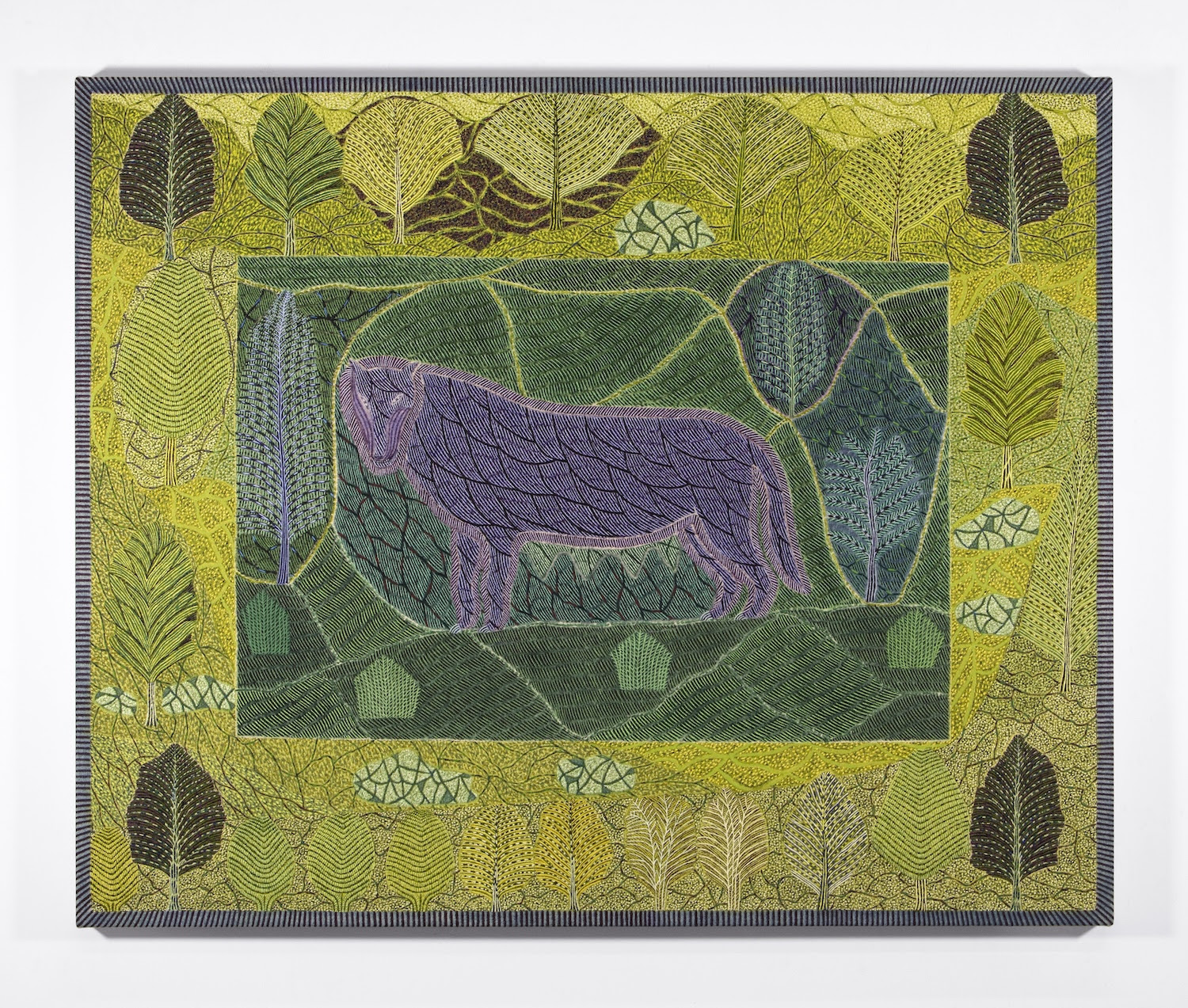
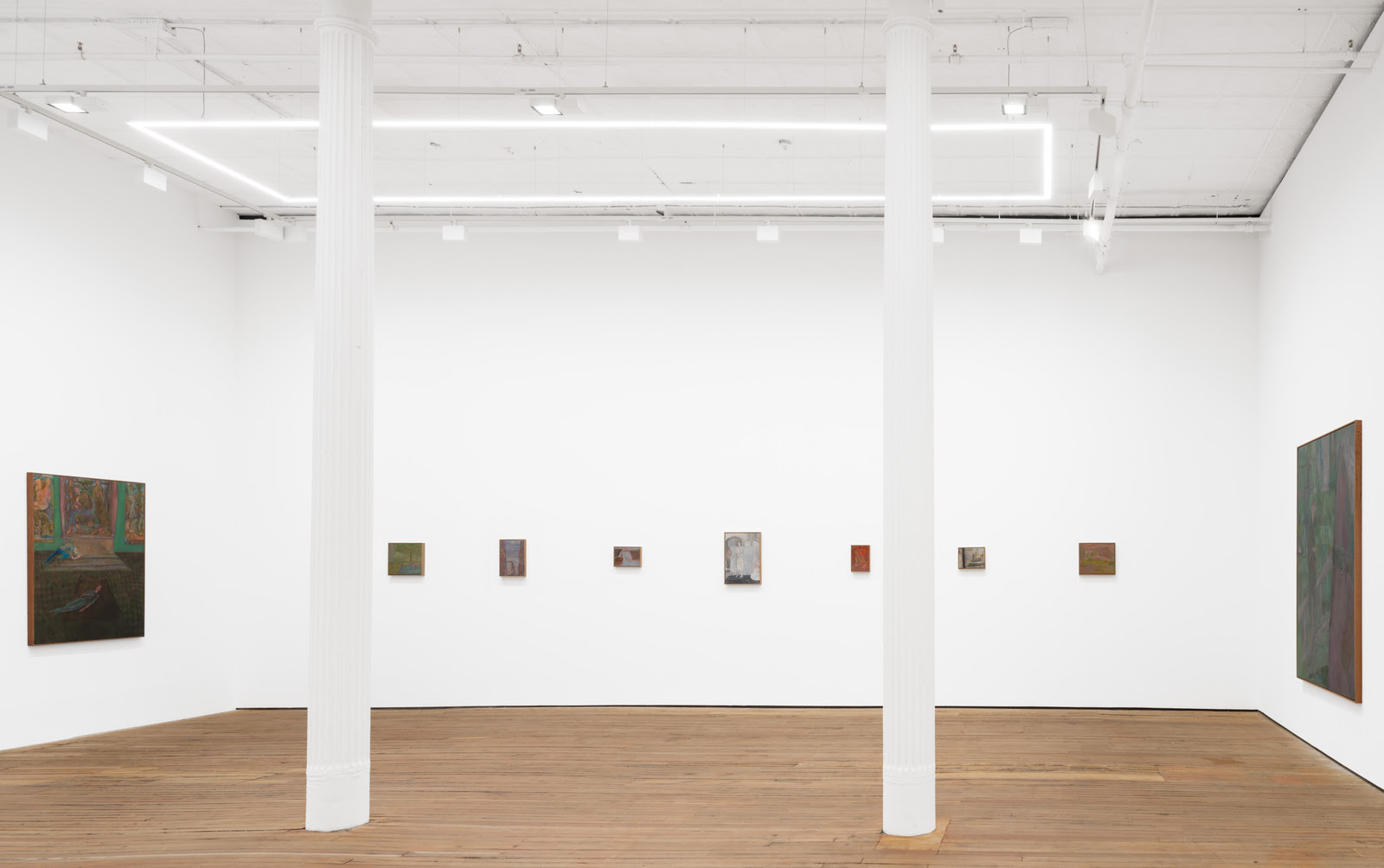
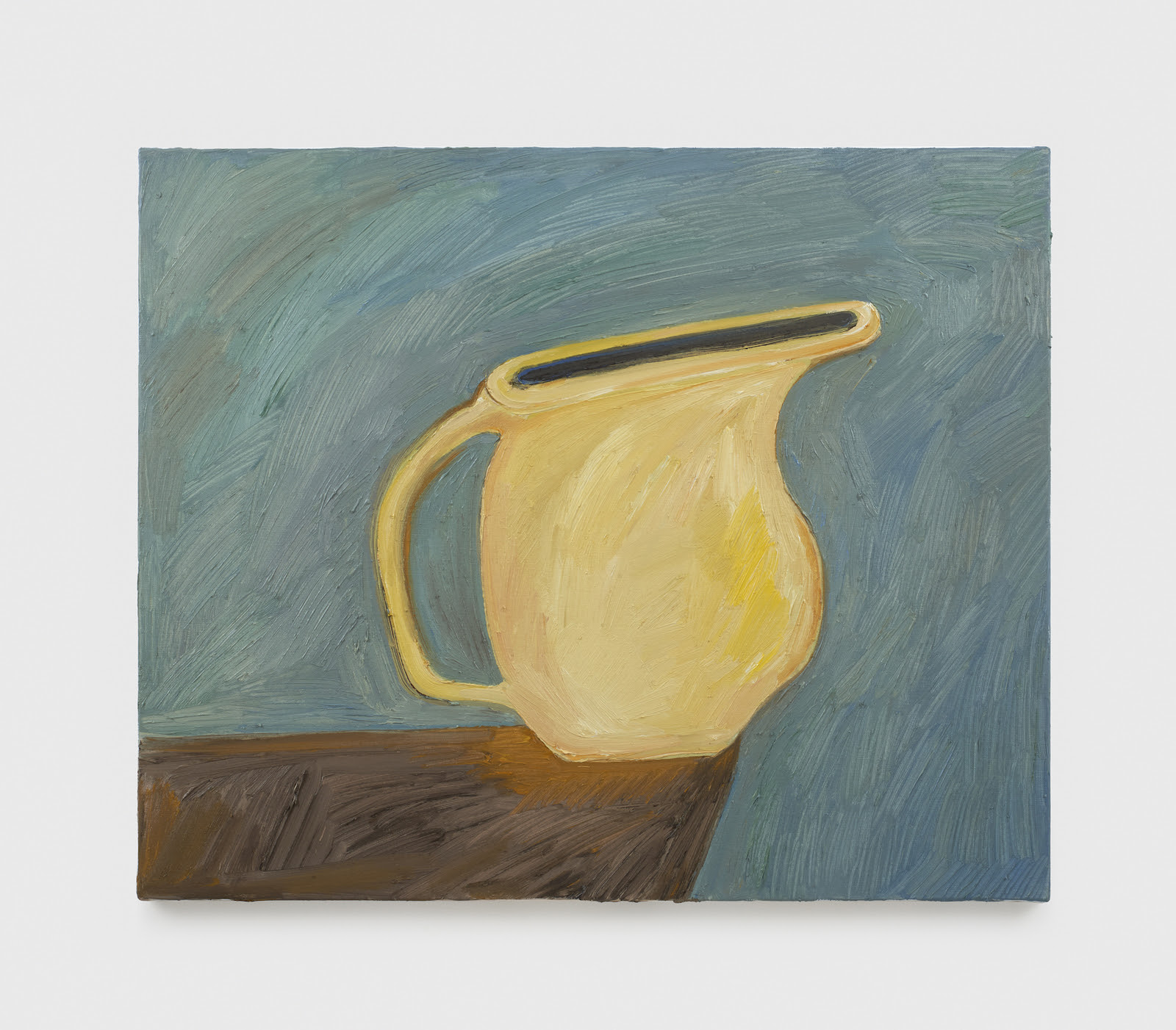
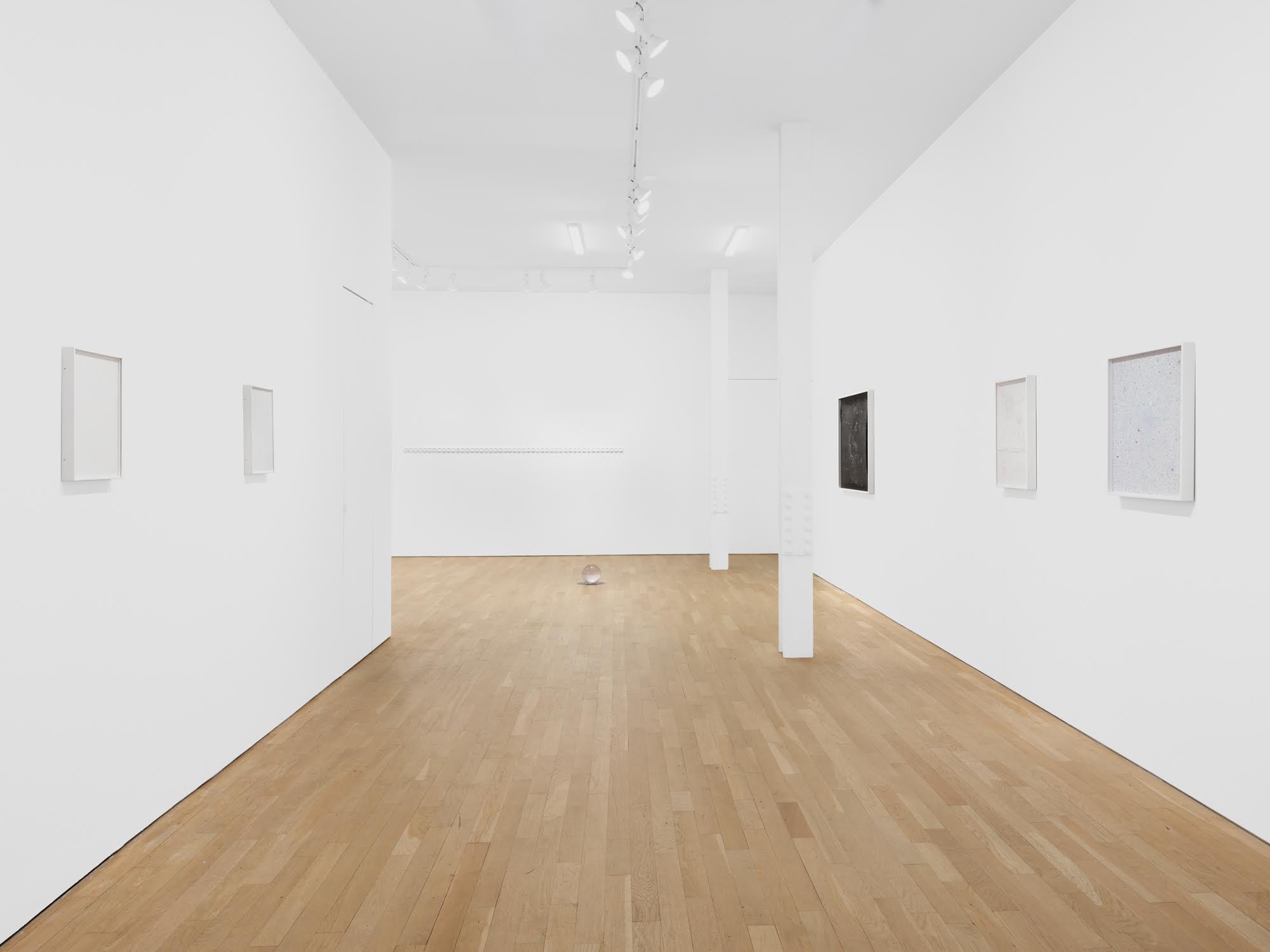
Margot Samel is pleased to present Imago, a solo exhibition by Mexico-based artist Carolina Fusilier (b.1985, Buenos Aires, Argentina). This is the artist's first solo exhibition with the gallery and in the US.
When Carolina Fusilier invited me to write this text, she suggested I imagine the works as props from a film never made. This time, the sci-fi ambiance that runs through her work emanates from Ikaria XB1 (Jindřich Polák, 1962), a 1960s Czechoslovak space odyssey. Fusilier's pictorial-sonic device emerges by fantastically parasitizing the film, feeding on its spectral atmosphere and unrealized cosmologies.
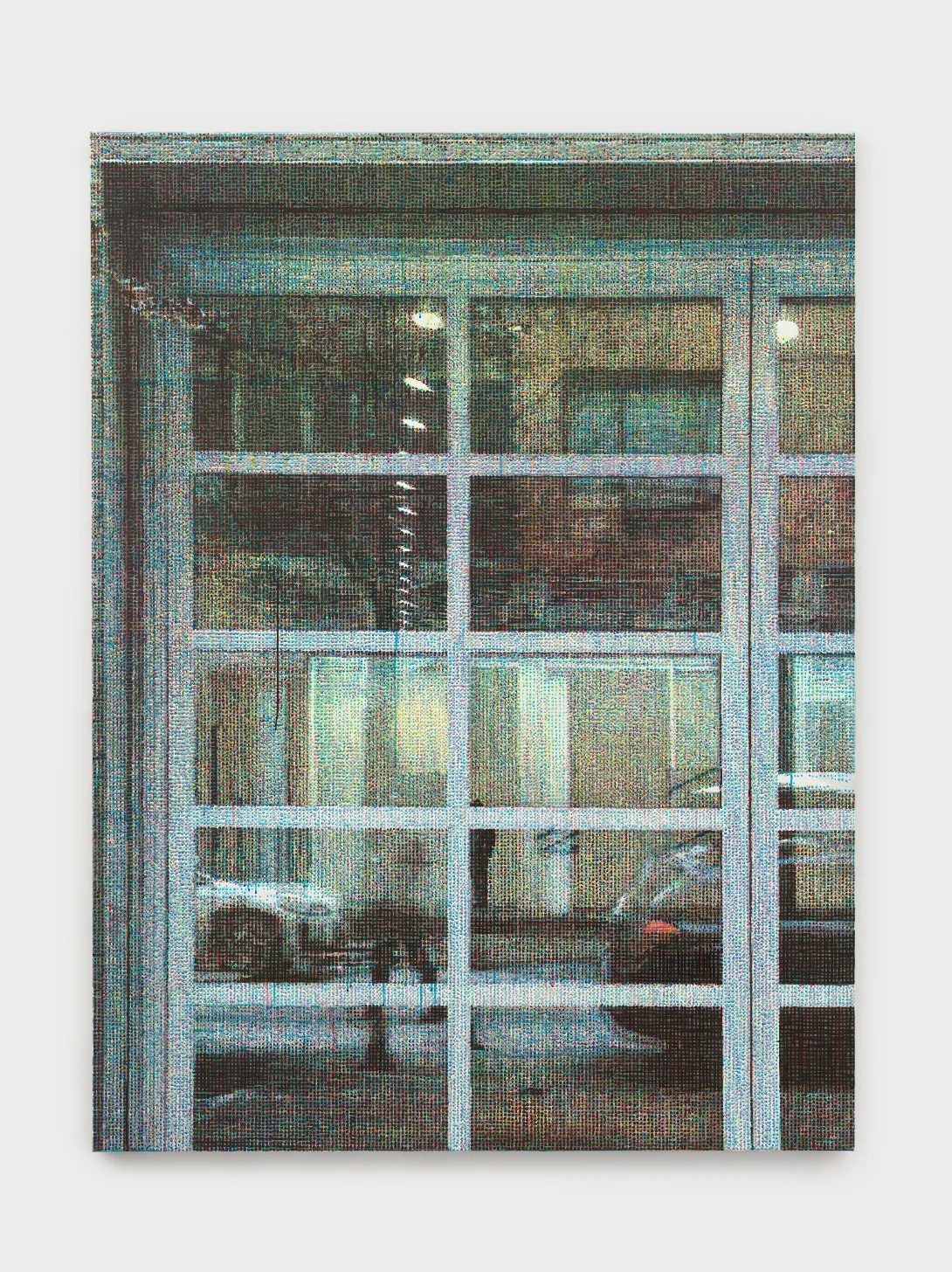
Subtle sonic pulses expand through the room like a signal, and the viewer becomes a passenger aboard the machine of Russian Cosmism, tasked with navigating the cosmos beyond our galaxy—through this virtual simulation. A large frontal painting evokes the ship's command panel, flanked by three trapezoidal works that resemble passenger windows. Each includes a small shelf bearing constellations of objects—seemingly unbound by logic or sequence, yet rendered with such precision they evoke still lifes or Vanitas, symbolic offerings left behind. It's as if the crew had mysteriously vanished, and what remains are their personal effects, these remnants humming with symbolic charge become clues from a moment suspended in time, a trace, an altar with the incense still burning.
Yellow post-it notes, scribbled in pen, appear to peel from the painted niche—so convincingly rendered it's unclear whether they are painted or affixed. Nearby, a microscope magnifies the ocelli on a butterfly's wings—a detail that lingers like a trace from a dream, or a message waiting to be deciphered. A vivid glow bathes the objects, seeping through the trapezoidal windows. Beyond them, a murky sky tinged with sunset tones is glimpsed, appearing—more atmospheric than scenic. Only then do we realize that the artist's mimetic precision is at work to destabilize reality; these portals do not reveal, but rather conceal. They are screens, simulating a terrestrial kind of light—a luminous membrane that filters the travelers' psychic exposure to the vertigo of the cosmic void beyond.
To navigate Fusilier's visual language through the lens of science fiction, and paraphrasing her own interests, I propose a parallel storyline, a supporting character aboard Ikaria, a lepidopterist leading a project called Imago. She pursues one of humanity's demiurgic dreams—"to create new species of butterflies through the latest Art Biotech, which, by making a simple incision in the mutating chrysalis, produces previously unseen ocelli on the adult insect." This proliferation of radiant, prismatic forms is, to her, a form of cosmic speech. In the more than 17,000 known variations of butterfly wings, she deciphers luminous hieroglyphs—codes she believes could allow contact with extraterrestrial beings.
For the researcher, the power these creatures hold over human spirituality remains a mystery. Through butterfly-therapy, she enhances the passengers' aesthetic sublimation, drawing them into heightened states of perception. But soon, things spiral. Nocturnal moths begin to reproduce uncontrollably, infiltrating every crevice of the ship. Drawn to the paintings' luminous emanations, they settle on the window-like screens—revealing them for what they are: trompe l'oeil illusions. As Georges Didi-Huberman writes, when we can no longer tell whether the insect is nestled within the image or resting on the surface of the canvas, "a specter is created in which, through the revelation of the artifice, we come to recognize the illusion."
In Ikaria, the ship is drawn toward a black hole whose negative energy lulls the crew into sleep—they remain unconscious for over seventy hours. What happens during that time? What do the earthly travelers dream of? Polák offers only a suggestion: cosmic enemies who subdue the crew not through violence, but through invisible psychic force.
In Fusilier's unrealized film, the moths become an ominous presence—heralds of the eruption of unconscious forces, of psychic energies emanating from the cosmos that overwhelm the travelers with madness and delirium, stripping reason of its hold. The astronauts grow melancholic, their movements slowed, their will dissolved by an irrepressible fatigue that draws them into sleep. The red diptych unfolds before the viewer as a dreamscape into which the travelers descend—"a certain surrender of the psyche to the powers of the unconscious," completely defenseless, completely exposed, adrift at the edge of the unknown.
Between opposing image-worlds—between mimesis as conquest of detail, a puncture of the real, and fantasy as the summoning of the invisible—Fusilier opens vanishing points toward alternate realities. Her galactic spaces become ether, spiritual plasma through which psychic beings drift: soul-bearing cyborgs on a surrealist voyage, winged machines of longing, libating the light of stars.
—Itala Schmelz
Carolina Fusilier (b. 1985, Buenos Aires, Argentina) lives and works in Oaxaca, Mexico. She studied at the Universidad del Cine in Buenos Aires and completed postgraduate programs at Universidad Torcuato Di Tella (2011), SOMA in Mexico City (2016), and was a guest student at the Düsseldorf Academy under Rita McBride in 2018.
Recent solo and duo exhibitions include Imago, Margot Samel, New York, NY (2025); ¿Cómo se escribe muerte al sur?, Museo Anahuacalli, Mexico City, Mexico (2025); Isla Eléctrica, PEANA, Mexico City, Mexico (2024); Nuit Blanche, Toronto, Canada (2024); Espejo-Espectro, Malba, Buenos Aires, Argentina (2024); Corrientes Mercuriales, Museo Jumex, Mexico City, Mexico (2023); Clepsidra, Daniela Elbahara Gallery, Mexico City, Mexico (2021); Kitchen with a View, Locust Projects, Miami, FL (2019); and Angel Engines, Natalia Hug, Cologne, Germany (2018).
Selected group exhibitions include Otr’s Mund’s, curated by Aram Moshayedi and Lena Solá Nogué, Museo Tamayo, Mexico City, Mexico (2025); Yendo de la cama al living, curated by Enrique Giner, Salón Acme, Mexico City, Mexico (2025); Breaking up of ice on a river, curated by Lilian Hiob, Margot Samel, New York, NY (2024); Casa Ideal, Proyectos Multipropósito, Mexico City, Mexico (2024); Linhas Tortas, Mendes Wood, São Paulo, Brazil (2023); Hic Sunt Dracones, Deli Gallery, Mexico City, Mexico (2023); Viscera, curated by Moira Sims, Simone Subal Gallery, New York, NY (2022); Folk Fiction, curated by Ariana Kalliga, OMS Space, Athens, Greece (2022); Point of Departure, The Drawing Center, New York, NY (2019); Mutagenesis, DOC, Paris, France (2019); and 74 million million million tons, SculptureCenter, New York, NY, curated by Ruba Katrib and Lawrence Abu Hamdan (2018).
She received the Pollock-Krasner Foundation Grant (2019, US) and the Raúl Urtasun–Frances Harley Grant (2015, The Banff Centre, CA). El Lado Quieto (2021), her first feature film as co-director, was selected by the ACC Cinema Fund, Asia Culture Center, South Korea. Her latest short film, Corrientes Mercuriales (2023), premiered at the New York Film Festival and received a Special Mention for Best Argentine Short Film at the Mar del Plata International Film Festival, 2023. She is currently working on Sorry For the Late Reply, her second feature as co-director, supported by ACF–BIFF (Busan International Film Festival, South Korea) and the Sea-Doc Grant from the Singapore International Film Festival. Together with filmmaker Miko Revereza, she forms the collaborative duo Arquitectura Parlante, where they lead film workshops, produce their own films, and are self-managing the beginnings of Cinema Antena, a micro-community cinema space for screenings and workshops in San Agustín Etla, Oaxaca.