Ended Sep 22
Leslie Hewitt
Sep 6 – Sep 22, 2018
More from Leslie Hewitt on Gallop
[Scroll down for French version / Veuillez trouver ci-dessous la version française]
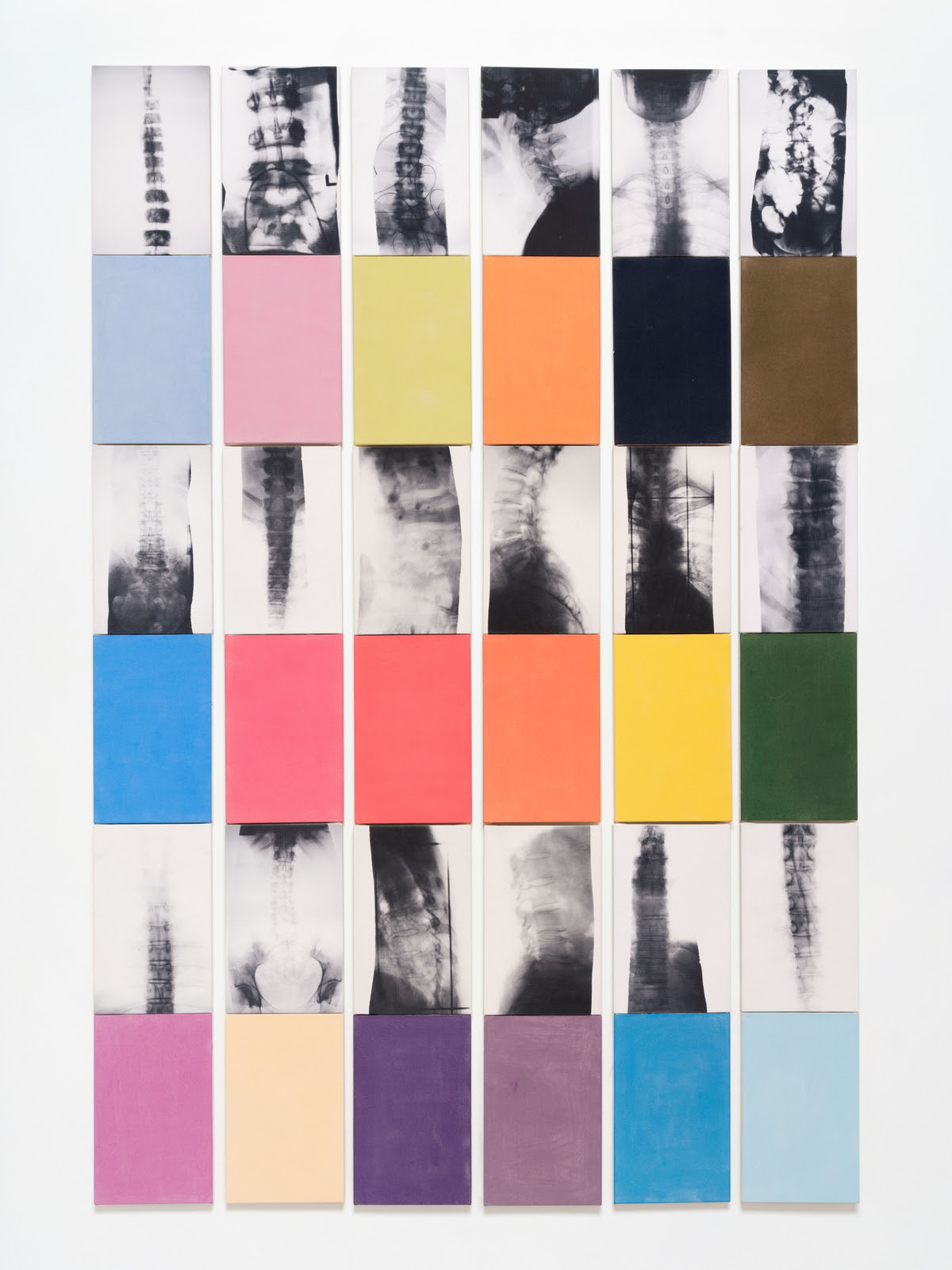
For her first exhibition at Perrotin Paris, the American artist Leslie Hewitt (born in 1977 in New York) presents a new set of photographs drawn from the series Riffs on Real Time. The set is accompanied by a new trajectory including colour grounds (unobstructed photograms and digital chromogenic prints) and minimalist sculptures.
Associating vernacular snapshots with archival documents photographed against textured motifs, the compositions that make up Riffs on Real Time are rooted in an idiosyncratic reaction to post civil rights and postindustrial americana (1950–89). The complex arrangement of the material brings to mind Photoshop-based montages and the visual manipulations that are spread online, and invites us to question, in the tradition of conceptual American photography (John Baldessari, Allan Sekula, Taryn Simon, etc.), the power that we generally attribute to this medium, i.e. the power to bear witness to the past objectively, to shape our memory, to build a collective history.
Launched in 2002, the series Riffs on Real Time, shown at MoMA in 2009 and at the Guggenheim Museum in New York in 2015, superimposes three layers of images. First, our gaze focuses on snapshots taken from the photo albums of Leslie Hewitt’s friends, relatives and associates, whose blurred, erased or worn outlines give them the aura of ‘relics’ [1].
But while their “original” meaning and particular context may sometimes escape the artist, each of these snapshots is placed on top of a larger document (covers drawn from African American protest writings, magazine reportage, governmental archives, etc.) that frames it and anchors it in a broader sociopolitical context, i.e. documents of such demands, marches and riots related to the fight for human rights – elliptical images that we have to complete mentally, since their centre remains obscure, prompting precarious free association.
Finally, a last layer, serving as a background to the whole, reveals textured motifs. These are the grooves in the floorboard of the artist’s studio, on which the two previously superimposed objects have been laid out and photographed from above. This third plan therefore opens up a dialectic field in which intimate and political iconographies, private and public spaces, personal and collective memories resonate off one another. A dialogue then emerges between history and History. Inspired by cinematic montage, this arrangement reminds us that the meaning of images, far from being intrinsic, depends on the way in which they are arranged and connected to one another. In that sense, the term ‘riff’, borrowed from the vocabulary of bebop, a jazz movement whose members were (Max Roach, Charles Mingus, etc.) actively engaged in the fight for civil rights, refers to the art of freely combining melodic and rhythmic elements in the structure of the solos.
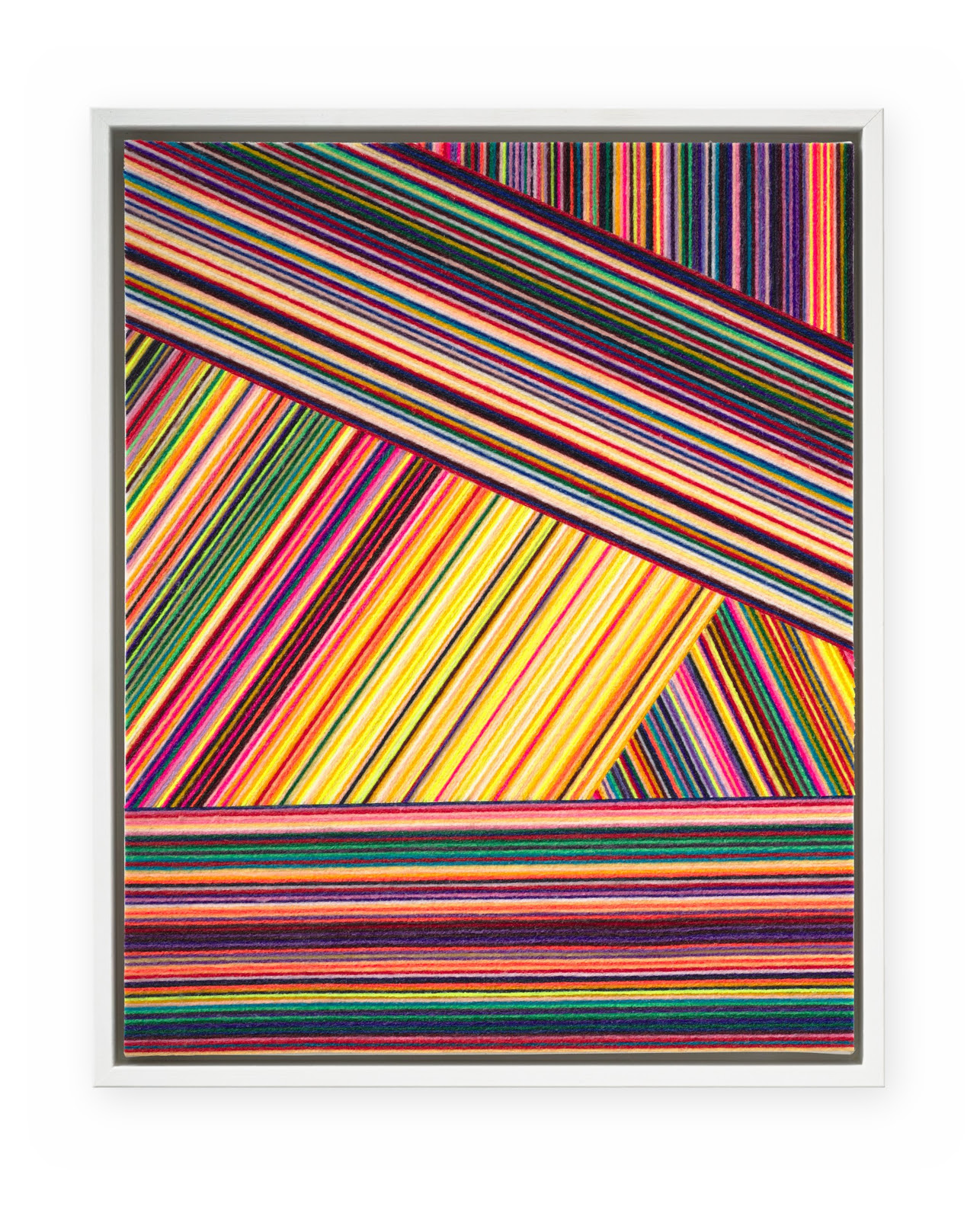
Achromatic Scales, a brand-new black-and-white version of the Riffs on Real Time series seen at the Armory Show, reveals a new chiaroscuro aesthetic in the work of Leslie Hewitt, who has here ‘dechromatized’ the reclaimed colour photographs and documents. Working with an analogue camera and using daylight, the artist demonstrates the ambiguities of photography – a medium that can highlight a situation and render it visible, reveal it to our gaze, but that can also make it obscure, underexpose it and let it linger in the ‘black holes’ of history and memory. Leslie Hewitt therefore questions the way in which an event can be put forward or kept in the background in a country’s culture and official history. Criticizing the alleged objectivity of photography, commonly interpreted as genuine proof of ‘what was’ [2], Hewitt argues that each and every image only offers a singular and subjective perspective that attempts to influence our perception of reality – if only through framing or the angle from which the shot is taken. The compositions elaborated by Leslie Hewitt are thus void of chroma and combined with the chromatic filled grounds, whose golden, cyan or green-checked tones were carefully chosen to balance the texture of the silver gelatin prints in both form and concept. These monochromes together form a colourful selection, a tribute to the abstractions of the suprematists or the gamut of colour moving through digital space in perpetuity.
Playing on an interpretation of the Dutch vanitas paintings of the seventeenth century, Hewitt’s photo-sculptures like the series Still Life (2013) and Riffs on Real Time owing to the quality of their chiaroscuro and their studio composition, the assemblages draw on a approach to photography as object. Indeed, the layering of the images gives a rare depth to a medium that is generally reduced to its two-dimensional nature. The work on the textures and the retrieved materials contribute a certain volume to the whole, and render even more tangible the elements present on the surface of the pictures. Moreover, these photographs are accompanied by a minimalist sculpture made up of simple materials, copper and wood. Displayed on the floor, it shows us that the artist, who trained as a sculptor, has a willingness to engage in a materialist or formalist conversation with the vocabulary of Minimalism. Two on-site installations confirm Leslie Hewitt’s taste for the spatialization of materials. Two wall like structures duplicate, through their dimensions, the doors and windows of the second floor of Perrotin gallery. Adapting themselves to the architecture of the building, these sculptures rest on the floor and against the wall inviting us to question the role of formalism and the slippages found between representation and real life.
- François Salmeron, Art critic and lecturer, Photography Department Paris 8 University
1 - André Bazin, ‘Ontologie de l’image photographique’, in: Qu’est-ce que le cinéma? (Paris: Editions Le Cerf, 2002, p. 14).
2 - Roland Barthes, La Chambre claire. Note sur la photographie, chapitre 32 « Le ça-a-été », chapitre 34 « L’authentification », Editions Gallimard, Paris, 1980.
*****
Pour sa première exposition à la galerie Perrotin de Paris, l’artiste américaine Leslie Hewitt (née en 1977 à New York) présente un nouvel ensemble de photographies issues de la série Riffs on Real Time, accompagné de fonds colorés (photogrammes non-obstrués, tirages digitaux à développement chromogène), et de sculptures minimalistes.
Associant instantanés et documents d’archive photographiés sur des motifs texturés, les compositions de Riffs on Real Time s’enracinent dans l’Amérique post-industrielle, en lien avec les mouvement des droits civiques (1950-1989). Leur agencement complexe rappelle les montages Photoshop ou les manipulations visuelles diffusées sur Internet, et nous invite à remettre en question, dans la lignée de la photographie conceptuelle américaine (John Baldessari, Allan Sekula, Taryn Simon...), le pouvoir que l’on attribue habituellement à ce médium. À savoir : témoigner objectivement du passé, nourrir notre mémoire, et bâtir une histoire collective.
Entamée en 2002, la série Riffs on Real Time, exposée au MoMA (2009) et au musée Guggenheim de New York (2015), superpose trois couches d’images. Tout d’abord, notre regard se focalise sur un cliché glané dans les albums de famille des proches de Leslie Hewitt, dont les contours flous, effacés ou usés lui confèrent l’aura d’une « relique » [1] . Mais si leur sens
« original » et leur contexte particulier échappent parfois à l’artiste, chacun de ces instantanés recouvre un document de plus grand format (couvertures tirées de la littérature contestataire noire américaine, photos de magazines, reportages, archives gouvernementales...), qui l’encadre, et l’ancre dans une situation sociopolitique plus large. Celui de revendications, de marches et d’émeutes liées à la lutte pour les droits de l’homme – images elliptiques que l’on complète mentalement, et qui invitent à établir de libres associations, vu que leur centre reste obscur.
Enfin, une dernière couche, servant d’arrière-plan à l’ensemble, laisse apparaître des motifs texturés. Il s’agit des rainures ou des stries du parquet de l’atelier de l’artiste, sur lequel les deux objets précédemment superposés ont été disposés et photographiés en plongée. Ainsi, ce troisième plan ouvre le champ d’une dialectique où iconographies intime et politique, espaces privé et public, mémoires personnelle et collective, entrent en résonance. Petite et grande Histoire se répondent alors. Ce dispositif, inspiré du montage cinématographique, vient nous rappeler que la signification des images, loin de leur être intrinsèque, dépend de la façon dont elles se trouvent agencées et reliées les unes aux autres. En ce sens, le terme de « riff », emprunté au mouvement jazz bebop engagé dans la lutte des droits civiques (Max Roach, Charles Mingus...), désigne un art de combiner librement des éléments mélodiques et rythmiques dans la structure des solos.
Achromatic Scales, version noir et blanc inédite de la série Riffs on Real Time aperçue à l’Armory Show, manifeste une nouvelle esthétique du clair-obscur chez Leslie Hewitt, qui
« déchromatise » ainsi les photos et documents couleurs récupérés. Travaillant avec un appareil analogique à la lumière du jour, l’artiste montre par-là les ambiguïtés du médium photographique. Mettre en lumière une situation et la rendre visible, la révéler à notre regard. Ou l’obscurcir, la sous- exposer, et la laisser tapie dans les « trous noirs » de l’histoire et de la mémoire. Dès lors, elle interroge la manière dont un événement peut être promu ou sous-représenté dans la culture et l’histoire officielle d’un pays. Critiquant la prétendue objectivité de la photographie, entendue comme une authentique preuve de « ce qui a été » [2], elle affirme que toute image n’est qu’une perspective singulière et subjective qui tente d’infléchir notre perception du réel – ne serait-ce que par le choix du cadrage ou de l’angle de prise de vue. Les compositions photographiques élaborées par Leslie Hewitt se trouvent ainsi évidées de toute couleur, et combineés aux sols remplis de chromatiques, dont les tons dorés, cyan, quadrillés de vert, ont été soigneusement choisis pour s’équilibrer avec la texture profonde des tirages argentiques sur gélatine, à la fois dans leur forme et leur contenu. Ces monochromes forment ainsi un assortiment coloré, un hommage aux abstractions suprématistes ou une gamme de couleur se déplaçant perpétuellement dans l’espace digital.
Jouant sur une interprétation des vanités hollandaises datant du XVIIe siècle, les photos-sculptures de Leslie Hewitt, à l’instar des séries Still Life (2013) et Riffs on Real Time, pour la qualité de leurs clair-obscur et de leur composition en atelier, procèdent d’une approche de la photographie comme objet. L’empilement des images donne effectivement une épaisseur rare au médium, que l’on réduit souvent à sa dimension bidimensionnelle. Le travail sur les textures et les matériaux récupérés offrent du volume à l’ensemble, et rendent davantage tangibles les éléments présents à la surface des clichés. De plus, ces photographies s’accompagnent d’une sculpture faite de matières simples (bois, cuivre). Déployée sur le sol, elle nous montre que l’artiste, qui a une formation de sculptrice, engage un dialogue matérialiste ou formaliste avec le Minimaliste. Deux installations in situ confirment enfin le goût de Leslie Hewitt pour la mise en espace des matériaux. Ces deux structures murales redoublent, de par leurs dimensions, les portes et fenêtres du deuxième étage de la galerie Perrotin. Épousant les formes architecturales du bâtiment, ces sculptures, posées sur le sol et contre les murs de la galerie, nous invitent à interroger le rôle du formalisme et les glissements fondés entre représentation et réalité.
- François Salmeron, Critique d’art, et chargé de cours au département de photographie de l’Université Paris 8
1 - André Bazin, ‘Ontologie de l’image photographique’, in: Qu’est-ce que le cinéma? (Paris: Editions Le Cerf, 2002, p. 14).
2 - Roland Barthes, La Chambre claire. Note sur la photographie, chapitre 32 « Le ça-a-été », chapitre 34 « L’authentification », Editions Gallimard, Paris, 1980.