Ended Jun 22
Anastasia Pavlou
The Sleeper
Apr 25 – Jun 22, 2024
More from Anastasia Pavlou on Gallop
[Scroll down for French version / Veuillez trouver ci-dessous la version française]
While organizing my thoughts on Anastasia Pavlou’s painting in preparation for this essay, I received a long list of notes and questions from the artist’s studio that was to be my constant companion while writing. Pavlou, as an artist, is a staunch defender of the idea of aesthetic autonomy and authorship, which among artists of her generation is certainly not an uncontroversial attitude. Pavlou’s own understanding of her work nevertheless follows the thinking of the German philosopher Juliane Rebentisch, who observed that art installed in an exhibition is contextualized by the “rhetoric of hanging,” which also broadens the scope of the aesthetic experience to be derived from it.[1] This is a possibility that Pavlou exploits to the full in her current solo exhibition at the Galerie Balice Hertling. Before discussing the painter’s use of the exhibition as a tool and her transmedia painterly practice, I should first say a word about photography and the role that it plays in her work. Not just because Pavlou publishes photographs and in her exhibitions combines prints that she herself has enlarged with paintings, but also because her career as an artist began with the medium of photography, which consequently had – and still has – a formative impact on her visual thinking and artistic practice. Pavlou works with a small-format, analogue camera and her approach is that of the twentieth century, when photography was still taught and widely practiced as a craft. Writing about contemporary painting as it was in 1977, the American art critic Rosalind E. Krauss opined that our impression of photography and abstract painting as having nothing in common was deceptive. While the one was “wholly dependent on the world for the source of its imagery” and the other shunned “that world and the images it might provide,”[2] photography still had “an implacable hold” on abstract art. To fathom why that might be so, Krauss recalls an observation by the French writer Roland Barthes, according to whom “the relation of signified and signifier is quasi-tautological,” in that the images produced by the photographic method simultaneously express presence and absence, figuration and abstraction. Concurring with Barthes, we might say that photographs show “a reality from which we ourselves are sheltered.”[3] Pavlou, in Image Making, a book of her own photographs and drawings flanked by essays written by friends of hers, accordingly assigns her readers programmatic questions and assertions with which to approach her art. Debated in the aforementioned book is the following conceptual assertion that will serve me as a gloss for the discussion of her artistic practice that follows: “It is about where the visual takes place, not ‘how’ we see and where the capturable is.”[4] This is a statement I shall return to shortly.
I
Since the 1960s, contemporary works of art have been contemplated, absorbed and discussed from a perspective that favours inter- and transmedia works, first and foremost among them installations.[5] Krauss regards installation art’s enduring and broad-based success as problematic since the talk of contemporary art’s “post-medium condition” implies that we are already living in a “post-medium” age, which is true only up to a point.[6] In 1993, the Belgian art historian Thierry de Duve drew a distinction between such post-medium art and “generic” modernist art as “art that has severed its ties with the specific crafts and traditions of painting or sculpture.”[7] Krauss, for her part, bases her own retelling and critique of modernism on the writings of Clement Greenberg and the works of Donald Judd. In an oblique allusion to Judd, for example, she recalls that all that remains of the modernist conception of painting as “surface and support in an indivisible unity” is the object.[8] Her analysis of Marcel Broodthaers’ film A Voyage on the North Sea (1973/74), shows how the Belgian artist who created it was not merely reacting to that postulate of two-dimensionality but actually triumphing over it. After all, the film re-imagines a voyage by alternating footage of ships at sea with photos of nineteenth-century seascapes; thus it shows not just a particular object – the materiality of a sail, for example – but also the support on which it is painted, meaning the canvas underneath. In her reading of the film, Krauss speaks of the “experience of a passage between several surfaces.”[9] She seconds Broodthaers in calling for a structural definition of medium that apprehends its specificity “as differential, self-differing,” the real challenge being that posed by the medium’s “inner complexity,” by which she means its as yet unrealized expressive potential. Her essay on Bruce Nauman’s video Mapping the Studio I (Fat Chance John Cage) (2001) consequently opens with the assertion that the simultaneity of diverse media has been a widely accepted aspect of art since the 1960s. Since Postminimalism, however, the various forms in which art is expressed have become cross-referential, meaning that the question of the medium must be addressed, though without limiting it to traditional genres.[10] In Krauss’s view, in other words, installation art is a child of Conceptual Art, whose principal interest has always been in the concept, not the medium. Installation art, argues Krauss, tends to treat mediality only in the plural and to negate the question of media specificity. She herself is therefore most interested in artists who, despite creating installations, like to investigate the specific properties of their chosen technical support, which may even become their chosen theme.[11]
The use of the term “intermedia” to denote those works which, at least conceptually, operate between media – like Robert Rauschenberg’s Combine Paintings – or between arts – like Allan Kaprow’s Happening – can be traced back to the artist Dick Higgins. His “Intermedia” essay of 1965 contains a nod to the English poet Samuel Taylor Coleridge, who used the word “intermedia” in this sense as early as 1812.[12] The crucial step towards this understanding of art, however, was the Cubists’ invention and artistic execution of the collage in the early twentieth century. Their incorporation of fragments from the world of things into the composition of a painting, and with it the refraction of the painted plane, had the effect of transforming the painting into a painted thing. No longer did painting merely reference objects in space; now it could itself become such an object. If we are to gain a clearer understanding of this on-going development, it is vital that we introduce another term first, namely that of transmediality, meaning the “transition from one medium of expression to another.”[13]
What constitutes transmediality, as a specific form of intermediality, is the shift from one medium to another, or from one semiotic system to another, in which the key factor is not the end result of the said shift but the transition itself, as evidenced by the work’s theme and/or its reception. Transmedia painting transcends the material limits of conventional painting and by referencing other media, that is, by means of “media in transition,”[14] to borrow Roberto Simanowski’s phrase, makes making itself its theme.
II
Anastasia Pavlou’s painting builds on this finding of an uncertain ideal work and asks how painting can still be practiced today, given what we know of its long history and our awareness of the changes prompted by the second wave of modernism. Her work stands for an approach to painting that is contemporary in both structure and method, that rather than updating the content sets out to reinvent the work. What all this artist’s works have in common, as the discussion that follows will show, is their interest in painting without limits, which since the 1960s has manifested itself in all manner of permutations. This begs the question of the extent to which her works are “specific” rather than “generic,” to borrow de Duve’s terminology again.15 “The thought one might begin to have,” wrote Stephen Melville, one of the curators of “As Painting: Division and Displacement“, an exhibition that put our understanding of contemporary painting on a new theoretical footing, “is that the internal possibilities of a medium are not fully or adequately thinkable apart from some reflection on the other mediums with which it is in relation.”[16] Pavlou, like many artists before her, wonders whether intermedia works, too, can be premised on painterly questions, and not only that, but whether they would count as paintings at all if they no longer fit the traditional definition of the same. Several preconditions have to be met for this line of inquiry. The term “medium,” for example, has to be reconsidered. Here, Krauss departs from the modernist understanding of the term as the as yet unprocessed technical or material support, which in our case would be the painted surface, and instead emphasizes the “internal plurality of any given medium,” which comprises not just its materiality but also the expressive and methodological scope opened up by that materiality.[17]
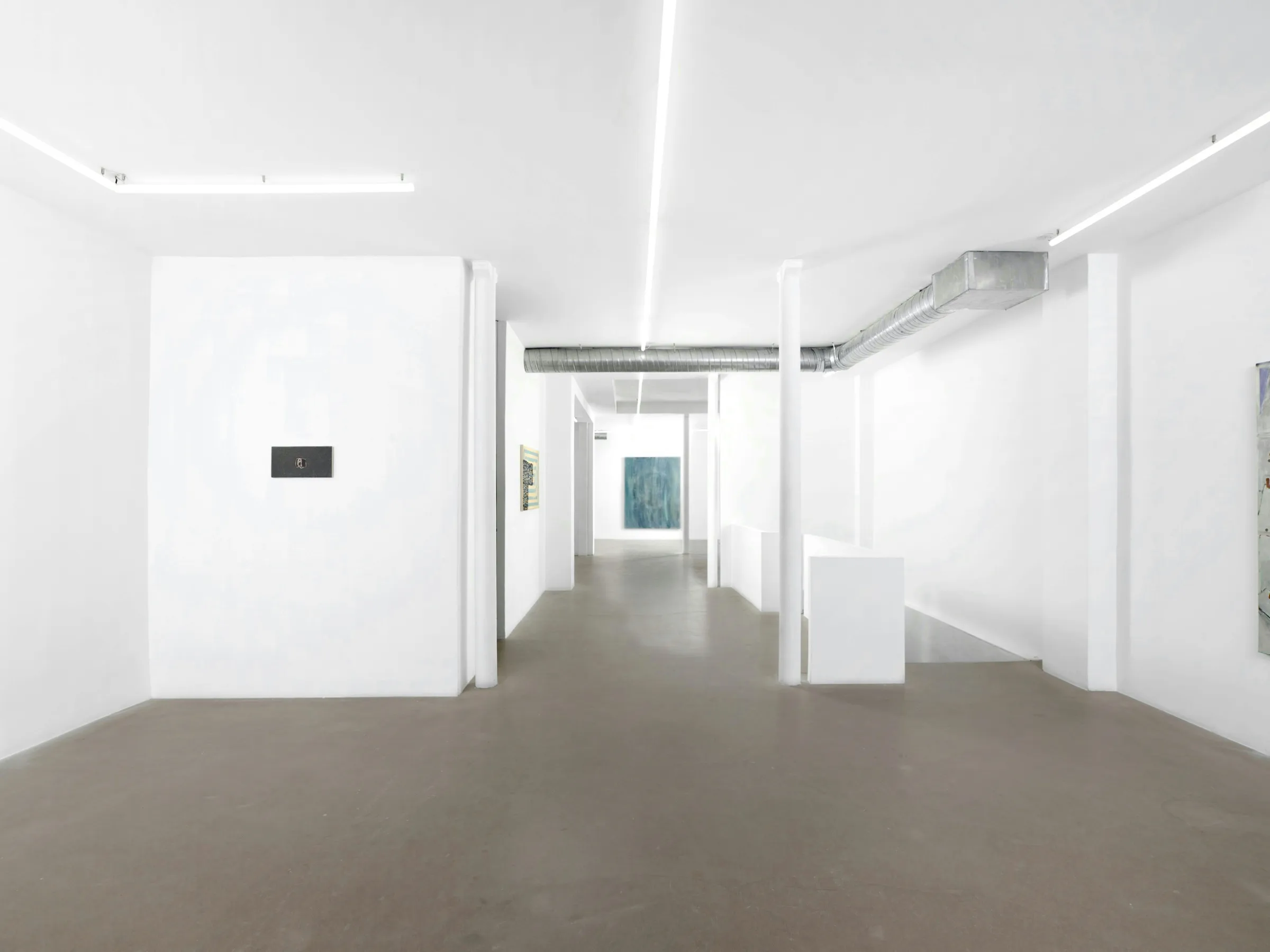
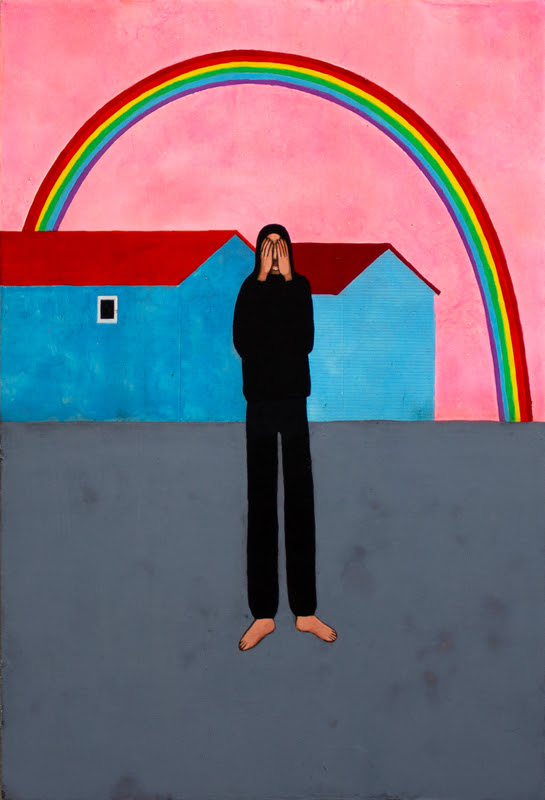
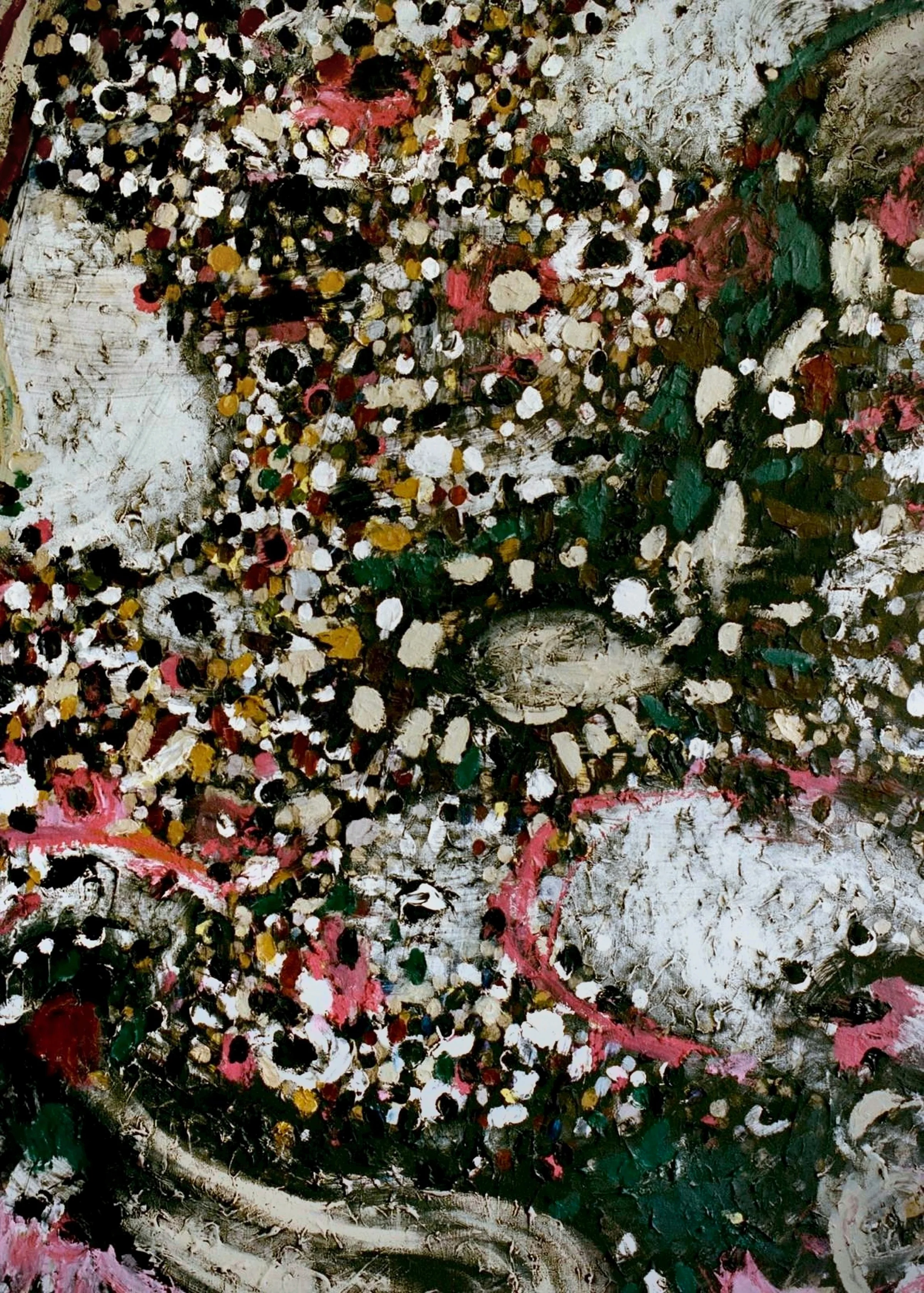
Painting’s starting point has always been the flat surface. This self-imposed restriction is part of its identity. Yet it says nothing about how painting explores and exploits the inherent potential of its own flatness. Pavlou sees in the canvas more than just a two-dimensional surface, which like the modernists she might well have made her theme, since for her it is also a two-dimensional support that can be painted as such while at the same time being apprehended as a volume in space. As her exhibition at the Galerie Balice Hertling demonstrates, her paintings can be fast or slow, heavy or light, transparent or opaque. While some were evidently painted by pouring liquid paint of varying degrees of pigmentation onto a canvas lying flat on the floor, others feature small scraps of dried paint stuck onto a monochrome surface. Pavlou’s paintings, which take their cues from Art Informel, are both tightly organized and remarkable for the transparency and expansiveness of their pictorial space. They come across as works that were created spontaneously but developed slowly. Her autonomous, small-format drawings, meanwhile, are a form of figurative, inspired visual thinking. We encounter them again, scaled up, on the canvases that fill her exhibitions. The reflective, hermetic- looking surfaces of her material pictures, by contrast, show the surrounding world of things to which the compositions allude, it being here that the artist incorporates studio waste into her opaque painting. Adrian Schiess’s painting is a good example of this practice.[18]
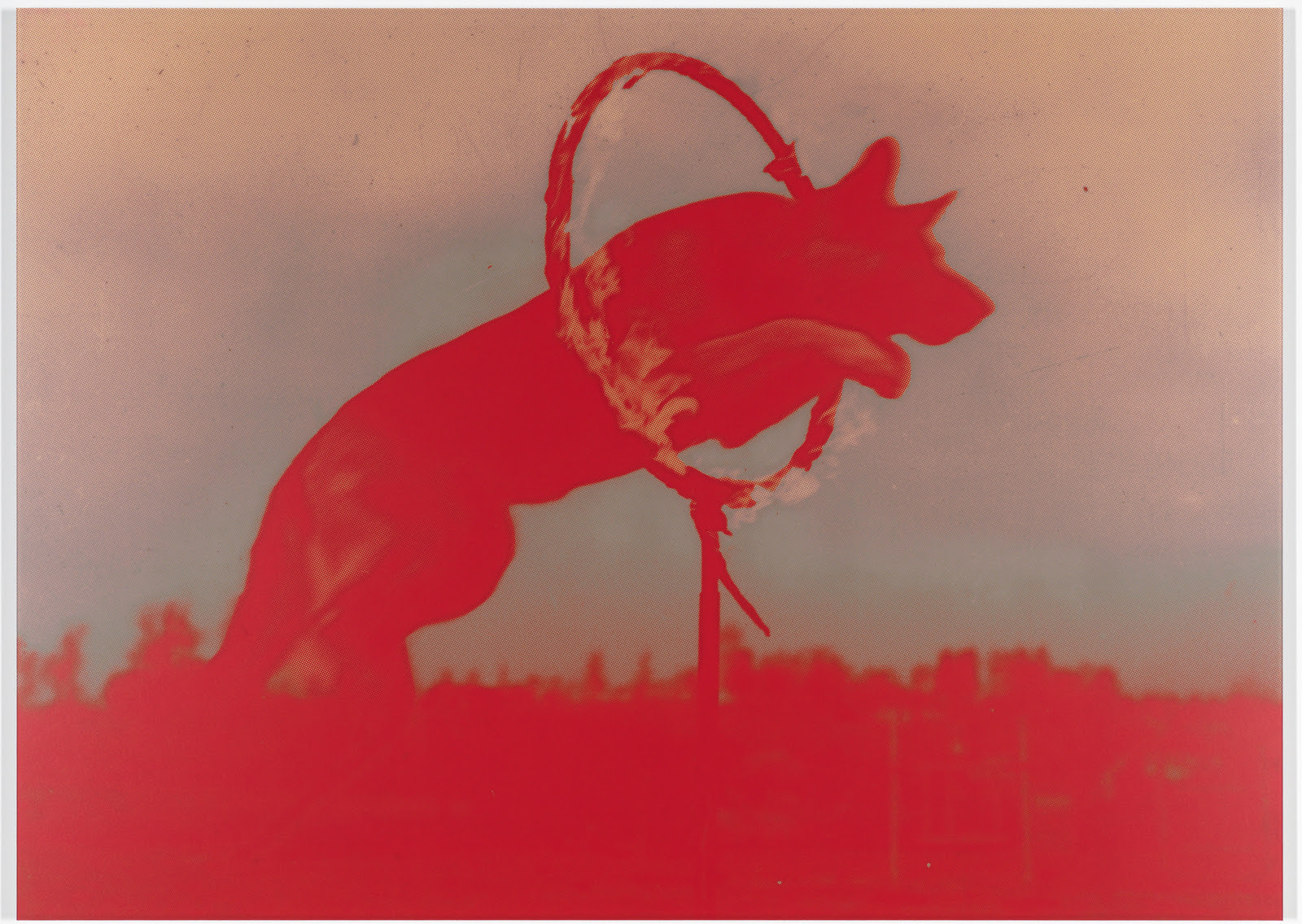
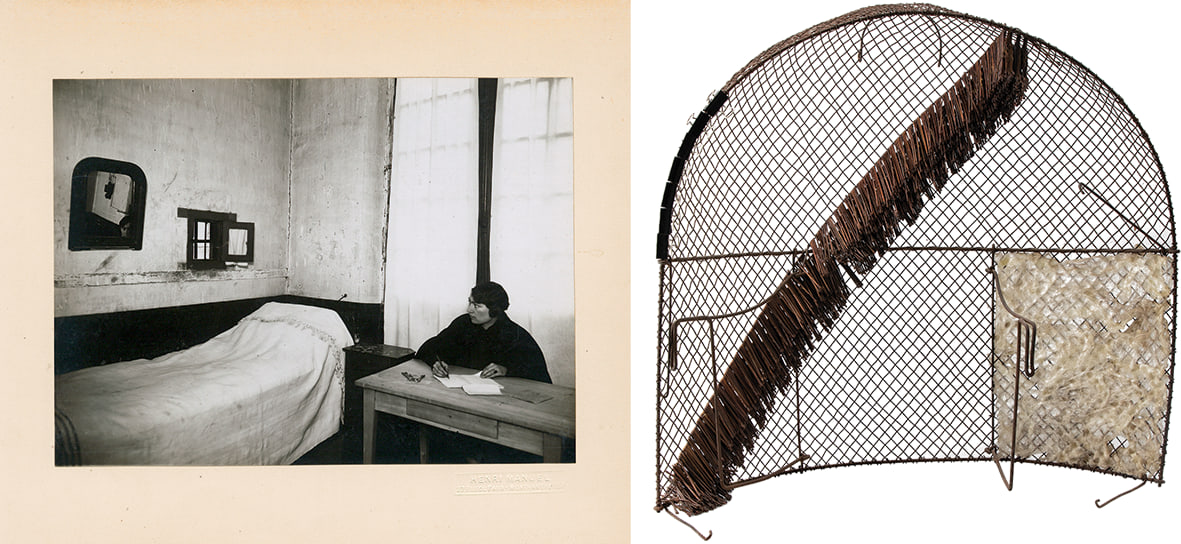
Pavlou’s photographs, meanwhile, derive from a private context. The people in these images – apart from the photographer herself – are present only at one remove, that is, in the arrangement of the interiors and, of course, in the atmosphere of the place, as conveyed by the interior fall of light captured by the camera. Any exploration of painting these days is bound to entail the question of its touchpoints with other media – in Pavlou’s case above all photography – and the wish to visualize this relationship. One way of doing this is through the exhibition as a medium in its own right. Exhibiting rebounds on Pavlou’s own studio practice and can therefore be regarded as a genuine part of her method. She experiments with the notion of artistic practice and exhibiting as a “continuum” – that being the term used by Adam Szymczyk as artistic director of documenta 14 in 2017 when called upon to explain his decision to break with the unities of time, place and action by staging the international art show in both Kassel and Athens.[19] Some years earlier, the French artist Pierre Huyghe, drawing on Robert Smithson and his “site/non-site dialectic,” had described such an endeavour as the “temporalization of the exhibition.”[20] What it ultimately entails is the practice of constantly recontextualizing what has already been created. For Pavlou, photographing, painting, drawing, reading and writing are parallel activities that may be mutually enriching but not mutually subsuming. Each of her exhibitions is therefore accompanied by a sheet of excerpts from those literary and academic source texts with which she was preoccupied in the run-up to the show. Alone the titles of the works generate an echo chamber of their own that can be understood as a commentary on the exhibition. Pavlou favours a perception of works of art that the British philosopher Richard Wollheim in 1980 described as a “seeing-in” as opposed to the representational seeing, or “seeing-as,” that in contemporary art has since become the norm. “Seeing-in,” unlike the more direct “seeing-as,” “permits unlimited, simultaneous attention to what is seen and to the features of the medium,” writes Wollheim.[21] Since it is not localized, it can focus on what Stefan Neuner calls “the surface of the work – the material aspect of the representation.”[22] It is this material aspect of art to which the artist, in her current works, directs our attention.
—Roman Kurzmeyer, Translation from German by Bronwen Saunders
Anastasia Pavlou was born in 1993 in Athens, Greece and lives and works between Basel, Switzerland and Athens, Greece. Her works have been exhibited at the Kunstmuseum, Appenzell, CH; at Harmony 100, Basel, CH; at Kunsthaus Baselland, Basel, CH; at Hot Wheels, London, UK and Athens, GR; at Kunsthalle Basel, Basel, CH; at the Benaki Museum, Athens, GR, among others.
1 - Juliane Rebentisch, Aesthetics of Installation Art, Berlin 2012, p. 222.
2 - Rosalind E. Krauss, “Notes on the Index: Part 2,” in The Originality of the Avant-Garde and other Modernist Myths, Cambridge (MA). 1985, pp. 210–221, here: pp. 210–211.
3 - Ibid., p. 218.
4 - Anastasia Pavlou, “Foreword”, in: Image Making, ed. by Julia Gardener and Anastasia Pavlou, Athens 2022, S. 11.
5 - Cf. my thoughts on the notion of painting as a discipline without limits in Boden und Wand / Wand und Fenster / Zeit, exh. cat. ed. by Roman Kurzmeyer, Helmhaus Zürich, 2009, passim.
6 - Rosalind Krauss, “A Voyage on the North Sea”: Art in the Age of the Post-Medium Condition, New York 1999, pp. 5–7.
7 - Thierry de Duve, Kant after Duchamp, Cambridge (MA) 1996, p. 205.
8 - Rosalind Krauss, see note 6, p. 53.
9 - Ibid., p. 52.
10 - Rosalind E. Krauss, “Fat Chance: Bruce Nauman,” in Lynn Cooke, Karen Kelly & Barbara Schröder (eds.), Robert Lehman Lectures on Contemporary Art, New York 2009 (= Dia Art Foundation, New York, no. 4), pp. 137–147.
11 - Rosalind E. Krauss, Under Blue Cup, Cambridge (MA)/London 2011.
12 - Dick Higgins, “Intermedia” (1965), in Horizons: The Poetics and Theory of Intermedia, Carbondale/Edwardsville 1984, pp. 18–28, here p. 23.
13 - Roberto Simanowski, “Transmedialität als Kennzeichen moderner Kunst,” in Urs Meyer, Roberto Simanowski & Christoph Zeller (eds.), Transmedialität: Zur Ästhetik paraliterarischer Verfahren, Göttingen 2006, p. 43.
14 - Ibid., p. 80.
15 - Thierry de Duve, see note 7, pp. 145 ff.
16 - Stephen Melville, “Counting/As/Painting,” in Philip Armstrong, Laura Lisbon & Stephen Melville (eds.), As Painting: Division and Displacement, exh. cat. Wexner Center for the Visual Arts, Columbus, Ohio, Cambridge (MA)/London 2001, p. 17.
17 - Rosalind Krauss, see note 6, p. 6.
18 - Cf. Roman Kurzmeyer, “Adrian Schiess. Lumpensammler der Moderne,” in Roman Kurzmeyer, Doppelte Artikulation. Schriften zur neueren Kunst II, Berlin/Boston/Zurich 2022, pp. 154–165.
19 - Adam Szymczyk, “14: Iterability and Otherness: Learning and Working from Athens,” in The documenta 14 Reader, ed. by Quinn Latimer and Adam Szymczyk, Munich/London/New York 2017, pp. 17–42. Pavlou graduated from the Athens School of Fine Arts in that same year, 2017.
20 - Marie-France Rafael, Pierre Huyghe: “on site.” Atelierbesuch, Berlin 2012, p. 25.
21 - Richard Wollheim, “Seeing-as, seeing-in, and pictorial representation,” in Richard Wollheim, Art and Its Objects, Cambridge 1980, pp. 205–226,
here p. 212.
22 - Stefan Neuner, “Die Zweiheit des Bildes. Jasper Johns, Richard Wollheim und Ludwig Wittgensteins Problem des ‘Sehen-als’,” in Philosophy, Science and the Arts. Volume 1, ed. by Richard Heinrich, Elisabeth Nemeth, Wolfram Pichler, David Wagner, Frankfurt/Lancaster/Paris/New Brunswick 2011, pp. 219-250, here p. 228.
*****
Alors que je rassemblais mes réflexions sur la peinture d’Anastasia Pavlou en préparation de cet essai, j’ai reçu une longue liste de notes et de questions du studio de l’artiste qui devait m’accompagner pendant mon écriture. En tant qu’artiste, Pavlou défend avec enthousiasme l’idée d’autonomie esthétique et d’autorialité, ce qui représente sans doute une position quelque peu controversée parmi les artistes de sa génération. Son approche de sa pratique rejoint néanmoins la pensée de la philosophe allemande Juliane Rebentisch, selon laquelle l’art, en tant qu’il est installé dans une exposition, est contextualisé par la « rhétorique de l’accrochage » de cette dernière, ce qui élargit également la portée de l’expérience esthétique qui en découle[1]. Pavlou joue complètement cette carte à l’occasion de sa première exposition personnelle à la Galerie Balice Hertling, à Paris. Avant de discuter de l’utilisation par l’artiste de l’exposition comme outil et de sa pratique picturale trans-médiale, il me faut dire un mot sur le rôle que la photographie joue dans son travail. Pavlou a publié en effet des photographies et, lors d’expositions, elle présente des tirages agrandis par ses soins aux côtés de ses peintures. Sa carrière d’artiste a d’ailleurs commencé avec le médium de la photographie, qui a eu - et a toujours - un impact déterminant sur sa pensée visuelle et sa pratique artistique. Pavlou travaille avec un petit appareil photographique analogique et son approche est celle du XXe siècle, à l’époque où la photographie était encore enseignée et largement pratiquée comme de l’artisanat. Au sujet de la peinture contemporaine, la critique d’art américaine Rosalind E. Krauss arguait en 1977 qu’il était illusoire de croire que photographie et peinture abstraite n’avaient rien en commun. Bien que l’une « dépendait entièrement du monde comme source de son imagerie » et que l’autre fuyait « ce même monde et les images qu’il pouvait produire », la photographie a toujours eu « une lien indissoluble » avec l’art abstrait[2]. Pour nous faire comprendre comment cela est possible, Krauss reprend une observation de l’écrivain français Roland Barthes, selon qui « le rapport du signifié et du signifiant est quasi-tautologique », c’est-à-dire ici que les images produites par la méthode photographique expriment simultanément la présence et l’absence, la figuration et l’abstraction. Pour aller dans le sens de Barthes, nous pouvons dire que les photographies montrent « une réalité de laquelle nous sommes exclus. »[3] Dans Image Making, un livre qui présente ses propres photographies et dessins accompagnés d’essais écrits par ses amis, Pavlou confie aux lecteurs des questions programmatiques et des pistes pour aborder son travail. Extraite de ce livre, l’affirmation suivante me servira de glossaire pour étudier sa pratique artistique : « Il s’agit de l’endroit où le visuel se produit, pas du ‘comment’ nous voyons ni d’où se trouve l’intelligible »[4]. J’y reviendrai plus tard.
I
Depuis les années 1960, les œuvres d’art contemporain ont été contemplées, absorbées et discutées d’un point de vue qui privilégie les œuvres inter- et trans-médiatiques, en particulier les installations[5]. Krauss considère le succès durable et généralisé de l’installation comme problématique, car la supposée « condition post-médium » de l’art contemporain implique en effet que notre ère soit elle-même « post-médium », ce qui n’est vrai que jusqu’à un certain point[6]. En 1993, l’historien de l’art belge Thierry De Duve a souligné la différence entre l’art post-médium et le modernisme « générique » en définissant le premier comme « un art qui a rompu ses liens avec les techniques et les traditions spécifiques de la peinture ou de la sculpture »[7]. Pour sa part, Krauss fonde sa relecture et sa critique du modernisme sur les écrits de Clement Greenberg et les œuvres de Donald Judd. Dans une allusion détournée à ce dernier, elle rappelle que tout ce qui reste de la conception moderniste de la peinture comme « surface et support dans une unité indivisible »[8] est l’objet. Son analyse du film A Voyage on the North Sea (1973/74) de Marcel Broodthaers montre que l’artiste belge ne faisait pas que répondre au postulat de la bidimensionnalité, mais qu’il parvenait en fait à le surmonter. Après tout, le film réimagine un voyage en alternant des séquences filmées de navires en mer avec des peintures de paysages marins du XIXe siècle ; ainsi l’artiste montre non seulement un objet particulier - la matérialité d’une voile - mais aussi le support sur lequel il est peint, c’est-à-dire la toile en dessous. Dans son analyse du film, Krauss parle de « l’expérience d’un passage entre plusieurs surfaces »[9]. Elle rejoint Broodthaers en appelant à une définition structurale du médium qui appréhende sa spécificité « comme différentielle, se différenciant », le véritable défi étant posé par la « complexité interne » du médium, c’est-à-dire son potentiel expressif qui n’a pas encore été réalisé. Krauss débute son essai sur la vidéo de Bruce Nauman Mapping the Studio I (Fat Chance John Cage) (2001) en affirmant que la simultanéité de divers médiums est un aspect largement accepté de l’art depuis les années 1960. Cependant, les différentes formes d’expression artistique étant devenues inter-référentielles depuis le post-minimalisme, la question du médium doit être abordée, mais sans la limiter aux genres traditionnels. Selon Krauss, l’art de l’installation est donc né de l’art conceptuel, qui s’est toujours plus intéressé au concept qu’au médium[10]. L’installation, argue-t-elle, tend majoritairement à traiter la « médialité » sous l’angle de la pluralité et à nier la spécificité de chaque médium. La critique s’intéresse donc principalement aux artistes qui non seulement produisent des installations, mais explorent également les propriétés spécifiques des supports techniques pour les ériger parfois en sujets même de leurs œuvres[11].
L’une des premières évocation du terme « inter-média » pour désigner les œuvres qui opèrent entre les médiums - comme les Combine Paintings de Robert Rauschenberg - ou entre les arts - comme le Happening d’Allan Kaprow - peut être attribuée à l’artiste Dick Higgins. En 1965, son essai Intermedia fait référence au poète anglais Samuel Taylor Coleridge qui employa le vocable dans ce sens dès 1812[12]. Cependant, une étape cruciale vers cette compréhension de l’art a été franchie par les cubistes, en particulier grâce à leur invention et leur pratique du collage au début du XXe siècle. Leur incorporation de fragments du monde des choses dans les compositions sur toile et la réfraction du plan peint ont transformé la peinture en objet peint. La peinture ne se contente alors plus de référencer des objets dans l’espace ; elle devient désormais elle-même un de ces objets. Pour mieux comprendre ce développement toujours en cours, il est important d’introduire le terme de « trans-médialité », qui exprime la « transition d’un médium d’expression à un autre »[13]. Ce qui constitue la trans-médialité, en tant que forme spécifique d’inter-médialité, est le passage d’un médium à un autre, ou d’un système sémiotique à un autre, le facteur clé n’étant pas le résultat final mais la transition elle-même, comme le prouve le sujet de l’œuvre ou sa réception. La peinture trans- médiale transcende les limites matérielles de la peinture conventionnelle et, en référençant d’autres médiums, c’est-à-dire en passant par le biais de « médiums en transition »[14] (pour emprunter l’expression de Roberto Simanowski), fait de son auto-fabrication son propre sujet.
II
La peinture d’Anastasia Pavlou s’appuie sur cette idée d’œuvre idéale indéterminée et se demande comment la peinture peut encore être pratiquée aujourd’hui, étant donnés son histoire et les changements induits par la deuxième vague du modernisme. Son travail propose une approche contemporaine de la peinture, à la fois sur le plan structurel et méthodologique. Plutôt que de mettre à jour le contenu, elle vise à réinventer le travail. Toutes les œuvres de l’artiste partagent un intérêt pour une peinture sans limites qui, depuis les années 1960, s’est manifestée sous forme de diverses permutations. Il est alors nécessaire de se demander dans quelle mesure ses œuvres sont « spécifiques » plutôt que « génériques », pour reprendre la terminologie de De Duve[15]. Stephen Melville, l’un des commissaires de l’exposition « As Painting: Division and Displacement », qui a fait passer un nouveau cap théorique à notre compréhension de la peinture contemporaine, écrit que « les possibilités internes d’un médium ne sont pas entièrement ou adéquatement pensables en dehors de toute réflexion sur les autres médiums avec lesquels il est en relation »[16]. Comme de nombreux artistes avant elle, Pavlou se demande si les œuvres inter-média peuvent également reposer sur des questions picturales, mais aussi si elles peuvent toujours être considérées comme appartenant au genre de la peinture, alors qu’elles ne répondent plus à la définition traditionnelle de cette dernière. Plusieurs conditions préalables doivent être remplies pour cette quête. Le vocable « médium », par exemple, doit être réexaminé. Ici, Krauss s’éloigne de l’acceptation moderniste du terme qui renvoie au support technique ou matériel qui n’a pas encore été transformé (la surface peinte) et insiste plutôt sur la « pluralité interne de tout médium donné », qui correspond non seulement à sa matérialité mais aussi au champ expressif et méthodologique ouvert par cette matérialité[17].
Le point de départ de la peinture a toujours été la surface plane. Cette contrainte auto-imposée fait partie de son identité. Pourtant, cela ne préjuge pas de la manière dont la peinture explore et exploite le potentiel inhérent de sa propre planéité. Pour Pavlou, la toile est plus qu’une surface bidimensionnelle, même si cette même bidimensionnalité pourrait bien être devenue son sujet d’exploration, à l’instar des modernistes. En effet, pour elle, la toile est à la fois un support bidimensionnel qui peut être peint en tant que tel et un volume dans l’espace. Comme cette exposition le démontre, ses peintures peuvent être rapides ou lentes, lourdes ou légères, transparentes ou opaques. Alors que certaines d’entre elles ont visiblement été réalisées en versant des peintures liquides aux degrés de pigmentation variables sur une toile posée à plat sur le sol, d’autres présentent de petits morceaux de peinture séchée collés sur une surface monochrome. Les peintures de Pavlou, qui s’inspirent de l’Art informel, sont à la fois rigoureusement organisées et remarquables par la transparence et l’expansivité de leur espace pictural. Elles apparaissent comme des œuvres créées spontanément mais développées lentement. Dans le même temps, ses petits dessins autonomes expriment une forme de pensée visuelle figurative. On les retrouve parfois agrandis sur les toiles qui peuplent ses expositions. Par contraste, les surfaces réfléchissantes et hermétiques de ces peintures composites montrent le monde des choses environnant auquel les compositions font allusion, notamment quand l’artiste incorpore les déchets de son atelier dans sa peinture opaque. L’oeuvre d’Adrian Schiess peut faire office de pratique voisine[18].
Les photographies de Pavlou proviennent en revanche d’un contexte privé. Les sujets dans ces images - à l’exception de la photographe elle-même - ne sont présents qu’à un degré de séparation, c’est-à-dire en relation aux espaces dans lesquels ils sont captés et, bien sûr, dans l’atmosphère du lieu telle qu’elle est capturée par la lumière saisie par l’appareil photographique. Toute exploration de la peinture implique de nos jours d’aborder la problématique de ses points de contact avec d’autres médiums - la photographie dans le cas de Pavlou - et le désir de rendre visible cette relation. Cela devient possible dans l’exposition si elle est considérée comme médium à part entière. L’acte d’exposer fait écho à la pratique d’atelier de Pavlou et peut dès lors être considéré comme faisant fondamentalement partie de sa méthode. Elle expérimente les pratiques d’atelier et d’exposition en tant que « continuum » - terme utilisé par Adam Szymczyk, le directeur artistique de la Documenta 14 en 2017, lorsqu’il a été invité à expliquer sa décision de rompre avec les unités de temps, de lieu et d’action en installant l’événement à la fois à Kassel et Athènes[19]. Quelques années plus tôt, s’inspirant de Robert Smithson et de sa « dialectique site/non-site », l’artiste français Pierre Huyghe avait défini une telle entreprise comme la « temporalisation de l’exposition »[20]. Cela implique de recontextualiser constamment ce qui a déjà été créé. Pour Pavlou, photographier, peindre, dessiner, lire et écrire sont des activités parallèles qui peuvent s’enrichir mutuellement, sans jamais s’assimiler l’une à l’autre. Chacune de ses expositions est accompagnée d’extraits de textes, sources littéraires et académiques qui l’ont interrogée préoccupée dans la préparation de l’accrochage. Pris à part, les titres des œuvres de l’artiste génèrent à eux seuls une chambre d’écho qui peut servir de commentaire sur l’exposition. Pavlou privilégie une perception des œuvres d’art que le philosophe britannique Richard Wollheim a décrite en 1980 comme un « voir-dans » par opposition au voir représentatif, ou « voir-comme », qui est plus commun dans l’art contemporain. Contrairement au « voir-comme » qui est plus direct, le « voir-dans » permet une attention illimitée et simultanée à ce qui est vu et aux caractéristiques du médium », écrit Wollheim[21]. Comme il n’est pas localisé, il peut se concentrer sur ce que Stefan Neuner appelle « la surface de l’œuvre - l’aspect matériel de la représentation »[22]. C’est sur cet aspect matériel de l’art que Pavlou attire notre attention à travers son travail actuel.
—Roman Kurzmeyer
Anastasia Pavlou est née en 1993 à Athènes, Grèce et vit et travaille entre Bâle, Suisse et Athènes, Grèce. Ses oeuvres ont été exposées au Kunstmuseum, Appenzell, CH; à Harmony 100, Bâle, CH; au Kunsthaus Baselland, Bâle, CH; à Hot Wheels, Londres, UK et Athènes, GR; au Kunsthalle Basel, Bâle, CH; au Benaki Museum, Athènes, GR, parmi d’autres.
1 - Juliane Rebentisch, Aesthetics of Installatoon Art, Berlin 2012, p. 222.
2 - Rosalind E. Krauss, “Notes on the Index: Part 2,” dans The Originality of the Avant-Garde and other Modernist Myths, Cambridge (MA), MIT Press, 1985, pp. 210–221, ici : pp. 210–211.
3 - Ibid., p. 218.
4 - “It is about where the visual takes place, not ‘how’ we see and where the capturable is.” Anastasia Pavlou, “Foreword”, in: Image Making, ed. Julia Gardener et Anastasia Pavlou, Athène, 2022 S. 11.
5 - Cf. mes réflexions sur la notoon de peinture en tant que discipline sans limites dans Boden und Wand / Wand und Fenster / Zeit, exh. cat. ed. Roman Kurzmeyer, Helmhaus Zürich/Edition Fink, 2009, passim.
6 - Rosalind Krauss, “A Voyage on the North Sea”: Art in the Age of the Post-Medium Condi&on, New York/London, Thames & Hudson, 2000, pp. 5–7.
7 - Thierry De Duve, ‘Kant (d’)après Duchamp’, dans Au nom de l’art : une archéologie de la modernité, Paris, Minuit, 1989 p.67
8 - Rosalind Krauss, cf. note 6, p. 53.
9 - Ibid., p. 52.
10 - Rosalind E. Krauss, “Fat Chance: Bruce Nauman,” dans Lynn Cooke, Karen Kelly & Barbara Schröder (eds.), Robert Lehman Lectures on Contemporary Art, New York, Dia Center for the Arts 2009 (Dia Art Foundation, New York, no. 4), pp. 137–147.
11 - Rosalind E. Krauss, Under Blue Cup, Cambridge (MA)/London, MIT Press, 2011.
12 - Dick Higgins, “Intermedia” (1965), dans Horizons: The Poetics and Theory of Intermedia, Carbondale/Edwardsville, Southern Illinois University Press, 1984, pp. 18–28, ici p. 23.
13 - Roberto Simanowski, “Transmedialität als Kennzeichen moderner Kunst,” dans Urs Meyer, Roberto Simanowski & Christoph Zeller (eds.), Transmedialität: Zur Ästhetik paraliterarischer Verfahren, Gönngen Wallstein, 2006, p. 43.
14 - Ibid., p. 80.
15 - Thierry de Duve, cf. note 7, pp. 145 ff.
16 - Stephen Melville, “Counting/As/Painting,” dans Philip Armstrong, Laura Lisbon & Stephen Melville (eds.), As Painting: Division and Displacement, exh. cat. Wexner Center for the Visual Arts, Columbus, Ohio, Cambridge (MA)/Londres, MIT Press, 2001, p. 17.
17 - Rosalind Krauss, see note 6, p. 6.
18 - Cf. Roman Kurzmeyer, “Adrian Schiess. Lumpensammler der Moderne,” in Roman Kurzmeyer, Doppelte Artikulation. SchriWen zur neueren Kunst II, Berlin/ Boston/Zurich, Voldemeer/De Gruyter, 2022, pp. 154–165.
19 - Adam Szymczyk, “14: Iterability and Otherness: Learning and Working from Athens,” in The documenta 14 Reader, ed. Quinn Latimer et Adam Szymczyk, Munich/London/New York, Prestel, 2017, pp. 17–42. Pavlou a obtenu son diplôme de l’École des beaux-arts d’Athènes la même année, en 2017.
20 - Marie-France Rafael, Pierre Huyghe: “on site.” Atelierbesuch, Berlin, Verlag der Buchh/Walther König, 2012, p. 25.