Ended Mar 26
Imi Knoebel
Once Upon a Time
Feb 8 – Mar 26, 2023
More from Imi Knoebel on Gallop
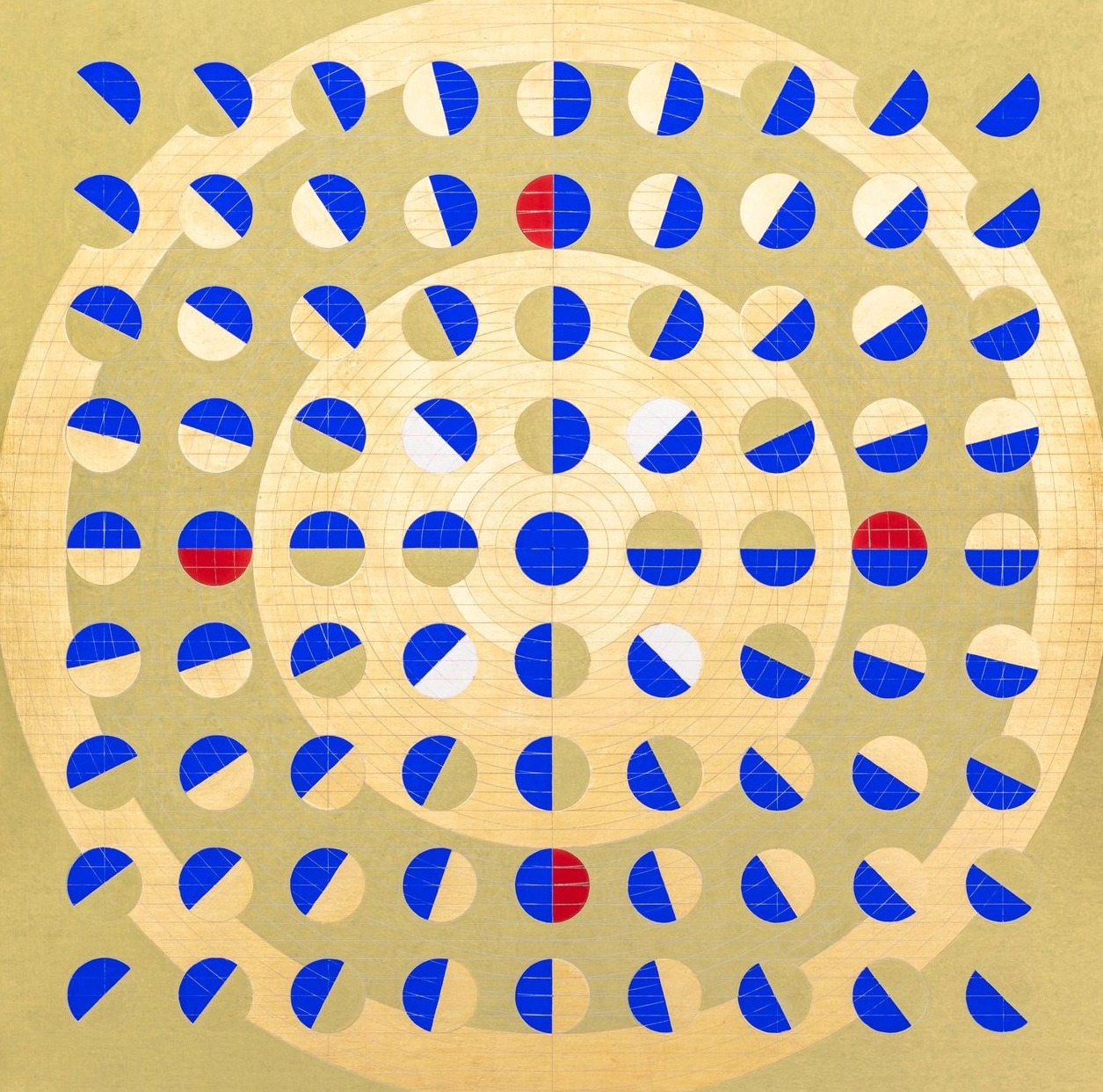
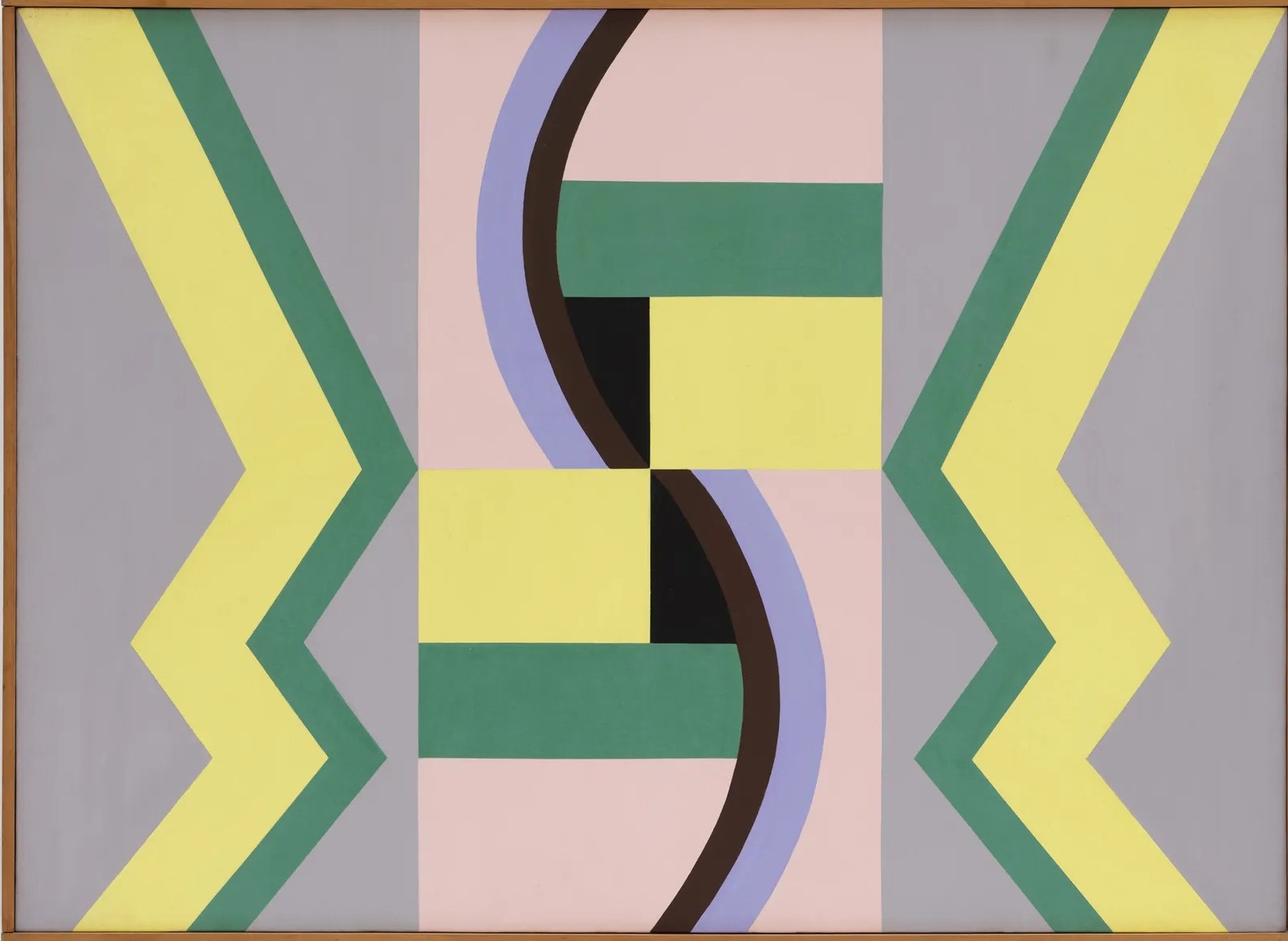
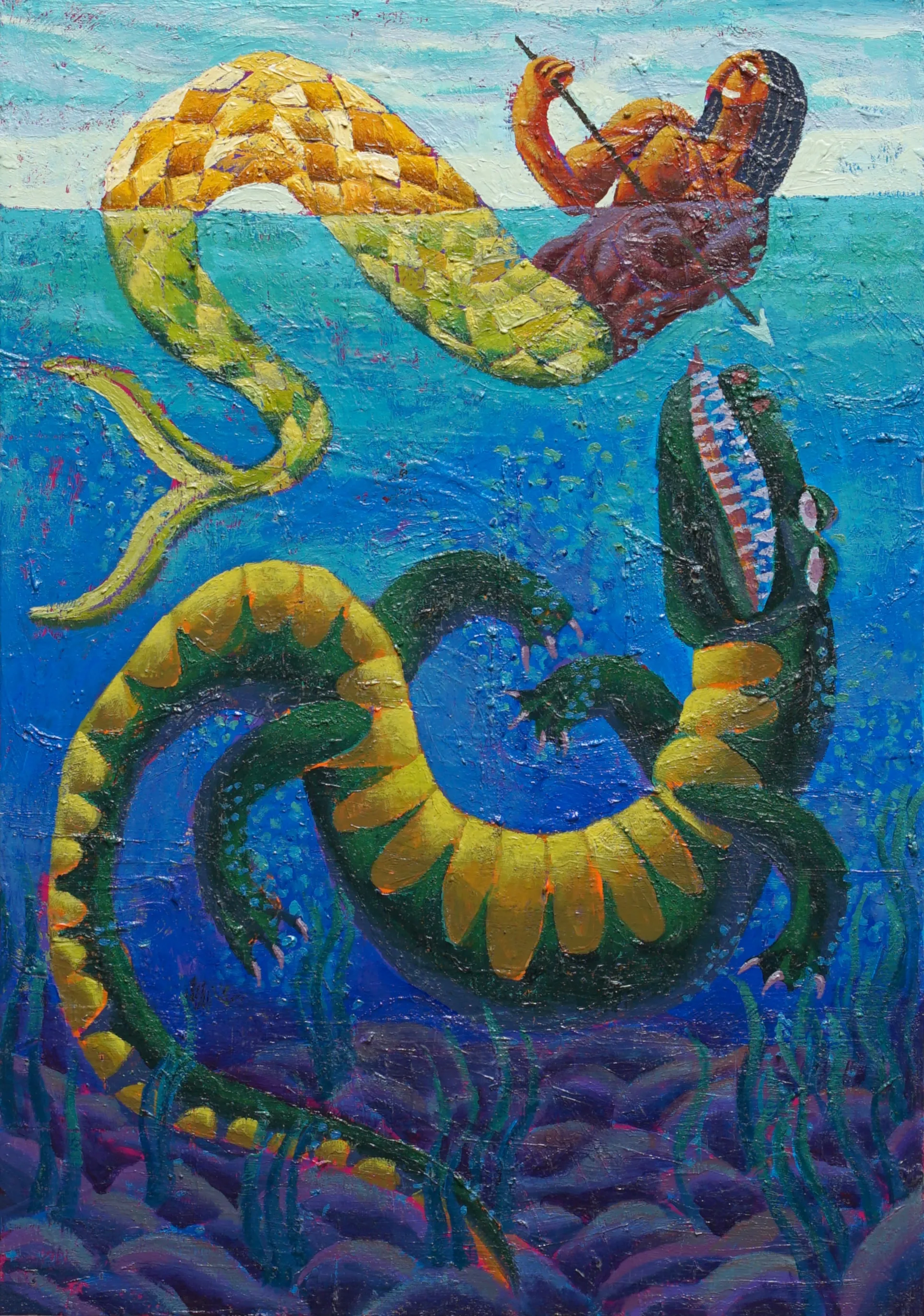
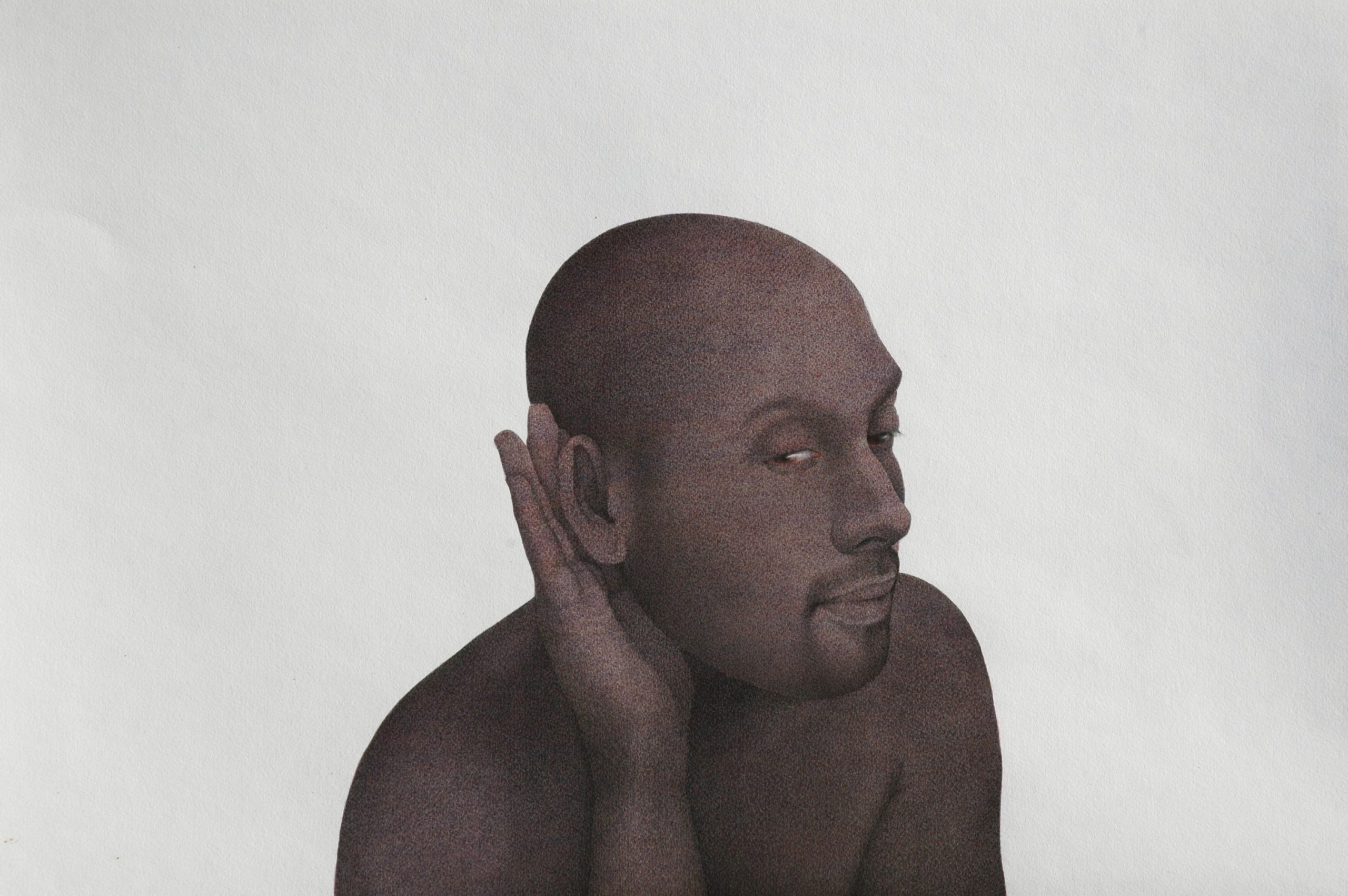
Imi Knoebel’s exhibition Once Upon a Time at White Cube Bermondsey, includes examples from three new painting series as well as a major installation exhibited for the first time. Exploring recent directions in Knoebel’s ever-evolving engagement with non-representational art, the project also contains an element of storytelling, as the title suggests – the result of Knoebel looking back at his career as an abstract artist.
At age 82, Knoebel still works daily in his Düsseldorf studio. As he has since he studied with artist and activist Joseph Beuys at the city's Kunstakademie in 1964, Knoebel develops his ideas through the hands-on process of making his wall- and floor-based works. For inspiration, he draws on art’s basic building blocks – line, form and colour – as well as the collections of cut-paper shapes, paint swatches and other materials that surround him in his workspace.
A photograph of the Venus of Hohle Fels found in a newspaper, for example, served as the catalyst for the ‘Archetyp’ paintings. This small, paleolithic mammoth-ivory representation of Venus discovered in Germany in 2008, and estimated to be 35,000 to 40,000 years old, is thought to be the world's earliest known depiction of a woman. Knoebel cut silhouettes based on the figure’s torso from aluminium panels and painted them in thick strokes of semi-translucent acrylic paint over a textured layer of primer. The artist’s choice of series title and use of highly stylised female forms recalls the concept of the ‘eternal feminine’, famously identified in Johann Wolfgang von Goethe's play Faust (1832) and celebrated in many world cultures. Knoebel’s installation – in which the paintings are hung on the gallery walls in different orientations so that they resemble, among other things, diving figures, lobster claws and giant molars – suggests a dance of life with a feminine, creative force at its centre.
The ‘Love Child’ series comprise paintings on thin sheets of aluminium, copper and other metals, which have been cut into irregular circles, rectangles, arcs and ovals. Broad brushstrokes of colour, often a singular soft pink, yellow, green or blue, cover their flat, unprimed surfaces. These works build upon Knoebel’s ‘Bastards’ series of paintings from the mid-2000s, which use similarly shaped metal supports covered in gold leaf. Knoebel wanted to revisit these eccentric shapes as paintings and thought that the English term 'love child', which has no German equivalent, possessed a poetic resonance absent from 'bastard'. The ‘Love Child’ paintings are hung on the wall with oversize nails that protrude through holes near the top edges of the works, giving them a sense of spontaneity akin to notes pinned up on a board.
The Once Upon a Time series of paintings, conceived while Knoebel was planning this exhibition, borrow traits from the 'Love Child' paintings – including their use of soft colours, visible brushwork and shaped metal supports – but also feature a variety of painted shapes on their surfaces: areas of darker or lighter colour in the form of rough rectangles, ovals and semicircles. Resembling loose, brushy interpretations of the crisp, rectilinear forms created by the Russian Suprematist painter Kazimir Malevich in the 1910s, the first entirely non-objective images produced by an artist, these new painted elements point to an important touchstone for Knoebel.
Knoebel’s new installation Unterm Strich (2019) uses a range of elements, many not visible to the viewer, to take stock of a long and varied career. Its title, which translates directly as ‘bottom line’, comes from the final accounting of profit and loss in bookkeeping but is also used in conversation to mean something like ‘all in all’. The multi-part work consists of two tall pink-painted aluminium walls pushed into a corner of the gallery to form a closed space. Set behind it are a variety of constructed and found objects, including stacks of wooden boxes reminiscent of those in the artist's legendary 1968 installation Raum 19, made in the Kunstakademie Düsseldorf studio of the same name which he shared with then-artist-partner Imi Giese. Only the tips of the trunks of three pine trees protrude above the panels, a reference to Beuys’ many works incorporating pine trees, themselves an important symbol in Germany. On the walls adjacent to Unterm Strich hang a number of Hartfaser, or hardboard panels. Cut to Knoebel’s specifications, these rectangular ‘paintings’ made of pressed wood pay homage to the warm textures of the inexpensive building material that the artist came to love as a child during the reconstruction of Germany after World War II. Knoebel says of Unterm Strich and the exhibition as a whole: ‘When I take account of all the things I’ve done, what remains at the end of the day are the Hartfaserbild and the free form’.
In presenting new investigations of the geometric and free-form shapes that have preoccupied the artist throughout his career, this exhibition both summarises a life in art and celebrates the limitless possibility of the artist’s unique engagement with abstraction.
Imi Knoebel was born in Dessau, Germany in 1940 and lives and works in Düsseldorf. He has exhibited extensively including solo exhibitions at Dia:Beacon, New York (ongoing); Museum Haus Konstrucktiv, Zürich, Switzerland (2018); Museum Haus Lange und Haus Esters, Krefeld, Germany (2015); Kunstsammlung Nordrhein-Westfalen, K21, Düsseldorf, Germany (2015); Kunstmuseum Wolfsburg, Germany (2014); Museum der bildenden Künste, Leipzig, Germany (2011); Gemeentemuseum, The Hague (2010); Neue Nationalgalerie, Berlin (2009); Deutsche Guggenheim, Berlin (2009); Hamburger Kunsthalle, Germany (2004); Kestner Gesellschaft, Hannover, Germany (2002); Institut Valencià d’Art Modern, Valencia, Spain (1997); Kunstmuseum Luzern, Switzerland (1997); Haus der Kunst, Munich, Germany (1996); and Stedelijk Museum, Amsterdam (1996).
One of the leading German artists of the post-war period, Imi Knoebel's wide-ranging and rigorous oeuvre incorporates drawing, painting, sculpture, photography, projections and installation. Born as Klaus Wolf Knoebel in Dessau in 1940 he studied under the tutelage of Joseph Beuys at the Düsseldorf Art Academy and was assigned, together with his friend Imi Giese, its legendary 'Raum 19'.
Knoebel's art is resolutely abstract, continuing Malevich's notion of “pure perception” through the exploration of form, colour and material. “When I am asked about what I think when I look at a painting” he has said, “I can only answer that I don't think at all; I look at it and can only take in the beauty, and I don't want to see it in relation to anything else. Only what I see, simply because it has its own validity.” Often producing work in groups or series, his minimal compositions rely on a pared down, strict vocabulary of forms combined with a subtle and commanding use of colour, exposing the physical possibilities inherent in the most basic of materials, such as plywood, aluminium and fibreboard. This is exemplified by the large installation Raum 19, created while Knoebel was still a student under Joseph Beuys and now part of Dia Beacon’s permanent collection. Borrowing its title from the number of his studio at the Kunstakademie, it consists of 184 wood and fibreboard forms such as frames or stretchers, cylinders, cubes and rectangles which can be stacked, layered and reconfigured in any number of different ways. Unpainted and left in their raw material state, this constellation of neutrally coloured, humble components suggests both the potential for future use as well as the reduction of art to its basic material elements.