
Exhibition · Reisig and Taylor Contemporary
Ratio
Jul 26 – Sep 6
3 images · swipe
About the show
Cesar Herrejon, Trey Ross, Saun Santipreecha, Joey Serricchio, Sue Shu, Shuai Yang
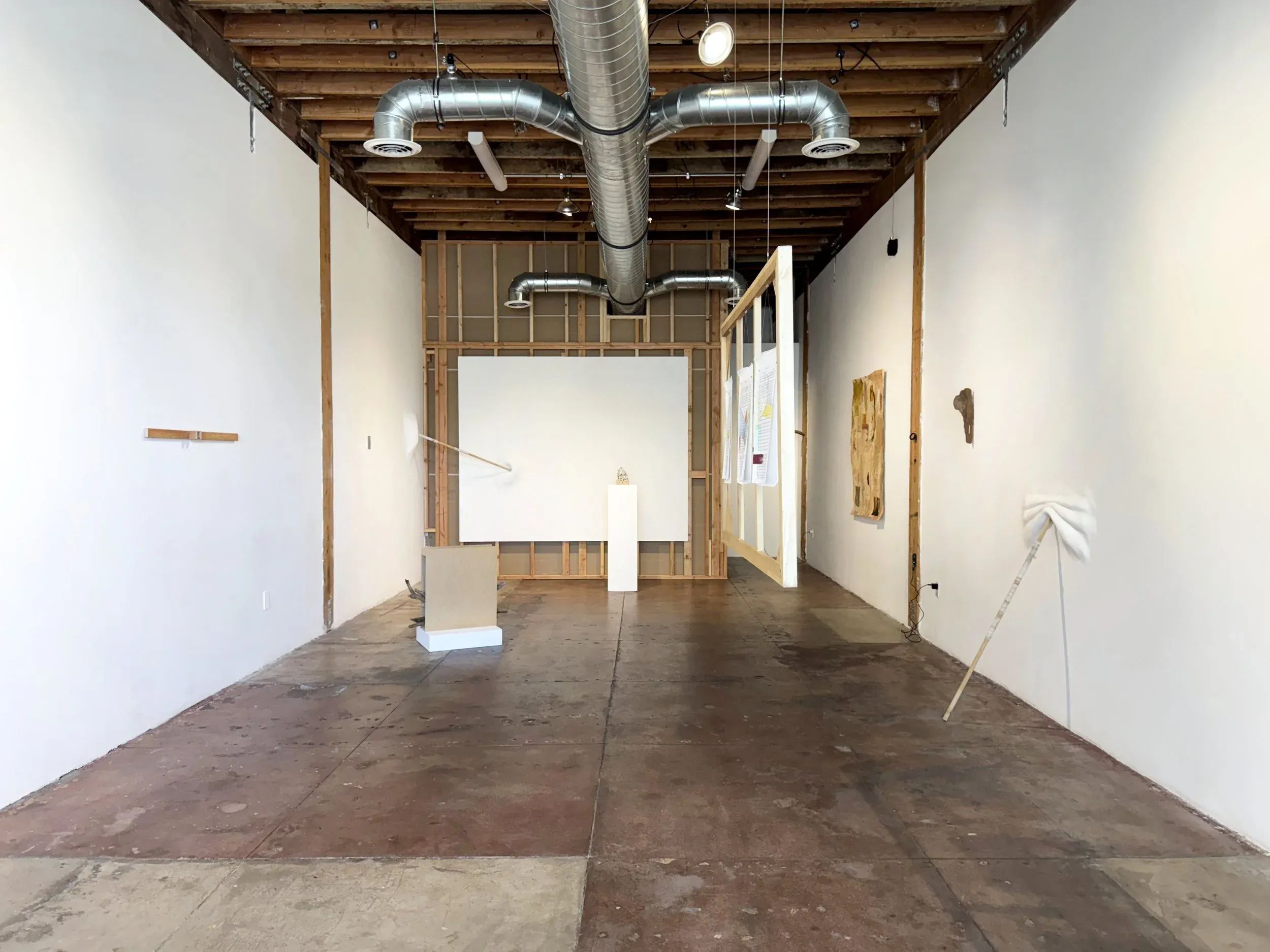
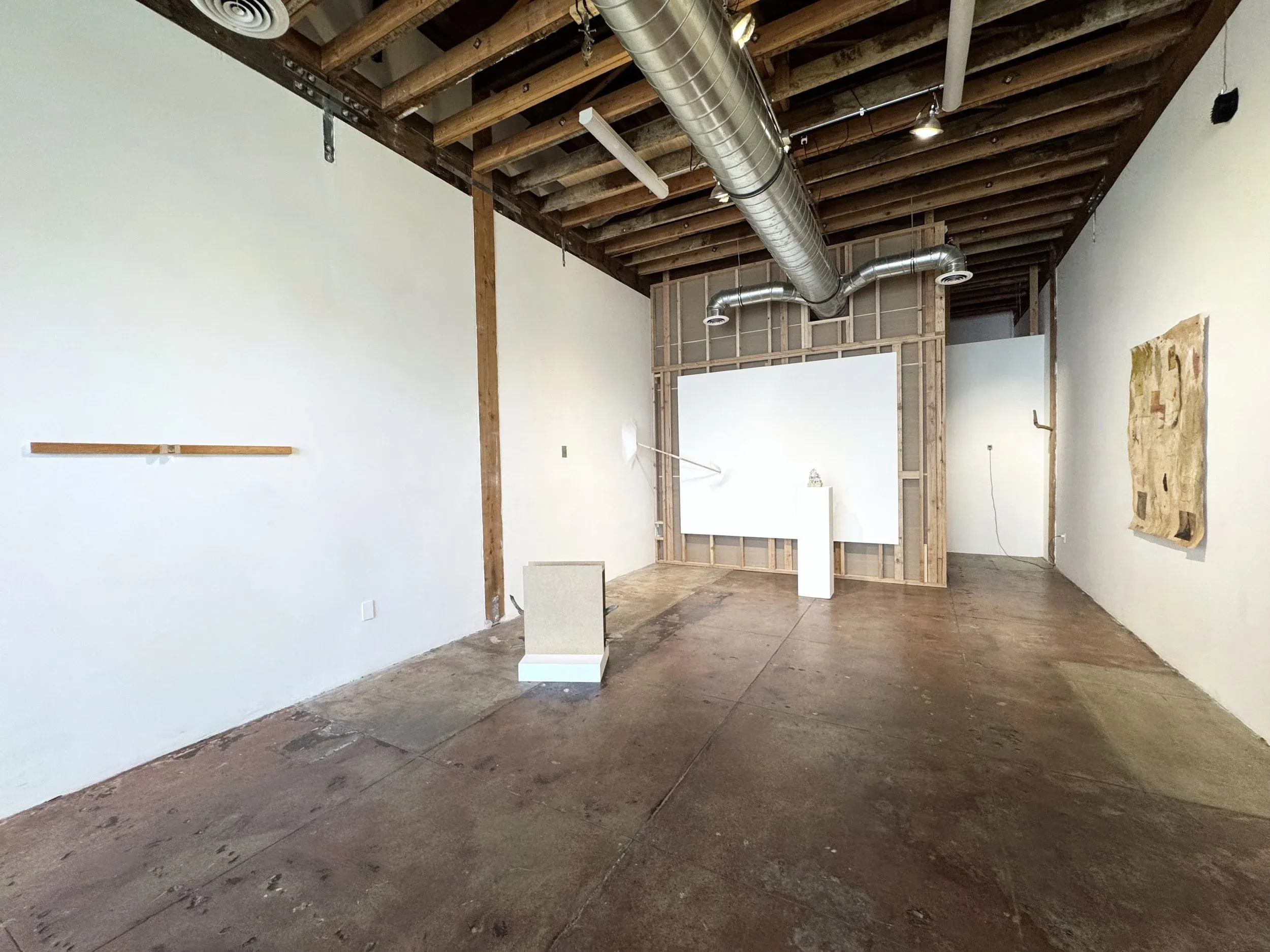
Ratio works-through recurring consequences of systems and themes of precision, scale, measurement, observation, logic, thought, truth, instrument and structure that sustain old and ongoing infrastructures of Reason and rational processes. Initially scanning local instances of planetary histories and architectures or “practices” of social control—ranging from scientific standards and colonial methods to insane asylums, prisons, and contemporary detention facilities—this context starts where and when (how) activities of recording, simulating, looking, constructing, and calibrating are materially embedded between bodies and environments. (Remember: reason itself is not a norm: it’s a view—a gaze. A relation or division: a ratio.) Intuitively, the exhibition responds to problems of ‘scale pathologies’: processes in which rationality fails, doubles, distorts, over-achieves, or violently reduces that which it relays.
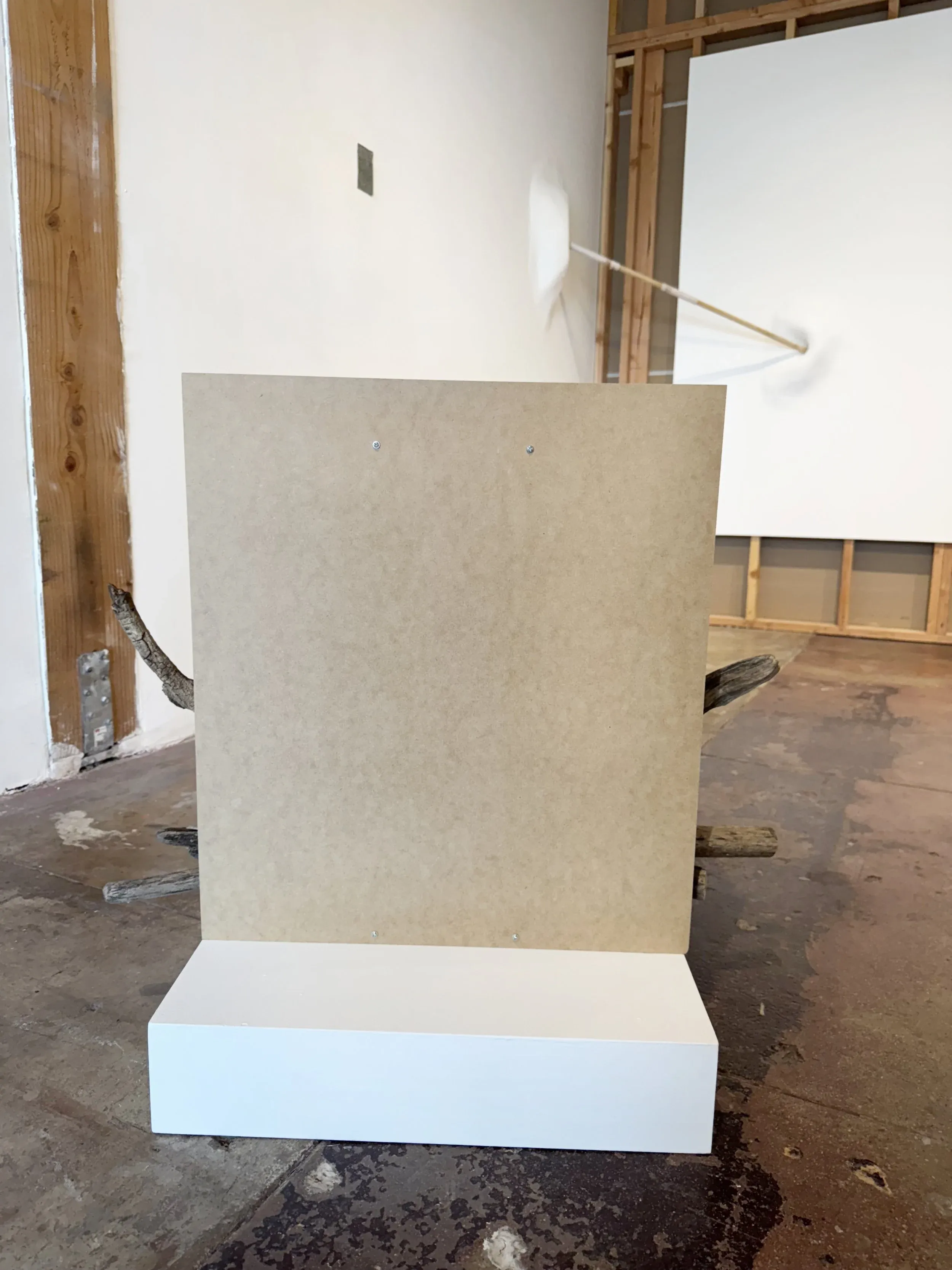
The exhibition builds with works that operate along transitional instances—between micro and macro, signal and noise, sanity and “madness,” body and machine. With surfaces, sounds, sculptures, videos, compositions, installations, documentations, ratio asks how logics (and logos) of proportion and quantification shape not only physical infrastructure but psychically—and magically—coordinates perception itself. (When does the quantitative be qualitative?) Precipitating artworks after scientific and historical references, legal documents, and acoustic tools, the exhibition arrives at the borders between disciplines and mediums as delirious rhetorical figures or ‘sayings,’ rather than formal or ‘real' boundaries. It asks what happens when measurement becomes embodied (again): when the ratio is no longer an automated structural fold between belief, desire, demand, dis/order, but a reckoning, a counting-up—an account (of itself). Ratio returns to itself as an act or action—not as an automatic formulation. At the same time, despite the vast range of non/disciplinary practices among the included artists, the exhibition maintains a focus on the literal, material context and constraints of its (institutional) place: in an art gallery. Made of wood, plaster, concrete, and people. What are the gallery’s reasons? And what is the scale of the act of producing a work of art?
As a gallery scaled to the level of work (of art) itself, and with works that tend to document themselves, the exhibition is also deconstructing the relationship between artworks, exhibitions, art documentation, art markets, and cultural labor. In part, this problem of the act of art documentation and the act of art exhibition are embedded in a residual art historical question: what is the status of the documentation? Boris Groys pries at this question in his essay Art in the Age of Biopolitics: From Artwork to Art Documentation (2008), writing: “...art documentation is neither the making present of a past art event nor the promise of a coming artwork, but rather is the only possible form of reference to an artistic activity that cannot be represented in any other way.” (A representative of representation?) But we are passed this place by now, so we must keep going: is it the only possible form, or the only necessary form? Which needs to take place: the work or its record? Addressing these questions turns on themes, on structural and symbolic tropes that take-on mythological and monumental proportions when the realistic image produced by science is mistaken for reality, and when the auratic autonomy of an artwork’s display is mistaken for a combative delirium. (When tragedy is mistaken for drama and we get ideology.) Groys also details this historical chiasmus between artistic and scientific processes:
<< Traditionally, art was divided into pure, contemplative, “fine” art and applied art—that is, design. The former was concerned not with reality but with images of reality. Applied art built and composed the things of reality themselves. In this respect, art resembles science, which can also be divided into a theoretical and an applied version. The difference between fine art and theoretical science, however, is that science has wanted to make the images of reality that it creates as transparent as possible, in order to judge reality itself on the basis of these images, whereas art, taking another path, has taken as its theme its own materiality and lack of clarity, the obscurity and, therefore, autonomy of images and the resulting inability of these images adequately to reproduce reality. >>
By raising the hallucinations of these themes to the scale of precision, by making-lucid the everydaymade, the works collectively demonstrate the contemporary transformation of cultural processes as simultaneous social/informational mediums. Like the overdetermination of a theme as an avoidable image—and not-non-reproducible—the hyperfunction, not the dysfunction, is the failure of a system because it becomes impossible to keep-pace with, like the failure of a double negation: it only reaffirms itself. (The modern asylum system is perhaps the clearest historical example of a hyperfunction of a system as its failure, but almost any industrial-complex achieves this by its excess.)
But if we can keep pace with this hyperspeed, what can be gained? This exhibition begins to unravel this question from the place of artwork, starting with the hyperactivity of this (con)text. Lately, any attempt at ‘Reality’ has been feeling unwieldy, so we want to find our grasp and keep seeking ways of catching-hold of something elsewhere and otherwise (but present and constructible: wieldy.)
After all, truth can be handled.
[Note: there are several stages and scales to the exhibition documentation, including the production of the press release and further (and preliminary) supplemental texts. This statement is provided as a functional abstract documenting the meta-discourses inhabiting the exhibition. This abstract is aimed directly at the commercial and art historical contexts in which the exhibition is already and unavoidably embedded.]
Trey Ross (b. 1999) grew up in the Silicon Valley. He currently lives and works in Los Angeles. His work engages ceramic and lithographic processes in an experimental practice that explores the natural, technological, and magical. [His recent solo exhibition Future Fossils was presented at Long Play Contemporary in Santa Monica, CA in 2024.]
Shuai Yang (b.1998, Beijing, China) is a New York-based visual artist. Practicing across sculpture, printmaking, drawing, painting, and installation, she investigates the conflicts between the lived nature and man-made laws, specifically challenging the system of measurement. Yang received her MFA in Visual Arts from Columbia University School of the Arts and a BFA in printmaking from Massachusetts College of Art. She has exhibited her work in a three-person exhibition at Eli Klein Gallery (New York) and has shown at Hudson River Museum (New York); Lenfest Center For The Arts (New York); Society of Arts and Crafts (Boston); Chambers Fine Arts (New York); Storage Gallery (New York); Latitude Gallery (New York); theBlanc (New York); DeCA Foundation (New York); Fredric Snitzer Gallery (Miami); Abigail Ogilvy (Los Angeles); Accent Sisters (Jersey City); among others. Her work is collected by the Hudson River Museum (New York) and the Artemizia Foundation (Bisbee, Arizona). Yang has received reviews and interviews from Impulse Magazine, White Hot Magazine, and VENTI Journal, and has given talks at the Pratt Institute and the Massachusetts College of Art. She is a recipient of the GlogauAIR Artist-in-Residence (Berlin, Germany), Vermont Studio Center Residency (Vermont, U.S.), Nars
Foundation International Artist Residency (New York, U.S.), Rockella Artist Residency (New York, U.S.), Morty Frank Travel Award, and Donald C. Kelley Travel Award.
Cesar Herrejon is currently an MFA candidate at the University of Colorado Boulder focusing on mixed media painting and drawing. He is from Birmingham Alabama. Growing up in the deep south, Cesar was involved in the skateboard culture around his teen years and draws influences from these childhood experiences into his work. Currently his work also explores materials foreign to academic artistic expression that parallel and enrich his cultural heritage. He often uses defamiliarized quotations from culture in his work like the surrealism that he finds deeply rooted in Mexican Culture. Art is the only thing that has interested him, and it is the only thing he has found to feel passionate about and build his identity with. His studies and research included printmaking incorporating it with painting and drawing.
Joey Serricchio is a conceptual artist and sculptor working across interdisciplinary mediums, currently living and working in Los Angeles County. Their practice explores systems and infrastructures—both tangible and intangible—operating at various scales, from the intimate to the expansive. By focusing on the banal and fleeting, the monumental and inescapable, the tender, the callous, the vast, their work invites a closer look at the systems and forces that shape our lives.
Their work is rooted in questions of permanence, safety, and inevitability, often taking the form of assembled sculptures, temporary installation, or systematic intervention. Through these mediums, the artist seeks to reveal the mundane moments that turn into emergencies.
Joey Serricchio holds a BFA in Fine Art from ArtCenter College of Design. Their work has previously been exhibited at Kylin Gallery, Tropico de Nopal Gallery, and sidebitch Project Space.
Sue Shu (she/her) was born in Shanghai, China. In 2023 Shu starts to immigrate to America. Shu lives and works in Los Angeles, CA. Shu is a process-based artist who makes multi-medium sculptures. She received her BFA in fine arts from the California Institute of the Arts in 2022 and is currently an MFA candidate at the University of Southern California. Sue Shu (she/her) was born in Shanghai, China. In 2023 Shu starts to immigrate to America. Shu lives and works in Los Angeles, CA. Shu is a process based artist who makes multi-medium sculptures. She received her BFA in fine arts from California Institute of the Arts in 2022 and is currently an MFA candidate at University of Southern California. Shu is the recipient of USC Roski Departmental Fellowship. Shu also received the Macomber Travel Award to in 2024 to travel to Jingdezhen to research and learn techniques of the ramie fabric. Shu had her first solo show When the Monster Speaks in 2024, at Attom Gallery in Lincoln Heights. Her riso zine was collected by LACA. Shu had her thesis exhibition we are becoming clouds in March 2025.
Saun Santipreecha (b. 1989, Thailand) is a composer, interdisciplinary artist, and writer who works at the intersection of image, sound, and body. He has had two solo exhibitions at Reisig and Taylor Contemporary in Los Angeles, CA (Dandelye—or, Beneath this River’s Tempo’d Time We Walk (2023), and ...These Things That Divide The World In Two... (2024)) as well as a solo exhibition in Rome, Italy (Per/formative Cities, A Nest of Triptychal Performances (2024)). He recently had his first institutional commission for a sound and sculpture installation in the
ADN East German guardhouse at the Wende Museum (2024). His work has been in various group exhibitions in South Korea, New York and Los Angeles.
His compositional work in film, television, and fashion—many of which he worked on under the pseudonym S. Peace Nistades—has been screened in over thirty film festivals worldwide including the Cannes Film Festival as well as at New York, Paris and LA Fashion Weeks. He has worked in numerous capacities in the music department for a number of composers including John Debney, Danny Elfman, The Newton Brothers and Abel Korzeniowski.
He was invited to speak at the 9th Annual Conference of the Samuel Beckett Society—Beckett and Justice—at California State University, Los Angeles on the panel Beckett, Justice, and Thai Artist Saun Santipreecha in conversation with Beckett scholars Katherine Weiss and Feargal Whelan (2024) and has also served as an Industry Mentor at Musician’s Institute (2020-2022).
He is currently based in Los Angeles and continues to work with artists and specialists across disciplines including film, fashion, and performing arts.
{Biographical information courtesy of the artists.}
About Reisig and Taylor Contemporary
Reisig and Taylor Contemporary is a gallery and test site based in Los Angeles. As a medium for (art)work, the gallery operates through an evolving program at its primary location, as well as through off-site projects and collaborative presentations that take-place locally and internationally.
More about Reisig and Taylor Contemporary →