Ended Aug 20
The Kingfisher's Wing
Jul 21 – Aug 20, 2022
Artists: Gabriella Boyd, Varda Caivano, Louise Giovanelli, Matthew Krishanu, Francesca Mollett, Mary Ramsden, Tim Stoner
Gabriella Boyd, Varda Caivano, Louise Giovanelli, Matthew Krishanu, Francesca Mollett, William Monk, Ryan Mosley, Christian Quin Newell, Mary Ramsden, Tim Stoner, Phoebe Unwin
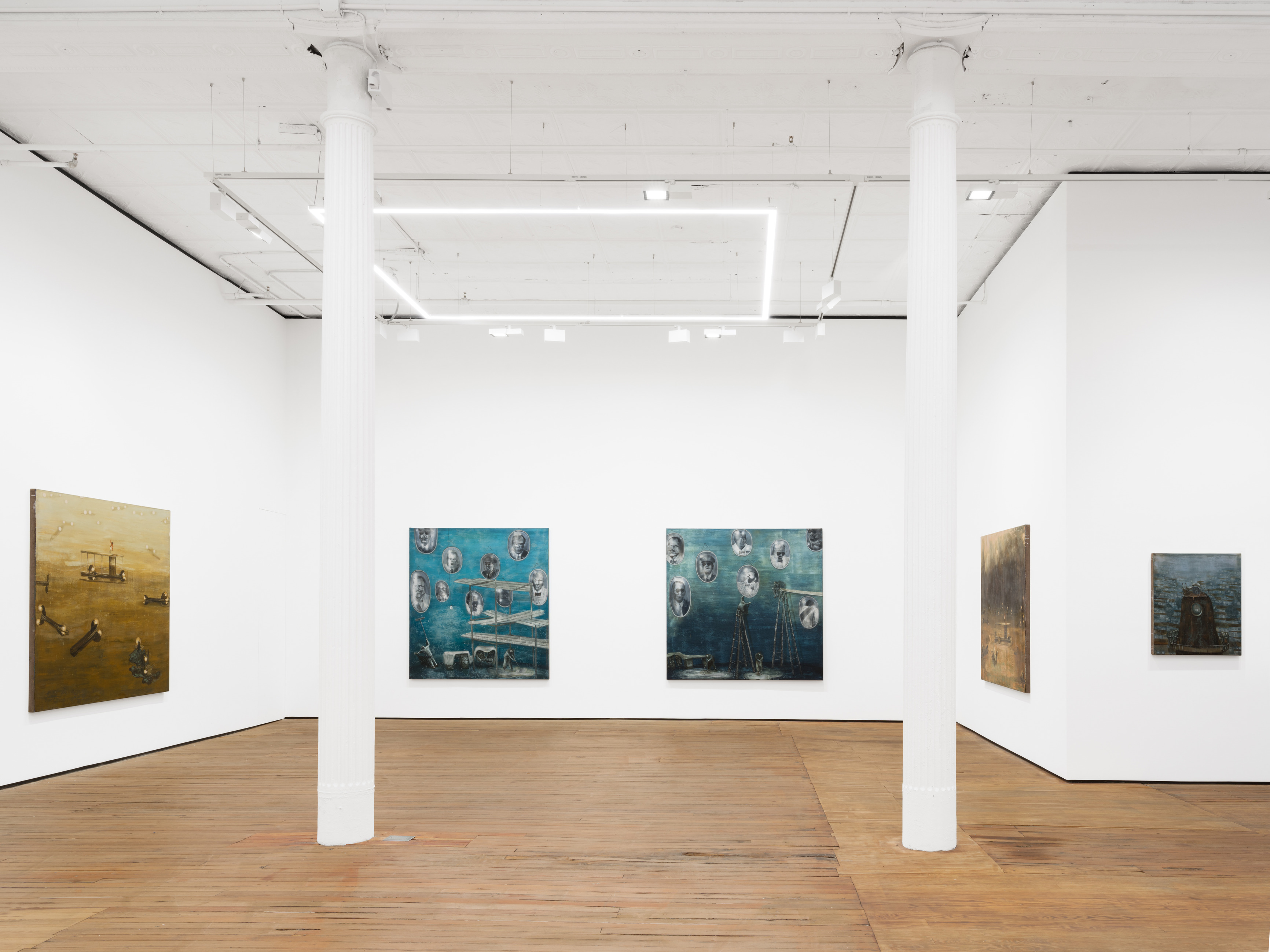
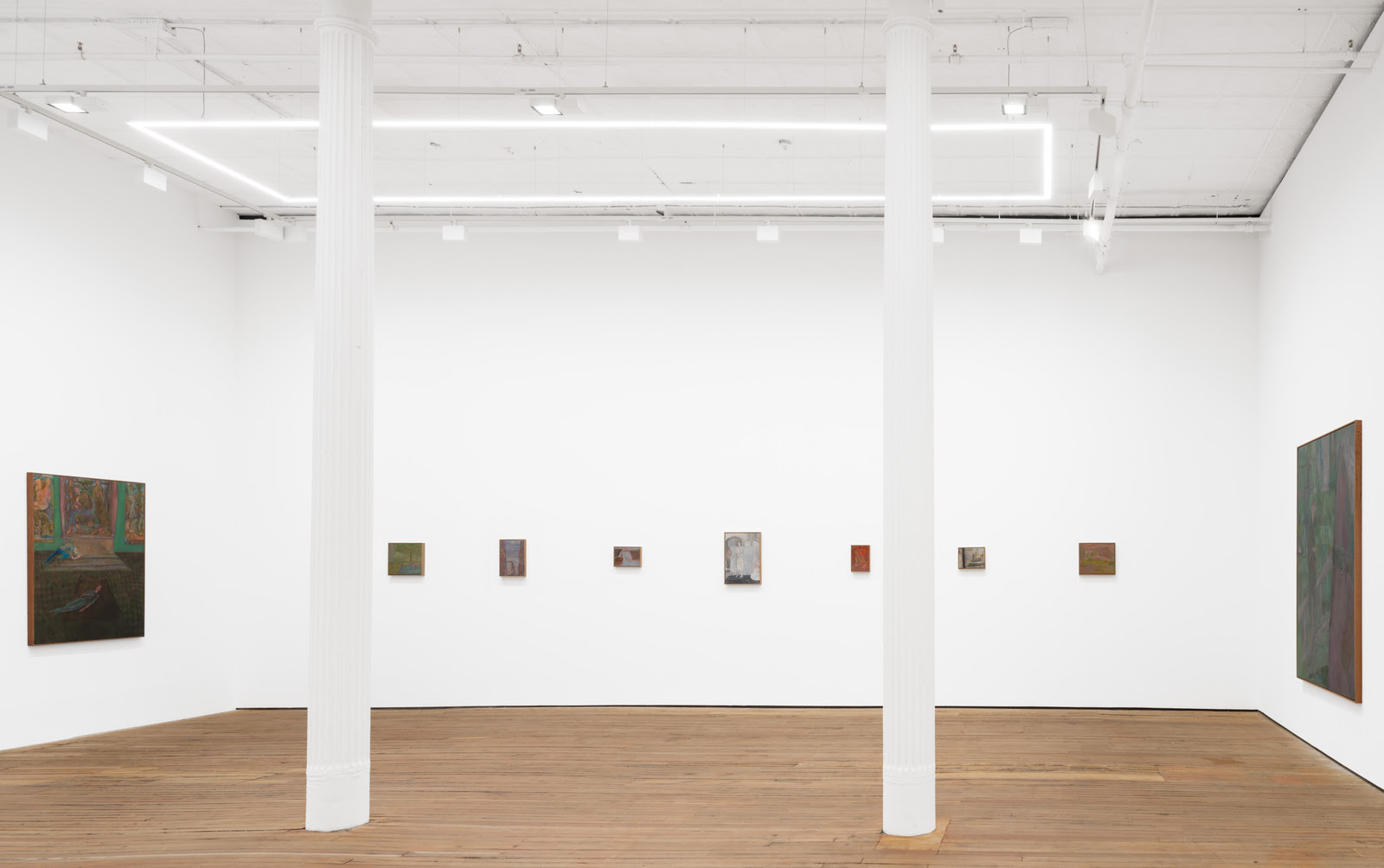
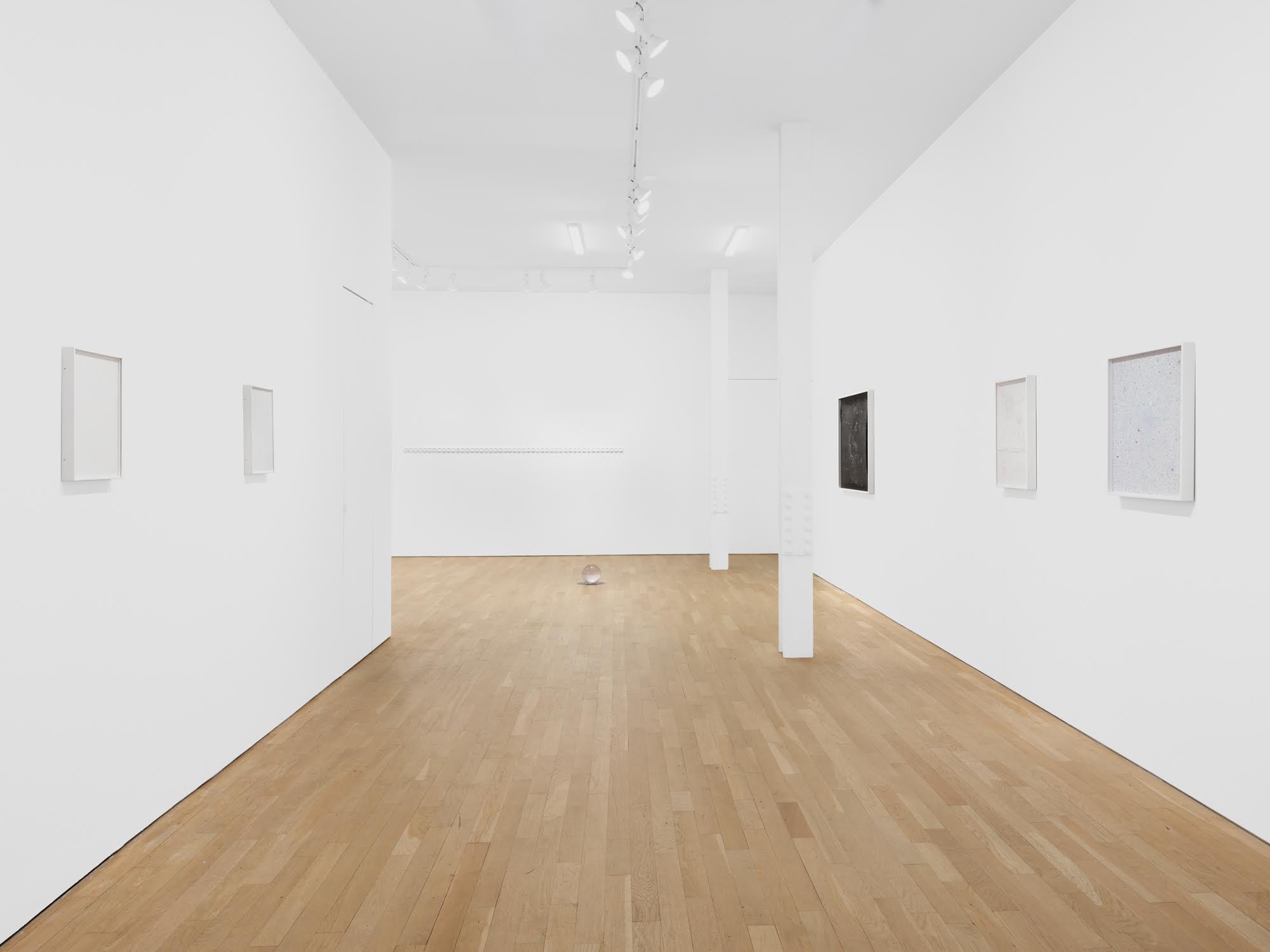
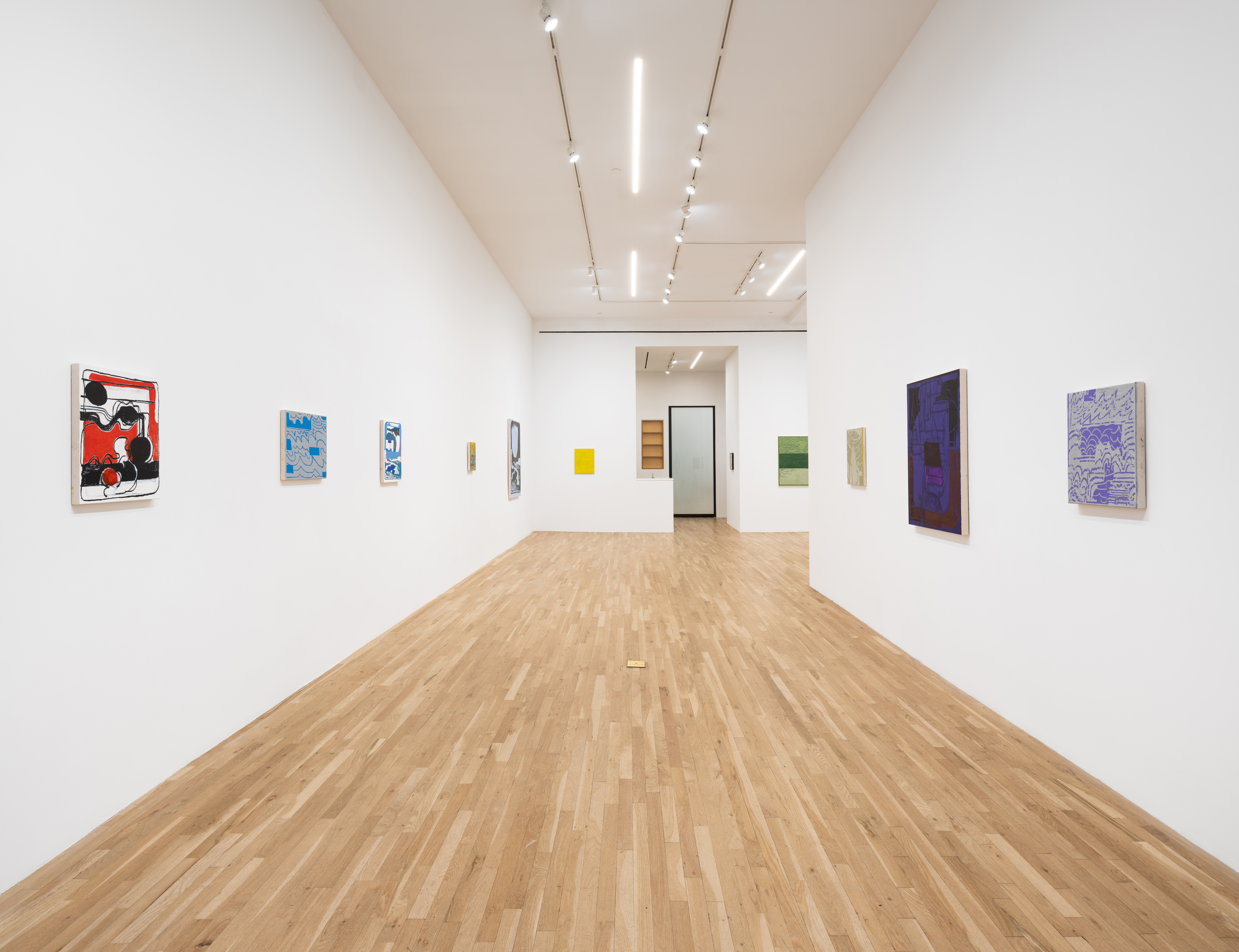
Grimm is pleased to present The Kingfisher’s Wing, a group exhibition curated by Tom Morton. The exhibition is the third collaboration between Grimm and Morton, following the exhibitions Recent British Sculpture and Recent British Painting presented by the gallery in Amsterdam in 2011 and 2012 respectively.
The Kingfisher’s Wing takes its title from a motif in TS Eliot’s Burnt Norton (1936), a poem that is concerned with how we might live in the present moment, when it is both haunted by our memories of the past, and is forever merging seamlessly into the future:
"After the kingfisher’s wing
Has answered light to light, and is silent, the light is still
at the still point of the turning world."
In the exhibition, these lines are offered as a spur to thinking about the peculiar temporality of the (still, restless) painted image, and the fugitive nature of color, form and meaning. Featuring works by eleven contemporary artists, each of whom has a strong connection to Eliot’s adopted homeland of Great Britain, The Kingfisher’s Wing sequences a set of distinct painterly propositions, attending to their echoed moods and preoccupations, and to their contrapuntal play of atmospheres, imagery and themes—the way they answer
“light to light”.
Across the show, we encounter figuration and abstraction, the domestic and the mythic, landscapes and dreamscapes, bodies in motion and at rest. Here and there, we glimpse traces of painting’s long history and perhaps auguries of its possible futures. What emerges is not an argument for the medium as a “still point” in a “turning world” (it belongs, inescapably, to time), but rather as a repository of present-ness, and as a realm in which the moment lingers and thickens.
If Eliot’s kingfisher is a herald of sorts, here in the exhibition this bird—with its flashing blue and orange feathers, its uncommon, compact charisma—functions as a totem of our encounters with painting.
Kingfishers are found almost everywhere across the Earth, aside from at the poles and in the very driest deserts. Nevertheless, to chance across one always feels something of a blessing, a modest little miracle.
Tom Morton is a curator, writer and a Contributing Editor for Frieze magazine, based in Rochester, UK. His previous exhibitions include The City & The City & The City at Frestonian Gallery, London (2020); Äppärät at The Ballroom Marfa, Texas, USA (2015); Panda Sex at State of Concept, Athens, Greece; British British Polish Polish: Art from Europe’s Edges in the Long ‘90s and Today, CSW Ujazdowski Castle, Warsaw (2013, co-curated with Marek Goździewski); and British Art Show 7: In the Days of the Comet, Hayward Gallery London and touring (2010-11, co-curated with Lisa Le Feuvre).
Gabriella Boyd (b. 1988, Glasgow, UK, lives and works in London, UK)
A kind of dream logic appears to govern Gabriella Boyd’s paintings. Suffused with an atmosphere of both eroticism and threat, a fretful urgency and an odd, immobilising calm, they feel like glimpses into a sideways dimension, where everything from social conventions to the laws of physics have been subtly redrafted by some shadowy consciousness. Time accretes on their surfaces, marked by single, swift brushstrokes and dense fogs of pigment. Space buckles and collapses in on itself, and bodies are turned inside out. Human relationships take on shapes that are at once strange and strangely familiar, while near-diagrammatic modes of depiction coexist with the airy diffusion of color, line and form.
Boyd studied at Glasgow School of Art (2007-11) and the Royal Academy Schools, London (2014-17). Recent solo exhibitions
include: Signal at Friends Indeed, San Francisco (2022); For Days at Seventeen, London (2020); and Help Yourself at Blain Southern, London (2018, curated by Tom Morton). Her work was included in the major survey exhibition Mixing it Up: Painting Today at the Hayward Gallery, London (2021, curated by Ralph Rugoff). GRIMM will present a solo exhibition of Boyd’s newest paintings in New York, opening November 2022.
Varda Caivano (b. 1971, Buenos Aires, AR, lives and works in London, UK and Madrid, ES)
Varda Caivano has said that her subtle, amorphous, mutedly chromatic abstract paintings ‘are built on layers, they are thoughts or monologues, moments that grow over time’.
Here, the ungovernable fluidity of perception is essayed in the fluid stuff of paint, and to look at these canvases is to see an intuitive, playful, yet determinedly rigorous and self-questioning mind at work. If abstraction has historically often dealt in (somewhat brittle) heroism, Caivano instead embraces vulnerability and doubt, exhibiting a Beckettian resolve to ‘fail better’ at the impossible task of reconciling cognition and its expression, and in the process creating works in which the limit conditions of painting are tested and retested.
Caivano studied at Goldsmiths College (2000-1) and the Royal College of Art (2002-4), London. Recent solo exhibitions of her work have been staged at Lulu, Mexico City (2022), Mendes Wood, São Paolo, and Tomio Koyama Gallery, Tokyo (2021). Her work has featured in numerous major group exhibitions, including: the Hayward Gallery Touring show Slow Painting (2019, curated by Martin Herbert); The Encyclopedic Palace, 55th Venice Biennale (2015, curated by Massimiliano Gioni); and British Art Show 7: In the Days of the Comet at the Hayward Gallery, London and touring (2010-11, curated by Tom Morton and Lisa Le Feuvre).
Louise Giovanelli (b. 1993, London, UK, lives and works in Manchester, UK)
Much concerned with stillness and anticipation – what is, isn’t, and might soon be seen – Louise Giovanelli’s work turns on charged atmospheres and suggestive details, in which light, having been transmuted into paint, attains a dense, glinting physicality.
Drawing her imagery from sources as diverse as Renaissance art, vintage film stills, and contemporary popular entertainers, her intensely worked canvases often focus on the staging of rituals and performances (religious, theatrical, social), while their jewelled palette and shallow pictorial space compels us to linger on their surfaces, slowing down the act of looking to something close to a meditative encounter, and underlining painting’s status as a system of representation, in which meaning is created in the meeting of medium and support.
Giovanelli studied at the Städelschule, Frankfurt (2018–20) under the tutelage of Amy Sillman, having received her BA from the Manchester School of Art, UK, in 2015. Her recent solo exhibitions include: As If, Almost at White Cube Bermondsey, London (2022); Auto-da-fé at Grimm New York, NY (2021); A Priori at Grimm, Amsterdam (2021); in medias res at Workplace, London (2020); Aerial Silk at Grimm New York, NY (2020); and Louise Giovanelli at Manchester Art Gallery (2019). In 2021, her work was included in Mixing it Up: Painting Today at the Hayward Gallery, London.
Matthew Krishanu (b. 1980, Bradford, UK, lives and works in London, UK)
A cross appears in each of the three paintings shown by Matthew Krishanu in The Kingfisher’s Wing, crowning Christian chapels that rise among the verdant greenery of rural Bangladesh, their stiff right angles contrasting with the organic curvature of the surrounding trees, and the liquid formlessness of a still blue lake. While there is an autobiographical element to these canvases (the son of a white British priest father and an Indian theologian mother, the artist lived in Bangladesh between the ages of one and twelve), they also speak to broader histories of political and spiritual colonialism. Looking at these images, we might wonder where the numinous truly resides: in the symbol of the cross, or in the unruly landscape it seeks to sequence and dominate?
Krishanu received his MA Fine Art from Central Saint Martins, London, in 2009. Recent solo exhibitions of his work have been staged at LGDR, New York (2002), Tanya Leighton, Berlin (2021), Niru Ratnam Gallery, London (2020), and Ikon Gallery, Birmingham UK (2019). Recent group exhibitions include Prophecy, at the Mead Gallery, Coventry, UK (2022) and Mixing it Up: Painting Today at the Hayward Gallery, London (2021).
Francesca Mollett (b. 1991, Bristol, UK, lives and works in London, UK)
Teemingly organic, Francesca Mollett’s recent paintings take as their point of departure a luminescent moss colloquially known as Goblin’s Gold (Phosphorous Grip, all works 2022), and the iridescent wings of moths (Alliance and Scattered Rest), nocturnal insects that navigate by lunar light, and who often mistake naked flames and electric bulbs for the glow of the moon. By honing in on this flora and fauna – these radiant beings that occupy nature’s dark, damp spaces – Mollett creates abstracted compositions in which tangible form fractures, and her paint takes on an agitated mobility, suggesting living, ever-growing matter, saturated with light.
Mollett received her MA in Painting from the Royal College of Art, London, in 2020, having previously studied at the Royal Drawing School and Wimbledon College of Art, London. She has been the subject of solo exhibitions at Taymour Grahne Projects, London (2022), and Baert Gallery, Los Angeles (2022), and her work has featured in numerous group shows including: Down in Albion at L.U.P.O. Lorenzelli Projects, Milan, Italy (2022); Le coeur encore at The approach, London (2021) and London Grads Now at the Saatchi Gallery, London (2020).
William Monk (b. 1977, Kingston upon Thames, UK, lives and works in New York, NY, US)
Known for his visionary scenographic canvases, in which we find ourselves stranded in what might be alien landscapes, or phantasmagorical internal vistas, William Monk locates a kind of 21st-century sublime in fields of pulsing pigment and cryptic forms that snag on our deep cultural subconsciousness. In his painting Untitled (2022), we are presented with a group of vertical columns that resemble Neolithic standing stones, set in a desolate terrain in which a primordial black ooze (oil formed from long-dead organic matter?) appears to bubble from the ground. Are these columns the ruins of an ancient civilization lost to an unknown apocalypse, and if so, what warning do they give to our own, fragile world?
Monk studied at Kingston University, London (1997-2000) and De Ateliers, Amsterdam (2004-6). He was the recipient of the Netherlands’ Koninklijke Prijs voor Vrije Schilderkunst (Royal Prize for Painting) in 2005 and Britain’s Jerwood Contemporary Painters award in 2009. Monk’s work was recently the subject of a three-part solo exhibition across Grimm, NY and Pace Gallery, NY titled The Ferryman (2022). He has previously shown in spaces including: Pace Gallery, Hong Kong and London; Grimm, Amsterdam; James Cohan Gallery, NY; Kohn Gallery, Los Angeles; Azko Nobel Art Foundation, Amsterdam; Fries Museum, Leeuwarden, NL; Kunstmuseum, The Hague, NL; and The Cobra Museum, Amstelveen, NL.
Ryan Mosley (b. 1980, Chesterfield, UK, lives and works in Sheffield, UK)
Ryan Mosley’s paintings plunge us into the narrative deep end, immersing us in worlds where time is out of joint, and a rag-bag cast of characters pursue quixotic ends. In his Athenians (2022), two women swim in the waters off a Grecian quayside, observed by a pair of lanky, impassive men, who stand on the decks of oar-less, unmoored boats, which might at any moment drift off, pitching their passengers into the lapping waves. We might wonder what obscure protocol is being followed, here, and whether the apparent hierarchy between the figures is about to be upended.
Bonne Anniversarie (2022) is perhaps even more of a puzzle. A small crowd of zoo visitors (one with a Gustave Courbet-like beard, another with an image of a birthday cake on his jacket’s back) stand inside a cheetah’s cage, while a keeper whispers in the beast’s ear. What is he whispering? The silent, static image cannot tell us, and therein lies not a limitation, but a universe of possibilities.
Mosley completed his MA in Painting at the Royal College of Art, London, in 2007. His recent solo exhibitions include Upon Peaceable Land at Galerie Eigen + Art, Leipzig, Germany (2022), Three Corner Field at Josh Lilley, London (2021), and Verses in Time at Larsen Warner, Stockholm. His work has featured in numerous group shows, notably the major survey Radical Figures: Painting in the New Millennium at the Whitechapel Gallery, London (2020) and One Day, Something Happens: Paintings of People, Hayward Gallery Touring (2015-16, curated by Jennifer Higgie).
Christian Quin Newell (b. 1991, Latisana, IT, lives and works in London, UK and New York, NY, US)
Perhaps best understood as a set of way markers on a journey of personal development, the work of Christian Quin Newell braids
his studies of mysticism, psychology and art’s long history into an arresting, otherworldly gestalt. In an echo of early 20th-century Pittura Metafisica (Metaphysical Painting), the artist – who is of mixed Jamaican and Italian heritage – presents us with imagined worlds in which enigmatic objects proliferate, Earthly principles of time and space do not quite obtain, and hybrid figures from what might be a mythic past, or an imagined future, struggle towards wisdom, or else lose themselves in a terminally fractured reality.
Educated at Camberwell College of Art, London, Newell’s recent solo exhibitions include Siena at Various Small Fires, Los Angeles (2022) and Earth Altar at Public Gallery, London (2021). His work featured in the group shows Likkle Things at the New York Studio School (2021, curated by Curtis Talwst Santiago) and 100 Drawings from Now at The Drawing Center, New York (2020), and in 2021 he was an artist in residence at the WT Foundation, Kyiv, Ukraine.
Mary Ramsden (b. 1984, North Yorkshire, UK, lives and works
in London and North Yorkshire, UK)
Mary Ramsden’s paintings track a ceaseless, ever-supple reckoning with her medium: its materiality and histories, its complex deals with figuration and abstraction, the points where it yields, the points where it resists. Drawing on ways of seeing that are both long- established and acutely contemporary (not least those inaugurated by new technology), there is an archaeological quality to the way she lays down, and excavates, strata of marks and pigments, buried deposits of space and time. With their audacious play of textures, surface and scale, these are paintings that insist on their own physicality, the impossibility of their reduction to mere image. Rather, like us, they belong to the world of objects, a realm of densities and depths. Here in The Kingfisher’s Wing, the artist’s focus turns to the domestic interior, with a triptych that echoes the work of Henri Matisse and Édouard Vuillard, while imbuing the everyday world of the home with an ambiguous psychological charge that is all her own.
A graduate of the Royal Academy Schools, London (2010-13), Ramsden’s recent solo exhibitions include For newness of the
night - at Wentrup, Berlin (2022) and The bag of stars at Pilar Corrias, London (2022). In 2016, the Aspen Art Museum, Colorado, presented a key solo show of her work, and her paintings have been included in numerous group exhibitions, notably 60 Years at Tate Britain, London (2019); The Drawing Biennial 2019 at The Drawing Room, London; Art Now: Vanilla and Concrete at Tate Britain, London (2016); and Panda Sex at State of Concept, Athens, Greece (2014, curated by Tom Morton).
Tim Stoner (b. 1970, London, UK, lives and works in London, UK)
Often painted over a period of several years, Tim Stoner’s monumental landscape works are as much concerned with the passage of time as they are with topographical and pictorial space. In the two large paintings featured in The Kingfisher’s Wing, the artist presents us with a pair of heat-baked vistas of Ronda, Spain, a region that was his home for two decades prior to the UK’s exit from the European Union. What accretes on the surface of these works – with their almost geological layering of pigment, their aggressive moments of erasure – is a history of looking, thinking, and feeling, in which paint summons the flux both of a physical terrain, and of Stoner’s own intense perceptions of it.
Stoner completed his postgraduate education at the Royal College of Art, London (1992-4), and the Rijksakademie, Amsterdam (1997-8), and was the recipient of the ICA London’s Becks Futures Prize in 2001. Recent solo shows of his work have been staged at Vardaxoglou, London (2022 and 2021), and Stuart Shave/ Modern Art, London (2020). Recent group exhibitions include Slow Painting, Hayward Gallery Touring (2019-20); Telescope at Hastings Contemporary, Hastings UK (2019, curated by Nigel Cooke); and The London Open, Whitechapel Gallery, London (2015).
Phoebe Unwin (b. 1979, Cambridge, UK, lives and works in London, UK)
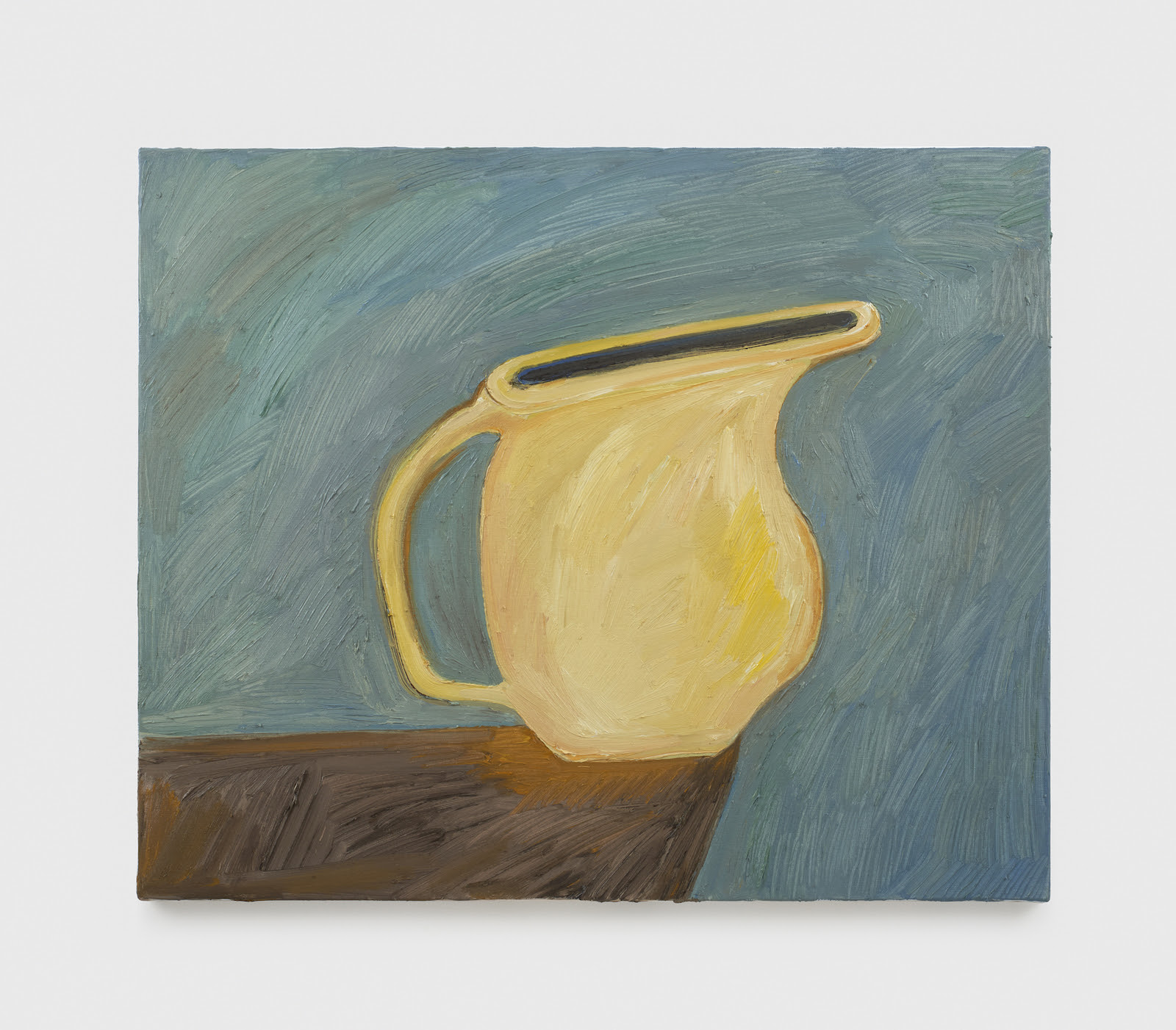
For Phoebe Unwin, painting is a way of articulating things – impressions and moods, experiences and thoughts – for which we do not have words. While her intimate, acutely sensitive canvases characteristically focus on the familiar stuff of daily life – a sun-hazed beach, a lounging figure, an energetic dog – her paint is never wholly subordinated to the business of representation, but rather insists on its own quiddity. Each of her works presents a particular formal challenge, and perhaps this is why she often shifts painterly register, sometimes within a single image. Nevertheless, what abides is a sense of her tuning into a fleeting signal on the edge of perception, or understanding, and amplifying it until it feels deeply present, and as undeniable as any of the named things that make up our world.
Unwin studied at the University of Newcastle, UK (1998-2002) and the Slade School of Fine Art, London (2003-5), and was shortlisted for Whitechapel Gallery’s Max Mara Art Prize for Women in 2015. Her recent solo exhibitions include Osmosis at Amanda Wilkinson Gallery, London (2020); Iris, Towner Art Gallery, Eastbourne, UK (2019); and Field, Collezione Maramotti, Reggio Emilia, Italy (2018). Her institutional group shows include Walk Through British Art, Tate Britain, London (2016); One Day, Something Happens: Paintings of People, Hayward Gallery Touring (2015-16); British British Polish Polish: Art from Europe’s Edges in the Long ‘90s and Today, CSW Ujazdowski Castle, Warsaw (2013, curated by Tom Morton and Marek Goździewski); and British Art Show 7: In the Days of the Comet at the Hayward Gallery, London and touring (2010-11).