
Ended
The Breaking Room
Jun 8 – Jul 8, 2023
Nan Collymore
Julia Jalowiec
Pamela Sneed
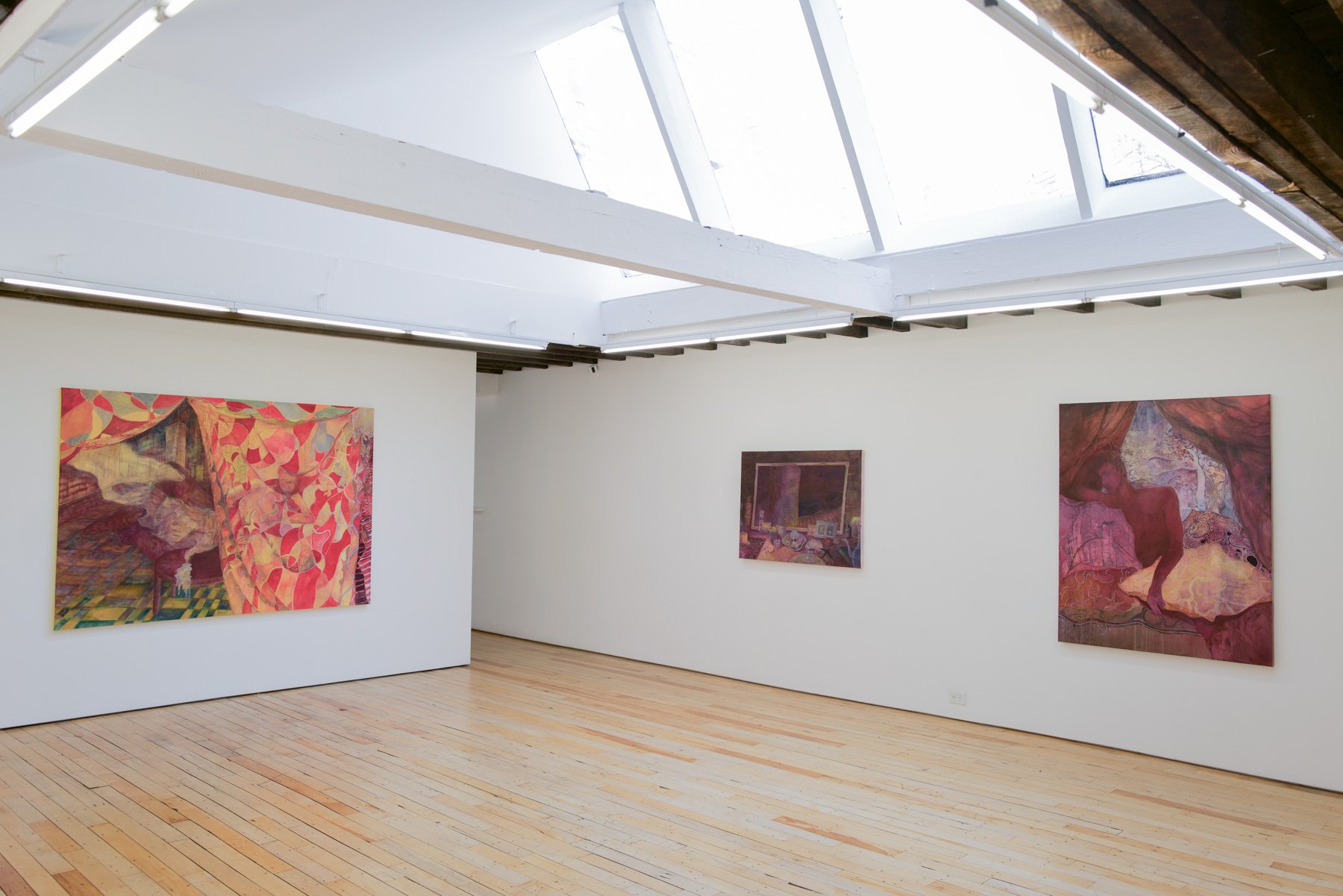
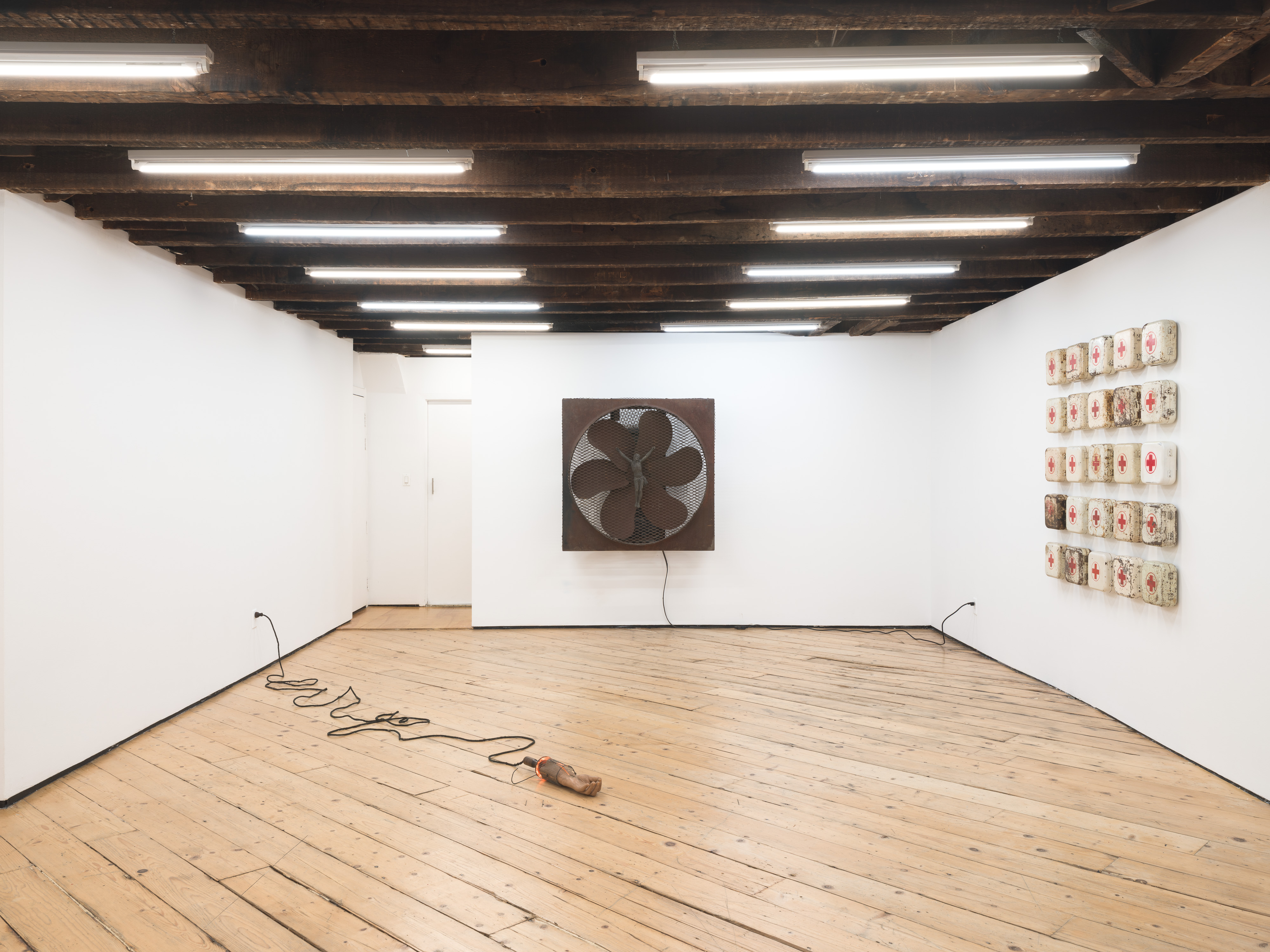
In celebration of Pride Month, Kates-Ferri Projects is proud to present The Breaking Room, a three-person exhibition. Through collage, watercolor, video, cast iron and ceramic sculpture, and installation, the artists evade art world hierarchies with their mediums and approaches, while centering queerness and its inclusive potentialities in the show.
Eve Kosofsky Sedgwick’s oft-quoted 1994 Tendencies definition of queer notes that: “‘Queer’ can refer to: the open mesh of possibilities, gaps, overlaps, dissonances and resonances, lapses and excesses of meaning when the constituent elements of anyone’s gender, or anyone’s sexuality aren’t made (or can’t be made) to signify monolithically.” Queer theory has since expanded beyond gender and sexuality to offer an open mesh of possibilities for how society could function. Queerness imagines a future where the observed normativity is not the default, and the interlinked subjectivity is honored. Sneed, Collymore, and Jalowiec form and advocate for this unfixed proposal, materially.
Sneed approaches the past as a way to pave the path forward by developing a Queer Black lineage through her watercolors of queer historical Black figures, such as Ma Rainey (1886-1939), Moms Mabley (1894-1975), Bessie Smith (1894-1937), and Big Mama Thornton (1926-1984). Incredibly, these performers survived the general erasure of Black women from history. It is not surprising that they were all entertainers, who stepped on stage and into the frame and into view, like the artist. Using archival images of them, Sneed merges her features with these greats in her large 18” x 14” tribute self-portraits to establish the intergenerational connection across time.
Collymore integrates first-account slave herstory into her recent collages and video work. The artist includes excerpts and texts from the first published autobiography of Mary Prince (1788-1833) on her collaged stills from Haptic Cloth: A Film (2020). The short is a tribute and a remembrance of Collymore’s mother through items that remind the artist of her mother’s presence. She pulls a piece of jewelry or a watch face from the footage as the basis of her photo collage. Tenderly requesting audiences to stretch out the moments of observation, Collymore deepens the interwoven Black women’s narratives from Prince’s account to her mother’s and her own lived experiences.
Sneed imprints her likeness and Collymore implants her memories in her work; Jalowiec infuses their personal journey into their interactive installation. Her narrative is embodied in text, found objects, cast iron, paintings, and ceramic components. By building furnishings to sit in and warm lighting that feels like being at a friend’s, Jalowiec brings healing, a sense of playfulness, and joy to their work. The hardships and illnesses she faced throughout her life provide Jalowiec with clarity in forming relatable expressions in her sculptural figures with heavily textured surfaces. They forge this welcoming, open-ended, and visible space to empower participants to find and exist in their queer mix of truths with no apologies.
Living in the queer margins of society carries precarious visibility and invisibility. As multiple states enact legislation that limits the rights and powers of the trans-community, this exhibition recommends a nonlinear radically humane course–one of egalitarian inclusion, just relationships, and thriving visibility. By reinserting and reminding audiences of queer joy, existence, and possibility, the three artists posit that today’s harmful norms are historical constructs that need not be the preselection of tomorrow. The Breaking Room gives space for new personal and public histories that redefine and envision a new hereafter.