Ended Aug 7
Hilton Als
The Romance of Certain Old Clothes: Sheryl Sutton, My Sister, Senga Nengudi, and the Rest
Jun 27 – Aug 7, 2016
More from Hilton Als on Gallop
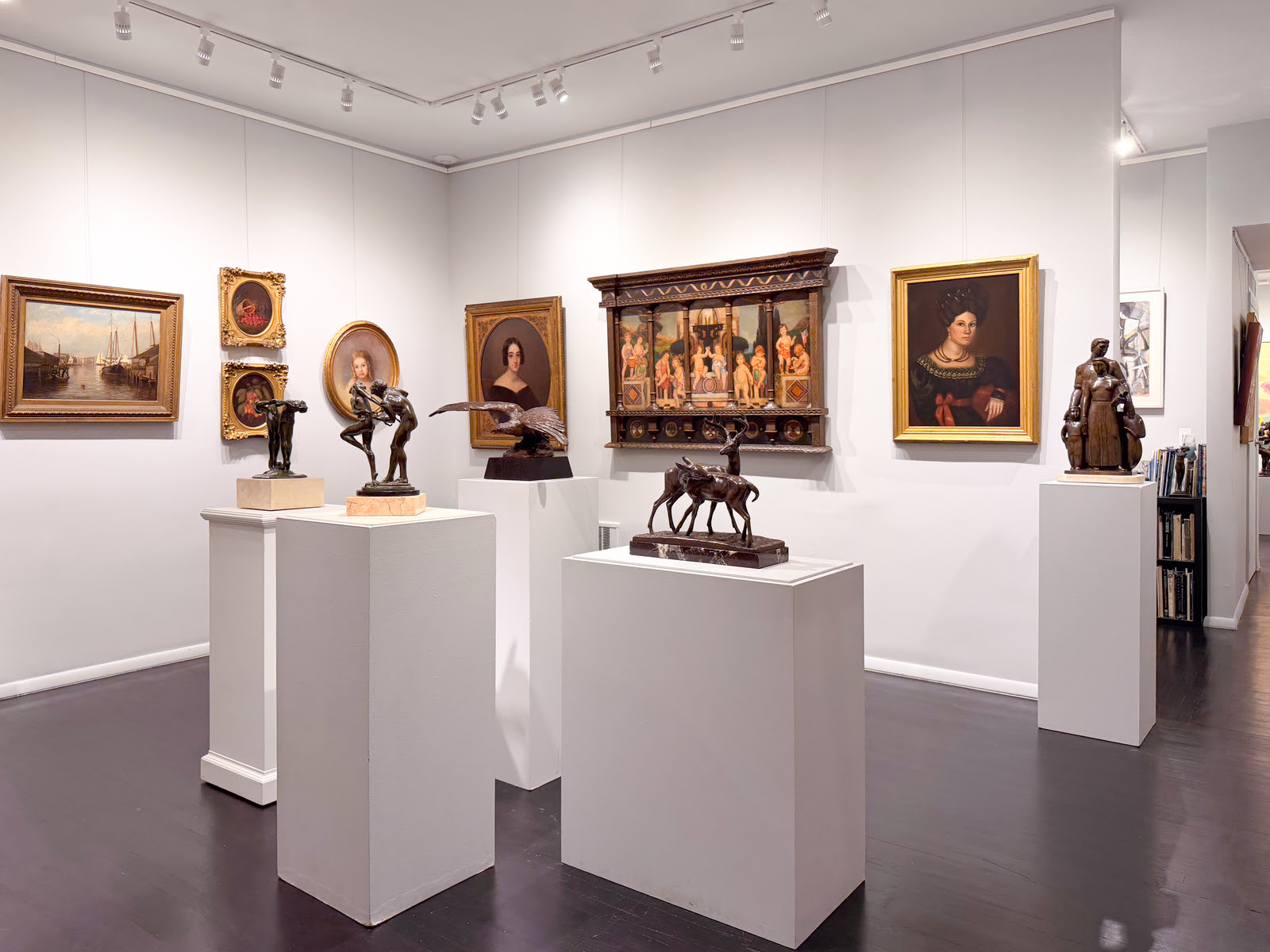
Looking back I can see that one of the chief pleasures, for me, of working on these three shows for The Artist’s Institute has been in making rooms at 132 E. 65th Street that amount to a forum where artists could play with one another without realizing, at least not at first, who their fellow playmates were. This, of course, yielded many surprises, many gifts. When I began putting these shows together I didn’t discuss who the artists might be because I didn’t know: the guiding impulse here was a wild, non-verbal emotional feeling about an idea or bit of personal history that was eventually substantiated by intellectual evidence. But once a given show started to evolve, I worked very quickly to bring together those artists who could make my admittedly internal vision real. When I look back at all the artist-wonders who graced these shows, I am impressed, once again, by the leap of faith they made by joining me on this grand and great adventure, and I love them for that. By lending me their work, they have helped me create a vocabulary—a language—about myself in relation to their respective selves, and to the world.
About the shows: Each centered on the body, more or less. While Candy Darling, Holly Woodlawn and others were their own art in a pre-Transparent world, the second installation, James Baldwin/Jim Brown and the Children, took a more traditional relationship to objects to express similar ideas: what does this kind of body look like in the context of this moment in history? What have we lost because of AIDS, because of the often stultifying arguments around what makes an “other,” and, thus, an “us”? I think The Romance of Certain Old Clothes—the title comes from Henry James’s 1868 tale about siblings, ghosts, and the metaphysical significance of clothes—combines elements from those first two shows to become, in the end, an exhibition about the convergence of bodies and art and an examination of memory and love.
When I began thinking about this final environment, I thought of my sister, Bonnie. Christened Yvonne Cecilia, she was born in 1949. Eleven years my senior, she was the first artist and intellectual I ever knew. From an early age she wrote poetry; then, as an adult, she studied painting. (Her middle name, Cecilia, is a variation on Celia, and Celia Paul sent her beautiful paint-encrusted clothes for the exhibition. Celia continues to paint while my sister cannot. In a way, does Celia paint for my sister?) We were raised in an alternately staid and creatively free West Indian-American environment, in Brooklyn. We did not feel limited by poverty—we grew up with our mother, a single woman who loved to dance and loved the dance but never had a chance to do it professionally—because we could dream. In the nineteen-seventies Bonnie took me to many black-centric events in public spaces near where we lived. (Sharifa Rhodes-Pitts, the wonderful young writer who reminds me, in her distinctive costuming and interests, of Bonnie, has, like my sister, an interest in The Voices of East Harlem—our cousin, Bobby, was the drummer—and in The East, one of the black arts collectives we visited. By being interested in all this, and maybe in eventually writing about it, will Sharifa write the history of my sister?) At The East I watched my sister stand up and talk to free jazz musicians about their work; her authority was thrilling to me—and a given. She was the center of her own power, always. She wrote poetry and played the trumpet. I did not know anyone else in the world I grew up in who did that. In her poems—where are they now?—my sister’s voice, her natural inquisitiveness, shone through; she looked at flowers and found metaphors.
As a teenager my sister wore certain old clothes—the dresses and such of our grandmother’s youth, and our mother’s. This was unusual. (She wasn’t interested in looking “correct.”) But she was unusual. My sister’s old clothes were the visual representation of how she felt inside: she was part of a line of women who put their insides outside, not knowing that by doing so they were making art. But my sister knew. Eventually, I went out into the world without her, but she was always with me. And it was always a thrill to see certain things—art, a performance—that did not so much remind me of our more intense moments together as, essentially, children, but rather what I admired in her.
The first time I saw Frances Johnston’s extraordinary pictures of the Hampton Institute, for instance, I thought of our grandmother’s house in Brooklyn. Large, gloomy, and correct, that house at 1097 Dean Street was a testament to immigrant will and perseverance. (My family is from Barbados.) But my grandmother’s legacy to her children, let alone to us, her grand children, didn’t last: through vanity, self-interest, laziness, and the need to settle old scores with one another and their parents, my father and his siblings lost the house at 1097 Dean Street—a house that they owned outright—to taxes. Eventually it was razed. For a long time it was a vacant lot. Now there’s a community garden there. So, in order for you to see my sister, you need to see where we came from. The Hampton Institute album was exhibited at MoMA in 1966 (that cultural magpie, Lincoln Kirstein, found the work and donated it to the museum) and it remains, I think, the last photographic exhibition devoted to the early lives of black Americans and Native Americans on record at MoMA, just as 1969’s Harlem on My Mind remains the last photographic show devoted to primarily black lives that the Metropolitan Museum of Art ever put on. If museums won’t show the world I knew, I am determined to show it myself.
Moving on from our ancestral home as visualized by someone else, I want to take this opportunity to introduce you to Sheryl Sutton. Sutton was, of course, Robert Wilson’s great star in the nineteen-seventies and eighties—a time when women, let alone women like my sister, were going through many politically generated upheavals: What do we do with out bodies? What do we do with our race? Anything at all? I was not familiar with Sutton’s work until I bought a recording of Einstein on the Beach in the late nineteen-eighties, by which time she wasn’t working with Wilson so much, but had moved on to Europe after being integral to the Squat Theatre, a collective founded by Hungarian artists who destabilized “classic” narrative theatre, among other projects, out of a storefront on West 23rd Street until 1984. Entranced by Sutton’s voice, I looked for anything I could find about her; the most valuable records were with Wilson, of course, and as I looked further into that period I saw that New Orleans native was the only black female figure in a white world. It has almost always been thus in the avant-garde.
Her experience was my experience, and my sister’s, too—Bonnie as the lone black female artist in a world of black nationalist men who preferred she did not wear old clothes, the clothes of her female ancestors, but the costuming of a “sister” (head wraps, so on). What was a sister supposed to look like? She tried to find out for a time, but she, like Sheryl, could only be herself. Mothers always give you your weirdness, sometimes without realizing it. Our mother loved art, loved artists, and sometimes now Bonnie and I will laugh over our love choices in this world, Bonnie saying: “I blame her,” for this or that improbable lover we loved in large part because they were artists. Given the way we were raised, we put those mad artists first. It has taken me years to think let alone accept the fact that, by speaking to artists in these shows and by sometimes making visual work myself, that I’m also an artist, one in dialogue with my fellow co-conspirators, and one who, albeit closeted for a time, has dedicated most of his adult life to remembering, to inquiry, and to the imaginings he finds as he buries his head in romance, in the fragrance to be found in people and certain of their old clothes.
—Hilton Als