Ended Aug 17
Swim Hole
Jul 11 – Aug 17, 2024
Artists: Eli Coplan, Rachel Fäth, Hana Miletić, Chadwick Rantanen
Alex Kwartler, Alexis Rockman, Barbara Ess, Bill Saylor, Don Dudley, Jane Swavely, Jennifer Bolande, Martha Diamond, Matthew Weinstein, Peter Nagy
Alex Kwartler’s (b. 1979, New York, NY) paintings subtly dismantle the ordinary symbols and signs that permeate our everyday lives; collapsing the transcendental and everyday onto the painted surface. A varied lexicon of codified signs and signifiers such as pennies, Powerball, Tums, tin cans, and telephone receivers dot Kwartler’s paintings. These quotidian and anachronistic items of pure utility become iconographic against Kwartler’s ground of heavily processed expressionist gestures. Thoughtful and incisive, he deconstructs painterly space and visual meaning with sharp wit and humor.
Alexis Rockman (b. 1962, New York, NY) utilizes a variety of paint mediums to conceive unexpected perspectives of the natural environment, collapsing the boundary between the viewer and the world we inhabit. Examining the euphoria, psychedelia, and enchantment of experiencing nature, these works encourage the viewer to set aside fatalism in favor of an energetic defense of the environment. Over the decades of Rockman’s career the studied realism of his work in oil paint has been exchanged for a more abstracted quality which provides a hallucinatory edge to the painted images he creates.
Barbara Ess (b. 1944, Brooklyn, NY, d. 2021, Elizaville, NY) was renowned for her haunting pinhole photographs and for performing in experimental bands in New York City’s 1980s and 90s downtown art scene. Ess long used unconventional methods to underline the subjective nature of experience and representation. Ess’ more recent projects in photography, video, and sound dealt with themes of boundaries, distance and separation. Employing lo-fi optical devices and image systems, small telescopes, and a toy microscope, Ess embraced the glitches and unintended artifacts resulting from her processes, seeking to depict the uncertainties of perception and uncover “ambiguous perceptual boundaries between people, between the self and the not self, and between ‘in’ here and ‘out’ there.”
Bill Saylor (b. 1960, Willow Grove, PA) emerged from the vibrant painting scene that developed in the 1990s in Brooklyn. Incredibly influential to a younger generation of painters, Saylor’s work is distinguished by his merging of explosive gestural abstraction with a comprehensive personal iconography, revealing an anthropogenic concern and interest in natural history, weather patterns, and marine biology. Saylor’s work recycles and reframes elements from graffiti, cave painting, and industrial production while mining the legacy of both American and European expressionism.
Don Dudley (b. 1930, Los Angeles, CA) is a crucial, historical link between the optical and surface oriented “Cool School” or “Finish Fetish” generation of California artists who came into prominence in the 1960s and the more cerebral, Hard-edged Minimalist artists such as Frank Stella, Brice Marden and Ellsworth Kelly. Dudley’s practice embraces drawing and painting by way of sculpture and installation—creating subtle and sophisticated wall works that stand out for both their elegance and formal intelligence. Throughout Don Dudley's seventy-year career he has challenged artistic conventions and the traditional concept of painting by incorporating industrial materials in his work such as aluminum, lacquer, Homasote and plywood.
Jennifer Bolande (b. 1957, Cleveland, OH) emerged as an artist in the late 1970s working initially in dance, choreography and drawing. In the early 1980s, influenced by Pop, Conceptualism, Arte Povera, and the ‘Pictures’ artists, she began working with found material from the urban and media landscape which she remixed and invested with idiosyncratic narratives. Exhibiting in New York at Nature Morte Gallery, Metro Pictures, Artists Space and The Kitchen, Bolande was noted early on for her works exploring the materiality of photographs. She uses various media including photography, film, sculpture and installation to explore affinities and relationships and to convey embodied experience.
Jane Swavely’s (b. 1959, Allentown, PA) painted abstractions attempt to reconcile romanticism and minimalism while referencing natural and cinematic elements. Intense areas of color are set against zones where paint has been wiped from the surface, revealing undertones and vestigial forms. Swavely’s practice is intuitive and comes from the artist’s subconscious, each work an expression of a lingering thought. Compositionally, visual evocations of screens and portals are constant in the work as is an illusive silver tone, appearing intensely reflective and polished in some works and a tarnished patina in others. When combined with rich pigmented color otherwise present in her paintings the results can be emulsive and luminous, recalling some alchemical consequence.
Martha Diamond’s (b. 1944, New York, NY, d. 2023, New York, NY) paintings are born out of a desire to create a direct sensory experience of painting through emphasis on gesture and color, Diamond forces the psychology of the city streets onto the viewer as a physical experience. An urban romantic, Diamond paints her perception of the city from memory only, the masonite studies akin to automatic writing. Closely cropped forms and shadows of buildings loom out of a dense ether of color (John Coffey). Enigmatic structures such as windows, scaffolds, and gesturally rendered facades collide or haphazardly enter into the frame from the edges. In some cases the built environment vanishes entirely in favor of pure abstraction.
Matthew Weinstein (b. 1964, New York, NY) engages in a phenomenological approach to rendering lived experience. In Weinstein’s work, representations of skeletons, sunsets, vintage Halloween masks, animated fish, and lens flares form an aesthetic socio-political cabaret whose elements he assembles and reassembles to evoke the idea that our social, political and natural environment is a medium in which we are embedded, like an idea or emotion in a work of art. His studio practice works in feedback between animation, objects and painting, which allows for each element to inform the other. He currently works with a small group of animators, actors and musicians and is constantly producing what he calls “animated cabarets.”
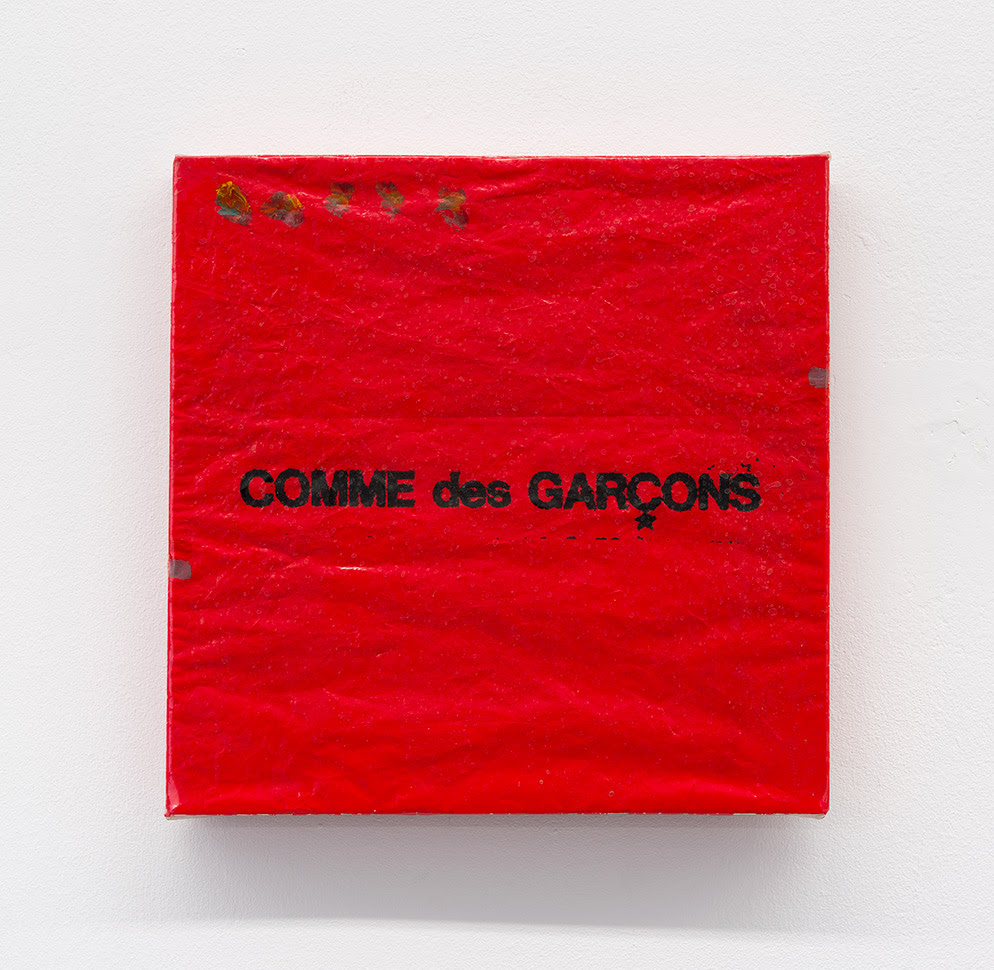
Peter Nagy (b. 1959, Bridgeport, CT) is an artist-dealer who is known for founding the fabled gallery Nature Morte. His iconic work includes his Xeroxes (the earliest body of work he produced from 1982 to 1985) as well as his black and white Cancer, Baroque and Rococo, and early Orientalist Paintings. Nagy’s works are at once self-conscious and ripe with irony, reflecting the spirit of New York in the 1980s. Connecting with the propaganda tactics of artists such as Barbara Kruger and Louise Lawler and artists in the Nature Morte community such as Gretchen Bender, Ross Bleckner, and Steven Parrino, Nagy’s works reflect the trends of the decade. From the beginnings of a digitized information culture to the infatuation with logos and branding, his practice tackles the obsession with photo-mechanical reproduction, the degradation of information, the development of a hyper-inflated art star system, and the rise of institutional critique.