Ended Dec 18
Caitlin Keogh
Waxing Year
Nov 5 – Dec 18, 2021
More from Caitlin Keogh on Gallop
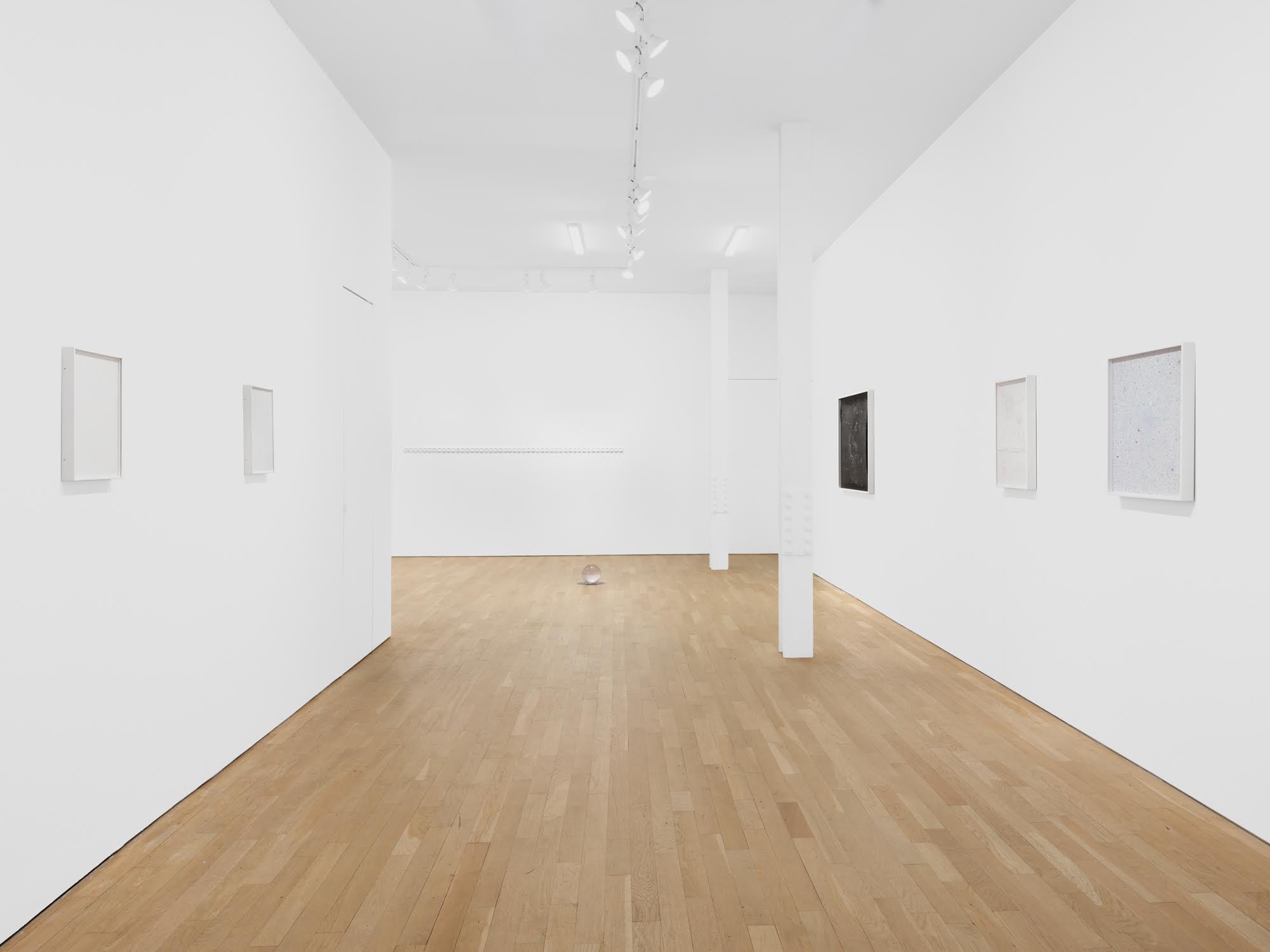
Bortolami is pleased to present Waxing Year, Caitlin Keogh’s third exhibition with the gallery.
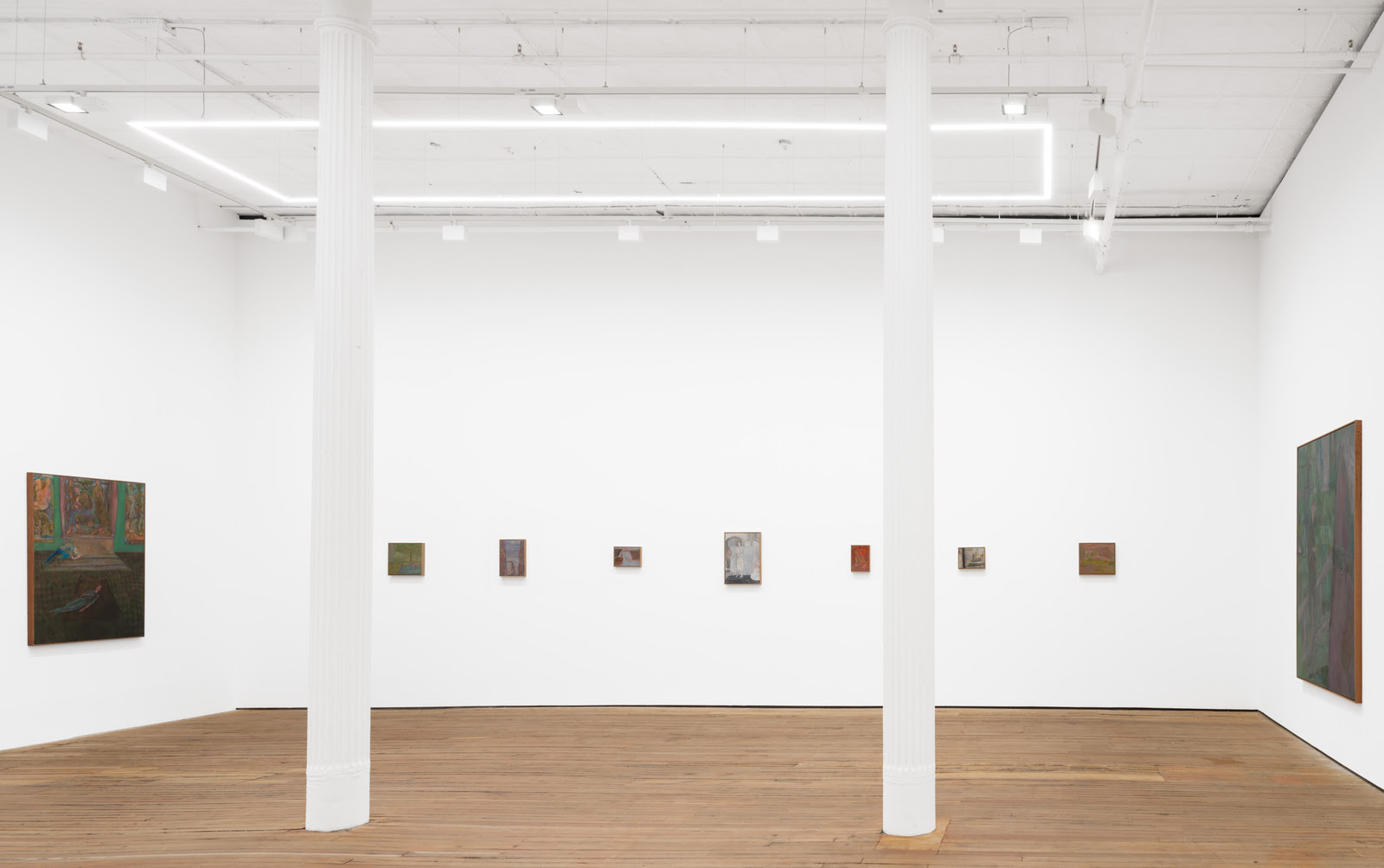
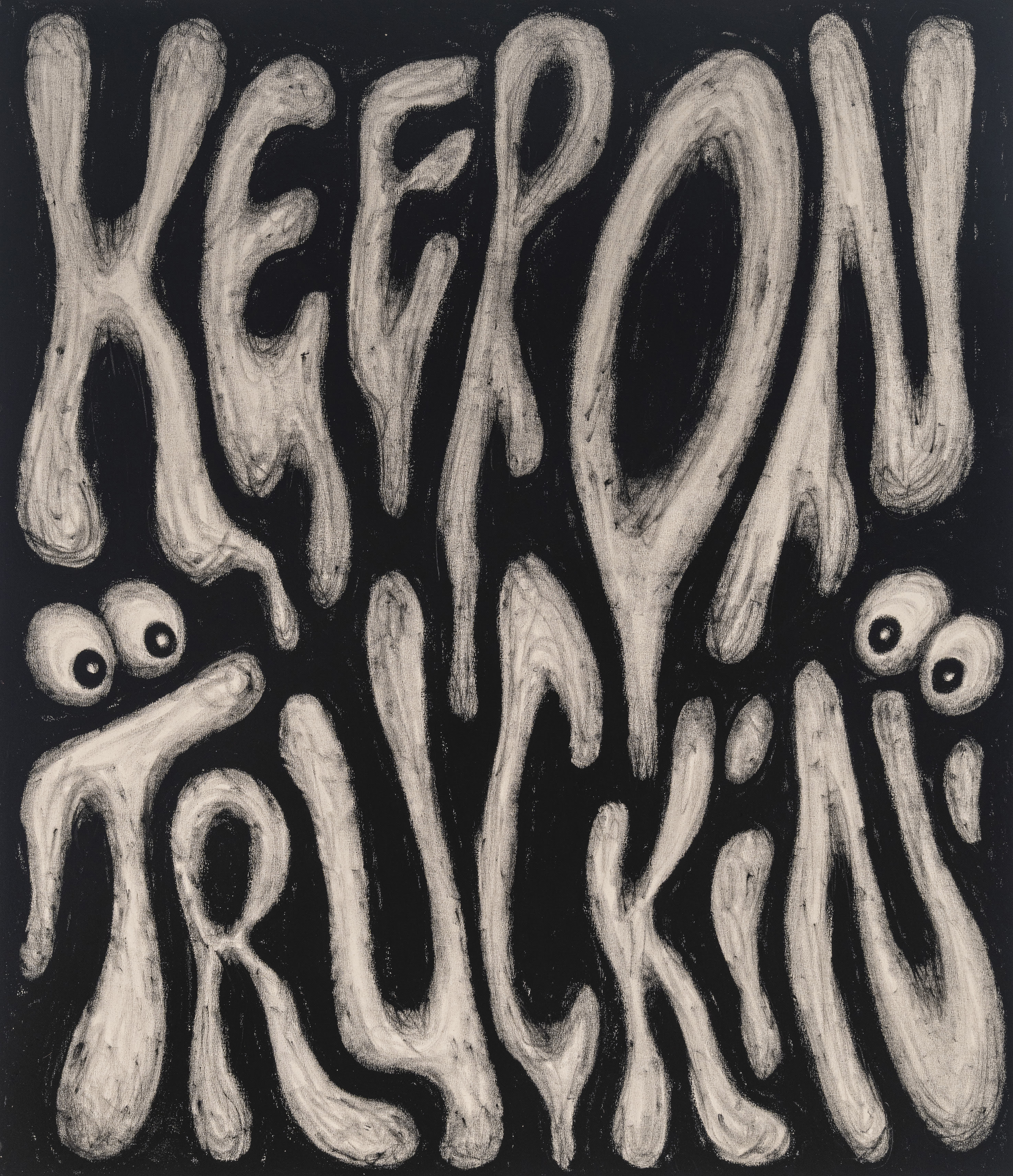
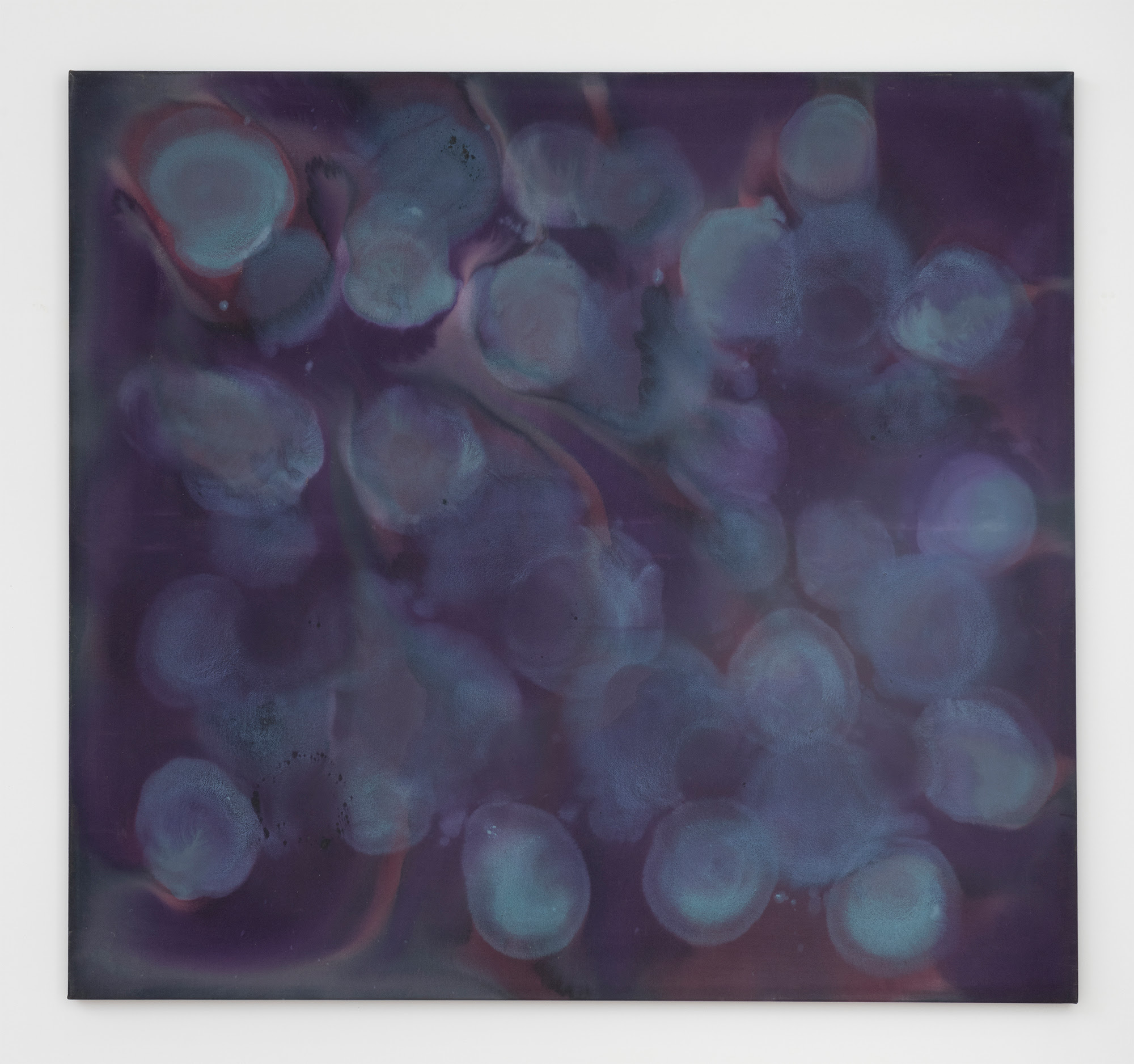
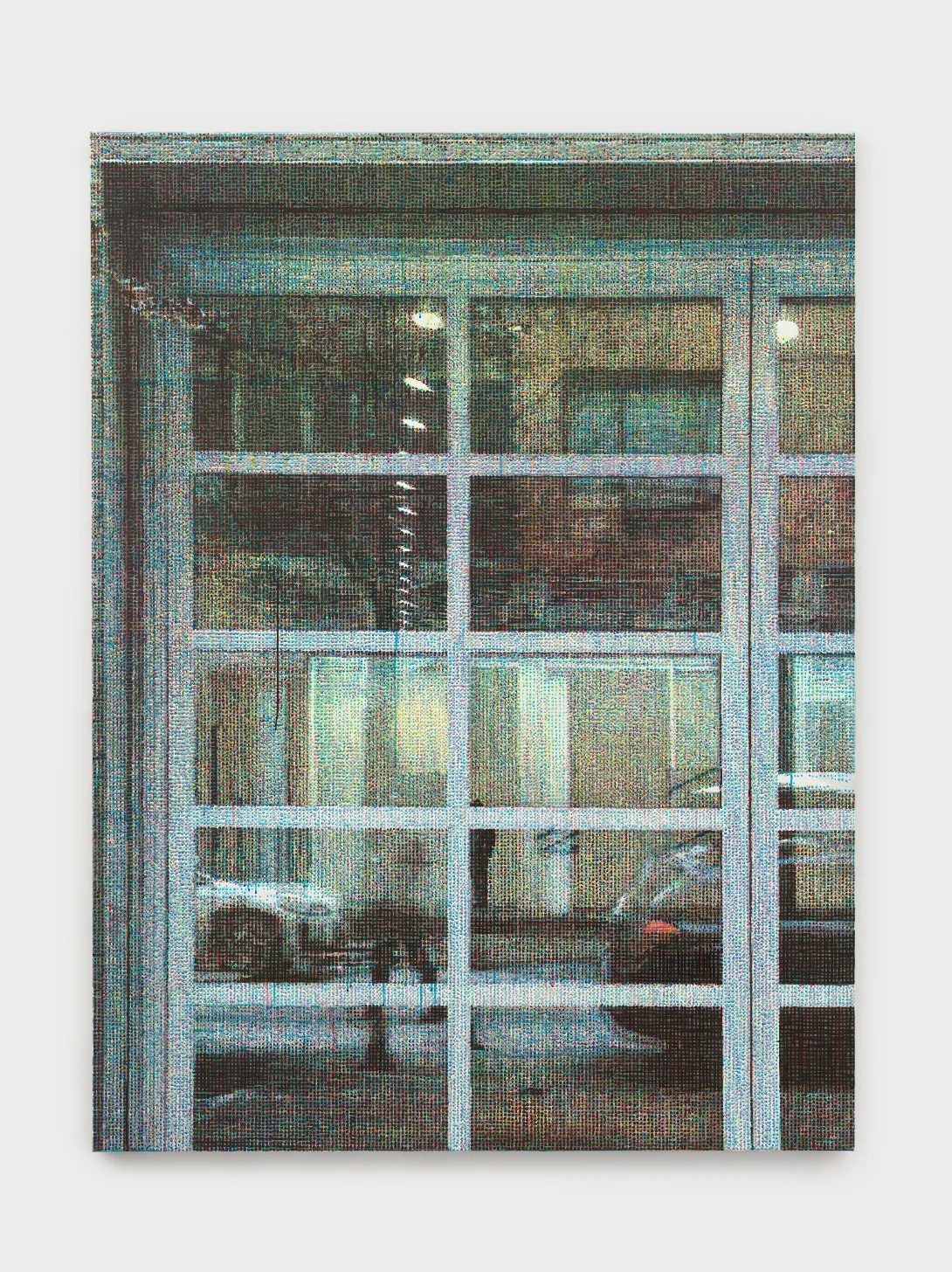
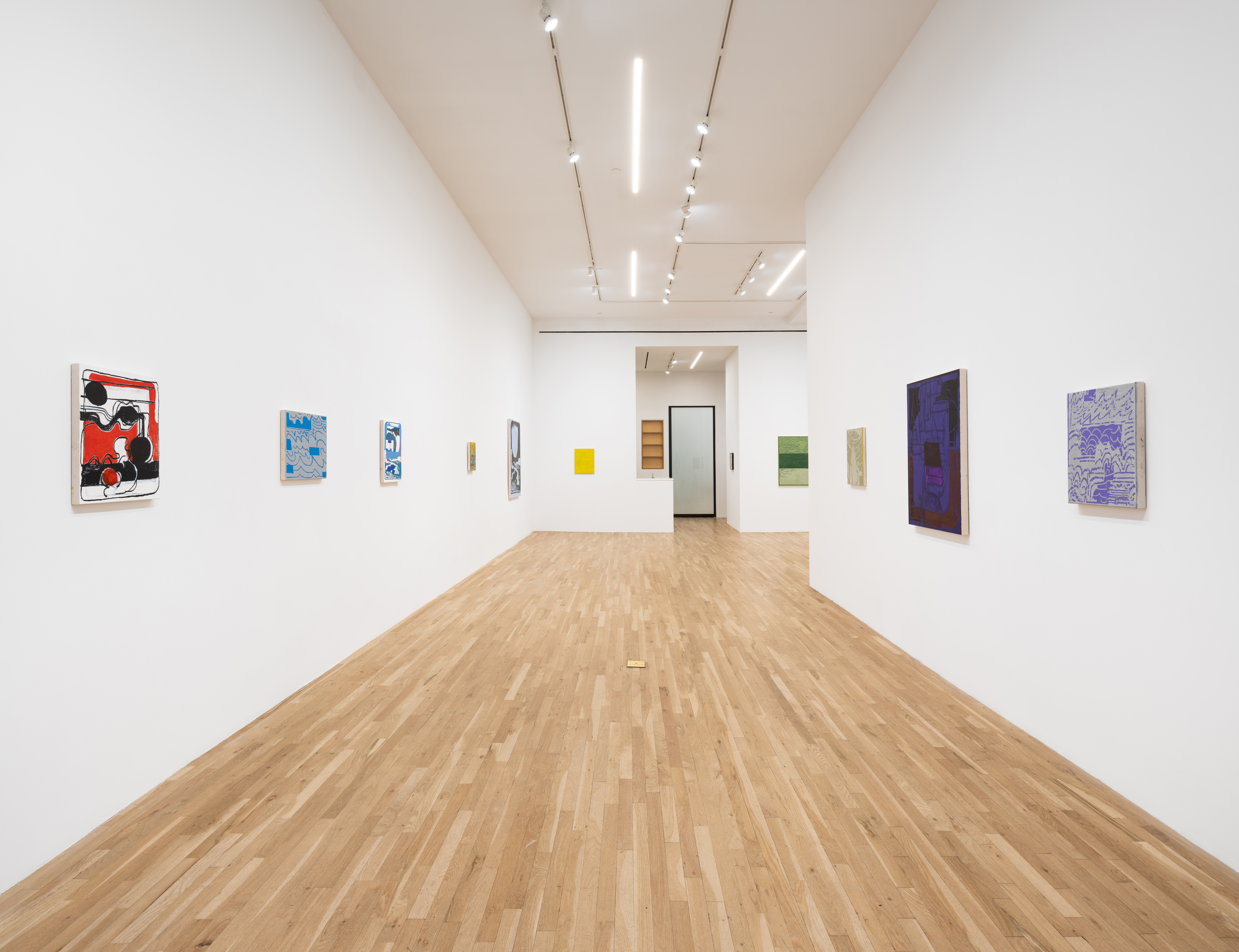
The Waxing Year paintings bring appropriation of historical material, always central to Keogh’s practice, to the foreground. This show is composed of new work that continues from paintings and collages exhibited in February at Overduin & Co in Los Angeles. The five large paintings on view here are an extension of the composition of the seven large paintings shown there. All together, the twelve paintings are an interpretation of one continuous collage and drawing. Spatial constructions that could imply narrative are displaced in favor of the visual material (museum postcards, artist’s monographs, textiles, image search results, decorative arts manuals, cell phone photos) that Keogh accumulates in her studio. An expressive subject, as it might exist in the work, is not rendered through painting conventions of touch or voice or narrative sensibility; rather the subject emerges through an open process of acquiring, collecting, and culling, and is represented through the work-a-day, perfunctory line of a technical illustrator. And unencumbered by an actual illustrational utility, the space depicted becomes free-associative, dreamlike, and subterranean.
The text presented below is the introduction to Keogh’s earlier exhibition, which describes the work in this show as well:
There are three bodies that animate these paintings.
The first is the body of Piet Mondrian, buried in the ground near my studio in Queens. In late March of 2020, I walked to Mondrian’s grave site with a friend to give him some flowers and to sit outside and talk. Our conversation was about what we knew and didn’t know about Mondrian and I realized I knew almost nothing. I had admired his paintings for years, thought about them often, read theoretical texts on the meaning and importance of his work, but did not know much else. I had never imagined him as a physical person. Suddenly imagining him with a corporeal existence was something of a shock. His grave is austere, non-denominational, and situated to point the visitor directly towards his last and favorite studio in Midtown. (For someone preoccupied with the grid of the city, I can’t imagine this is a coincidence.) I knew nothing about Mondrian’s personality, biography, and physical appearance. According to my education, I realized, he was pure theory, as though the paintings had been produced by an algorithm. I couldn’t picture his face, despite his iconic status. Since this visit, I have spent time with his writings on paintings, spiritualism, and politics, and looking at his less-known paintings and drawings. Reading this has been instructive, to consider that he loved to leave his studio in the afternoon to go dancing at jazz clubs and was an austere dandy who owned few possessions and was very interested in the interior design of his studio.
The process of composing these continuous paintings was informed partly from reading Mondrian’s writings. He emphatically insists on the canvas as being an urgent and vital plane, a sort of game board with which to test out rules for a vision of utopian equilibrium, the compositional edges as the limits of a force field with which he could define perception as it ought to be for a free, harmonious future. I took from his writings questions to do with taking paintings apart to more basic elements and reconstructing, intuitively, a fluid and elastic space. While Mondrian established the edge of the picture plane as the ultimate metaphor for delineating the rules of his painting -and social- vision (he had a short falling out with Theo van Doesburg over the diagonal line meeting the edge, which to Mondrian was not a matter of taste but rather of ideology; the oblique, unlike the perpendicular, was not a concentrated and pure enough vision of space and time to declutter the past and move boldly into the future), I, conversely, considered my anxiety around the painting’s edge in relation to the representational imagery in my work. The edge of the canvas is the restraint that imposes narrative and hierarchy onto the picture plane if composing a picture with recognizable “things” and therefore was a liberating restraint to remove.
The second body is that of my beloved therapist. Three days after visiting Mondrian’s grave, spending time reading about his manners and material life, my therapist suddenly died. I was informed very soon after she passed, and the shock of her disappearance expressed itself in the form of dreams in which I was the person who discovered her body. I would find her in the grass, or lying on the floor of her bathroom, or on a pebbly beach at the shore. She never looked like herself and I would need to insist that I was finding the person I claimed I found. My therapy had recently gone in the direction of dream analysis and now the person who I relied on to interpret the dreams was making her exit through that medium. In both the case of visiting Mondrian and being visited by my therapist as I slept, there was the effect of a prompt to interpret, and interpret loosely and intuitively. And the realization of something or someone that I had held in a stable place of understanding needed to be reevaluated and reconstituted. Without the ritual of my therapy in which to free-associate between words and the images of dreams, I have reconstructed this space, of looking at and through the accumulation of images, within my paintings. The paintings are not a recreation of a dream, but move along according to the dream-model of an accumulation of images as an internal logic and an interpretive mirror.
The third body is a metaphorical one, the figure of the Waxing Year. This comes from Robert Graves’s book, The White Goddess, about pagan poetry. I have been interested, since I started painting the figure, in the construction of subject positions in relation to making pictures, especially as they deal with gendered narratives in connection with creative production, and literary criticism is usually where I find the most elaborate and potent models. A subject position is not a rigid pose for me, but rather a para-explanation for the development of work, a way to sublimate the personal into “someone else” and make more slippery the terms of self and depiction. The Waxing Year is for Graves the eternal figure of the poet, who is also the embodiment of the year progressing forward from winter into budding spring into blossoming summer. The task of the poet is to battle the Waning Year, which is time disappearing and growing smaller before it. Graves calls this antihero the Waxing Year’s shadow, his dark side, or his “weird”. This struggle between growing and shrinking is performed in honor of the eternal energy of the White Goddess who is the fickle muse to all who labor to make poems. This retrograde gendering and spiritualizing has been an appropriate place to start for my painting project of reconstructing known/unknown figures.
I like to imagine Mondrian as a tempestuous goddess with a passion for spontaneous dancing to jazz music, uncompromising in her painting credos and insistence on the struggle for freedom and harmony in the studio. If these paintings exist in any literal, specific space it is underground. The image of the decomposing body of Mondrian becoming earth, and the subterranean realm of dreams emerging from the subconscious. If I had previously been imagining a canvas as a torso, in this project the torso has disintegrated into a continuous field.
Caitlin Keogh (b. 1982 in Anchorage, Alaska) lives and works in New York. Keogh recently completed a mural in the city of Holbaek, Denmark in conjunction with Holbaek Art. Her paintings are currently included in New Time: Art and Feminisms in the 21st Century at BAMPFA, Berkeley, CA. Keogh participated in Art Basel Parcours 2019, Basel, Switzerland and has been the subject of solo exhibitions at the Institute of Contemporary Art, Boston, MA; Melas Papadopoulos, Athens, Greece; and MoMA PS1, Long Island City, NY. She has also exhibited at MoMA Warsaw, Poland; the Whitney Museum of American Art, New York, NY; Künstlerhaus Bremen, Germany; and the Queens Museum, Queens, NY. Her work is represented in the collections of the Institute of Contemporary Art in Boston, the Whitney Museum of American Art in New York, and the Cornell Fine Arts Museum in Winter Park, Florida.