Ended Apr 27
Victor Man
Mar 15 – Apr 27, 2024
More from Victor Man on Gallop
Offspring of some wretched tribe, he prowls the boulevards of the West. Cherishing one country after the next, he no longer hopes for any; stuck in a timeless twilight citizen of the world—and of no world—he is ineffectual, nameless, powerless... Peoples without a destiny cannot give one to their sons who, thirsting for other horizons, attach themselves to a fate and ultimately exhaust it to finish their days as ghosts of their admirations and their exhaustions. Having nothing to love at home, they locate their love elsewhere, in other lands, where their fervor astonishes the natives. Overworked, the feelings erode and disintegrate, admiration first of all... And the Alien who dispersed himself on so many highways of the world, exclaims: “I have set up countless idols for myself, have raised too many altars everywhere, and I have knelt before a host of gods. Now, weary of worship, I have squandered my share of delirium. One has resources only for the absolutes of one’s breed; a soul—like a country—flourishes only within its frontiers. I am paying for having crossed them, for having made the Indefinite into a fatherland, and foreign divinities into a cult, for having prostrated myself before ages which excluded my ancestors. Where I come from I can no longer say: in the temples I am without belief; in the cities, without ardor; among my kind, without curiosity; on the earth, without certitudes. Give me a specific desire and I could shake the world to its foundations. Release me from this shame of actions which makes me perform, every morning, the farce of resurrection and, every night, that of entombment; in the interval, nothing but this torment in the shroud of ennui... I dream of wanting—and all I want seems to me worthless. Like a vandal corroded by melancholy, I proceed without a goal, self without a self, toward some unknown corner. . . in order to discover an abandoned god, a god who is his own atheist, and to fall asleep in the shadow of his last doubts and his last miracles.”
—E. M. Cioran, Tribulations of an Alien
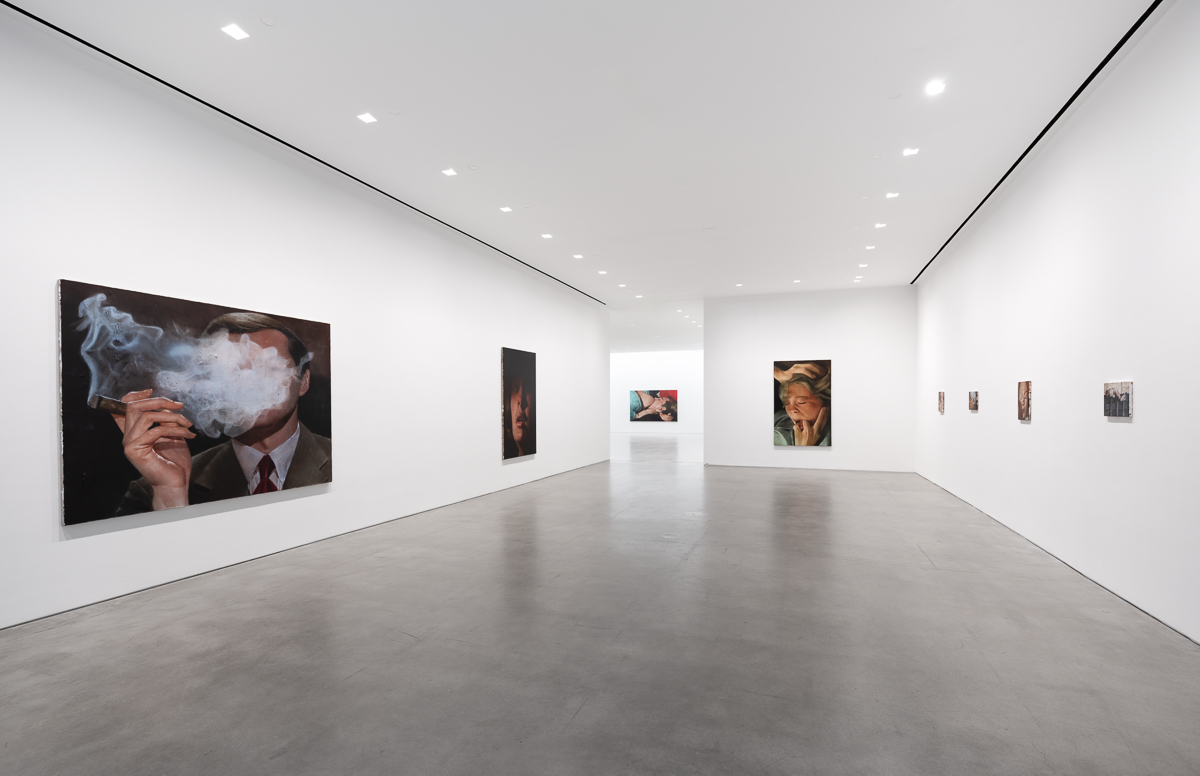
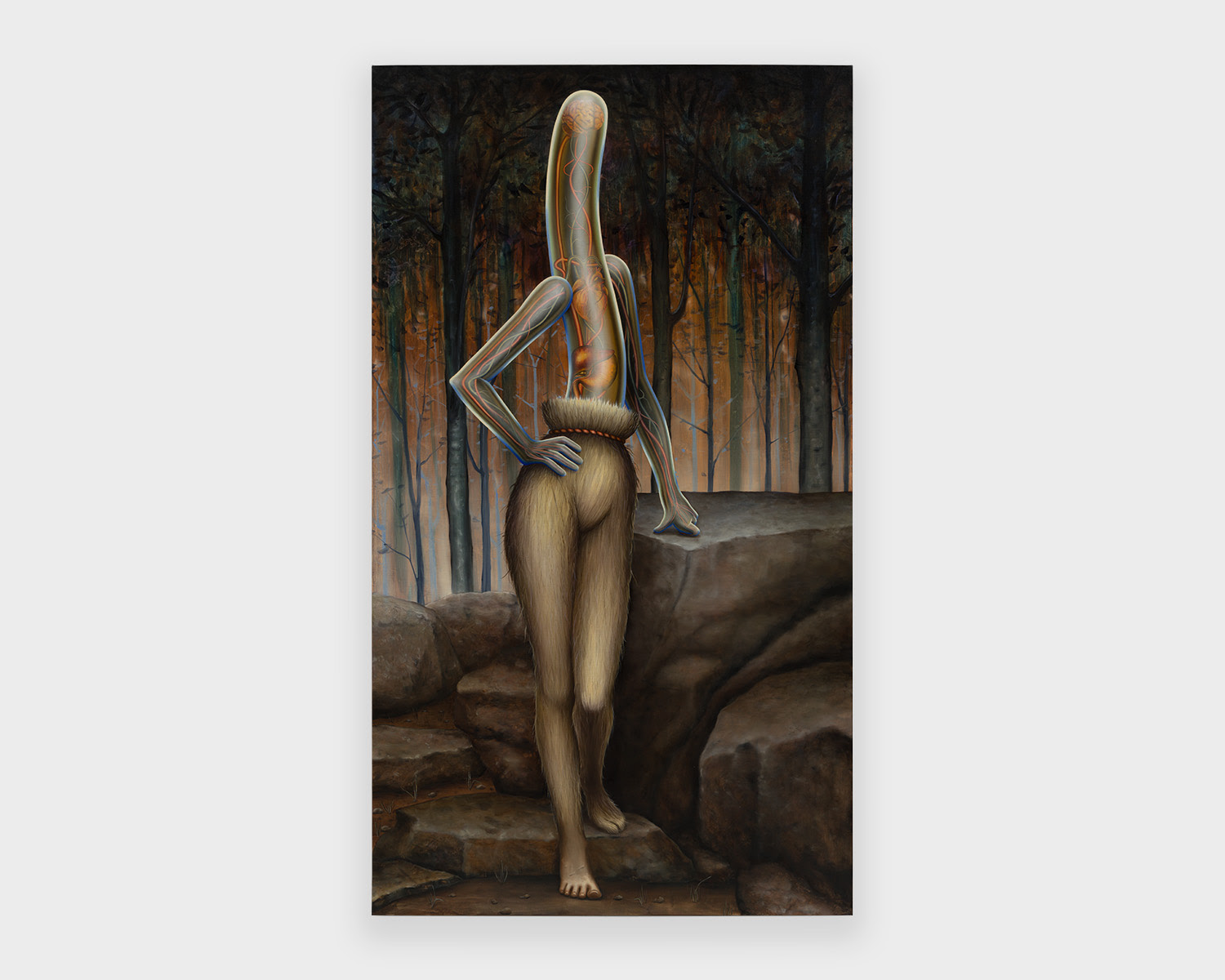
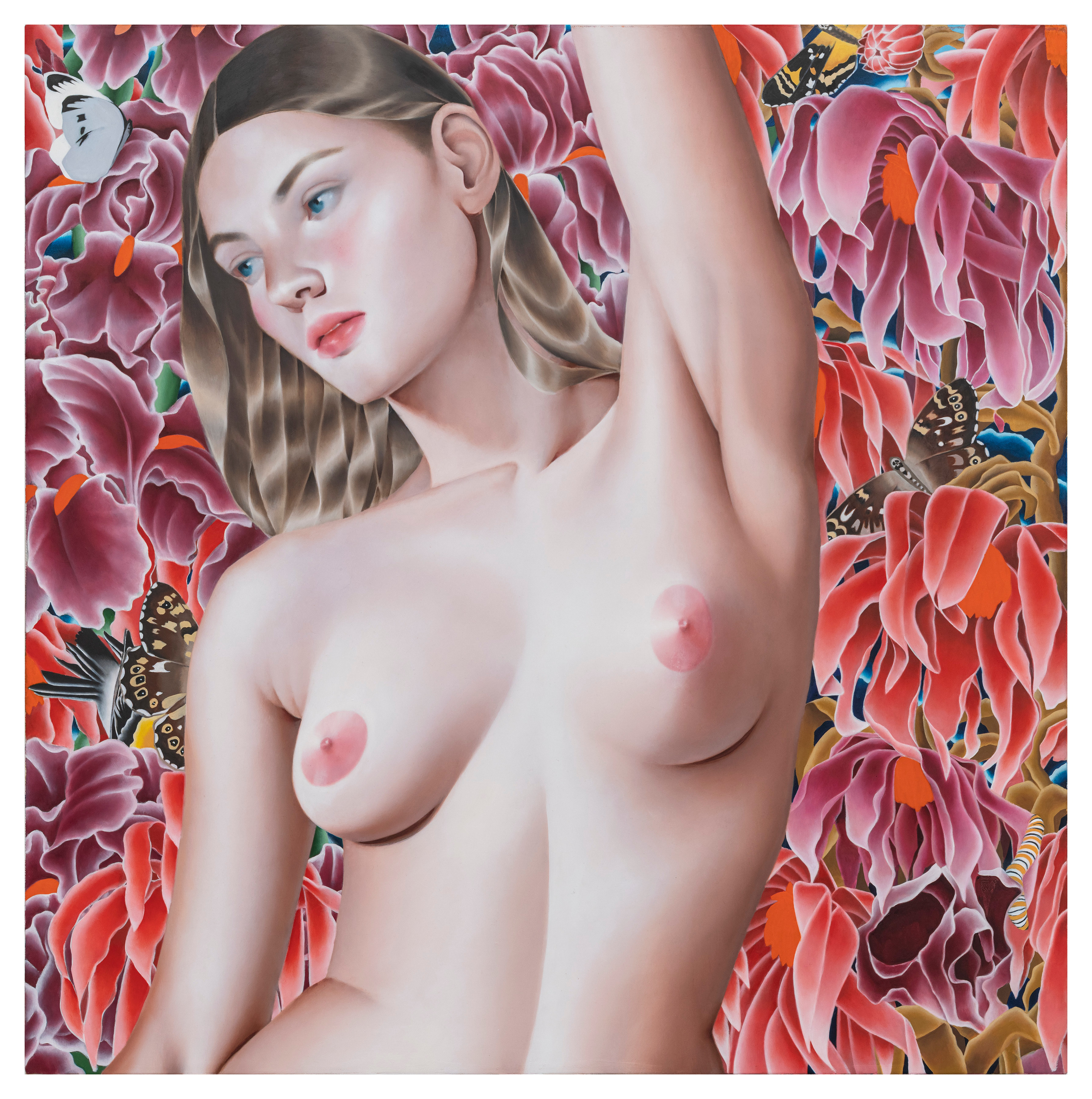
Granting equal poetic significance to the extraordinary and the banal, Victor Man’s artistic vocabulary examines the terrain where the historical and the personal overlap. Unencumbered by narrative convention, Man’s motifs resist associative deduction and instead ricochet between the inscrutable and the known. Though each new body of work sees the artist’s recurring themes interacting with a succession of new figures, his compositions consistently interrogate the same dialectic: what does it look like when the spiritual is biased by the existential?
A sensuous key plays throughout Man's tableaux, whether conjured via his use of saturated colors, his heavy, sustained textures, or his choice of subject. In his latest series of Gypsy Portraits, Man draws from personal encounters while flattening cultural distances, providing a horizontal approach that addresses both the history of art and the contemporary condition. Referencing themes of diaspora and global migration, these portraits contend with the increasingly urgent plight of those who are cast as perpetual foreigners. While formally acknowledging the medium’s complex historical relationship to gaze and authorship, Man’s shared and intimate experiences with his subjects results in an unexoticized and deeply humanist perspective.
Presenting a series of propositions that exert equal but oppositional tension, the exhibition is undergirded by a tonalité grave that serves as the gravitational center for its seemingly disparate imagery.The art-historical connotations prompted by Man’s Luminary Petals on a Wet Black Bough (Flagellazione di Christo, Maestro della Crocifissione nel Camposanto sec XIV) are reconfigured by the painting’s proximity to Illuminated Week. Titled in reference to the seven holy days that precede Easter, this composition depicts a fragmentary view of the cemetery visible from the artist’s window. The chestnut flowers that bloom from the austerity of the painting’s gnarled and dry trees generate further semiotic significance when considered in the context of Man’s luminously rendered Brothel Room with Monkey, creating a visual syntax that suggests a relationship between memento mori, spiritual rebirth, and the base nature of our consumer-driven desires. The artist’s painting of the cover of E. Gengenbach’s 1952 hagiographic autobiography, Adieu Satan, functions as the exhibition’s engine of synthesis, exorcising evil from a web conflicting but equivocalsentiments.
In contrast to his poetic ambiguity, Man’s paintings are supported by their underlying geometrical definition, a gesture that both anchors his images to the immediate and expands their meaning from the specific to the general. Rough and sophisticated, serene and disconcerting, these works engage in a series of inquiries that can be read as congruous to both conflict and autonomy. Assuming a symmetrical relationship to his subjects, Man probes issues of transference, existential transition, and the artistic exploration of language as the path to possibility. The familiarity with which Man presents his subjects both invokes and recategorizes the politics of looking, conflating the history of painting with a profound sense of personal intimacy.
—Bogdan Teodorescu