Ended May 28
John Zurier
Level Distance
Apr 29 – May 28, 2022
More from John Zurier on Gallop
"Lighting one candle
With another candle—
Spring evening."
—Yosa Buson
[Please scroll down for German version / Für Deutsch bitte scrollen Sie nach unten]
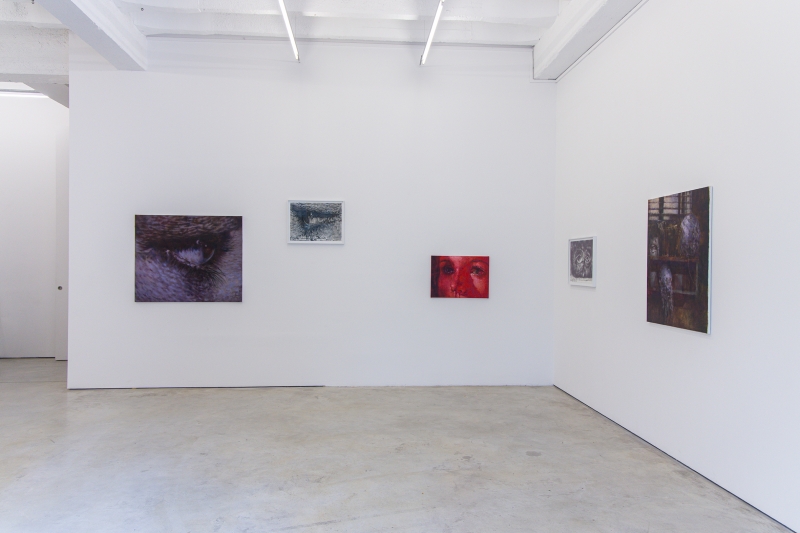
In his fifth solo show at Galerie Nordenhake, John Zurier presents new paintings shaped by an intense engagement with traditional Chinese and Japanese painting and poetry over the past two years. The inclusion of nature and perceptions of nature plays a key role in these classical genres. The way in which the seasons, for example, are linked to certain moods and their depiction can generate feelings similar to those experienced in nature itself.
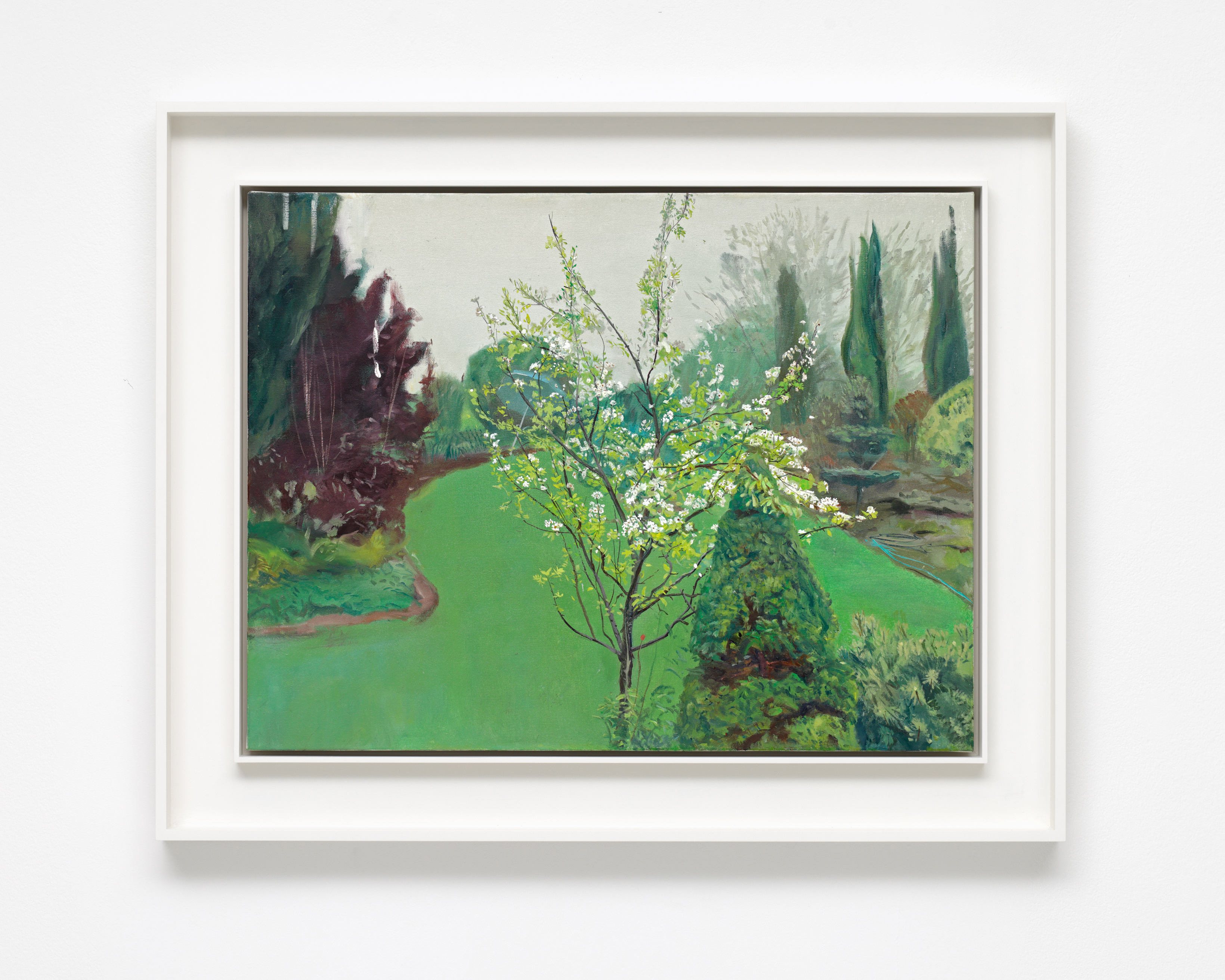
The concept of “Level Distance” (pingyuan in Chinese) is one of three compositional principles that became established in Chinese painting during the eleventh century to generate atmosphere and distance. Over centuries, this principle was repeated, refined, and reinvented. In a painting with “level distance,” the gaze gradually wanders to a far-off point in the image. The way in which this takes place, in an either unobstructed or interrupted manner, could be an allusion to painting itself, to levels of abstraction, to the personality of the painter, or represent an implicit commentary on the political situation at the time of the painting’s creation. As the artist himself puts it, “The title is meant to suggest breadth, balance, stillness, and expansion, qualities that are important to my painting.”
Like Chinese landscape painting, Zurier’s works powerfully communicated an atmosphere that recalls natural phenomena, the memory of a certain light or color quality in a particular location at a certain moment, frequently linked to literary figures and poetry. The title of Track (Spring Evening) (2022) is taken from an eighteenth-century haiku by the Japanese painter and poet Yosa Buson.
The paintings play with depth and surface, the ephemeral and the concrete, the signified and the signifier. For example, in the tempera and oil-based painting The Waves (2000), the layers of paint were scraped away with a sharp knife to the raw canvas beneath. This work was created at his studio in Iceland during the late summer with a view of the mountains, fields, and the sea and with Virginia Woolf’s eponymous text in mind, where she reveals that the only constant is flow and change.
Several paintings in the exhibition are covered with luminous washes in subtle colors and shades that lend them an ethereal atmosphere. Others show a powerful brush stroke in intense, broken fields of pigment or vertical and horizontal lines that support one another, apparently divorced from the surface and thus alluding to a spatiality. In their directness and immediacy, the works usually seem to have been executed rather intuitively and quickly, but they actually emerge “in a balance of deliberation and spontaneity,” making time another element of the composition. The physical painting itself, its objecthood, and even more its content, is reduced to its essence, over days, sometimes years. Comparable to poetry, John Zurier’s painting is abstract, condensed sensation.
John Zurier was born in 1956 in Santa Monica, California and lives and works in Berkeley, California and Reykjavik, Iceland. Most recently, he participated in the “artist as curator” exhibition The Artist’s Eye: Tammy Rae Carland, David Huffman, Lava Thomas, John Zurier at UC Berkeley Art Museum and Pacific Film in Berkeley, California (2022). A solo exhibition of recent paintings, “Far Again,” was presented at Moderna Museet Malmö in 2021. Selected museum exhibitions include UC Berkeley Art Museum and Pacific Film Archive (2018 and 2014); San Francisco Museum of Modern Art (2017); New Mexico Museum of Art, Santa Fe, NM (2016); Colby Museum of Art, Waterville, ME (2015). He has also exhibited at the 30th São Paulo Biennial, Brazil (2012); California Biennial, Orange County Museum of Art, CA (2010); 7th Gwangju Biennale, South Korea (2008); Kettle’s Yard, Cambridge, England (2003); and the Whitney Biennial, NY (2002). In 2010 he was awarded the prestigious John Simon Guggenheim Fellowship. His work can be found in numerous public collections including the UC Berkeley Art Museum and Pacific Film Archive; Moderna Museet, Stockholm; San Francisco Museum of Modern Art; Fine Arts Museums of San Francisco; Museum of Fine Arts Houston; and others. A catalogue surveying his work from 1981 to 2014 with an essay by Robert Storr was published in 2015.
*****
John Zurier zeigt in seiner fünften Einzelausstellung in der Galerie Nordenhake neue Gemälde, die geprägt sind von seiner intensiven Auseinandersetzung mit traditioneller chinesischer und japanischer Malerei und Poesie, während der letzten zwei Jahre. Der Einbezug von Natur und Ihrer Wahrnehmungen spielt in diesen klassischen Genres eine besondere Rolle. Die Art und Weise etwa, wie Jahreszeiten mit gewissen Stimmungen verbunden sind und deren Darstellung in der Malerei ähnliche Gefühle hervorrufen kann wie die Natur selbst.
Der titelgebende Begriff „Level Distance“ (chin. pingyuan) ist eines von drei Kompositionsprinzipien, die in der chinesischen Malerei des 11. Jahrhunderts festgelegt wurden, um Atmosphäre und Weite zu bewirken und die in der klassischen chinesischen Malerei jahrhundertelang wiederholt, verfeinert, neu erfunden. In einem Gemälde mit "ebener Entfernung" schweift das Auge langsam zu einer entfernten Ansicht. Die Art und Weise, wie dies geschieht, ob ungehindert oder unterbrochen, könnte eine Anspielung auf die Malerei selbst sein, die Abstraktionsebenen, die Persönlichkeit des Malers oder ein impliziter Kommentar zur politischen Situation der jeweiligen Zeit. Für John Zurier vermittelt der Ausstellungstitel „Weite, Ausgewogenheit, Stille und Ausdehnung“ – Qualitäten, die wesentlich für seine Malerei sind.
Ähnlich wie die chinesische Landschaftsmalerei haben John Zuriers Gemälde einen starken atmosphärischen Charakter, der an Phänomene aus der Natur erinnert – die Erinnerung an eine bestimmte Licht- und Farbqualität an einem bestimmten Ort, in einem bestimmten Moment, oft auch in Verbindung mit Gedanken an literarische Figuren und Poesie. So ist der Frühlingsabend im Titel von “Track (Spring Evening)“ (2022) von einem Haiku des japanischen Malers und Dichters Yosa Buson aus dem 18. Jahrhundert.
Die Gemälde spielen mit Tiefe und Oberfläche, dem Ephemeren und dem Konkreten, dem Bezeichneten und dem Bezeichner. Wie bei dem Tempera und Öl-basierten Gemälde “The Waves“ (2020), bei dem die Farbschichten mit einem scharfen Messer bis auf das rohe Leinen wieder abgekratzt wurden. Die Arbeit entstand im Spätsommer in seinem Atelier in Island, mit dem Blick auf Berge, Felder und das Meer und dem Gedanken an Virginia Woolfs gleichnamigen Text, in dem die Erkenntnis offengelegt wird, dass die einzige Konstante die Veränderung und der Fluss ist.
Einige Gemälde in der Ausstellung sind mit leuchtenden Waschungen in subtilen Farben und Tönen überzogen, die ihnen eine ätherische Atmosphäre verleihen. Andere zeigen eine kräftige Pinselführung in intensiven, gebrochenen Pigmentfeldern oder vertikale und horizontale Linien, die einander abstützen, scheinbar losgelöst von der Oberfläche und damit eine Räumlichkeit andeutend. In ihrer Direktheit und Unmittelbarkeit scheinen die Arbeiten zumeist intuitiv und schnell ausgeführt, doch sie entstehen „in einem Gleichgewicht aus Überlegung und Spontaneität“ und so wird auch die Zeit zu einem Element der Komposition. Das physische Gemälde selbst, seine Gegenständlichkeit, als auch mehr noch sein Inhalt wird – manchmal über Tage, manchmal über Jahre – auf seine Essenz hingeführt. Vergleichbar mit Poesie ist John Zuriers abstrakte Malerei kondensiertes Empfinden.
John Zurier wurde 1956 in Santa Monica, Kalifornien, geboren und lebt und arbeitet in Berkeley und Reykjavik. Zuletzt nahm er teil an der Ausstellung The Artist's Eye im UC Berkeley Art Museum und Pacific Film in Berkeley, Kalifornien (2022). Eine Einzelausstellung neuerer Gemälde, "Far Again", wurde 2021 im Moderna Museet Malmö gezeigt. Ausgewählte Museumsausstellungen umfassen das UC Berkeley Art Museum und das Pacific Film Archive (2018 und 2014); das San Francisco Museum of Modern Art (2017); das New Mexico Museum of Art, Santa Fe, NM (2016); das Colby Museum of Art Waterville, ME (2015). Seine Arbeiten wurden gezeigt in der São Paulo Biennale, Brasilien (2012); California Biennial, Orange County Museum of Art, Kalifornien (2010); 7. Gwangju Biennale, Südkorea (2008); Kettle's Yard, Cambridge, England (2003); und die Whitney Biennale, New York (2002). Im Jahr 2010 wurde er mit dem renommierten John Simon Guggenheim Fellowship ausgezeichnet. Seine Arbeiten befinden sich in zahlreichen öffentlichen Sammlungen, darunter UC Berkeley Art Museum und Pacific Film Archive, Moderna Museet, Stockholm, San Francisco Museum of Modern Art, Fine Arts Museums of San Francisco, Museum of Fine Arts Houston und andere. Ein Katalog mit einem Überblick über sein Werk von 1981 bis 2014 mit einem Essay von Robert Storr wurde 2015 veröffentlicht.