Ended Jan 11
Golnaz Payani
L'Ombre des Oasis
Nov 14, 2019 – Jan 11, 2020
More from Golnaz Payani on Gallop
[Scroll down for French version / Veuillez trouver ci-dessous la version française]
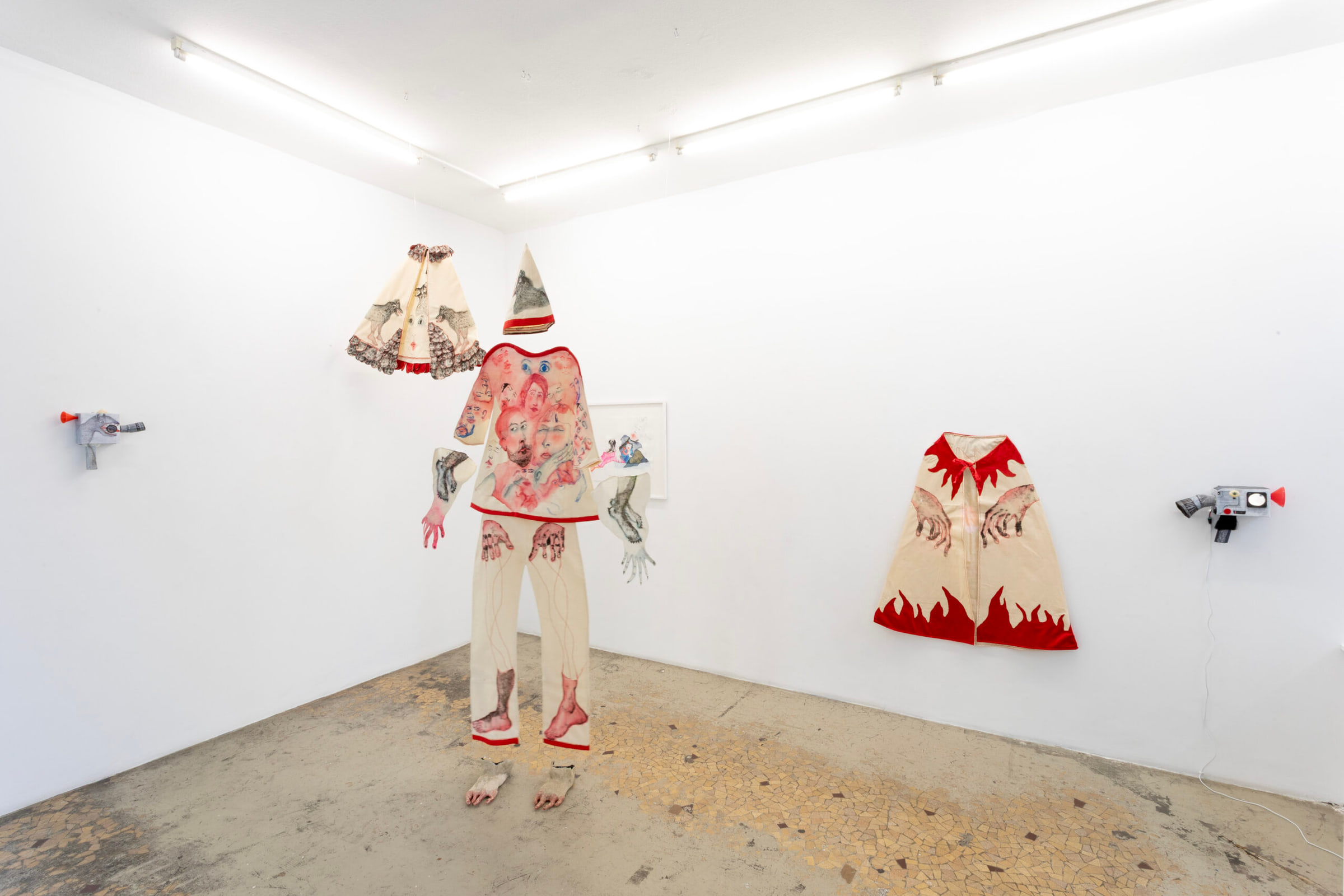
Praz-Delavallade is proud to welcome Golnaz Payani for her first solo show. Golnaz Payani, who was born in Teheran and now lives in Paris, embodies this generation of artists who delve into their own life story to find the elements of a new contemporaneity. The delicacy of her works and the emotions they give rise to are grounded in an attempt to exemplify a dual representation, one of paradise and lost happiness. She expresses the ambiguity of possibilities, where nostalgia meets memory and disappearance meets appearance. The very elegance of her art undeniably betrays her origins, this tropism that means she is drawn towards an idealised Persian garden. However, beauty is not alone in being invited into her art. Golnaz Payani strives to find the tiniest of details which will provide her with the feeling that she is returning to her roots, like a quixotic quest for a magical oasis, one that provides shade and succour and which is the stuff of which Persian tales are made. And yet, behind the poetry and the sheer delight of seeing, reality raises its head, a harsh, cruel and violent reality that does not necessarily reveal all at first glance.
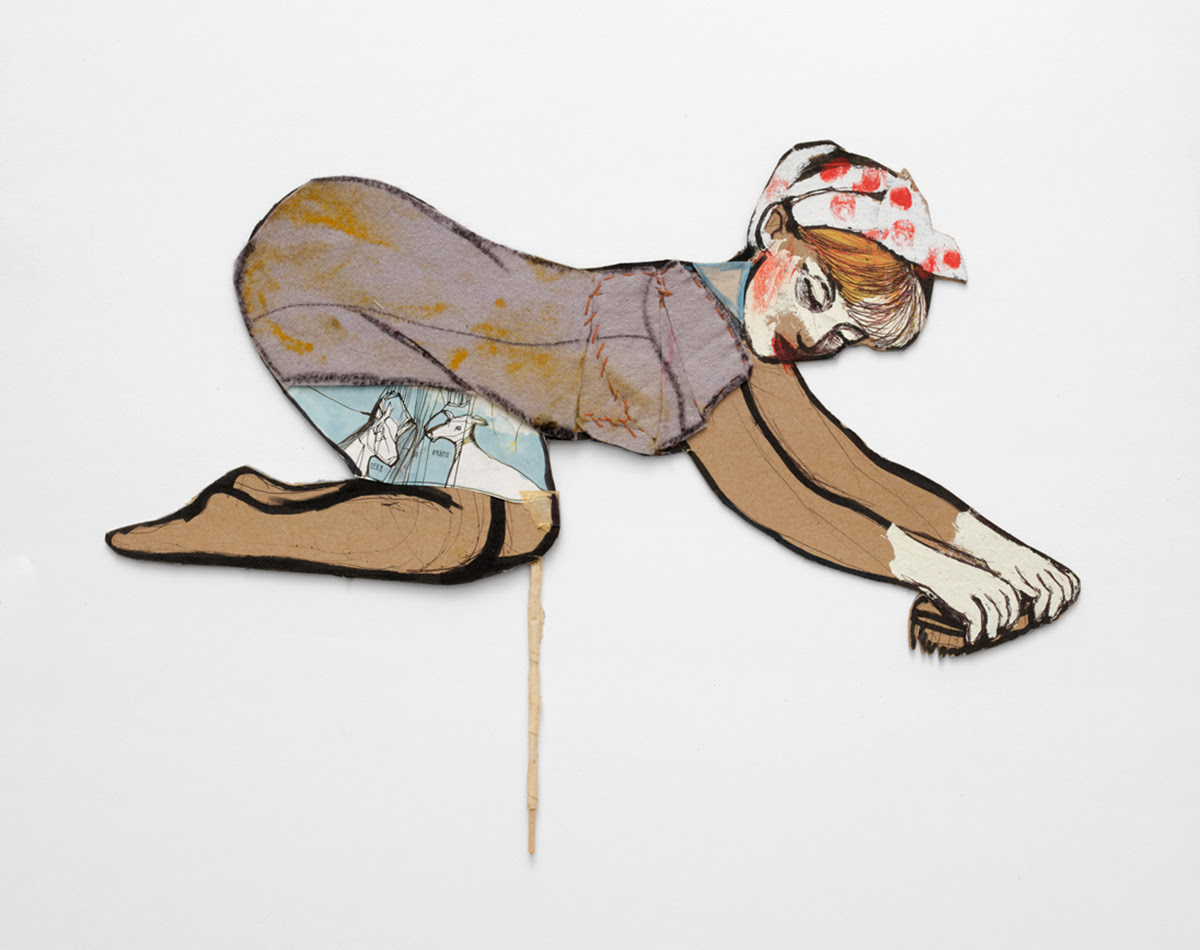
Just as these Indo-Persian tales have been passed down by word of mouth over the years, Golnaz Payani perpetuates stories as witnessed in her works. In her art, she remains faithful to the way this paradise is always represented, reinforcing her representation by borrowing traditional Persian motifs such as the Gol o Morgh, the flower and the bird. But make no mistake: behind her urbane appearance the artist is double-dealing, combining amiability and violence. Perhaps the latter is only present in her gestures, in the treatment she inflicts on the fabrics she uses, tearing, cutting and brutalising the material in a way that is a far cry from a perfect picture of idyllic happiness. In fact, this need she feels deep inside is apparent throughout her body of work in her constant toing-and-froing between presence and oblivion and with always the same insistence on traces: «Violence is also within the object I produce. The final work is a brutalised image, covered by other images superposed on top or hidden behind wool. The image is falsified, altered and transformed, which is in itself a violent act”, Golnaz Payani explains. Depending on its quality, its richness and the way she uses it, the fabric also embodies the notion that it actually reveals as much as it conceals, which is an underlying preoccupation in any quest for beauty and ornamentation. As she says herself: «Providing something that is beautiful to see, which in fact hides something else”. The same goes for her works on paper. Whether it is her stitches, her incisions of red and blue debris, her harmonious shades of orange or her doubly-transparent works, all are inspired by the tiles that decorate palaces, or which appear in the interlacing motifs of precious Persian carpets. “These motifs that I have embroidered represent a compendium of all of this ornamentation. I have simply replaced the diamond shape by a point.” Golnaz Payani bases the main part of her message on a narrative, on the telling of stories and their interpretation, building on the past in order to re-enchant the present. The Ombre des Oasis (shadow of the oases) hovers all around us and we are won over by a feeling of calm!
– René-Julien Praz
Golnaz Payani was born in Tehran in 1986. After studying Painting at the Faculty of Art and Architecture of Tehran, she continued her studies at the Clermont-Ferrand School of Art, where she obtained a National Diploma in Fine Arts (BFA) in 2010 and a National Diploma in Plastic Expression (MFA) in 2013. Payani has exhibited extensively in France and abroad: DomaineM, Cérilly, FR, 2019, 2018 ; Mastre, Venise, IT, 2018 ; Paratissima, Turin, IT, 2017 ; 61ème salon de Montrouge, FR, 2016 La Trap, Pré-Saint-Gervais, FR, 2015.
*****
Praz-Delavallade se félicite d’accueillir Golnaz Payani pour sa première exposition personnelle. Née à Téhéran et vivant à Paris, Golnaz Payani incarne cette génération de créateurs puisant dans leur histoire personnelle les éléments d’une nouvelle contemporanéité. La délicatesse de ses œuvres et les sentiments qu’elles inspirent ont pour fondement l’idée d’incarner cette représentation tant du paradis que du bonheur perdu. Il y a dans ses propos cette ambiguïté du possible, entre nostalgie et souvenir, disparition-apparition. L’élégance même de son art traduit indéniablement ses origines et ce tropisme pour ces jardins de Perse idéaux. La beauté n’est pas seule à être convoquée, Golnaz Payani recherche l’infime détail qui lui offrira ce sentiment de ressourcement, une quête chimérique d’une oasis accueillante et merveilleuse, fraîche et ombrée dont les contes Persans s’inspirent.
Derrière la poésie et la volupté du voir, se dévoile la réalité du vrai, rude, âpre, violente et qui au premier regard ne se livre pas forcément. À l’image de ces contes qui ont une origine indo-persane, des récits qui auraient été au fur et à mesure du temps transmis par voie orale. Golnaz Payani perpétue ces histoires, ses œuvres en attestent, fidèles à l’image de la représentation de ce paradis quelle souligne par l’appropriation de motifs persans traditionnels tels que le «Gol-O-Morgh», la fleur et l’oiseau. Ne nous méprenons pas, l’artiste sous des aspects urbains joue double jeu entre l’aimable et le violent, ne serait-ce que par les gestes physiques qu’elle inflige aux tissus et étoffes qu’elle utilise : elle arrache, coupe, enlève, rajoute et maltraite le tissu loin de l’image idyllique du bonheur paradisiaque.
On retrouve d’ailleurs tout au long de son ouvrage ce besoin qui l’habite, ces allers-retours entre apparition et néant, toujours cette insistance de la trace : «La violence est aussi dans l’objet que je produit, l’œuvre finale est une image maltraitée, couverte par la superposition d’autres images ou masquée par de la laine. L’image est falsifiée, modifiée, transformée, ce qui est un acte violent en soit» précise t’elle. Ce tissu incarne selon sa qualité, sa richesse et la manière dont elle en fait usage le sentiment que ce dernier couvre tout autant qu’il dévoile. Une préoccupation sous jacente à ce besoin du beau et de la décoration, «donner au regard une belle vue qui en cacherait une autre» dit-elle. Il en va de même pour ses travaux sur papier, que ce soit ses piqures et incisions de débris rouges et bleus, ses harmonies orangées ou ses œuvres à la transparence double, toutes sont inspirées par les carreaux qui ornent les architectures des palais où apparaissent dans les entrelacs des précieux tapis Persans. «Ces motifs que j’ai brodé incarnent la synthèse de ces ornementations, j’ai simplement remplacé le losange par un point».
Golnaz Payani fonde l’essentiel de son propos sur la narration des contes et leur herméneutique s’appuyant sur le passé pour ré-enchanter un présent. L’Ombre des Oasis plane sur nous tous et l’apaisement nous gagne !
Golnaz Payani est née à Téhéran en 1986. Elle vit et travaille à Paris. Après une Licence de Peinture obtenue à la Faculté d’Art et d’Architecture de Téhéran, elle poursuit un cursus complet à l’École d’Art de Clermont- Ferrand où elle obtient le Diplôme National d’Arts Plastiques en 2010 et le Diplôme National Supérieur d’Expression Plastique en 2013. Depuis 2011, son travail est présenté au sein d’expositions personnelles et collectives en France et à l’étranger : DomaineM, Cérilly, FR, 2019, 2018 ; Mastre, Venise, IT, 2018 ; Paratissima, Turin, IT, 2017 ou encore La Trap, Pré-Saint-Gervais, FR, 2015.