Ended Jun 22
Hana Miletić
Desire Lines
May 6 – Jun 22, 2025
More from Hana Miletić on Gallop
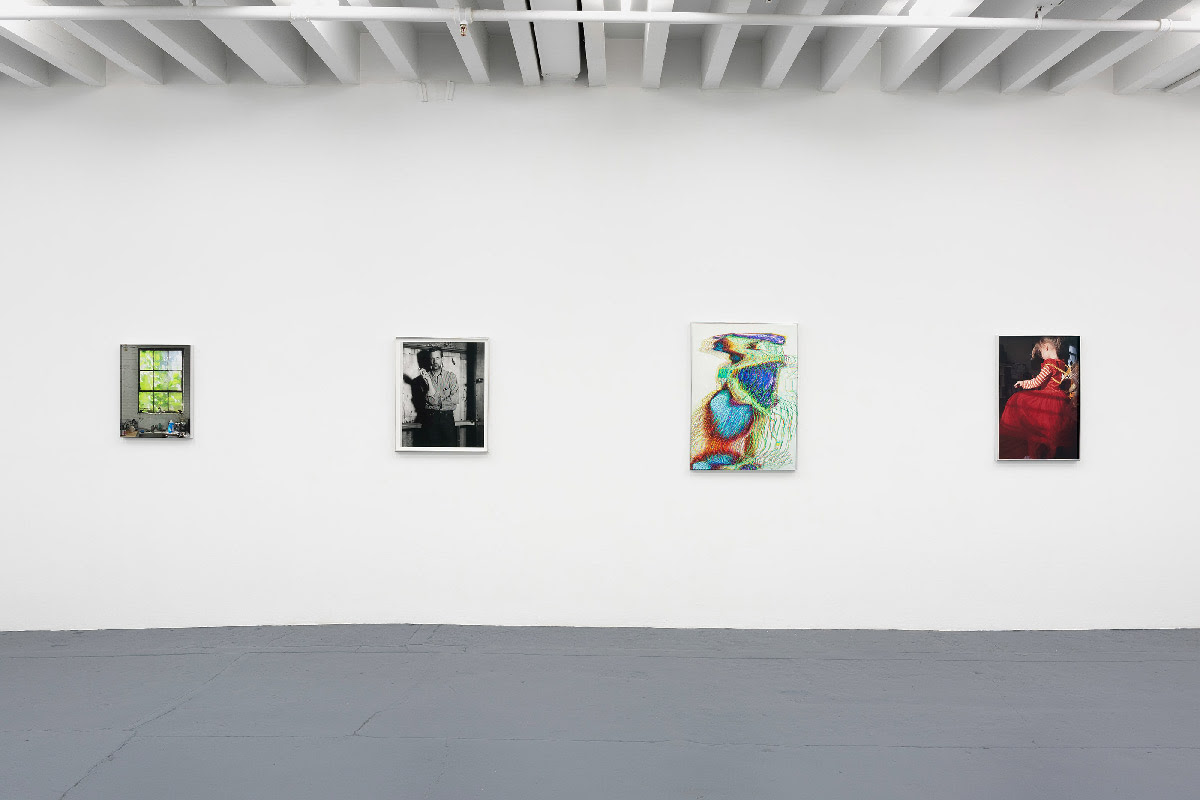
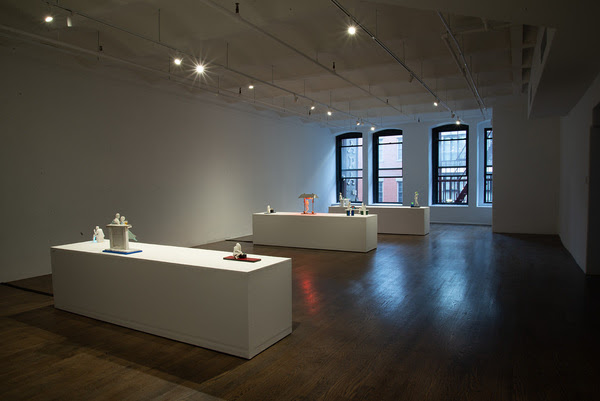
Magenta Plains is pleased to present Desire Lines, an exhibition of new hand-woven textile works by Hana Miletić. For her first gallery exhibition in the U.S., Miletić builds upon her well-known Materials series (ongoing since 2015). In the Materials series, delicate, often brightly colored weavings are conceived in relation to street photography, and hand woven on a 1970s loom. Extending from her formal training as a photographer, their idiosyncratic shapes and color-schemes are based on Miletić’s snapshots of temporary repairs to buildings and objects in urban public spaces. For Desire Lines, most of the works draw from the gallery’s neighborhood, New York City’s Chinatown. After photographing specific repairs and transformations during a site visit in 2024, the artist hand-wove each piece on her studio loom in Brussels. Reflecting on the incommensurable relationship between representation and historical development, Miletić’s process slows down production, translating overlooked, ad hoc handiwork in public space into delicate textile forms.
Miletić approaches Chinatown (like the cities of Dhaka, Pristina or Rijeka, where she has worked before) as a neighborhood defined by histories of struggle around precarious immigrant labor. Where the area’s strongholds in community organization and labor activism are met with property speculation and gentrification, Miletić's practice attempts to capture, if not directly represent, the traces of these opposed social forces through textile. The complex history of weaving, one of the oldest gendered trades, is the foundation of Miletić's work. Chinatown itself was built on the labor of those who manned the industrial sewing machines and small-scale light machinery in the garment factories which dominated Chinatown’s economy for most of the 20th century. Miletić’s collection of hand-made repairs – fixes, patches, mends, and temporary remedies – speak to the way labor creates the world we see and navigate.
Though never exhibited, the photographs of responsive, ad-hoc constructions (a haphazardly executed silver tape repair on a cracked window, a black tarp window covering held in place with blue painter’s tape, or a caution tape dangling around a streetlight) become templates for seemingly abstract textile pieces. Materials’ fidelity to the source photography also provides a logic for the scattershot heights the works hang at when presented in the gallery. The artist isolates these repairs as indices of socio-economic developments in cities, as well as representations in miniature of individuals’ “subjective gestures of care.” Tape holding together a broken window, for example, can indicate underfunded public housing and individual ingenuity at the same time. Across her various series, Miletić calls attention to the gendered associations of textile craft, subtly relating forms of historically undervalued labor, like the “women’s work” of weaving, to other narratives of social and economic struggle and the larger political forces that give shape to them.
In Desire Lines, Miletić presents a new textile work based on a reference photograph (a source document she calls 'cartoon'), on which she has applied generative AI technology, extending the image beyond its original edges. This follows Miletić longstanding interest in the relationship between weaving and the development of computer programming. Miletić uses AI deliberately and critically here, with a particular focus on the affective: not to enlarge the backgrounds of the places where she has photographed, but to enhance the traces of care and maintenance in those places by making them look bigger and more extravagant. Miletić stretches images during postproduction with the help of AI technology, before extending the time of their reproduction by weaving them. During these consecutive processes the surface of the image is not only stretched, but also distorted, warped and skewed, making the repair even more abstracted from its original form, and bringing it closer to a fictionalized or imagined subject. While this creates new sets of concerns – about truth value and authorship – it also generates a form of historical imagination, with this repair suggesting an alternative to present condition.
A "desire line” is an unplanned small path that represents the shortest or easiest route between two points. The earliest documented example in New York City is on Broadway in Manhattan, which follows the Wecquaesgeek trail predating European colonization. These social trails are convenient shortcuts that emerge against ordered or planned pathways, which represent a route dictated by an absentee power. Instead, desire lines memorialize the choices individuals make in their navigation of space. The casual repairs Miletić re-creates are improvised transformations, fashioned as conveniences, which, like desire lines, alter the structure of the city, indicating an alternate urban layout dictated by the everyday movements of the people who navigate it. Desire Lines looks to these improvisations as a roadmap for a different future.
Hana Miletić (b. 1982, Zagreb, HR) has held recent solo exhibitions at Foundation Walter & Nicole Leblanc, Brussels, BE (2025); MIT List Visual Arts Center, Cambridge, MA (2024); Kunsthalle Mainz, DE (2023); Museum of Modern and Contemporary Art, Rijeka, HR; Mudam Luxembourg (2022); Bergen Kunsthall, NO (2021); and Wiels, Brussels, BE (2018).
Her work was also included in Dhaka Art Summit, Dhaka, BD (2023); Manifesta 14, Prishtina, XK (2022); the 13th Sharjah Biennial (2017) and has been exhibited in group survey exhibitions at institutions including Antenna Space, Shanghai, CN; Kunsthalle Wien, Vienna, AT; Talbot Rice Gallery, Edinburgh, UK; Museum of Contemporary Art, Zagreb, HR; among many others.
Her work is in the permanent collections of Amsterdam Museum, Amsterdam; Flemish Parliament, Brussels; Frac Grand Large - Hauts-de-France, Dunkirk; Institut d'art contemporain (IAC), Villeurbanne/Rhône-Alpes; Kadist, Paris; KANAL Pompidou, Brussels; MAK Museum, Vienna; M Museum, Leuven; MUDAM, Luxembourg; MuHKA, Antwerp; Museum of Contemporary Art (MSU), Zagreb; Mu.ZEE, Ostend; Stedelijk Museum, Amsterdam; Susch Museum, Susch. In 2021 Miletić was awarded the Bâloise Art Prize. Hana Miletić lives and works in Brussels, Belgium.