Ended Mar 12
Yves Laloy
Vision
Jan 8 – Mar 12, 2022
More from Yves Laloy on Gallop
[Scroll down for French version / Veuillez trouver ci-dessous la version française]
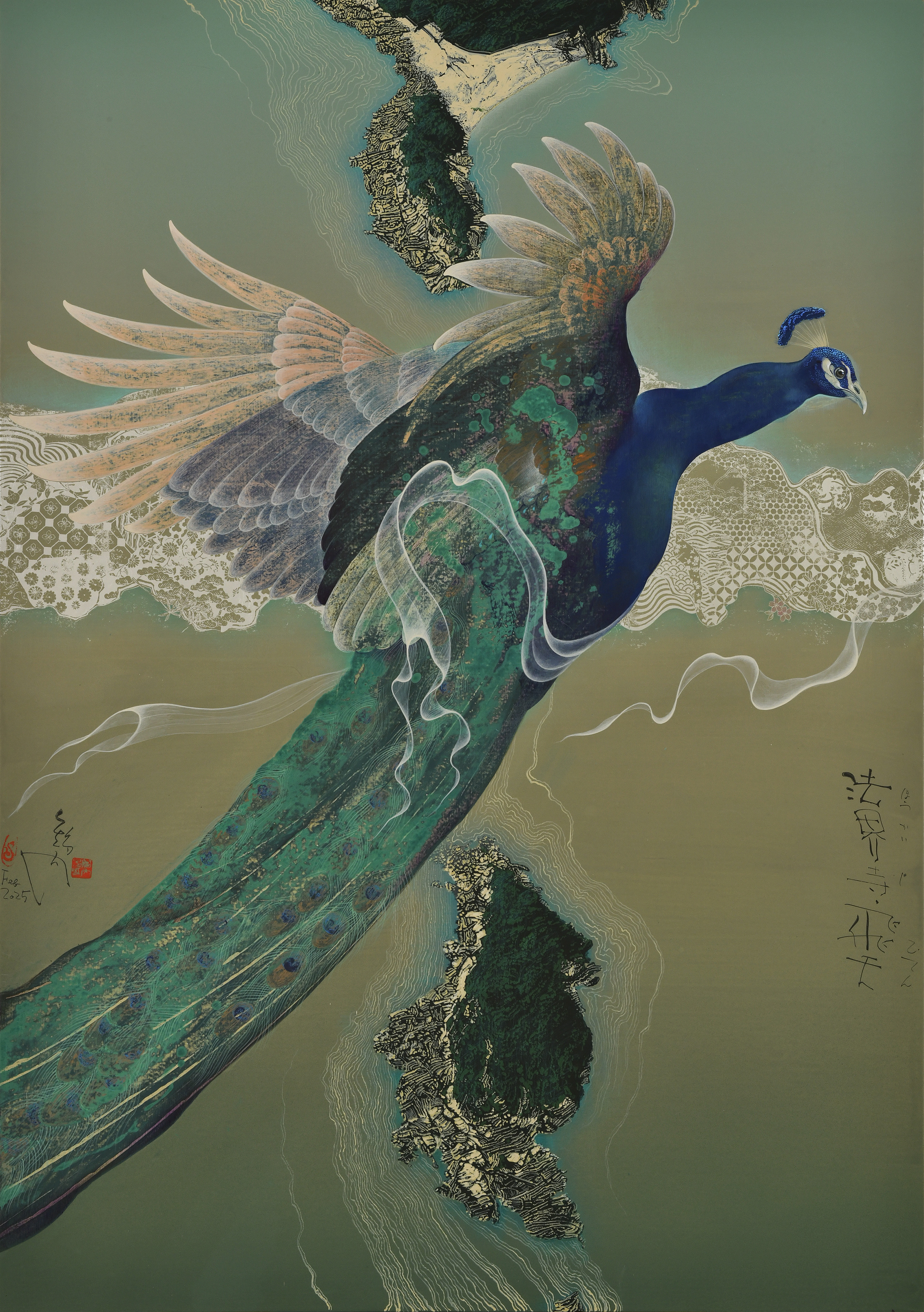
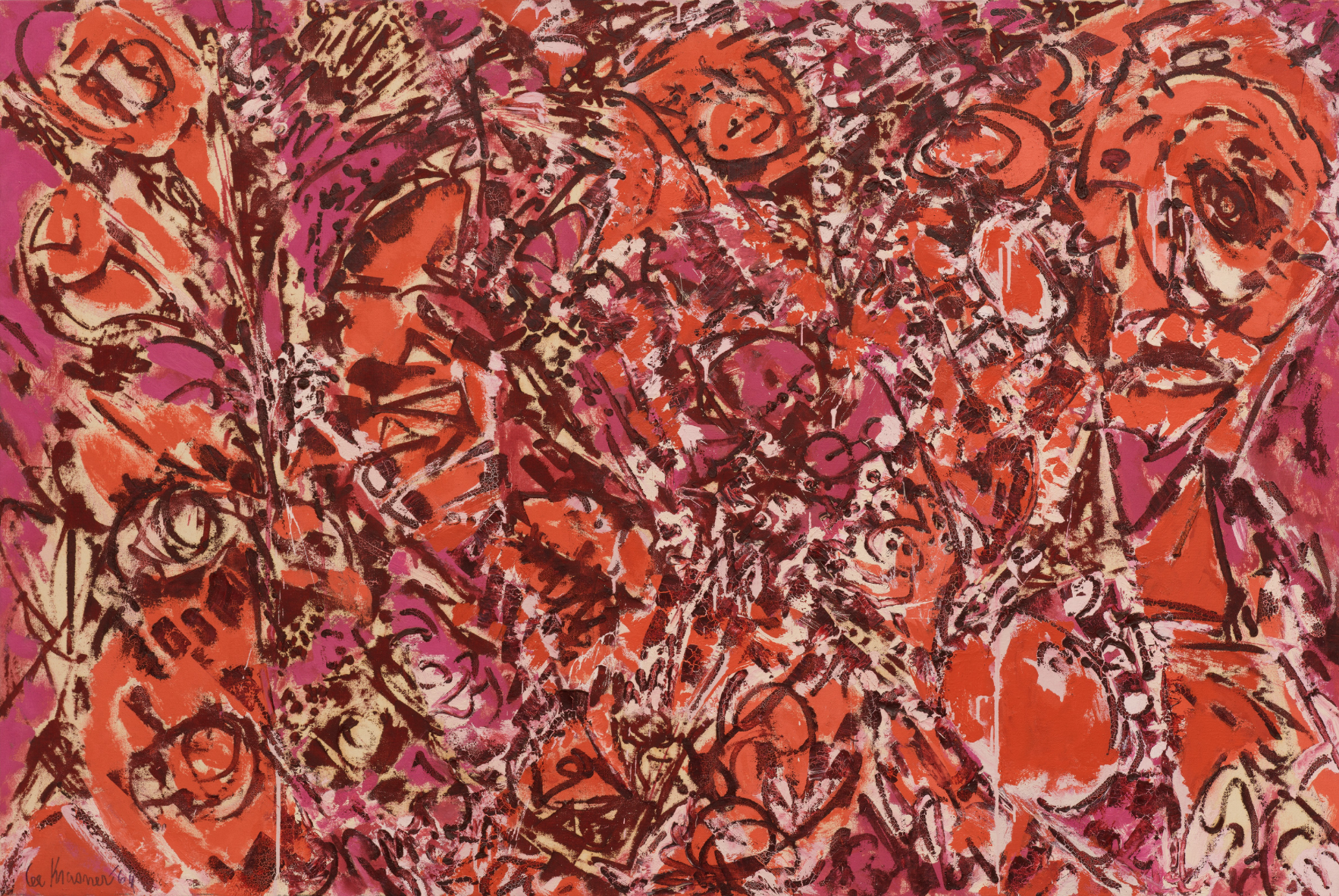
Perrotin is dedicating its first monographic exhibition on Yves Laloy (born in Rennes in 1920; died in Cancale in 1999). Some fifty works will be on view in both gallery spaces on avenue Matignon and rue de Turenne. Yves Laloy’s work has not been featured in a major exhibition since 2004, in a retrospective at the Musée des Beaux-Arts in Rennes. Two of his emblematic works from that museum’s collections will be exceptionally presented here.
Yves Laloy began his career as an architect, before turning definitively to painting in 1950. From the start, he began exhibiting in Parisian galleries devoted to Surrealism, which resonated with the wordplay and irony nestled in his work. In 1958, André Breton orchestrated an exhibition for him at the Galerie La Cour d’Ingres, and wrote a laudatory preface to the catalog. A few years later, Breton selected his painting Les Petits pois sont verts, les petits poissons rouges... (1959) as the cover image for his book Le Surréalisme et la peinture. Laloy himself was never part of the Surrealist movement; he developed his work around a multifaceted ‘plastic’ vocabulary, ranging from rigorous geometric compositions to undulating, cosmogonic worlds. His works have been exhibited in Paris, Milan, Basel, and within larger exhibitions devoted to Surrealism, including the 1991 homage to André Breton at the Centre Pompidou. His independent nature and the rarity of his work have bestowed him with a fairly discreet artistic status, known mainly amongst lovers of Surrealism. The polyphony of this hard-to-classify œuvre and its unconventional curiosity invite us to look at these paintings today in a different light. They are replete with the mysteries of the cosmos and the unconscious.
While Laloy’s spiritual dimension is forcefully expressed in the work, another singularity is clear, even to those looking at it today: he was a “sampler” of extremely heterogenous influences, in a way that is ultimately quite unconventional in postwar art. [...]
In the early 1950s, various avant-gardes coexisted in Paris, some long established, others more recent: lyrical abstraction, the abstract landscaping of the New School of Paris, art brut, the miserabilism of Bernard Buffet; while in the United States, abstract expressionism was causing a revolution. Certain of Laloy’s paintings seem to be “more” of one or another of these, but never in a confrontational way, and indeed while we can often see similarities in his works of the 1950s and 1960s to Kandinsky, Paul Klee, Auguste Herbin (who unveiled his “Plastic Alphabet” in 1946), and above anything else, to the works of the painter and tapestry designer Jean Lurçat, popular in Paris since the 1930s, the particularities of these paintings is to summon all these sources at once, “mixing”—as we say today—the contributions of one with those of another, combining sequences from one with the DNA of another. In his paintings, Laloy makes several languages coexist, each belonging to the figurative or abstract universe, in compositions always, notoriously, asymmetrical. And more importantly, he adds to theses universes a full pantheon of influences from both the so-called minor arts and cultures from beyond Western art’s conventional perimeter—thirty years before William Rubin showed, with the exhibition “Primitivism” in 20th Century Art at MoMA in New York in 1984, what can, in a certain light, unite contemporary and tribal art. Thus, in Laloy’s paintings we see not only sampling from Kandinsky, Herbin, and Lurçat, but patterns inspired by Panamanian Indian fabrics, Incan potter, and Native American sand paintings, an early celebration of the “Magiciens de la Terre.” [1]
—Eric Troncy, extract of Vision, exhibition catalog Yves Laloy, Perrotin, 2022
1 - Magiciens de la Terre was a highly influential exhibition at the Musée National d’Art Moderne – Centre Georges Pompidou and at the Villette, Paris in 1989, curated by Jean-Hubert Martin.
*****
Perrotin organise pour la première fois une exposition monographique d’Yves Laloy (1920 Rennes - 1999 Cancale) dans deux de ses espaces avenue Matignon et rue de Turenne, au travers d’une cinquantaine d’œuvres. L’artiste n’avait pas eu de grande exposition depuis une rétrospective au Musée des Beaux-Arts de Rennes en 2004. Deux œuvres emblématiques de Laloy issues de collections publiques sont exceptionnellement prêtées à la galerie à cette occasion.
Yves Laloy commence une carrière d’architecte avant de se tourner définitivement vers la peinture en 1950. Dès ses débuts, il expose dans les galeries surréalistes parisiennes où ses calembours et son ironie trouvent une résonance toute particulière. En 1958, André Breton lui organise une exposition à la Galerie La Cour d’Ingres et signe un texte élogieux dans la préface du catalogue. Quelques années plus tard, Breton choisit Les Petits pois sont verts, les petits poissons rouges... (1959) pour illustrer la couverture de son ouvrage Le Surréalisme et la peinture. Laloy lui-même n’a jamais adhéré au mouvement surréaliste, il a développé son œuvre autour d’un vocabulaire plastique multiple allant de compositions géométriques d’une grande rigueur à une figuration de mondes ondoyants et cosmogoniques. Ses œuvres ont été montrées à Paris, Milan, Bâle, et dans des expositions consacrées au surréalisme, jusqu’à celle organisée en 1991 au centre Pompidou en hommage à André Breton. Sa nature indépendante et la rareté de son œuvre lui ont conféré un statut d’artiste assez confidentiel, connu principalement des amateurs d’art surréaliste. La polyphonie de cette œuvre inclassable et sa curiosité non conventionnelle invitent aujourd’hui à regarder sous un jour différent ces tableaux pleins des mystères du cosmos et de son inconscient.
Si la dimension spirituelle de l’homme s’exprime fortement dans l’œuvre, une autre singularité s’impose à celui qui aujourd’hui la regarde : Laloy “sample” – comme on dit aujourd’hui – des influences très hétérogènes, d’une manière assez peu conventionnelle dans l’art d’après-guerre. [...]
À Paris, au début des années 1950, coexistent divers courants d’avant-garde, certains perdurant, d’autres plus nouveaux : l’abstraction lyrique, le paysagisme abstrait de la Nouvelle École de Paris, l’art brut, le misérabilisme de Bernard Buffet ; tandis qu’aux États-Unis l’expressionnisme abstrait fait révolution. Certains tableaux de Laloy semblent relever “plutôt” de celui-ci ou de celui-là, mais jamais de manière frontale, et si l’on repère en effet souvent dans ses œuvres des années 1950 et 1960 des similitudes avec Kandinsky, Paul Klee, Auguste Herbin (qui dévoila son “Alphabet plastique” en 1946), et surtout avec les œuvres du peintre et créateur de tapisseries Jean Lurçat, qui connaît un grand succès à Paris depuis les années 1930, la particularité de ces tableaux est bien de convoquer toutes ces sources simultanément, “mixant” les apports d’un tel avec ceux d’un autre, combinant des séquences de l’un avec l’ADN de l’autre. Laloy fait coexister dans ses toiles plusieurs langages, chacun ressortissant à l’univers figuratif ou à l’univers abstrait, dans des compositions toujours ouvertement asymétriques. Surtout, il ajoute à ces univers tout un Panthéon d’influences à la fois d’arts dits mineurs et de cultures excédant le périmètre conventionnel des arts occidentaux – trente ans avant que, en 1984 au MoMA de New York, William Rubin ne montre, avec l’exposition “Primitivism” in 20th Century Art, ce qui peut, sous une certaine lumière, unir l’art contemporain et l’art tribal. Ainsi voit-on dans les tableaux de Laloy, au-delà du sample de Kandinsky, Herbin ou Lurçat, des motifs inspirés des pièces de tissus des Indiens du Panama, de la poterie des Incas, ou des tableaux de sable des Amérindiens, célébration hautement précoce des Magiciens de la Terre. [1]
—Eric Troncy, extrait de Vision, catalogue de l’exposition Yves Laloy, Perrotin, 2022
1 - Magiciens de la Terre est le titre de l’exposition qui eut lieu en 1989, au Musée national d’art moderne - Centre Georges-Pompidou et à la Villette, à Paris, sous le commissariat de Jean-Hubert Martin.