
Exhibition · Peggy Guggenheim Collection
Peggy Guggenheim in London: The Making of a Collector
Apr 25 – Oct 19
About the show
Opens April 25, 2026
Tickets available at tinyurl.com/2evuywxw
Eileen Agar, Jean (Hans) Arp, Salvador Dalí, César Domela, Lucian Freud, Gisèle Freund, Otto Freundlich, Albert Harlingue, Hans Hartung, Stanley William Hayter, Jean Hélion, Heinz Henghes, Barbara Hepworth, Charles Houghton Howard, Dalla Husband, Humphrey Jennings, Augustus John, Vasily Kandinsky, Rita Kernn-Larsen, André Masson, Willy Maywald, Reuben Mednikoff, Piet Mondrian, Henry Moore, Cedric Morris, Paul Nash, Jeanne Oosting, Wolfgang Paalen, Grace Pailthorpe, Helen Phillips, Anton Prinner, Siri Rathsman, Man Ray, Kurt Schwitters, Sophie Taeuber-Arp, Yves Tanguy, John Tunnard, Pegeen Vail, Julie Van der Veen, Georges Vantongerloo, Marie Vassilieff, Paule Vézelay, Edward Wadsworth
"I have been in love with Venice for fifty years. If I didn't live here I would live in the English countryside."
—Peggy Guggenheim
The Peggy Guggenheim Collection presents Peggy Guggenheim in London: The Making of a Collector, the first large-scale museum exhibition dedicated to Peggy Guggenheim's years in London and her first gallery, Guggenheim Jeune, active at 30 Cork Street from 1938 to 1939. Organized by Gražina Subelytė, Curator, Peggy Guggenheim Collection, and Simon Grant, Guest Curator, the show casts a spotlight on a key chapter in Guggenheim's life, which defined her future as a collector and patron of twentieth-century art.
Guggenheim Jeune played a crucial role in shaping the artistic landscape of prewar Britain by increasing the visibility and acceptance of contemporary art at a time when institutions in London were still largely conservative. Alongside galleries such as the Redfern Gallery, the Mayor Gallery, and the London Gallery, it challenged established norms and provided an essential platform for the avant-garde. Additionally, this period proved essential in defining Guggenheim's identity as a patron of the arts—marked by her intention to establish a modern art museum in London, a vision that ultimately came to fruition in Venice. Over the course of eighteen months, Guggenheim Jeune became a beacon for the era's artistic avant-garde, distinguished for promoting local and international artists, many of whom were connected to Surrealism and abstraction, as well as for its bold and experimental exhibition program. Over a surprisingly brief period, from January 1938 through June 1939, Guggenheim organized over twenty shows and marked several curatorial firsts, including Vasily Kandinsky's first solo show in the United Kingdom, a solo exhibition of Jean Cocteau, the first U.K. group exhibition dedicated to collage, a controversial contemporary sculpture exhibition, and an exhibition of works created by children, including a very young Lucian Freud, marking the renowned British artist's debut.
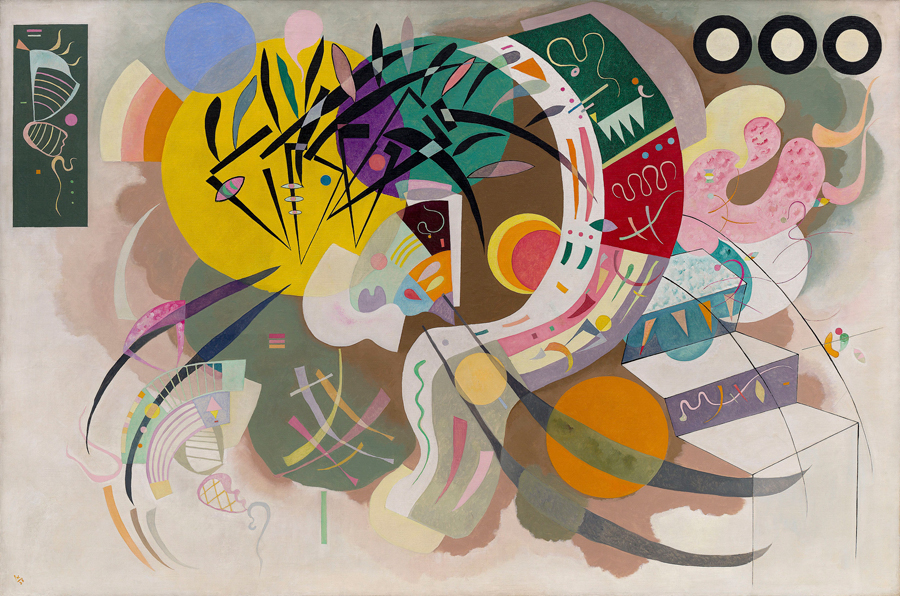
The exhibition brings together about one hundred key works—on loan from leading international institutions and private collections—that were on view at those pioneering shows, and related objects from the same period, as well as works by artists that Guggenheim later collected. These include Eileen Agar, Jean (Hans) Arp, Barbara Hepworth, Vasily Kandinsky, Rita Kernn-Larsen, Piet Mondrian, Henry Moore, Cedric Morris, Sophie Taeuber-Arp, Yves Tanguy, and others. The show features paintings, sculptures, works on paper, photographs, puppets, and archival material that highlights the variety of media exhibited by the gallery. It also documents a period of intense artistic experimentation and cultural innovation, marked by the profound sociopolitical tensions that preceded the outbreak of World War II. Guggenheim's friendships and collaborations in London are also a key focus of the exhibition, especially with leading figures of modernism—including Arp, Samuel Beckett, Marcel Duchamp, Roland Penrose, Herbert Read, and Mary Reynolds—as well as the vital network of galleries and intellectuals active in the city at the time.
The exhibition unfolds starting with key abstract and Surrealist works exhibited during Guggenheim Jeune's brief but intense period of activity, reflecting the main artistic currents underpinning the gallery's program. The following rooms are dedicated to solo shows the gallery devoted to artists including Kandinsky and Russian-born artist Marie Vassilieff, a pioneering figure in the development of the "portrait doll" genre, that is today regarded as an early reference for transdisciplinary artistic practices. This section is also dedicated to the modern sculpture exhibition that became a major event in the cultural history of pre-war London, revealing Guggenheim's vital role in promoting and ensuring the acceptance of modern and abstract art in Britain. Next are a series of portraits by Welsh artist Cedric Morris, a central figure in the British avant-garde, while another section is dedicated to shows presenting the work of U.S. painter Charles Howard and German sculptor Heinz Henghes, and the exhibition of Atelier 17, a printmaking studio founded by Stanley William Hayter. This is followed by a tribute to the exhibition Abstract and Concrete Art, featuring works by artists such as Mondrian, Taeuber-Arp, and Van Doesburg. A section will also focus on the photographic color portraits of Gisèle Freund, presented at Guggenheim Jeune as slide projections, her favored form of showing her color transparencies of artists and intellectuals throughout her life. Finally, the last rooms bring together works by artists included in the collage exhibition and several Surrealist exhibitions, including Kernn-Larsen, André Masson, Reuben Mednikoff, Wolfgang Paalen, Grace Pailthorpe, Man Ray, Tanguy, and John Tunnard.
Peggy Guggenheim in London: The Making of a Collector also stands as a tribute to the love that connected Guggenheim to England, which she always considered her spiritual home and where she maintained several close ties. When reflecting on her life during an interview in 1976, she stated: "I have been in love with Venice for fifty years. If I didn't live here I would live in the English countryside."
The exhibition is accompanied by an extensive illustrated catalogue, edited by the Peggy Guggenheim Collection and published by Marsilio Arte, which includes new essays by numerous scholars and art historians. Edited by the exhibition's curators Gražina Subelytė and Simon Grant, the volume includes essays by the editors and by Emma Boyd, James Chadwick, Emily Christensen, Ambra D'Antone, Susan Davidson, Patrick Elliott, Alice Ensabella, Paul B. Franklin, Sarah Lea, Clara L. Masnatta, Rosalind McKever, Benoît Noël, Abi Shapiro, Umberto Varricchio, Louise Weller, and Christina Weyl.
A rich program of free collateral events also accompanies the show, exploring and interpreting the exhibition, organized with the support of Fondazione Araldi Guinetti, Vaduz.
After Venice, Peggy Guggenheim in London: The Making of a Collector will travel to the Royal Academy of Arts, London, from November 21, 2026, through March 14, 2027, strengthening the international dialogue surrounding a key figure of twentieth-century art history and the context that marked her development, and to Guggenheim New York, from April 16, through September 12, 2027.
In Venice, the exhibition is made possible with the generous support of The K HR McNeely Family Foundation, Kevin, Rosemary and Hannah Rose McNeely.
About Peggy Guggenheim Collection
In October 1942, Peggy opened her museum-gallery Art of This Century in Manhattan, at 30 West 57th Street. Designed by the Austrian architect Frederick Kiesler, Art of This Century consisted of innovative and visually compelling exhibition rooms and soon became the most stimulating venue for contemporary art in New York City.
More about Peggy Guggenheim Collection →