
Exhibition · Gnyp
Wojciech Fangor
Nudes 1945–2010
Nov 30 – Feb 28
6 images · swipe
About the show
[Please scroll down for German version / Für Deutsch bitte scrollen Sie nach unten]
GNYP Gallery is pleased to present the fourth solo exhibition of the esteemed Polish artist Wojciech Fangor in Berlin.
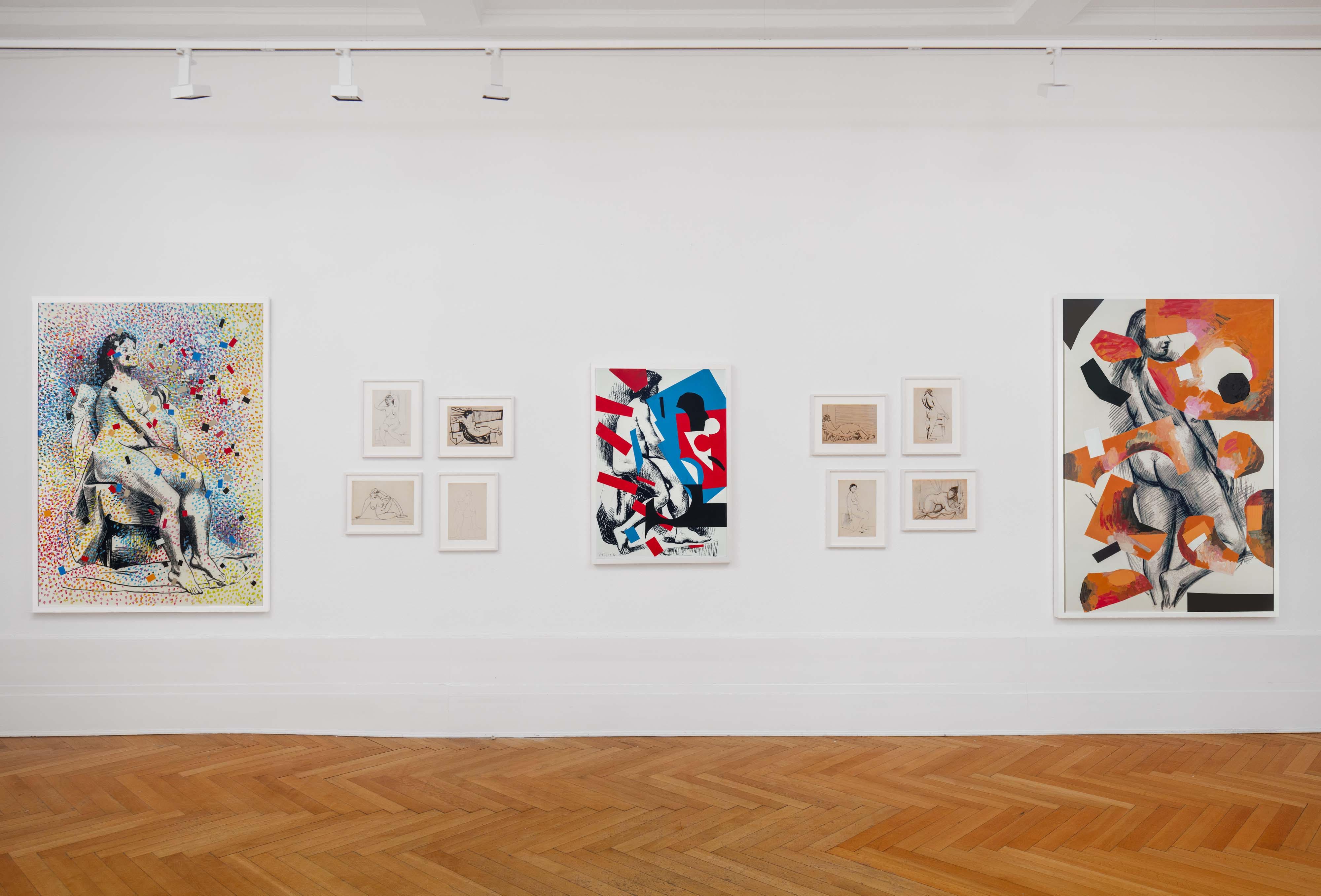
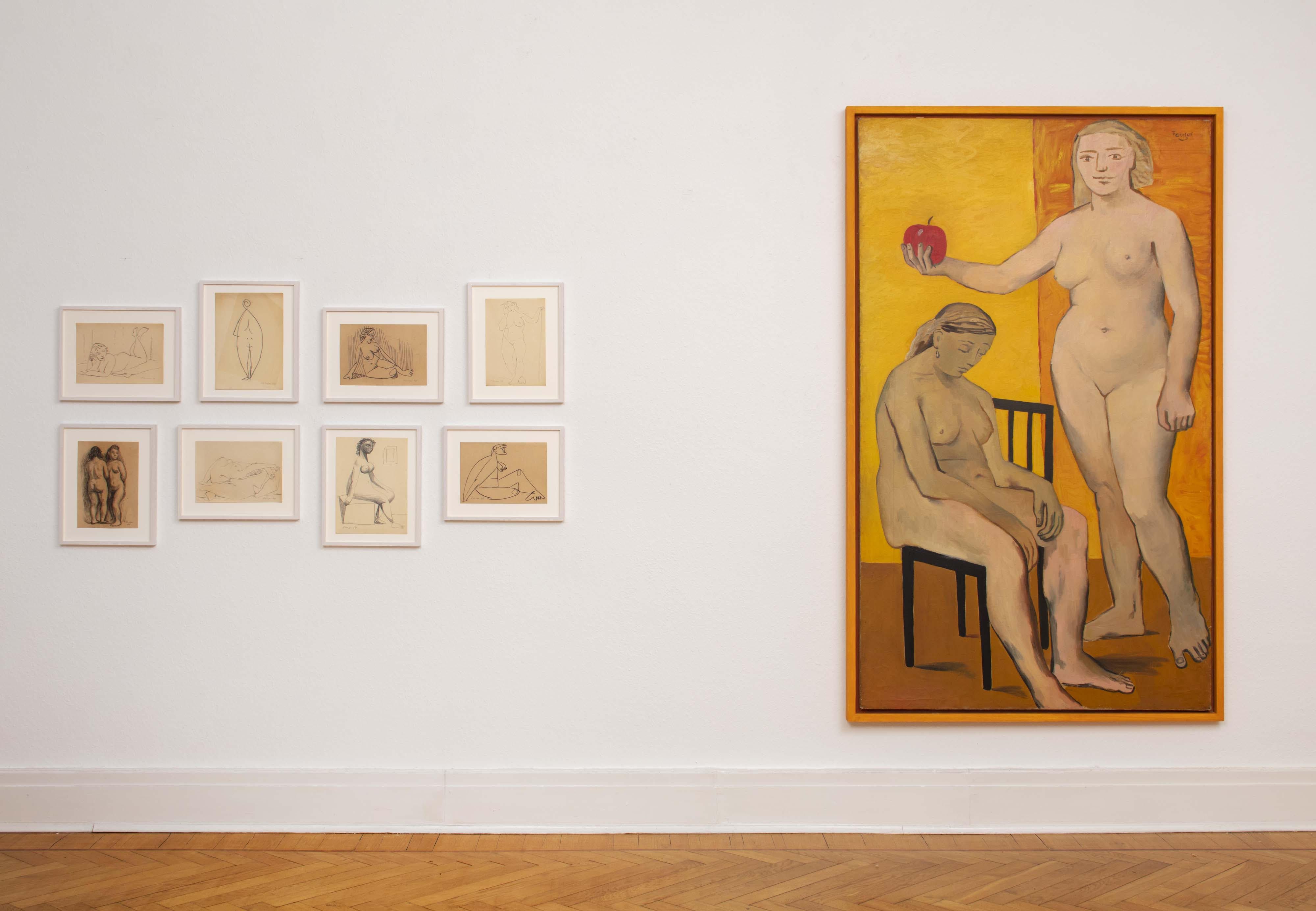
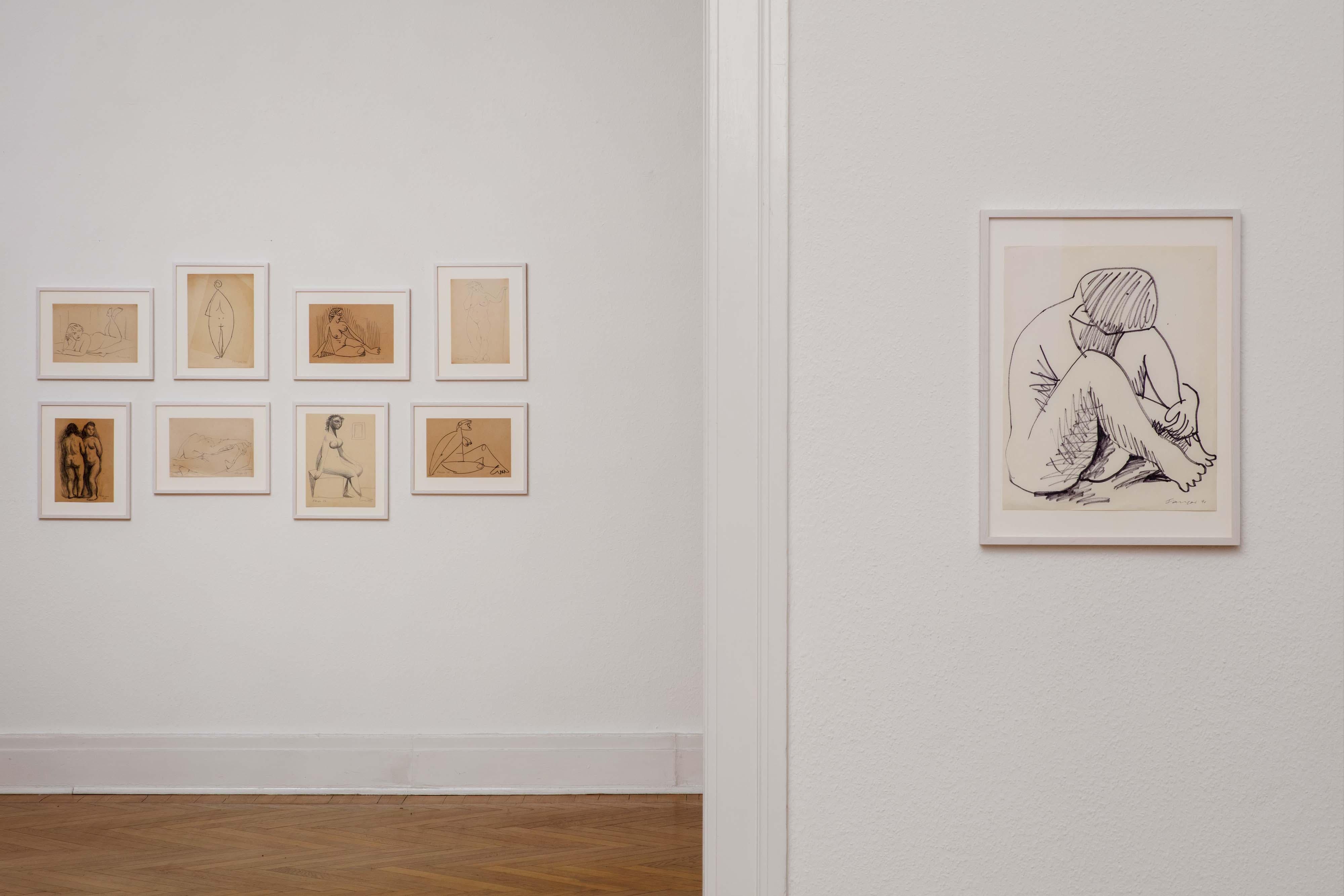
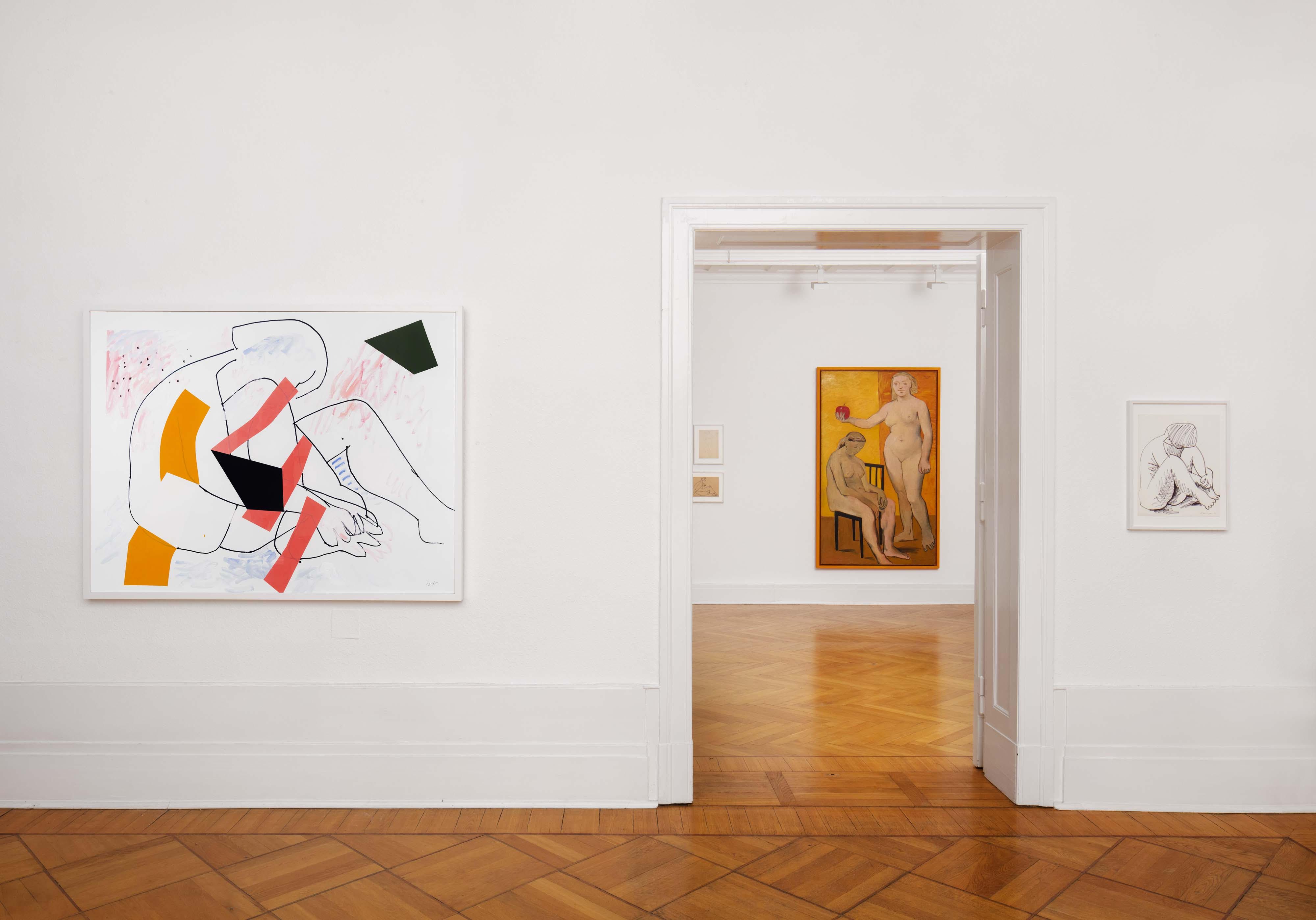
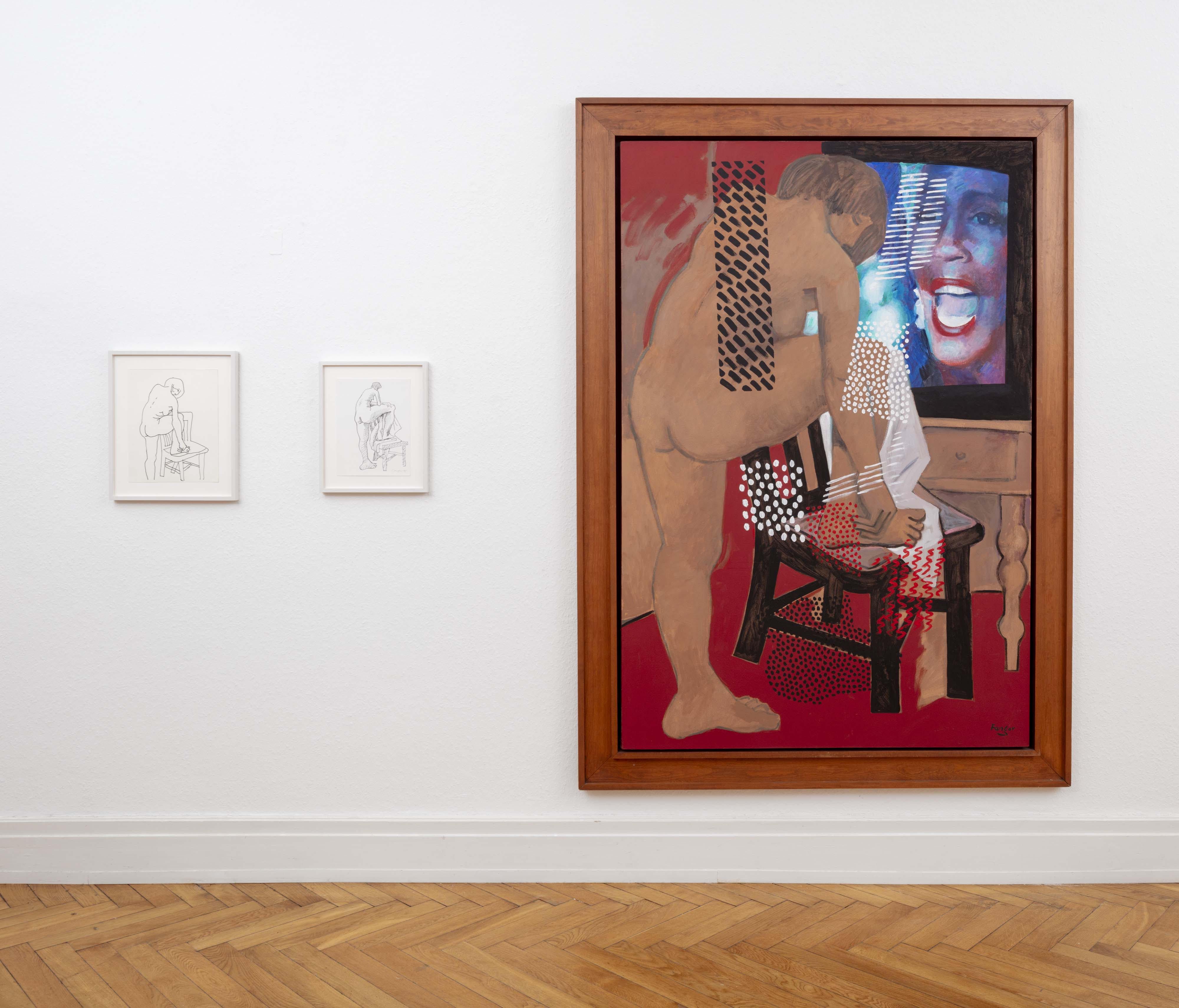
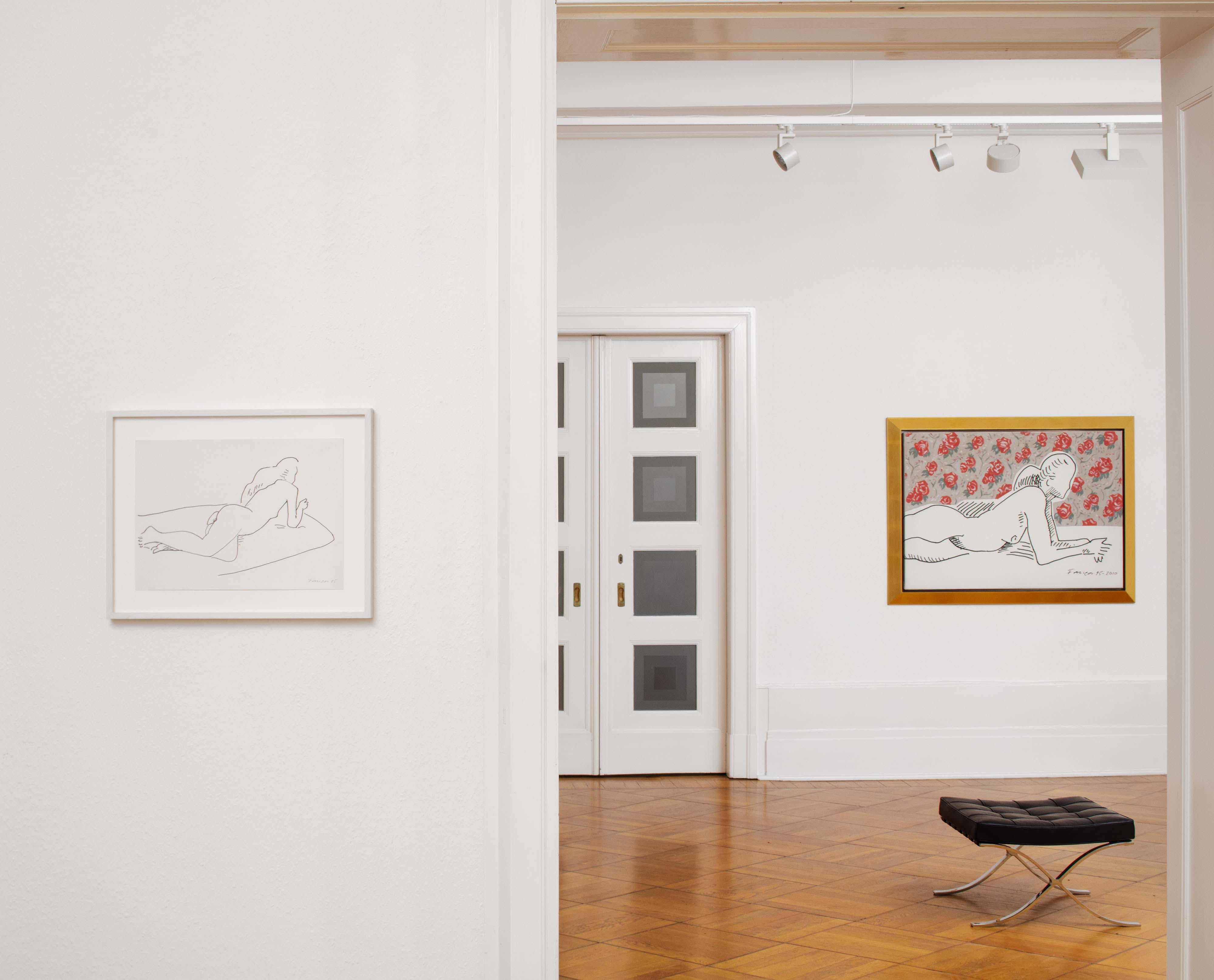
Nudes, 1945-2010 was mounted in close cooperation with the Fangor Foundation, which is currently completing the artist’s extensive catalogue raisonné. In the past few years, this combined activity has added to the understanding of the breadth of Fangor’s work. It has also proposed an inclusive appreciation of his experimentation across mediums and contrasting styles. The intention of focusing on his non-canonical work is not to diminish Fangor’s significant contribution to abstraction. Instead, it is to explore his oeuvre in the spirit of the artist’s own open-mindedness. An approach that no longer needs, for instance, to be limited to notions such as the abstraction/figuration divide of the Cold War era. It also gives more attention to the radically shifting cultural-political realities the artist faced and his variegated creative response. The motif of the exhibition suggests itself naturally, as Fangor drew and painted the human form continuously during his life. This was the case even while he was presenting his highly successful abstract work to exhibitions and for sale. By taking just a small section of his oeuvre as a case study, the implicit premise of Nudes is to consider the artist’s work as a vibrant, interwoven, contrasting, self-reflective whole. Instead of suggesting a heroic linear progression with a mid-point aesthetic climax, what emerges is a thoughtful and ethical artist in a long conversation about art and society.
The pluralist oeuvre of Wojciech Fangor (1922–2015) reflects many of the artistic polemics and geopolitical upheavals of the past century. His reputation primarily rests on his innovative, abstract Modernist Op-art paintings that reached full maturity in his New York period in the 1960s. But considering Fangor’s long, transatlantic life and his diverse output, there is much more to excogitate. As a young man, Fangor had the benefit of traditional artistic training. During the Second World War in his birthplace, Poland, he received private tutelage from two much-admired art professors, Tadeusz Pruszkowski and, later, Felicjan Kowarski. Fangor found he could paint and draw whatever and however he wished and, as a result, his early works are full of confident stylistic sampling. Later, he would put his shape-shifting technical ability to good use in postwar communist Warsaw. It was not until 1958 that his celebrated spatial fuzzy-edged geometric abstract work emerged. But alongside this important body of work, Fangor continued to practice and develop his visual language in other ways as well. From the mid-1970s onwards, for example, came decades of playful postmodern re-figuring, quotation, and collage. Sensitive and talented, Fangor never ceased his engagement both with emerging art ideas and art history until his last day in the studio.
Fangor took part in important exhibitions such as “The Responsive Eye” at MoMA in 1965 and opened a comprehensive retrospective at the Guggenheim Museum in New York in 1970. His works can be found in numerous important private and institutional collections worldwide.
—Dominic Eichler
Wojciech Fangor was born in 1922 in Warsaw. His artistic education was disrupted by the Second World War, which later on pushed him into practicing socialist realism as a painter. Between 1953 and 1961 he was employed as assistant professor at the Academy of Fine Arts in Warsaw. At the same time, he was also active as a designer of posters using collages, texts, drawings and photography, and became one of the founders of the Polish School of Posters. Although successful in these fields, Fangor decided to shift his attention to spatial experiments. In 1958 he constructed the first “environment” ever made, A Study of Space. These experiments gradually resulted in his abstract illusionist paintings with diffused edges of color and shape. After short stays in Vienna, Paris, Bath, London and Berlin, Fangor moved to the US in 1966, where he participated in important exhibitions such as ‘The Responsive Eye’ at MoMA in 1965, and had a solo exhibition at the Guggenheim Museum in 1970. After his retirement as professor of art at the Fairleigh Dickinson University in New Jersey, he returned to Poland in 1999. He continued to make art and in 2014 designed murals for the station walls of the Warsaw Underground. He died in 2015 near Warsaw.
****
Die Galerie GNYP freut sich, die vierte Einzelausstellung des geschätzten polnischen Künstlers Wojciech Fangor in Berlin zu präsentieren.
Nudes, 1945-2010 wird vom 30. November 2024 bis zum 28. Februar 2025 zu sehen sein und entstand in enger Zusammenarbeit mit der Fangor Foundation, die derzeit das umfangreiche Werkverzeichnis des Künstlers fertigstellt.
In den letzten Jahren haben diese gemeinsamen Aktivitäten dazu beigetragen, die Bandbreite von Fangors Werk besser zu verstehen. Sie hat auch eine umfassende Würdigung seiner Experimente mit verschiedenen Medien und kontrastierenden Stilen ermöglicht. Mit der Konzentration auf sein nicht-kanonisches Werk soll Fangors bedeutender Beitrag zur Abstraktion nicht geschmälert werden. Vielmehr soll sein Oeuvre im Geiste der Aufgeschlossenheit des Künstlers selbst erforscht werden. Eine Herangehensweise, die sich nicht mehr auf Begriffe wie die Abstraktion/Figuration aus der Zeit des Kalten Krieges beschränken muss. Sie schenkt auch den sich radikal verändernden kulturpolitischen Realitäten, mit denen der Künstler konfrontiert war, und seinen vielfältigen kreativen Reaktionen mehr Aufmerksamkeit. Das Motiv der Ausstellung liegt nahe, denn Fangor zeichnete und malte Zeit seines Lebens ununterbrochen die menschliche Gestalt. Dies war selbst dann der Fall, als er seine äußerst erfolgreichen abstrakten Werke in Ausstellungen und zum Verkauf präsentierte. Die implizite Prämisse von Akten besteht darin, das Werk des Künstlers als ein lebendiges, miteinander verwobenes, kontrastreiches und selbstreflexives Ganzes zu betrachten, indem nur ein kleiner Ausschnitt seines Oeuvres als Fallstudie herangezogen wird. Anstatt eine heroische, lineare Entwicklung mit einem ästhetischen Höhepunkt in der Mitte zu suggerieren, zeigt sich ein nachdenklicher und ethischer Künstler in einem langen Gespräch über Kunst und Gesellschaft.
Das pluralistische Oeuvre von Wojciech Fangor (1922-2015) spiegelt viele der künstlerischen Polemiken und geopolitischen Umwälzungen des vergangenen Jahrhunderts wider. Sein Ruf beruht in erster Linie auf seinen innovativen, abstrakten Op-Art-Gemälden der Moderne, die in seiner New Yorker Zeit in den 1960er Jahren zur vollen Reife gelangten. Doch wenn man Fangors langes, transatlantisches Leben und sein vielfältiges Schaffen betrachtet, gibt es noch viel mehr zu berichten. Als junger Mann kam Fangor in den Genuss einer traditionellen künstlerischen Ausbildung. Während des Zweiten Weltkriegs erhielt er in seinem Geburtsland Polen Privatunterricht von zwei sehr geschätzten Kunstprofessoren, Tadeusz Pruszkowski und später Felicjan Kowarski. Fangor fand heraus, dass er malen und zeichnen konnte, was und wie er wollte, und so sind seine frühen Werke voll von selbstbewussten stilistischen Stichproben. Später sollte er seine technischen Fähigkeiten im kommunistischen Warschau der Nachkriegszeit unter Beweis stellen. Erst 1958 entstand sein berühmtes räumlich unscharfes, geometrisch-abstraktes Werk. Doch neben diesem bedeutenden Werk hat Fangor seine Bildsprache auch auf andere Weise weiter praktiziert und entwickelt. So entstanden ab Mitte der 1970er Jahre jahrzehntelang spielerische postmoderne Neufigurationen, Zitate und Collagen. Der sensible und talentierte Fangor setzte sich bis zu seinem letzten Tag im Atelier immer wieder mit neuen Kunstideen und der Kunstgeschichte auseinander.
Fangor nahm an wichtigen Ausstellungen wie „The Responsive Eye“ im MoMA im Jahr 1965 teil und eröffnete 1970 eine umfassende Retrospektive im Guggenheim Museum in New York. Seine Werke befinden sich in zahlreichen bedeutenden privaten und institutionellen Sammlungen weltweit.
—Dominic Eichler
Wojciech Fangor wurde 1922 in Warschau geboren. Seine künstlerische Ausbildung wurde durch den Zweiten Weltkrieg unterbrochen, der ihn später dazu veranlasste, als Maler den sozialistischen Realismus zu praktizieren. Zwischen 1953 und 1961 war er als Assistenzprofessor an der Akademie der Schönen Künste in Warschau tätig. Gleichzeitig war er auch als Gestalter von Plakaten mit Collagen, Texten, Zeichnungen und Fotografien tätig und wurde zu einem der Begründer der Polnischen Plakatschule. Obwohl er in diesen Bereichen erfolgreich war, beschloss Fangor, seine Aufmerksamkeit auf räumliche Experimente zu lenken. Im Jahr 1958 schuf er das erste „Environment“, das je geschaffen wurde: A Study of Space. Diese Experimente führten allmählich zu seinen abstrakten illusionistischen Gemälden mit diffusen Farb- und Formkanten. Nach kurzen Aufenthalten in Wien, Paris, Bath, London und Berlin zog Fangor 1966 in die USA, wo er an wichtigen Ausstellungen wie „The Responsive Eye“ im MoMA 1965 teilnahm und 1970 eine Einzelausstellung im Guggenheim Museum hatte. Nach seiner Pensionierung als Professor für Kunst an der Fairleigh Dickinson University in New Jersey kehrte er 1999 nach Polen zurück. Er setzte sein künstlerisches Schaffen fort und entwarf 2014 Wandbilder für die Bahnhofswände der Warschauer U-Bahn. Er starb 2015 in der Nähe von Warschau.
About Gnyp
This publication explores a pivotal yet lesser-known period in the career of Wojciech Fangor, focusing on the years 1945 to 1958, when the artist navigated the constraints of Socialist Realism in post-war Poland.
More about Gnyp →