Opens Thursday
Adam Pendleton
Voices
Nov 19 – Dec 19, 2026
Opening reception Thursday, Nov 19, 6–8 pm
Opens Nov 19, closes Dec 19. Get a reminder before it closes.
 or scan for the iPhone app
More from Adam Pendleton on Gallop
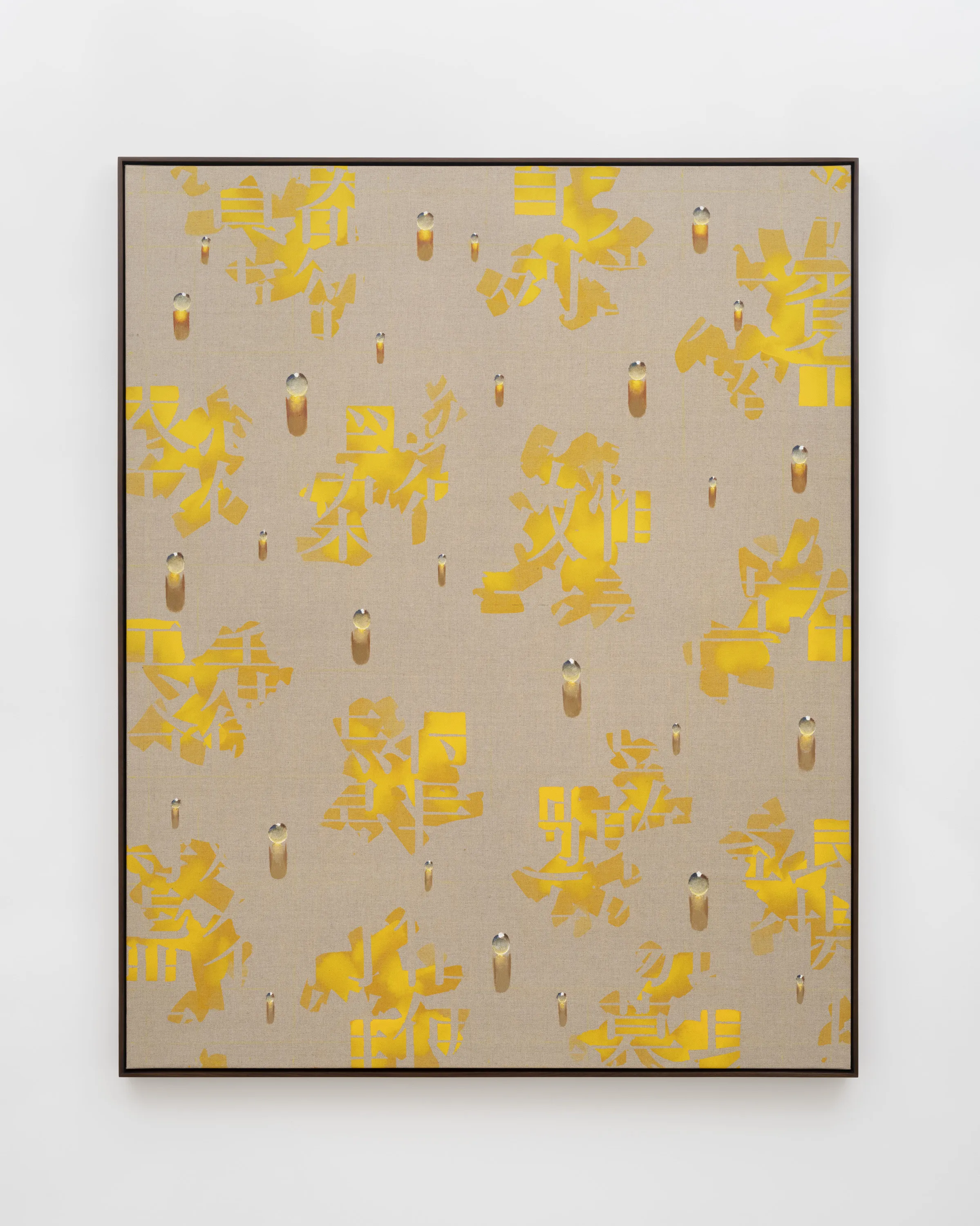
Pace Prints is honored to present Voices, its first solo exhibition of leading contemporary painter Adam Pendleton, well known for his abstract works that upend expectations of gesture, language, and conceptual form. Created in partnership with Pace Paper studios in Gowanus, Brooklyn, Voices extends Pendleton’s exploration of the phrase “We Are Not” through stenciled and pigmented handmade paper with hand-applied acrylic and ink. This show is the first in a series of exhibitions that will commemorate a decade of works centered on the recurring phrase, culminating in a 2028 solo exhibition at the Philadelphia Museum of Art, featuring pieces made in collaboration with both Brand X Editions and Pace Prints.
Drawing on recontextualized Dada poetry, Pendleton’s iconic We Are Not paintings explore language as an abstract form of collective expression and address. Truncated, layered, and overwritten, the words collide with shifting degrees of legibility, producing a field in which assertion and negation coexist. Pendleton has described his We Are Not paintings as operating “like the voices of a multitude.” Rendered in capital letters, the phrase carries the urgency of protest and the anthemic force of a rallying cry, yet resists becoming a fixed imperative. Voices brings this polyphony into sharper resonance. Through repetition, the exhibition stages a refusal that is neither absolute nor singular. A suggestion of a gathering, the declaration holds open: who might speak through it and why?
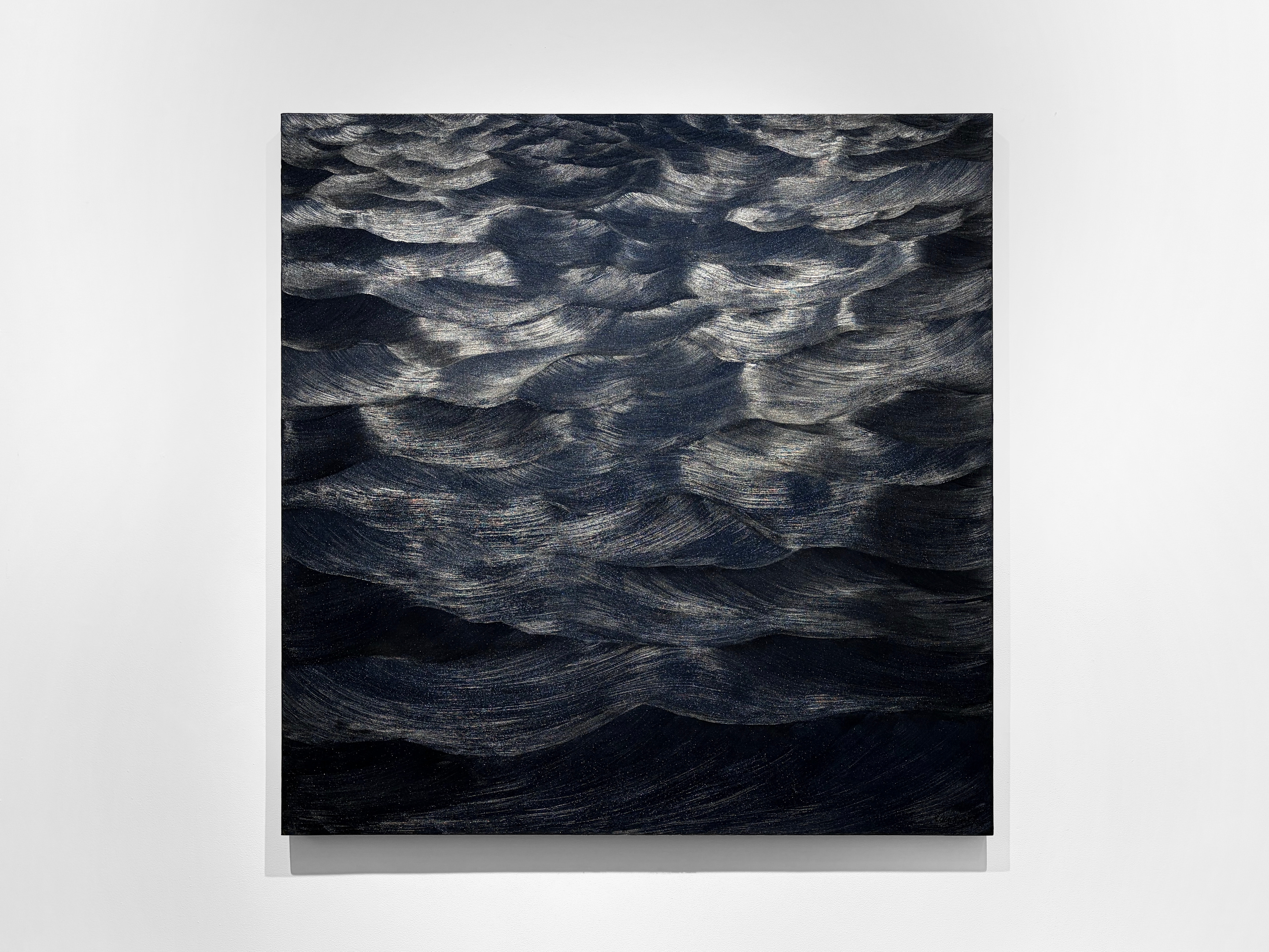
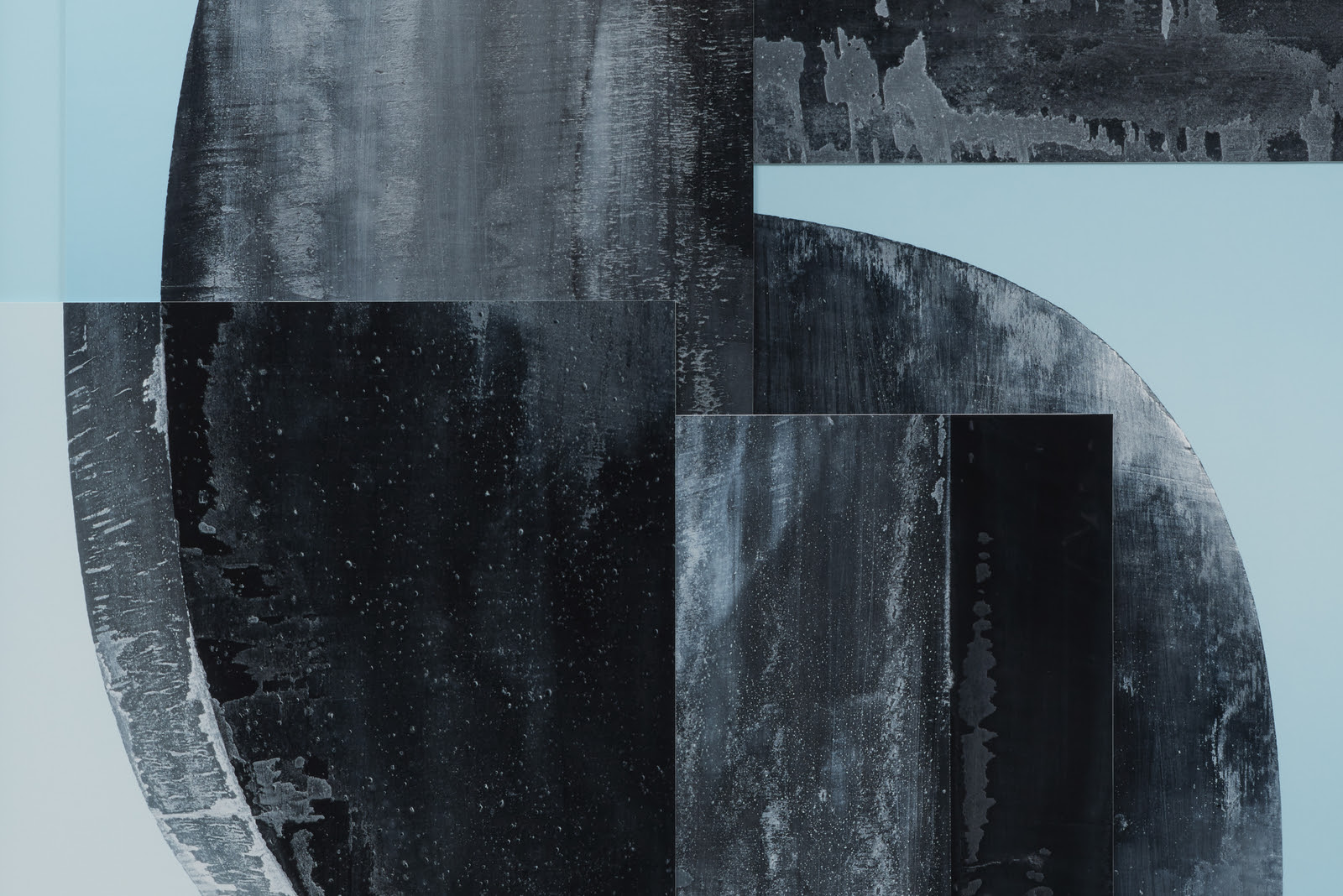
Tension takes a material form, as Pendleton employs paper pulp to sculpt his lettering, working in his characteristic black and white palette alongside lustrous silvers, rich blues, and deep reds. Each monoprint begins with the pulling of a large sheet of white or pigmented paper. Successive layers of stencils establish gestures and letterforms using a variety of pulps and water-based media, before the wet sheet is pressed and dried. Together with hand-applied acrylic and ink, this process gives Pendleton’s vernacular both poetic and material weight. Paper becomes an active part of the statement, its reinforcing substance physically shaping the words it carries.
The resulting surfaces draw the viewer to a nexus in the middle of reading and looking. Language becomes architecture, organizing the surface even at places where readability has broken down. Pendleton unsettles the relationship between signifier and signified, as marks that invite comprehension also ask us to attend to texture, density, and spatial relationships. Meaning emerges through this shifting encounter without ever determining a certain, deciphered understanding. Pendleton’s overlapping syntax gives form to a collective voice, as “We Are Not” disperses into gesture and shape, returns to legibility, and the cycle begins again.
Adam Pendleton is a central figure in contemporary art. A celebrated painter, he pushes the boundaries of the medium through a sustained engagement with process, language, and form. Typically composed of two or three colors on black-gessoed grounds, his paintings extend nonlinear compositional traditions rooted in twentieth- and twenty-first-century approaches to abstraction. His work, a distilled layering of gesture, fragment, and form, is also marked by a precision reminiscent of conceptual and minimal art as well as a freely expressionistic, experimental drive. In 2008, he began to define the working method for which he is now widely recognized as Black Dada—a critical framework that explores the relationship between Blackness, abstraction, and the historical avant-gardes. Adam Pendleton: Love, Queen is on view at the Hirshhorn Museum and Sculpture Garden, Smithsonian Institution in Washington, DC, through January 3, 2027. Adam Pendleton: Some Wild Kind of Language continues at the Stedelijk Museum Amsterdam through January 17, 2027. Pendleton's work is held in numerous public collections including the Museum of Modern Art, New York; the Solomon R. Guggenheim Museum, New York; the Whitney Museum of American Art, New York; the Los Angeles County Museum of Art; Tate, London; and the Pinakothek der Moderne, Munich.