
Exhibition · Duve
Paul Glaw
Seeing Silence
Apr 24 – Jun 19
6 images · swipe
About the show
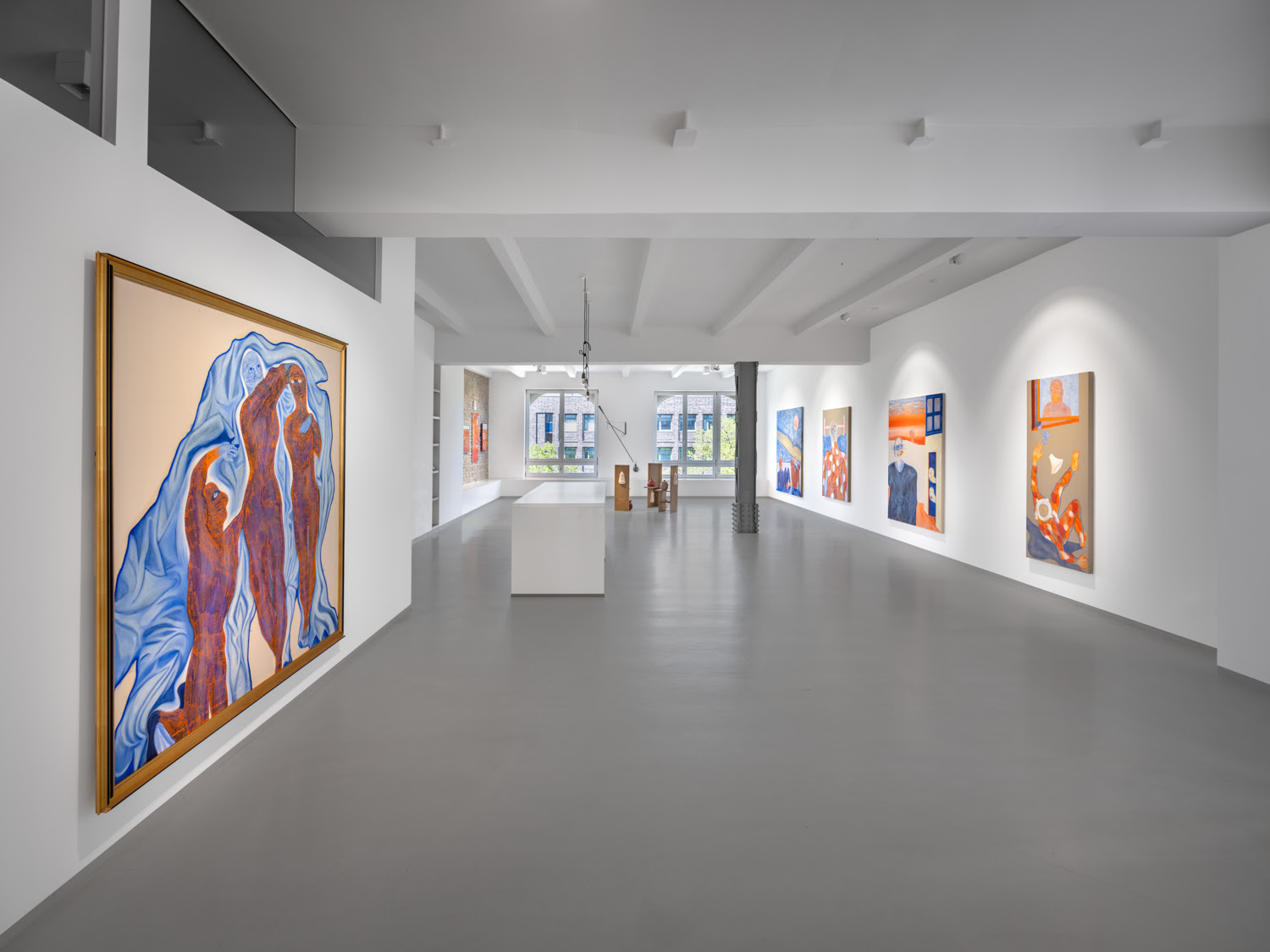
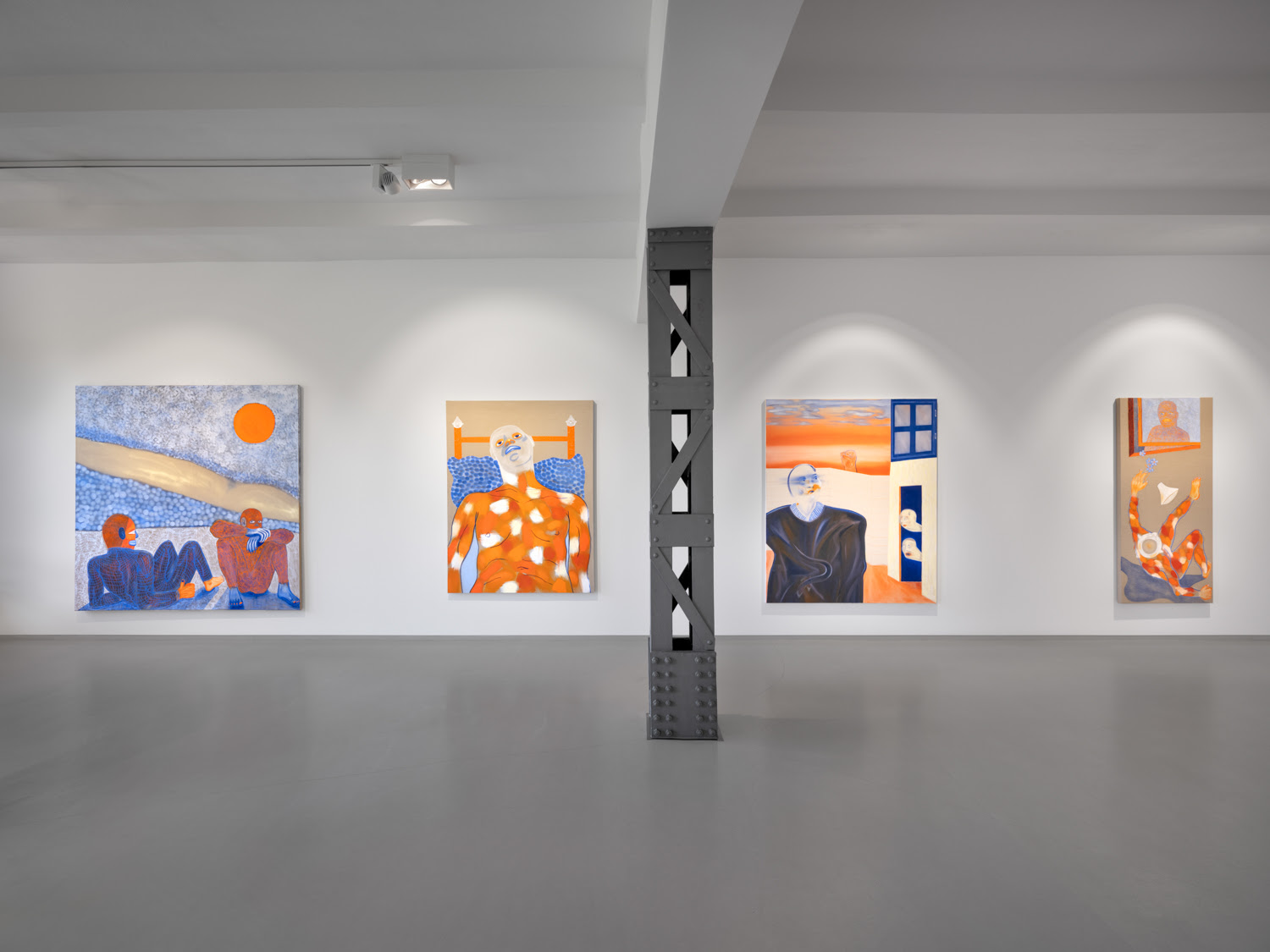
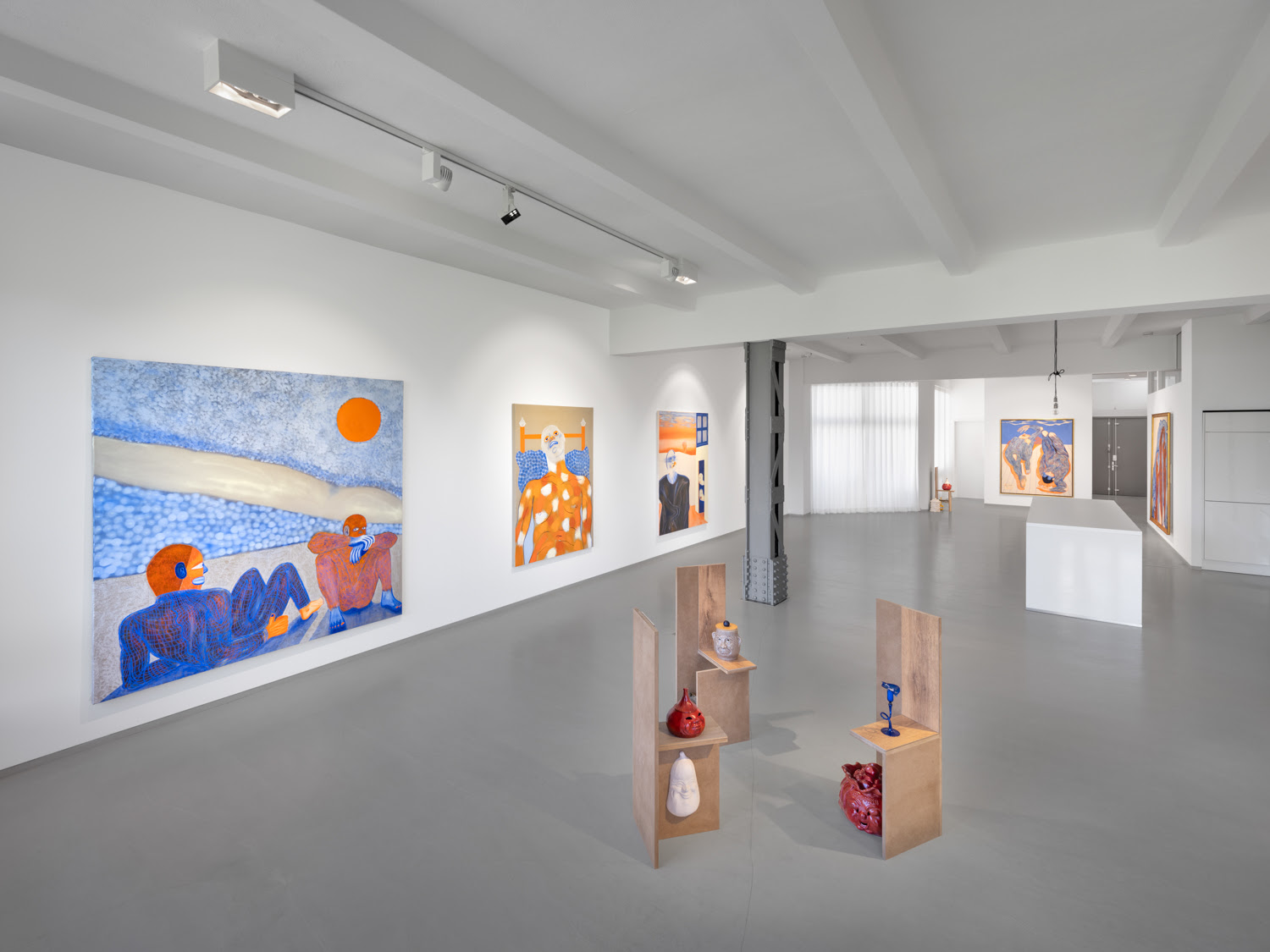
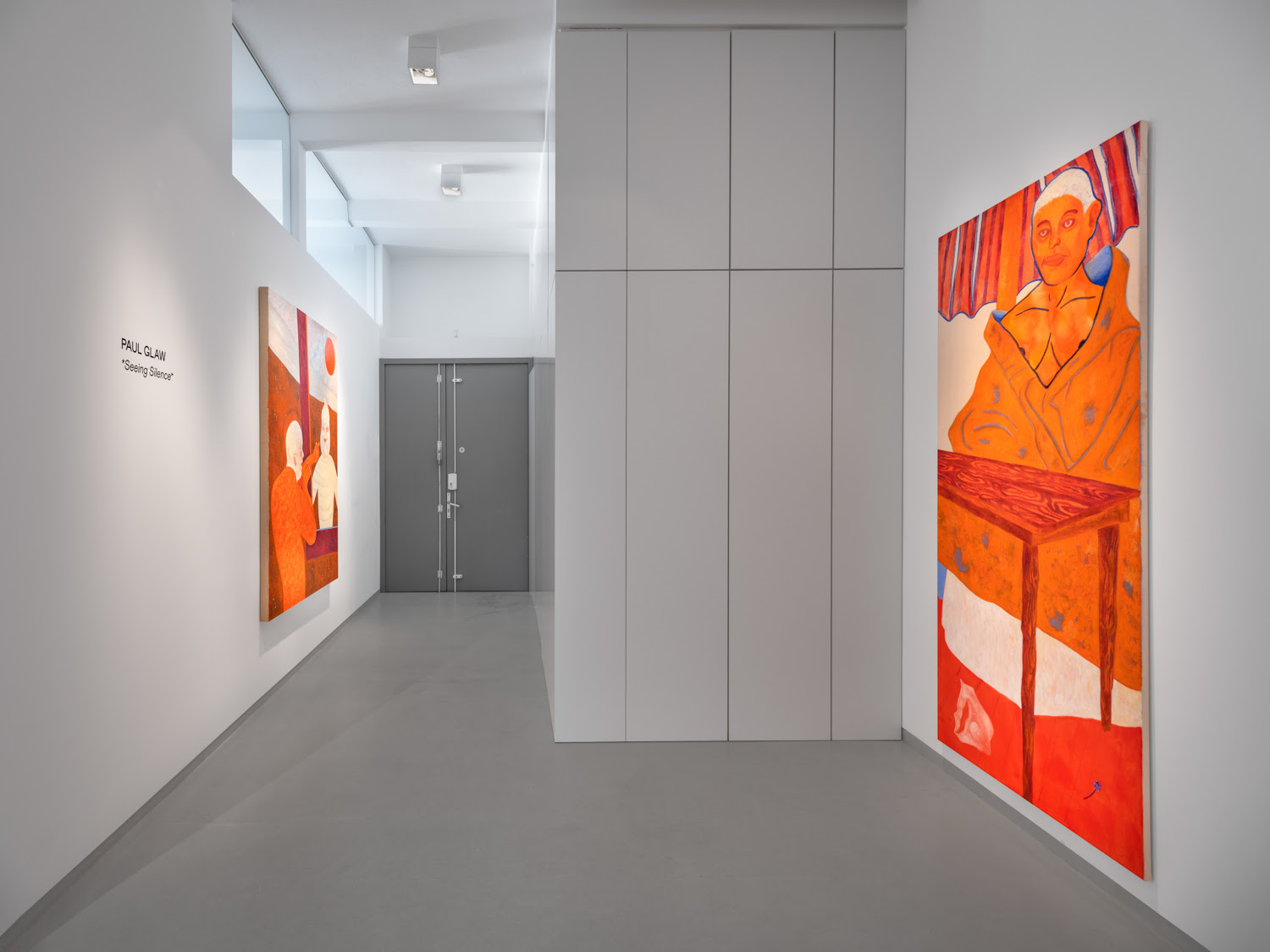
The sun rises in the East. No longer as a promise, but rather as an echo lingering in the air. In Paul Glaw’s paintings, this sun returns—circular, clear, a warm body of orange that spreads across the surfaces as if gently trying to lift them out of darkness. Yet its light finds no monuments, no jubilant gestures of departure. It settles over open peripheries, along the edges of paths, across fallow, abandoned fields—places that speak of what did not happen. Here, the sun feels less like a starting signal and more like a quiet magnifying glass for a present suspended between hope and fatigue.
Seeing Silence offers a view into those spaces that remain after a rupture, when the noise of slogans has long since faded. These are landscapes where memories do not appear clearly defined, but instead lie layered upon one another: personal experience, collective narratives of upheaval, and the diffuse afterimages of a time when much seemed possible. These places are less sites than states—intermediate zones of expectation, stagnation, lethargy, and the hesitant attempt at reconstruction.
Figures appear within them without stepping into the foreground. They stand at the margins, along paths, in open fields, as if embedded in a moment that refuses to become narrative. Nothing about them is pathetic. They do not act; they remain. The painting here is not concerned with major events, but with those seconds of pause in which history is not told, but simply breathed.
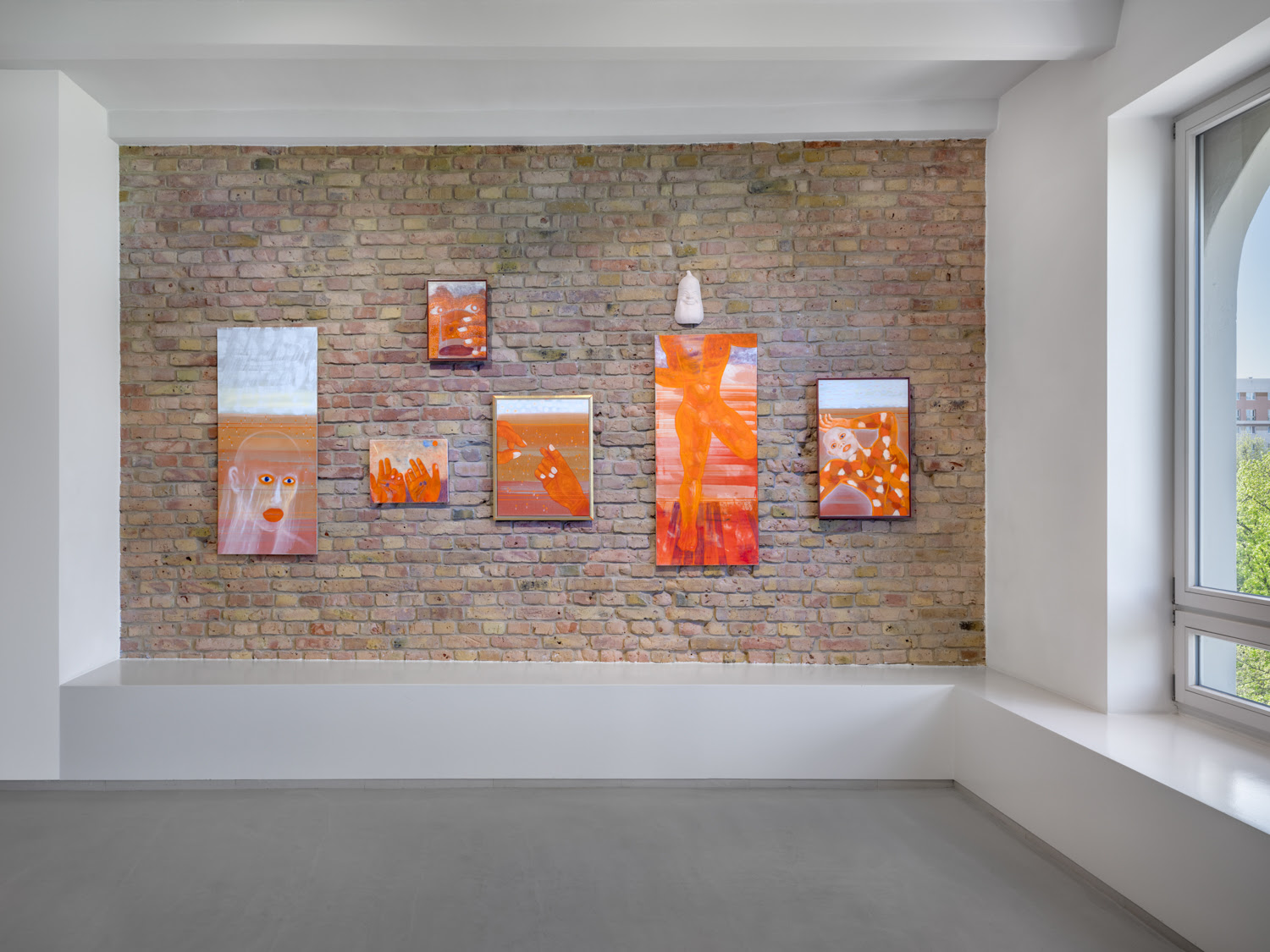
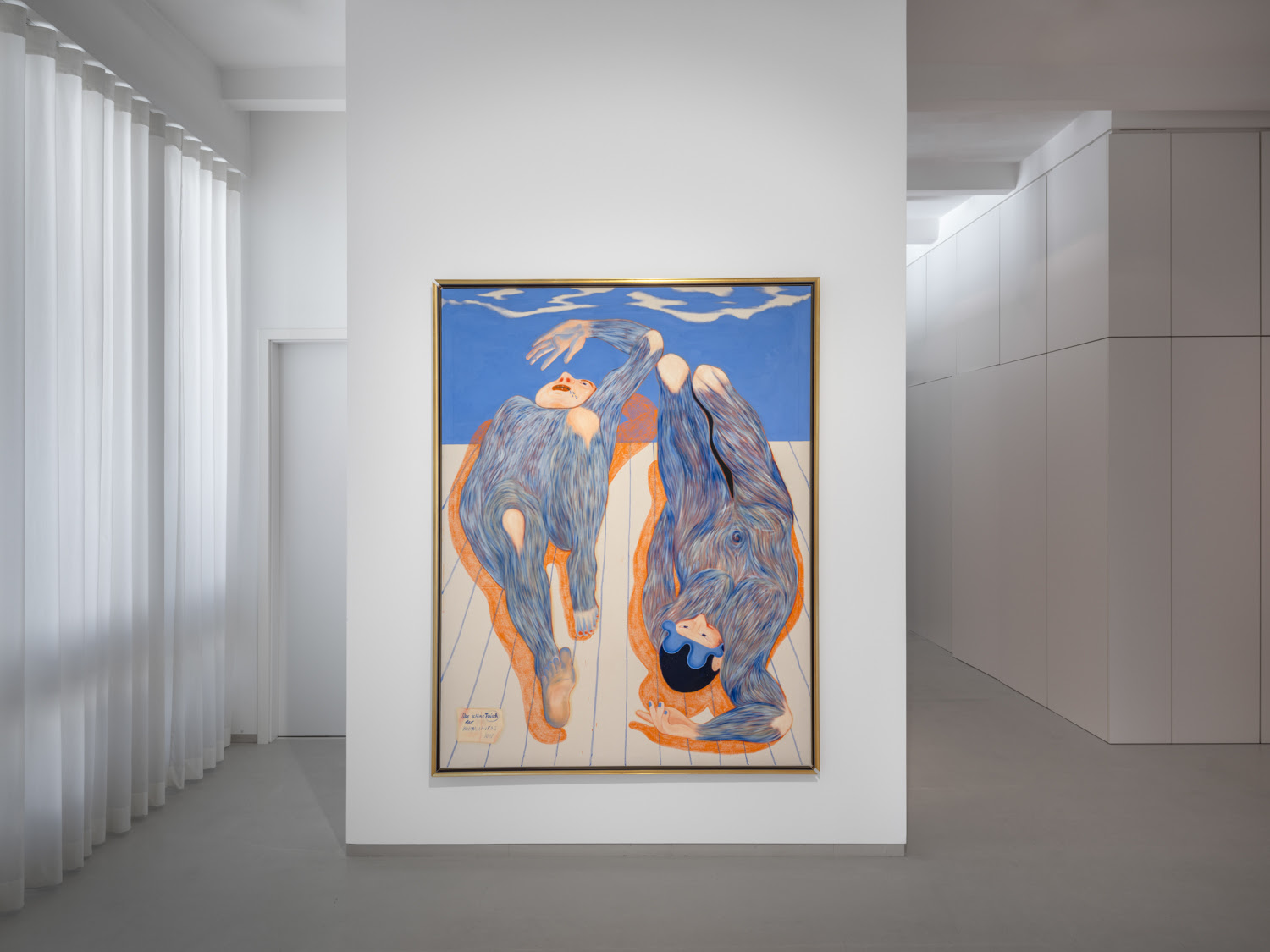
The warm light in these images falls onto fields of expectation, onto places where the desire for change and the experience of its absence are inscribed into one another. Bodies, too, become resonant surfaces for this tension. Hands rest on surfaces, reaching into the indeterminate, caught in gestures that are neither clearly beginning nor conclusion. In their quiet presence, a form of proximity emerges that does not explain, but simply offers itself: a contact with a mood, a possibility, a hesitation.
This openness of meaning continues within the painting itself. Earlier, Glaw’s works strongly revolved around the tension between two colors—the intense opposition of blue and orange, which clearly divided the pictorial space and lent it a stark atmospheric polarity. In the new works, this order appears more fragile, more permeable. The orange of the sun remains—luminous and present—but it no longer stands in opposition to blue alone. Additional shades of orange emerge in between, transitions soften, shadows become more nuanced, and the light loses its clarity while gaining depth. The compositions are no longer constructed through strict contrast, but through layering, mood, and gradual shifts. Figure and space no longer seem opposed, but rather engaged in a quiet dialogue.
Thus, the center of Glaw’s work shifts to where it is most fragile: to those moments in which landscape, body, and event briefly strike the same tone. Seeing Silence does not present history as a completed narrative, but as an aftersound in the air—as a subtle vibration within the light that moves across the paintings. It is a light that glorifies nothing, yet still provides warmth; that embellishes nothing, yet remains as a quiet, persistent presence within a landscape that does not yet know what it will become.
—Lara Popp (Art Historian), 2026
About Duve
DUVE is an independent art salon based in Berlin. Its program foregrounds conceptually driven, contextually aware practices across painting, sculpture, video, and mixed media. In response to an accelerated, hyper-connected world, DUVE champions work that is rigorous, nuanced, and materially precise.
More about Duve →