

Exhibition · Patrick Seguin
Jean Royère
Jean Royère
May 16 – Sep 1
3 images · swipe
About the show
[Scroll down for French version / Veuillez trouver ci-dessous la version française]
Jean Royère was a groundbreaking figure in mid-twentieth century French design. Initiating what would become a passionate life’s work with a garden furniture project in 1931, he would relentlessly pursue his career as furniture designer and decorator until retiring in 1972. In a world that was rapidly shifting towards the modern, Royère adeptly grasped and refined the techniques he had accumulated in the cabinet-making workshops of the Faubourg Saint-Antoine and later at the design firm Gouffé that reproduced 18th c. French furniture, and artfully applied them to an aesthetic that was distinctly of his time.
Royère altered the function of ornamentation by creating works of furniture that were structurally composed of patterns, rather than simply adding these decorative touches as accessorial afterthoughts. He was imaginative and deliberate with his distortion of line that ranged from the geometric, illustrated in the rectilineal Croisillon motif, to the wholly organic, found in the Oeuf models.
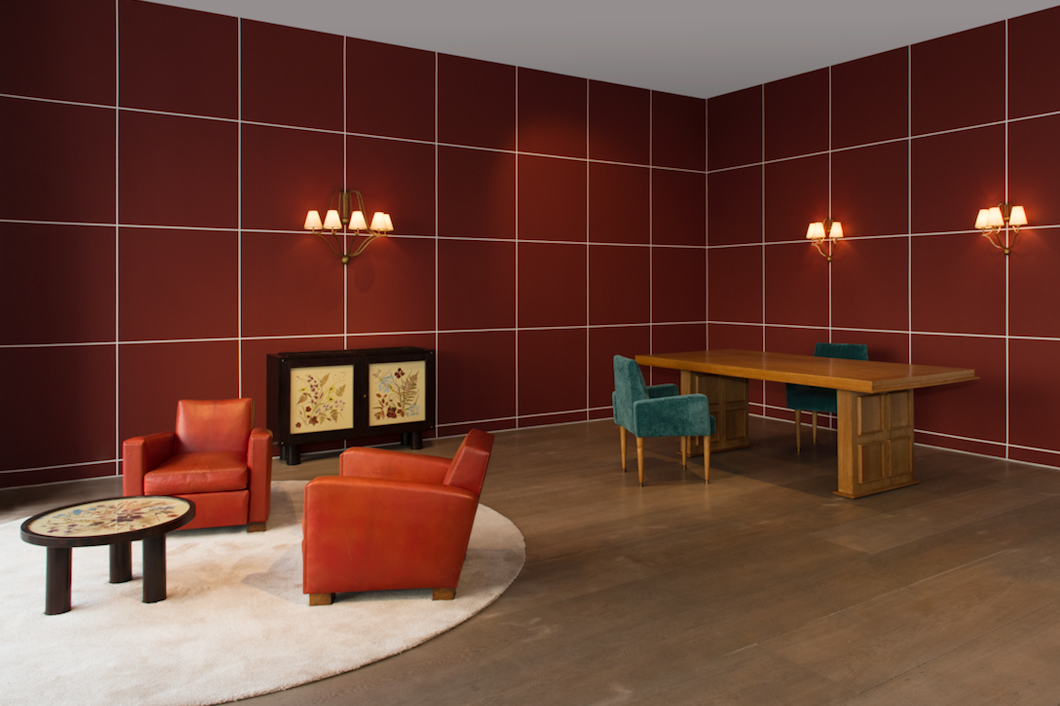
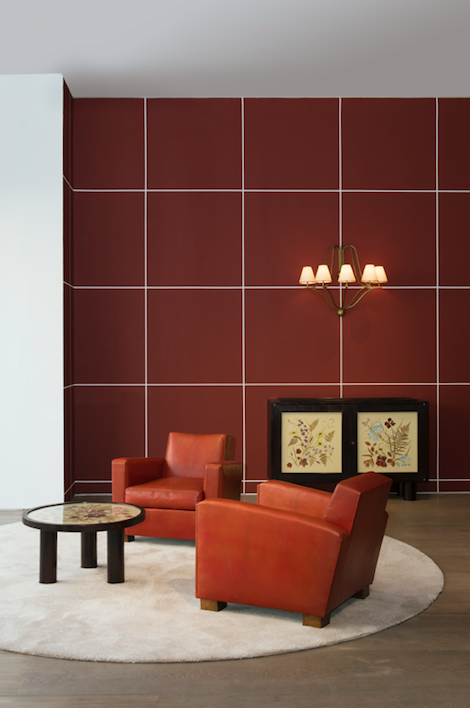
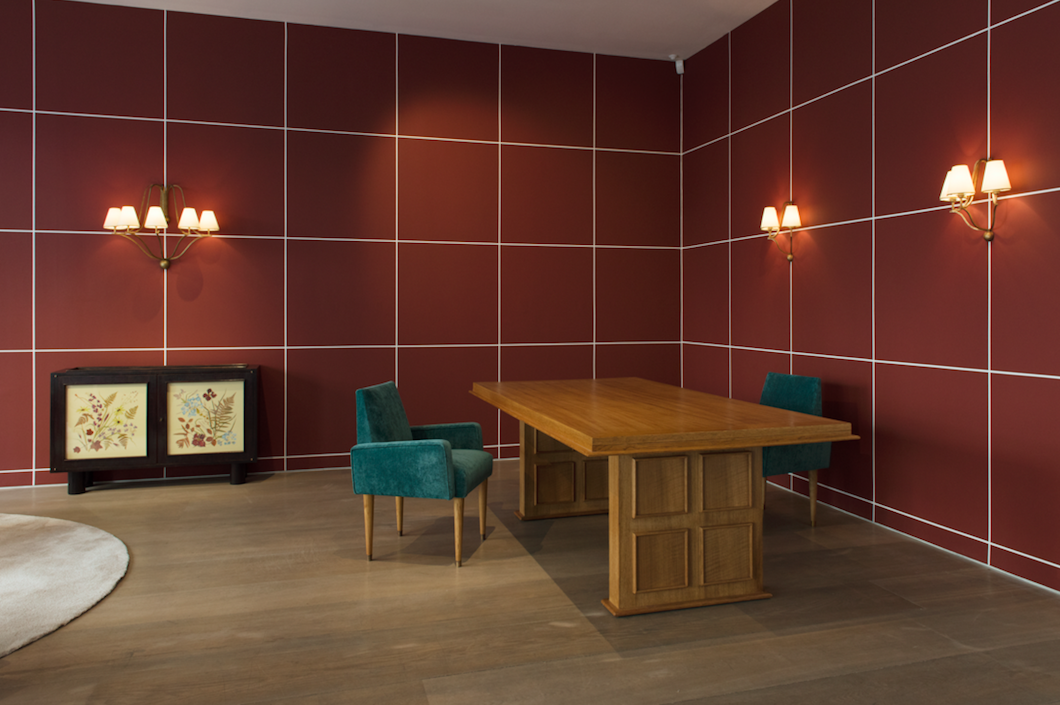
Intrigued by animal and vegetal shapes, Royère exploited his sources of inspiration in his manifestation of their forms into pieces of furniture. His 5-arm "Bouquet" sconce does not make direct allusion to a flower, but blossoms abundantly on the wall on which it is posed. In addition to seeing nature as the basis for his overarching designs, Royère would also adorn his works with dried flowers and plants, as in the "Herbier" cabinet and low table. In integrating marquetry into his oeuvre, Royère modernized the traditional savoir-faire he admired by emphasizing the artistic over the formal.
This presentation is a glimpse into the vibrant mind of Royère that brought works of furniture to life in a sophisticated and spirited manner.
*****
Jean Royère est un des principaux acteurs de la création française du milieu du XXème siècle. Avec un projet de mobilier de jardin en 1931, il initie ce qui deviendra l’œuvre de sa vie et poursuivra rigoureusement sa carrière de designer et de décorateur jusqu'à sa retraite en 1972. Dans un monde qui bascule dans la modernité, Royère saisit et affine les techniques apprises dans les ateliers d’ébénisterie du Faubourg Saint-Antoine, puis chez Gouffé (dans ce même faubourg), belle enseigne de décorateur-ensemblier où l’on copie le mobilier français de style, et les applique habilement à une esthétique fortement liée son époque.
Royère réhabilite l’ornement en tant qu’élément structurel, plutôt que comme motif surajouté. Son imagination l’entraine vers la distorsion des lignes, ce qu’il fait délibérément, d’une façon géométrique comme avec son motif Croisillon ou celle plus organique de ses fauteuils Œuf. Fasciné par les formes animales et végétales, Royère exploite ses sources d’inspiration en leur donnant forme dans ses créations. Son applique Bouquet ne fait pas directement allusion à des fleurs, mais s’épanouit délicatement sur le mur.
Au-delà de s’inspirer des formes de la nature, Royère s’en sert également pour orner certaines pièces, telles que le bahut et la table basse « Herbier », avec de délicats décors de fleurs séchées, ou pour créer de surprenantes marqueteries, faisant ainsi appel à des savoir-faire traditionnels qu’il admire tout en s’affranchissant de leur formalisme.
Cette exposition est une petite incursion dans l’esprit foisonnant de Jean Royère, créateur d’un univers éclatant et raffiné.