Ended Jan 14
Omer Fast
August
Dec 3, 2016 – Jan 14, 2017
[Scroll down for French version / Veuillez trouver ci-dessous la version française]
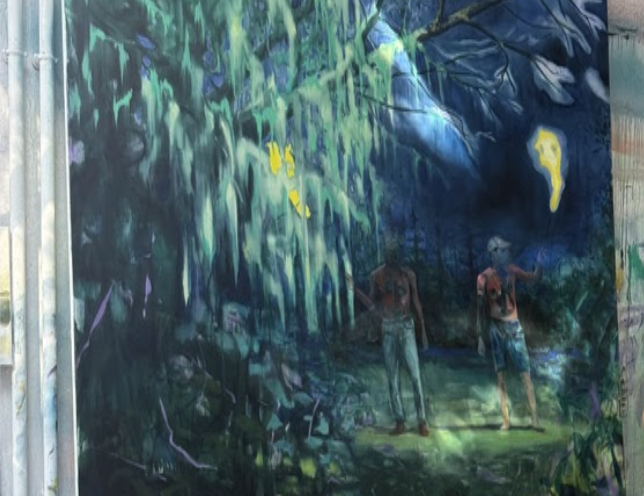
August, title of the exhibition and also of a new work by Omer Fast intimately engages the viewer. 3D technology creates the illusion of sharing the same space as the lead character, German photographer August Sander (1876-1974) at home at the end of his life, insomniac and nearly blind. He wanders through a night occupied by the loss of his son and those who were his former models. The film is composed of scenes going back and forth between recreations of life in the 1930s with his son at his side, August’s own youth, and a present (in the 1960s) where Sanders is alone and haunted by his past. In silent timeless enclosed rooms, ghosts from the past, at times terrifying at others friendly, emerge, disturbing the photographer’s night. Only a monologue by a Nazi official and model of the photographer breaks the silence, at once laudatory and critical of the work of August Sander… In the work of Omer Fast, here is the recurring skepticism of an artist’s legitimacy.
We are also presenting a piece in France for the first time, entitled Looking Pretty for God (After G.W.), shown in a particular presentation space, the waiting room of a doctor’s office. A place of isolation and itinerancy, where Fast engages the viewer through the construction of his work in which the sensory and spatial experience is omnipresent. Looking Pretty for God (After G.W.) uses the words of funeral home directors to tell about their final preparations for the last public viewings of the deceased. They refer to their responsibilities to the loved ones.
*****
August est le titre, tant de l’exposition que de la nouvelle oeuvre d'Omer Fast, et s’adresse au spectateur de façon intime. La technologie 3D donne l’illusion de partager le même espace que le personnage principal: le photographe allemand August Sander (1876-1964), à la fin de sa vie, chez lui, presque aveugle et insomniaque, errant dans la nuit, habité par la perte de son fils et par ceux qui furent ses modèles. Le film se construit à partir d’allers-retours entre des reconstitutions de scènes de vie des années 30, avec son fils qui l’assiste, la jeunesse d’August, et un présent, dans les années 60, où, solitaire, il est hanté par ce passé. Huis clos atemporel et silencieux où l’apparition des fantômes du passé, tantôt effrayants, tantôt amicaux, ponctue la nuit de Sander. Seul le monologue d’un chef nazi et modèle du photographe, à la fois élogieux et critique du travail d'August Sander, rompt le silence, scepticisme récurrent dans l’oeuvre d'Omer Fast sur la légitimité de l’artiste.
Nous présentons aussi Looking Pretty for God (After G.W.) vidéo de 2008, jamais encore montrée en France, à l'intérieur d'un dispositif spatial singulier, une salle d’attente d’un cabinet médical. Espace de distanciation ou de passage, Omer Fast sollicite le spectateur car dans la construction de son travail l’expérience sensorielle et spatiale est omniprésente.
Looking Pretty for God (After G.W.) retranscrit la parole d’entrepreneurs de pompes funèbres relatant leur prise en charge de la dernière apparition publique d'une personne décédée. Ils évoquent leur responsabilité vis-à-vis des proches et leur rapport à l’art.