Ended Nov 30
Jörg Immendorff
Passage
Oct 12 – Nov 30, 2019
More from Jörg Immendorff on Gallop
[Scroll down for French version / Veuillez trouver ci-dessous la version française]
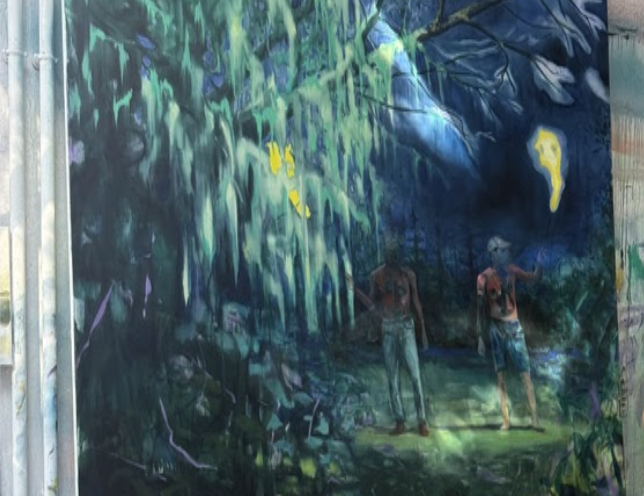
Galerie Suzanne Tarasieve presents a selection of Jörg Immendorffʼs final works, in the artistʼs second exhibition with the gallery. Immendorffʼs paintings created a personal universe, borrowing images from the Renaissance while moving away from the libertarian, anti-establishment climate of the 1960s. He was fascinated by forms of esoteric scholarship, neglected until then, which became an inexhaustible source of inspiration and energy. Embarking on a compulsive adventure to explore them, he brought his friends along with him: Goya, Granville, Hogarth, Dürer, Caspar David Friedrich, and more. Setting aside the legacies of Pollock and Picasso, he focused instead on Schwitters, Max Ernst, Manzoni, and Broodthaers. Immendorffʼs erudite appetite for the illustrations of ancient books led him to use the images as a means of addressing the role of art across time and to liberate painting from the limits of a pleasing aesthetic pleasure.
In 2003, a neuro-degenerative disease, diagnosed in 1997 as the artist was at the summit of his fame (he was 52 years old at the time), caused paralysis of his left arm, soon followed by his right arm, prevented Immendorff from painting. With the support of his wife Oda Jaune, herself an artist, and of his assistants, Immendorff found the necessary support to produce his final works. These paintings, on display here and almost all untitled, contrasted sharply from his earlier works, in which language played a central role. "Anyone who doesn't want to think can get out of here stat," said Joseph Beuys, and his favorite student not only thought, he dreamed. During the time he had left to live, Immendorff created a type of cerebral, dreamlike, introspective, illuminated painting. He left his comfort zone in order to better find himself. His painting, reminiscent of mannerist Renaissance works or Flemish proverbs, invented a surreality reflecting his disenchantment. This universal collage summoned images required by history. He had Beuys, Penck, and Fluxus in mind, along with Marcel Duchamp, Rimbaud, Stockhausen, and John Cage, whose assistant he was in New York.
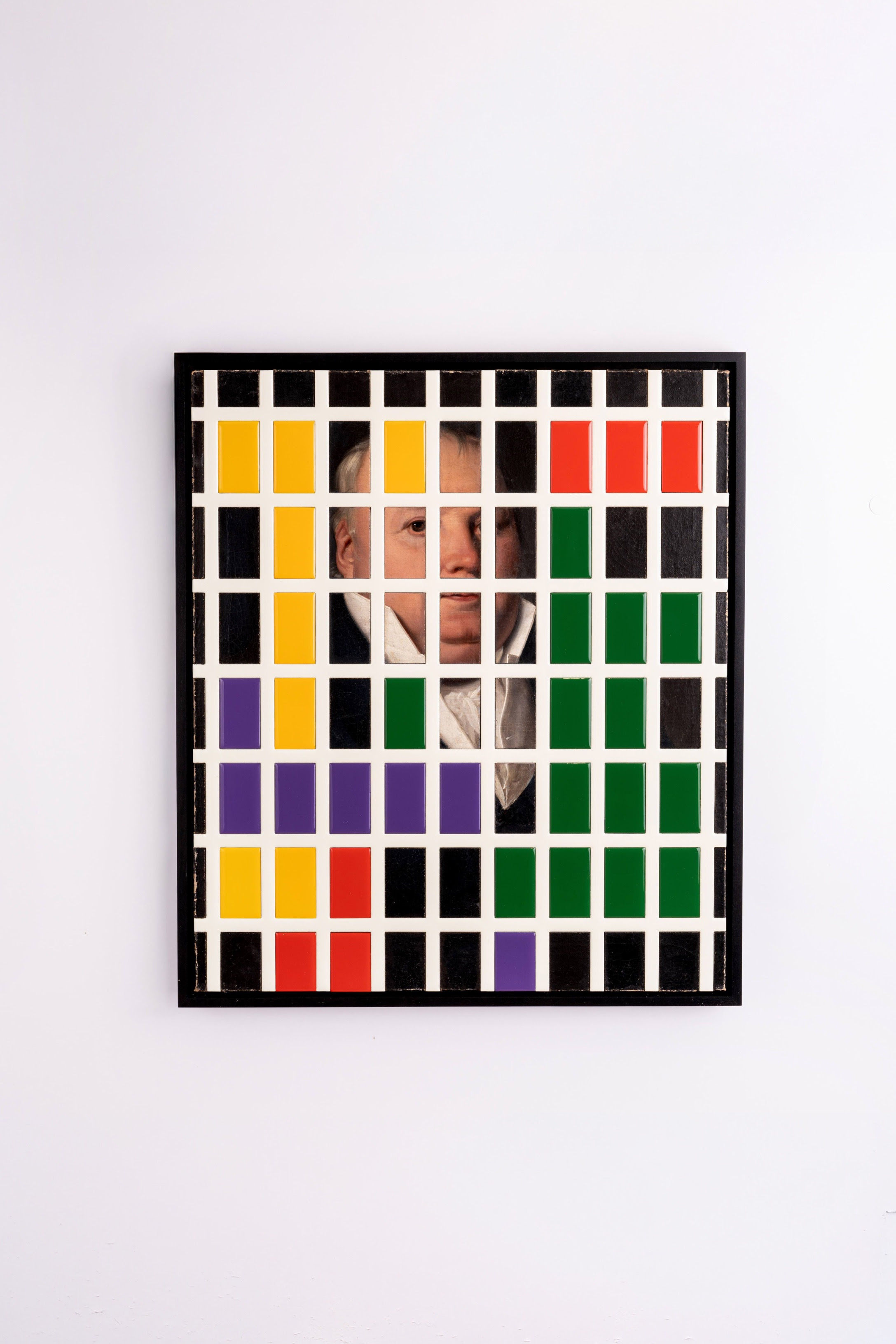
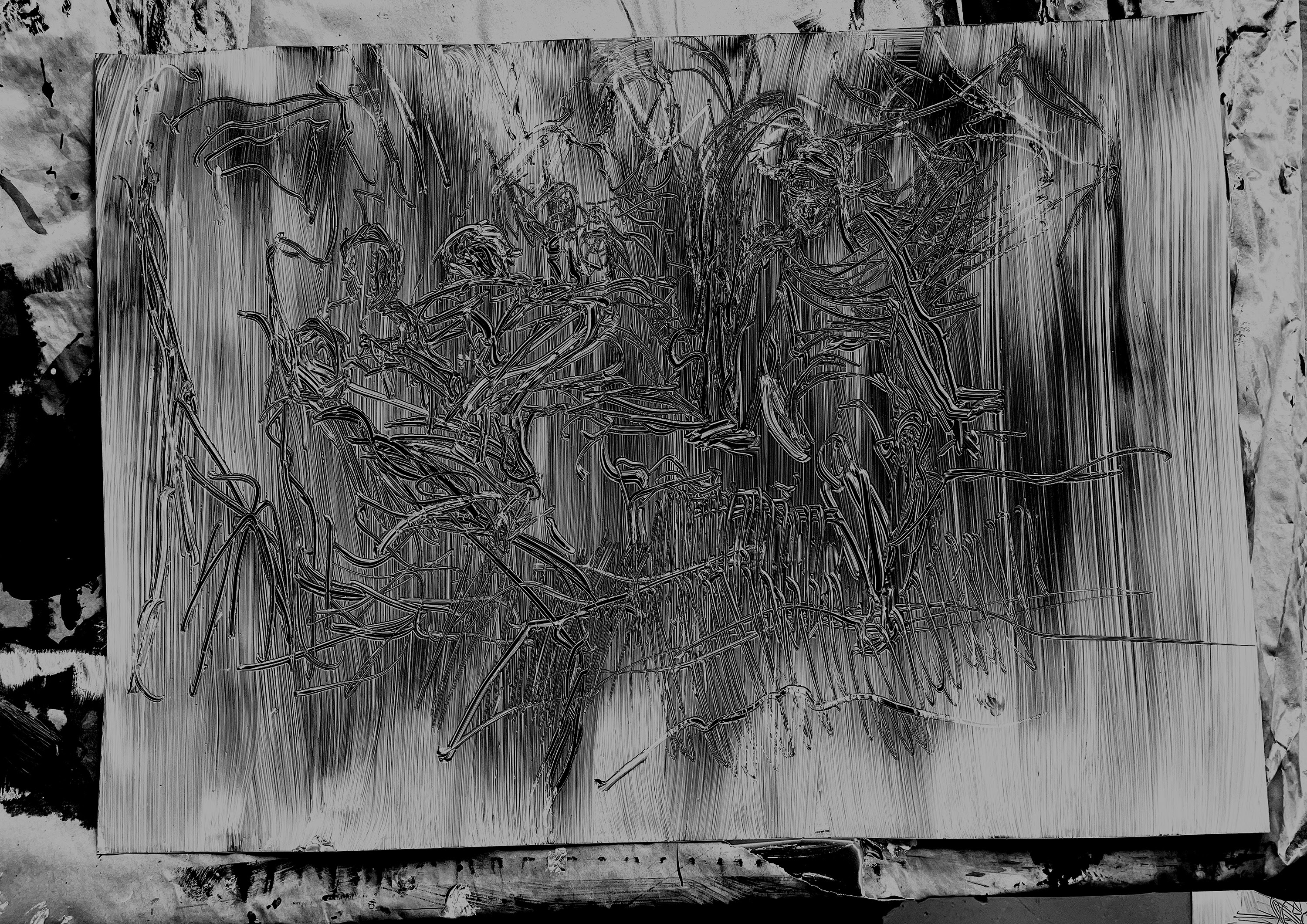
The narrative principle of his earlier painting disappeared: no more perspective, no more landscape, no more depth of field. Instead, an extraordinary network of figures emerged during his final ten years, through different techniques: layered motifs, cut stencils, positive/negative shapes, the omnipresence of ornament. This network forms a background—at times woven, sometimes abstract, at times obscured— that could have a final motif hidden within it. Perhaps everything was a mental double exposure, designed to go beyond appearances. Since the years of Café Deutschland (1977–83), his work conceives of his contemporaries—politicians, writers, artists, and other newsworthy figures—as allegories of a world that is constantly dividing and recomposing itself through spectacle, that of German history before and after the reunification of October 1990.
Immendorffʼs experience teaching at the Kunstakademie in Düsseldorf from 1993 to 2003 was important in several ways, most notably by providing him with his choice of assistants, as in the days of the Old Masters. Later, using the computer provided him with an unexpected light, that light and that night that he had always wanted to paint. A student of Beuys and Teo Otto, John Cageʼs assistant, Immendorff, as a painter, developed an art that was irresistibly conceptual. A witness of and actor in his time, he participated in the actions of Chris Reineckeʼs “LIDL” group, the Maoist period and its big-character posters, the punk cosmogony of his Café Deutschland, and the scenario of the "non-painters" Duchamp and Beuys in his Café de Flore series.
In early 2000, Benjamin Katz, a long-time friend, provoked a moment of truth that only a photographer can capture. "In Riesa, in 1999, he saw the painter, threatened with paralysis, parading ahead of him with, on his shoulder, defiantly, Friedrich's dead oak tree, which he turned into a monument to German art, Elbquelle. Part of a history of struggle for the reign of images that, for centuries, have changed the world without saying so. Immendorff tried to convince us of this until the end." [1]
Following his death in 2007, it would take several years and several exhibitions (Deadline at the Musée d'Art Moderne de la Ville de Paris in 2009, a retrospective at the Haus der Kunst in Munich in 2018, at the Querini Stampalia Foundation during the Venice Biennale 2019, and at the Reina Sophia in Madrid in October 2019) to understand that these fascinating paintings invent a unique and creative language, that they are the first in art history to have been produced in this way.
A huge thank you to Eric Darragon for his remarkable text.
Detailed explanations of each painting can be found in the exhibition catalogue, Jörg Immendorff – Passage.
1 - Eric Darragon "Vicissitudo" from the exhibition catalogue Jörg Immendorff - Passage, Galerie Suzanne Tarasieve, Paris, 2019
*****
Pour cette deuxième exposition de Jörg Immendorff, la Galerie Suzanne Tarasieve a choisi de présenter les travaux ultimes de lʼartiste. Jörg Immendorff a fait exister un monde, celui dʼimages issues de la Renaissance en sʻéloignant de plus en plus du climat libertaire et contestataire des années 60. Il découvre des formes dʼérudition savante jusquʼalors délaissées pour en faire une source inépuisable dʼinspiration et dʼénergie. Dans cette aventure compulsive, il emmène avec lui des amis : Goya, Granville, Hogarth, Dürer, Caspar David Friedrich, etc. Il délaisse lʼhéritage de Pollock ou de Picasso et se tourne vers Schwitters, Max Ernst, Manzoni et Broodthaers. Cet appétit érudit pour les illustrations de livres anciens sera pour lui un moyen de signifier la fonction de lʼart dans lʼhistoire et de libérer la peinture des limites dʼun plaisir esthétique complaisant.
A partir de 2003 la maladie neuro-dégénérative dite maladie de Charcot, diagnostiquée en 1997, au moment où lʼartiste connaît une reconnaissance internationale (il a alors 52 ans), provoque la paralysie du bras gauche puis celle du bras droit, et contrarie la réalisation dʼun tableau. Avec le soutien de sa jeune épouse Oda Jaune, elle-même artiste, et dʼassistants, Immendorff va trouver le ressort nécessaire pour produire ses dernières œuvres. Ce sont ces derniers tableaux que lʼon peut voir ici, presque tous sans titre, très différents de sa production antérieure où la présence du langage était centrale. « Celui qui ne veut pas penser, quʼil sorte dʼici en vitesse » déclamait Joseph Beuys. Son élève préféré ne va pas seulement penser, il va vouloir rêver. Du temps quʼil lui reste à vivre, Jörg Immendorff va revendiquer une peinture mentale, onirique, introspective et illuminée. Il se quitte pour mieux se retrouver. Sa peinture, proche dʼune Renaissance maniériste ou des proverbes flamands, invente une surréalité à la mesure dʼun désenchantement. A travers ce collage universel apparaissent des images exigées par lʼhistoire. Il garde en permanence à lʼesprit Beuys, Penck, Fluxus, sans oublier Marcel Duchamp, Rimbaud, Stockhausen et John Cage dont il fut lʼassistant à New-York.
Ce qui avait fait le principe narratif de sa peinture disparaît : plus de perspective, de paysage, de profondeur scénique. A la place, un extraordinaire réseau de figures apparaît au cours de ces dix dernières années, avec différentes techniques : la superposition des motifs, le découpage au pochoir, le positif / négatif des formes, lʼomniprésence de lʼornement. Ce réseau compose un fond tantôt tramé, tantôt abstrait, tantôt obscurci, sans quʼon soit sûr quʼun ultime motif ne sʼy cache pas. Cʼest comme si tout relevait dʼune surimpression mentale destinée à aller au delà des apparences. Son travail, depuis les années du Café Deutschland (1977-1983), conçoit la présence de ses contemporains, hommes politiques, écrivains, artistes et autres figures de lʼactualité comme autant dʼallégories dʼun monde qui ne cesse de se diviser et de se recomposer au gré dʼun spectacle, celui de lʼhistoire allemande avant et après la réunification dʼoctobre 1990.
Son expérience pédagogique à la Kunstakademie de Düsseldorf de 1993 à 2003 lui sera bénéfique pour le choix de ses assistants comme aux temps des maîtres anciens. Plus tard, le recours final à lʼordinateur lui confère une lumière inattendue, cette lumière et cette nuit quʼil a toujours voulu peindre. Elève de Beuys, étudiant de Teo Otto et assistant de John Cage, Jorg Immendorff, peintre, développe un art devenu par force majeure conceptuel. Témoin et acteur de son époque, il avait participé aux actions des années LIDL avec Chris Reinecke, à la période maoïste et ses dazibaos, à la cosmogonie punk du Café Deutschland, au scénario des « non-peintres » Duchamp et Beuys de la série Café de Flore.
Début 2000 Benjamin Katz, ami de toujours, déclenche lʼinstant de vérité que seul un photographe peut saisir. « Il a vu le peintre menacé de paralysie parader au pas de course devant lui avec, sur lʼépaule, par défi, le chêne mort de Friedrich dont il fit à Riesa en 1999 un monument à lʼart redevenu allemand, Elbquelle. Et cela dans lʼhistoire dʼun combat pour le règne des images qui, depuis des siècles, changent le monde sans le dire. Jörg Immendorff aura voulu nous en convaincre jusquʼau bout. » [1]
A sa disparition en 2007, il faudra plusieurs années et plusieurs expositions (Deadline au Musée dʼArt Moderne de la Ville de Paris en 2009, la rétrospective à la Haus der Kunst de Munich en 2018, à la fondation Querini Stampalia pendant la Biennale de Venise 2019, et au Reina Sophia de Madrid en octobre 2019) pour comprendre que ces peintures fascinantes inventent un langage créatif et unique, elles sont les premières dans lʼhistoire de lʼart à avoir été réalisées de cette manière.
Un immense merci à Eric Darragon pour son texte remarquable.
Vous pourrez retrouver une explication détaillée sur chaque œuvre dans le catalogue de lʼexposition Jörg Immendorf – Passage.
1 - Eric Darragon « Vicissitudo » extrait du catalogue de lʼexposition Jörg Immendorff - Passage, Galerie Suzanne Tarasieve, Paris, 2019