Ended Aug 14
Bernard Frize
Now or Never
May 18 – Aug 14, 2019
More from Bernard Frize on Gallop
[Scroll down for French version / Veuillez trouver ci-dessous la version française]
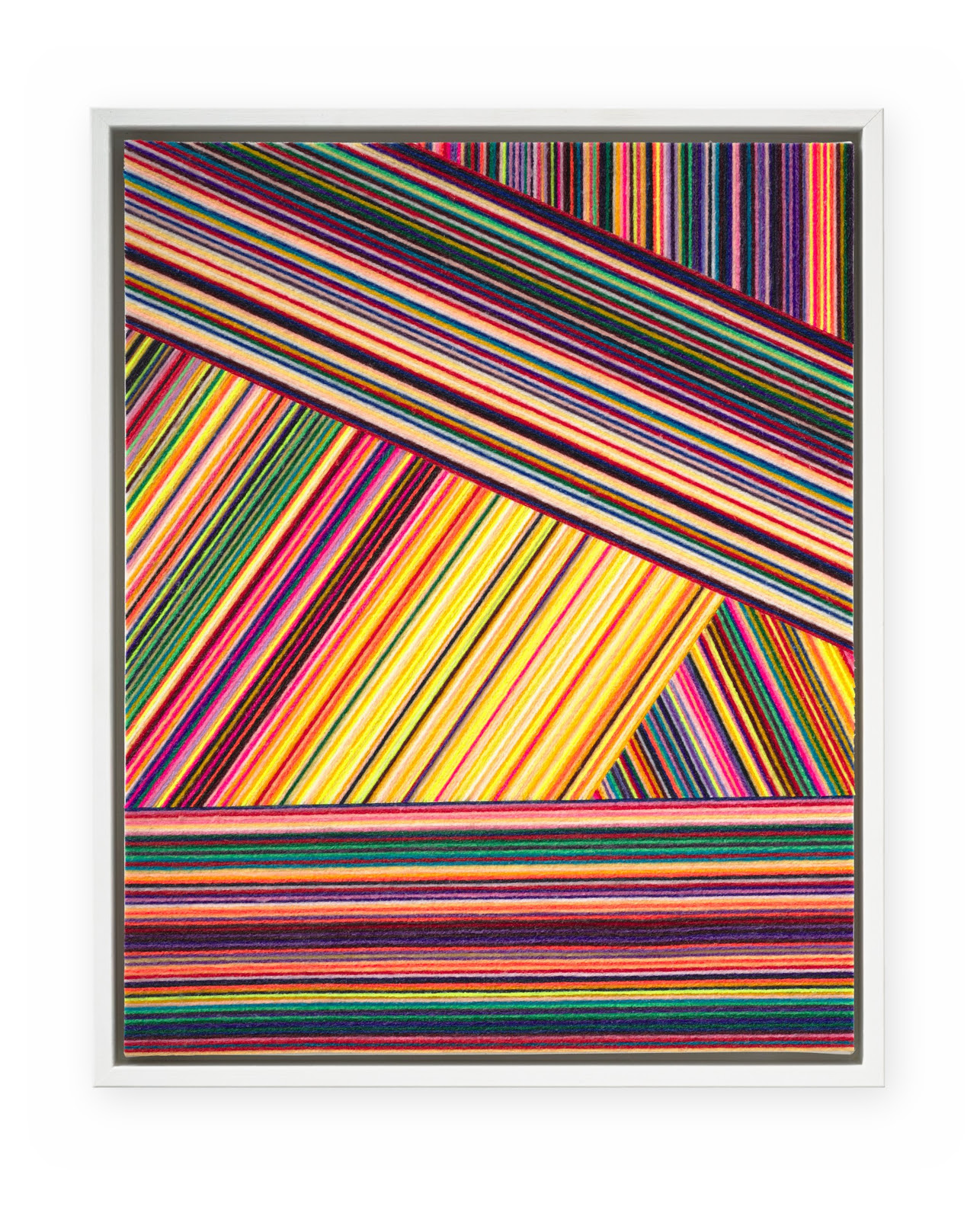
Perrotin Paris is proud to present a new exhibition of French painter Bernard Frize, simultaneously to his personal exhibition “Bernard Frize. Without Remorse” at the Centre Pompidou – Musée National d’Art Moderne (May 29 - August 26, curated by Angela Lampe). Featuring a wide range of paintings, including new productions, this exhibitions mark 25 years of collaboration between the artist and the gallery. The artist, who recently exhibited in Japan (Perrotin Tokyo and Kaikai Kiki gallery), will also be exhibited this Fall at Perrotin New York.
« While regularly revisiting various moments of his past practice, Frize has never stopped exploring new concepts, inventing novel ways to paint (starting with the development, 10 years ago, of processes based on the creation of one painting by multiple people simultaneously), but he has also, since the mid-1990s, abandoned all recourse to what we summarize as “figurative art,” namely the representation of real and identifiable objects or images. It is only by accident or allusion, and by a natural predisposition of our vision, that we perceive this or that painting as evoking a stone, a curtain or a bookshelf. So much so that this action of expansion that first strikes us corresponds to another, of reduction or of disconnection. The paradox is far-reaching and leads immediately to the Frize’s conception of painting since the beginning, which is to constitute it of an ensemble of paradoxes, in other words of propositions contrary to common sense and expectation. Of course, the principle applies at the level of each work considered individually:
“I always try to get to the point where there is not just one thing in the painting, one thing shown, but that there is a paradox, an antagonism, a difficulty in the work [1].”
“I try to make paintings that one can look at at least twice. I would also say that I try as much as possible to articulate the processes amongst themselves, to recycle the remains of one series for the benefit of another. The monochrome that is drying over there is an example: at one point I put a canvas beneath it so that the drops that fall from it provide me with the beginning of another painting [2].” These words, spoken by Frize more than 20 years ago, have just as much pertinence today. Since then his work has continued to grow using the same autodidactic method. Considering the many avenues he has explored, one of the questions he certainly now faces is that of a renewed, deliberate use of distinctly figurative motifs. In an interview published in Artforum, he remarked on this point: “The figurative pieces I’ve done, the ones that are paintings in the strict sense—not the photographs or scanachromes— are, it seems to me, even more ambiguous than the abstract ones. In the figurative the images function as a sort of primary material that I use without worrying about their references, or else they are used to play with the idea of hidden figuration, of double meaning. In any case, I have never invented an image, I can only paint one in order to put it to use in a demonstration of pictorial order. When, for example, I returned periodically to painting images of pots, I did so in order to work on the idea of ‘failure,’ to accentuate, via the image, a certain exploitation of accident that I was trying to get to. So, for example, I would cover the surface of the painting with “crazing” varnish, or I would paint the image itself out of register. I was trying to represent in the clearest way possible a certain inad- equacy, the fact that nothing fits in these pictures [3].” That there is still much to invent from such a conception of the image is more than likely, especially if one takes into account the way in which all sorts of illicit figurations haunt numerous paintings of Frize’s that can rightly be called “abstract.” In the course of his entire body of work, the logic would be that of an expansion of figurative exploration, through a revitalization of “pictorial intelligence [4].“
- Jean-Pierre Criqui, extract of Bernard Frize Today, in Bernard Frize, Perrotin, 2014
In 2015, Bernard Frize was awarded the Käthe Kollwitz Prize by the Berlin Akademie der Künste. The Jury members, Ayşe Erkmen, Mona Hatoum and Karin Sander wrote in their statement: “He strives with the utmost sophistication toward the advancement of contemporary painterly abstraction and the development of a topology of painterly gestures and structures. ”Bernard Frize was also awarded the Fred Thieler Prize for Painting, Berlinische Galerie, Berlin, 2011. The artist has been the subject of solo exhibitions in worldwide institutions, including the Fundação Calouste Gulbenkian, Lisboa, Portugal; Berlinische Galerie, Berlin, Germany; Museum Morsbroich, Leverkusen, Germany; Kunsthallen Brandts Klædefabrik, Odense, Denmark; Ikon Gallery, Birmingham, UK; Musée d’Art Moderne de la Ville de Paris, France; S.M.A.C.K., Ghent, Belgium; Gemeentemuseum, the Hague, the Netherlands; Kunstmuseum Basel & Museum für Gegenwartskunst, Switzerland; Westfälisches Landesmuseum für Kunst und Kulturgeschichte, Münster, Germany; Kunstmuseum St. Gallen, Switzerland; Museum Moderner Kunst, Stiftung Ludwig, Wien, Austria; De Pont Museum of Contemporary Art, Tilburg, The Netherlands; Ivan Dougherty Gallery, Sydney, Australia; Kunsthalle, Zürich, Switzerland; the Carnegie Museum of Art, Pittsburgh, USA, Villa Medici, Rome, Italy. He has also been featured in important group exhibitions, including the Sao Paolo Biennial, Venice Biennale, and Sydney Biennial, amongst others.
His work is represented in more than 45 public collections around the world, including the Tate Gallery, London; MNAM/ Centre Pompidou, Paris; MUMOK, Vienna; NMAO the National Museum of Art Osaka; Museo Nacional Centro de Arte Reina Sofía, Madrid; Museum of Contemporary Art, Los Angeles; Museum für Moderne Kunst, Frankfurt; the Kunstmuseum, Basel and the Kunsthalle, Zurich.
1 - “I buy a 40 cm brush...” interview with Irmeline Lebeer, catalogue Bernard Frize: Aplat, Musée d’Art Moderne de la Ville de Paris, 2003, p.190
2 - Unpublished interview with Bernard Frize and Jean-Pierre Criqui, Summer 1993
3 - “Rule and Branch : Jean-Pierre Criqui Visits Bernard Frize”, Artforum, October 1993, p.80-81
4 - From the title of the book by Svetlana Alpers & Michael Baxandall, Tiepolo and the Picto- rial Intelligence, Yale University Press, 1994
*****
La galerie Perrotin a l’honneur de présenter une nouvelle exposition du peintre Bernard Frize, en parallèle de son exposition à caractère rétrospectif « Bernard Frize. Sans Repentir » au Centre Pompidou, Musée National d’Art Moderne (29 mai - 26 août, commissaire Angela Lampe). Regroupant un large ensemble de peintures, notamment des productions récentes, cette exposition marque vingt-cinq ans de collaboration entre l’artiste et la galerie. L’artiste, qui a récemment exposé au Japon (Perrotin Tokyo et Kaikai Kiki gallery) sera également exposé à Perrotin New York en septembre prochain.
« Tout en revisitant régulièrement les divers moments de sa pratique passée, Frize n’a cessé d’ouvrir de nouveaux chantiers, d’inventer des modes de peindre inédits (à commencer par la mise au point, il y a une dizaine d’années, de procédures fondées sur la production du même tableau par plusieurs mains simultanées), mais il a aussi, depuis le milieu des années 1990, abandonné tout recours à ce que l’on nomme pour aller vite la « figuration », à savoir le rendu mimétique d’objets ou d’images identifiables à un référent extérieur. Ce n’est plus que par une allusion que l’on pressent fortuite, et qui ressortit à une disposition générale de notre regard, que tel ou tel tableau peut évoquer une pierre, un rideau ou une bibliothèque. Si bien qu’à ce mouvement d’extension qui frappe de prime abord en a correspondu un autre, de réduction ou de décrochement. Le paradoxe est d’envergure et renvoie d’emblée à la conception que depuis ses débuts Frize se fait de la peinture, qui est précisément de se constituer comme un ensemble de paradoxes, autrement dit de propositions contraires au sens commun et à ses attentes. Et le principe vaut bien sûr à l’échelle de chaque œuvre considérée de façon individuelle : « J’essaie toujours d’arriver à ce qu’il n’y ait pas qu’une seule chose sur le tableau, une seule chose montrée, mais qu’il y ait un paradoxe, un antagonisme, une difficulté qui soient à l’œuvre [1].»
« J’essaie de faire des tableaux qu’on puisse regarder au moins deux fois. Je voudrais dire également que je tente le plus possible d’articuler les procédures entre elles, de recycler les restes d’une série au profit d’une nouvelle. Le monochrome qui sèche la tête en bas donne un exemple de cela : au bout d’un moment j’ai mis une toile en dessous afin que les gouttes qui s’en détachent me fournissent le départ d’un autre tableau [2]. » Ces mots de Frize, qui datent d’il y a plus de vingt ans, n’ont aujourd’hui rien perdu en actualité. Son œuvre n’a cessé depuis lors de s’amplifier selon la même méthode autodéductive. Face aux multiples embranchements qu’il a ainsi tracés, l’une des questions qui se posent maintenant à lui est sans doute celle d’un emploi délibéré, renouvelé, de motifs distinctement figuratifs. Dans une interview publiée dans Artforum, il remarquait à ce propos : « Les peintures figuratives que j’ai faites – je veux dire les tableaux au sens strict, en mettant à part les quelques photographies ou scanachromes qu’il m’est aussi arrivé d’exposer – me paraissent encore plus ambigües que les autres ; les images y sont une sorte de matériau premier que j’utilise sans me préoccuper de ses référents. Ou alors elles jouent avec l’idée de figuration cachée, de double lecture. De toute façon, je n’ai jamais inventé une image, je ne peux que l’emprunter pour la mettre au service d’une démonstration d’ordre pictural. Quand j’ai peint des pots, c’était pour travailler sur l’idée de « raté », pour accentuer par l’image cette exploitation de l’accident à laquelle je tentais de parvenir. Il s’agissait de figurer de la manière la plus nette une espèce d’inadéquation générale, le fait que rien n’« allait dans ces tableaux [3]. » Qu’il y ait encore beaucoup à inventer à partir d’une telle conception de l’image est plus que probable, notamment si l’on tient compte de la façon dont toutes sortes de figurations illicites viennent hanter le nombre de tableaux de Frize que l’on peut à bon droit tenir pour « abstraits ». Dans le fil de son œuvre entière, la logique serait alors celle d’un élargissement de l’exploration picturale, à la faveur d’une relance de l’« intelligence figurative [4] ».
- Jean-Pierre Criqui, extrait de Bernard Frize Aujourd’hui, dans Bernard Frize, Perrotin, 2014
En 2015, Bernard Frize a été récompensé par le prix Käthe Kollwitz de l’Académie des arts de Berlin. Les membres du jury, Ayşe Erkmen, Mona Hatoum et Karin Sander ont écrit au sujet de son travail : « Il s’efforce, de tout son possible et avec la plus grande sophistication de faire progresser l’abstraction picturale contemporaine ainsi que de développer une topologie de gestes et structures picturales. » L’artiste a également été récompensé par le prix Fred Thieler, décerné par la galerie Berlinische à Berlin en 2011. Bernard Frize a eu de nombreux solo shows dans des institutions à travers le monde : la Fondation Calouste Gulbenkian à Lisbonne, Portugal ; la galerie Berlinische à Berlin, Allemagne ; le Musée Morsbroich à Leverkusen, Allemagne ; à la Kunsthallen Brandts Klædefabrik, Odense, Danemark ; la galerie Ikon, Birmingham, Royaume- Uni ; le Musée d’Art Moderne de la Ville de Paris, France ; le S.M.A.C.K., Gand, Belgique ; le Musée Municipal de la Haye, Pays-Bas ; le musée d’art contemporain de Bâle, Suisse ; le musée d’art et d’histoire culturelle de Westphalie, Münster, Allemagne ; Kunstmuseum Saint-Gall, Suisse ; Museum Moderner Kunst, Stiftung Ludwig, Vienne, Autriche ; le Musée De Pont, Tilburg, Pays-Bas ; la galerie Ivan Dougherty, Sydney, Australie ; Kunsthalle de Zürich, Suisse ; le Carnegie Museum of Art, Pittsburg, USA ; la Villa Médicis, Rome, Italie.
Il a également été présenté dans d’importantes expositions collectives, notamment à la Biennale de Sao Paulo, la Biennale de Venise et la Biennale de Sydney, entre autres.
Son travail est représenté dans plus de quarante-cinq collections internationales, dont celles de la Tate Gallery à Londres, le Musée National d’Art Moderne - Centre Pompidou à Paris, le MUseum MOderner Kunst à Vienne, le Musée National d’Art d’Osaka, le Musée National Centre d’Art Reina Sofía à Madrid, le Musée d’Art Contemporain de Los Angeles, le Museum für Moderne Kunst à Francfort, le Kunstmuseum à Bâle et la Kunsthalle de Zurich.
1 - « J’achète un pinceau de 40 cm... », entretien avec Irmeline Lebeer, catalogue Bernard Frize : Aplat, Musée d’Art moderne de la Ville de Paris, 2003, p.190.
2 - Entretien inédit de Bernard Frize avec l’auteur, été 1993
3 - « Rule and Branch : Jean-Pierre Criqui Visits Bernard Frize », Artforum, octobre 1993, p.80-81
4 - Je reprends ici pour la partie le titre d’un livre de Svetlana Alpers & Michael Baxandall, Tiepolo and the Pictorial Intelligence (Yale University Press, 1994)