
Ended
Michael Iveson
Anon
Nov 8 – Dec 16, 2024
Foreign & Domestic is pleased to present Michael Iveson's solo exhibition Anon. Anon is Michael Iveson's first solo exhibition in the United States.
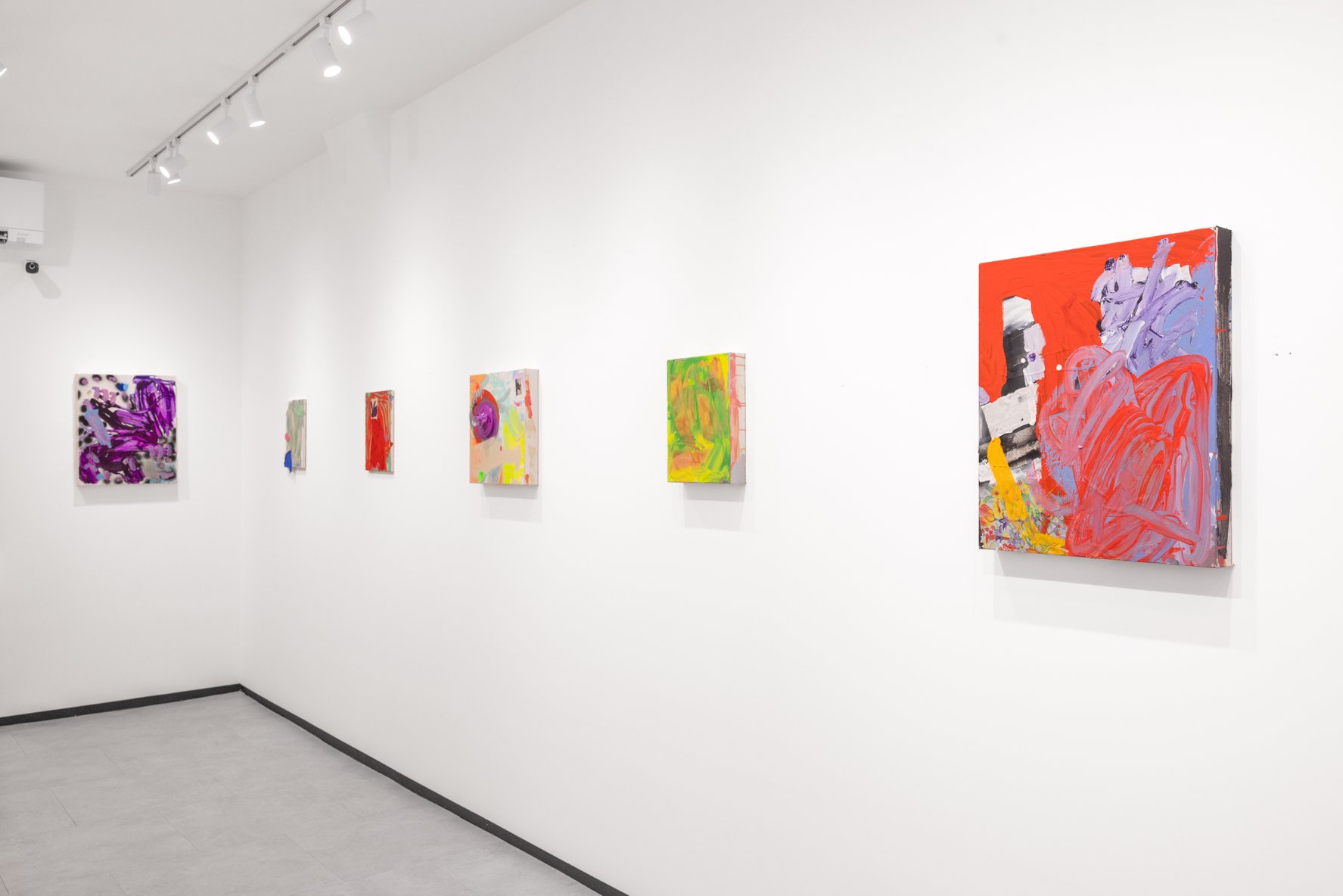
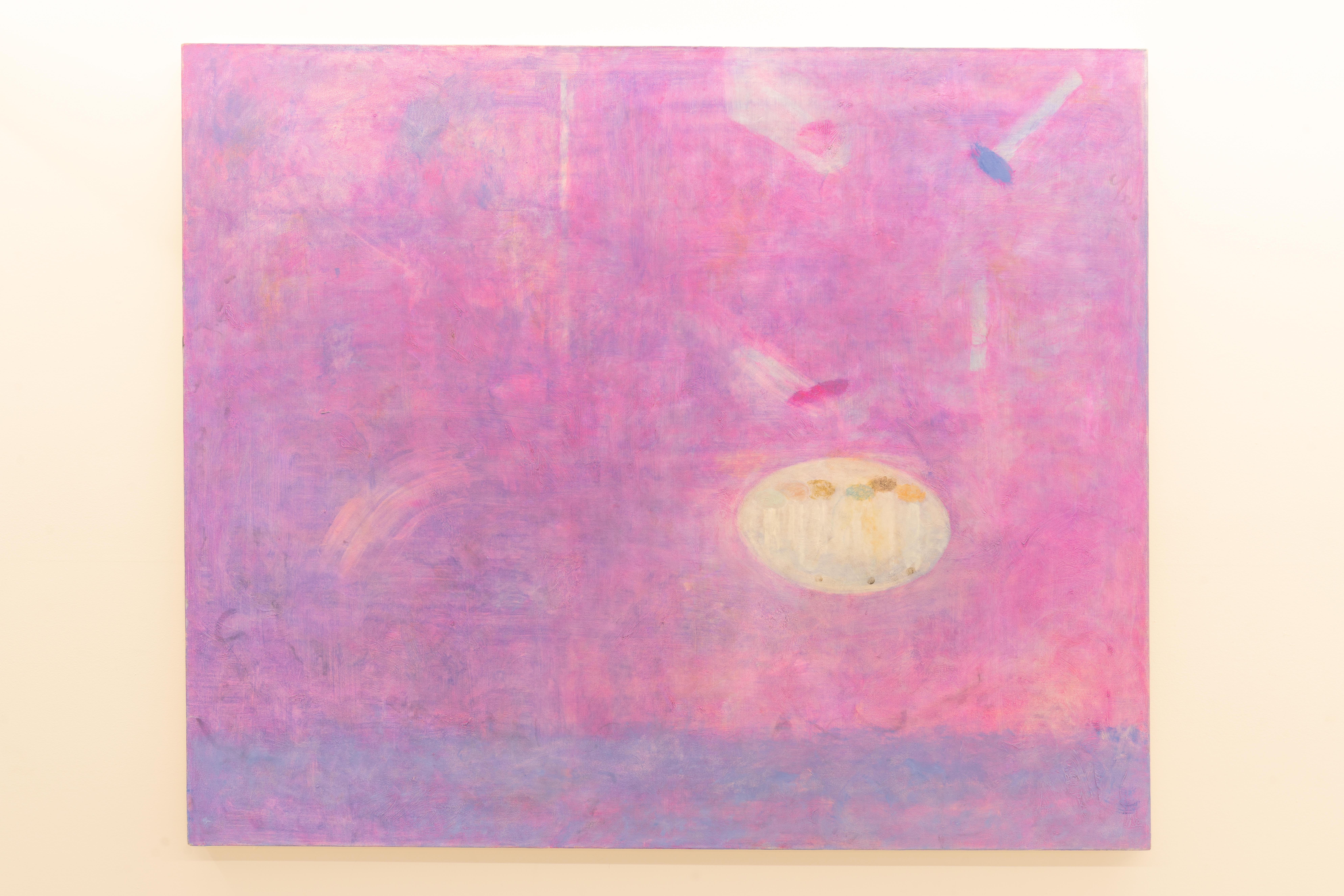
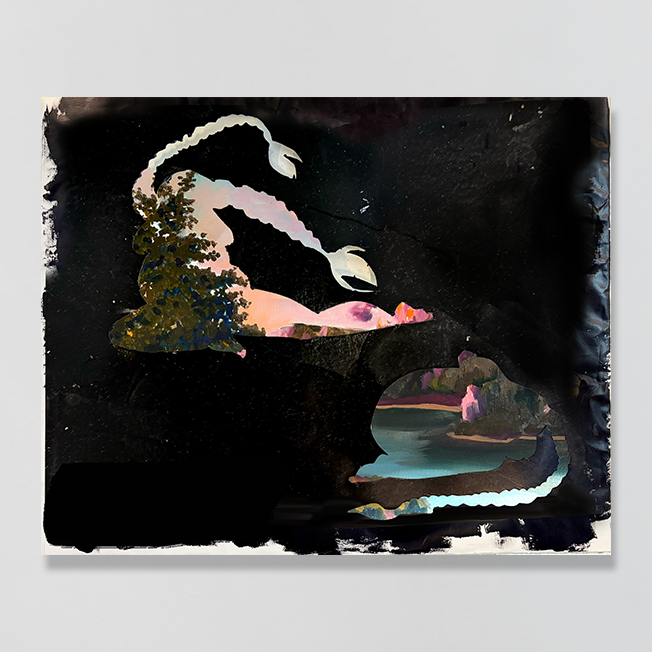
The exhibition consists of nine new paintings, each executed with pigments physically extracted from the ink printed onto glossy newsprint. The erased and reworked magazine pages – functioning as palettes for the painted canvases – are exhibited as distinct artworks alongside the paintings.
Iveson extracts pigments by working into selected areas of the magazine page with a brush, laden with solvents and white oil paint binder. With no final image in mind, he deposits the extracted pigment onto canvas, methodically filling the empty space. Initial chance-based compositions begin to influence the direction of the painting in an intuitive and iterative process. Each brushstroke provides additional material for interpretation, informing the next brushstroke, and so on. The quantity of ink or pigment available on the magazine page constitutes an objective constraint. In some one-shot paintings, a single ‘palette', or magazine spread, suffices to constitute the image. In others, further advertisements are erased and recycled – into pigment for the paintings – until a meaningful image eventually emerges.
Iveson's work scrambles and recombines, decodes and recodes. Input equals output, but order is exchanged for entropy in the process. By dissolving the magazine image into its constituent parts, Iveson greatly increases the options available for creating new meanings from the same material. Henceforth, each gesture is capable of expressing much more information. As the dissolved inks can be reordered in an infinite diversity of forms, each move resolves some uncertainty about the final outcome, thus revealing more about the world.
Iveson's search for new images performs like the ‘reinforcement learning' paradigm in machine learning – unsupervised trial-and-error algorithms guided by cumulative reward functions – used to discover latent structures within massive data sets. Step by step, Iveson's intuitive process conjures up latent images which exist in the space between our collective fears and desires, literary characters, current affairs, dreams, memory and the everyday.
Iveson's painting process discloses the complex interplay between material conditions, feedback loops, echoes, slippage and reinforcement that generates dominant narratives. The latent images here are the product of chance and initial conditions, suggestion and interpretation, the history of their making plain to see. They mirror how information is processed into worldviews, and how a space can open for desire, greed, corruption, violence, sadness and fear. At the same time, they release the emancipatory potential of the entropy inherent to the story-telling material of the world, for perpetual retelling.
The exhibition also features Michael Iveson's model_caption_epoch_repeat, a 2021 work consisting of reworked copies of the Financial Times' How To Spend It weekend supplement. Selected luxury advertisements are scanned and analyzed by an ‘attention-based image-captioning convolutional neural network', which iteratively outputs captions to describe each advertisement. In parallel, each advertisement is dissolved, and its pigments extracted, to produce unique screenprinting inks to screenprint the machine generated captions directly onto the magazine page from which the pigments were extracted. model_caption_epoch_repeat comprises four unique magazines of How To Spend It (44 pages each), as well as silkscreen and digital print editions.
Michael Iveson (b. 1984, Northern Ireland) lives and works in London. Iveson is a painter, printmaker and installation artist whose works investigate social divisions, the interplay between the abstract space of advertising, fear and desire and their concrete manifestations through status, consumption and the lived environment. Iveson has previously exhibited with Foreign & Domestic at the Salon de Normandy, Paris, in 2019, and at the Averard Hotel, London, in 2016 and 2018, with conceptual and site-specific architectural interventions in painted bubblewrap and experimental printmaking.