Ended
Beyond the Image
Aug 13 – Aug 30, 2026
Nouf Aljowaysir, Iyad Abou Gaida, Parham Ghalamdar, Mona Saeed Kamal, Aya Krisht, Noel Maghathe, Umber Majeed, Ridikkuluz, Layal Srouji, Sabri Sundos, Ali Van Godil
All Street Gallery and Shadowbanned Magazine are pleased to present Beyond the Image: A Benefit Exhibition for the Sameer Project, a group exhibition bringing together eleven artists whose work examines how images of the Middle East and its diasporas get made — and who has the power to make them. Beyond the Image is presented as a benefit exhibition. A portion of proceeds from sales will go to The Sameer Project, a Palestinian-led mutual aid initiative delivering food, water, medical care, and shelter to displaced families across Gaza.
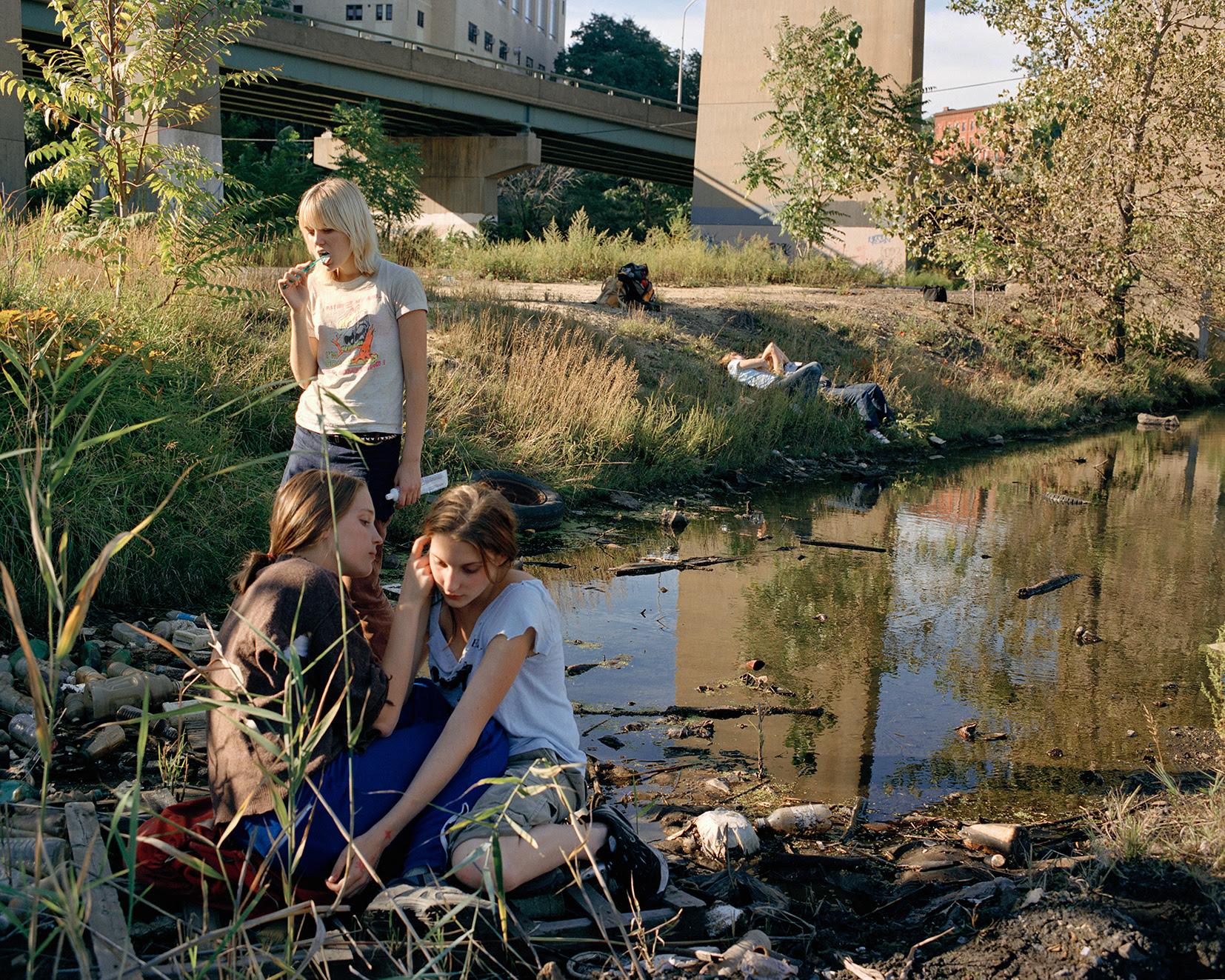
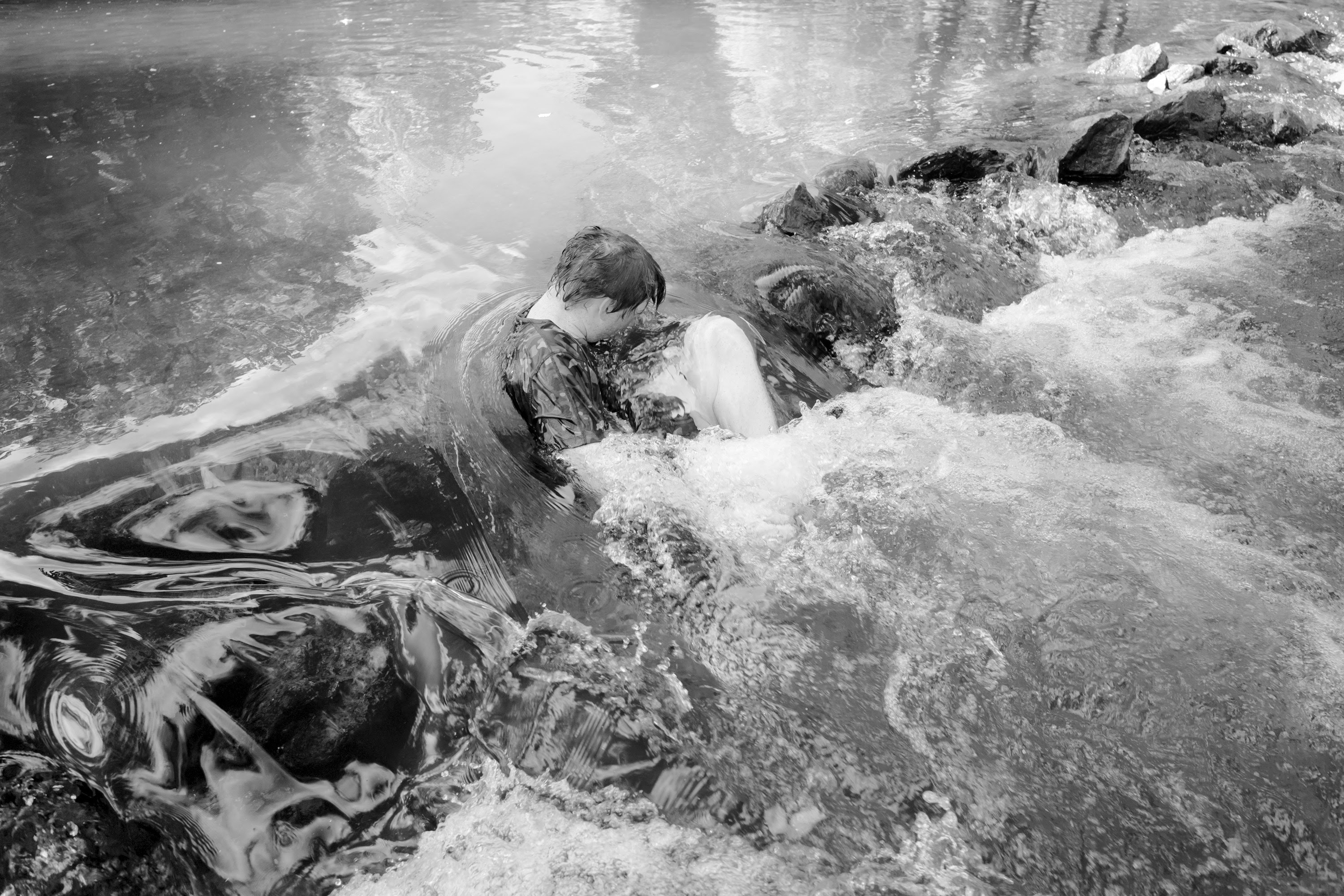
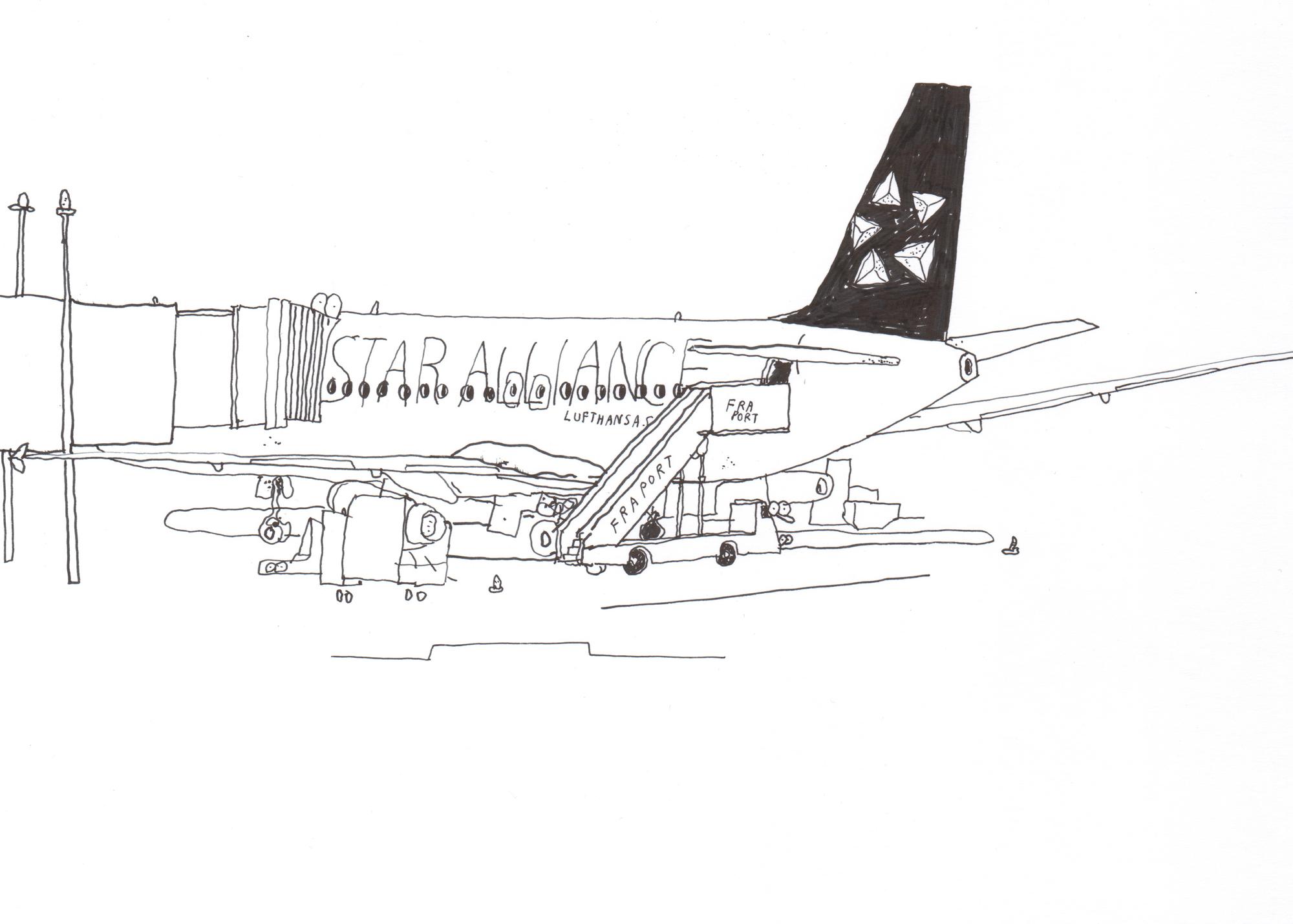
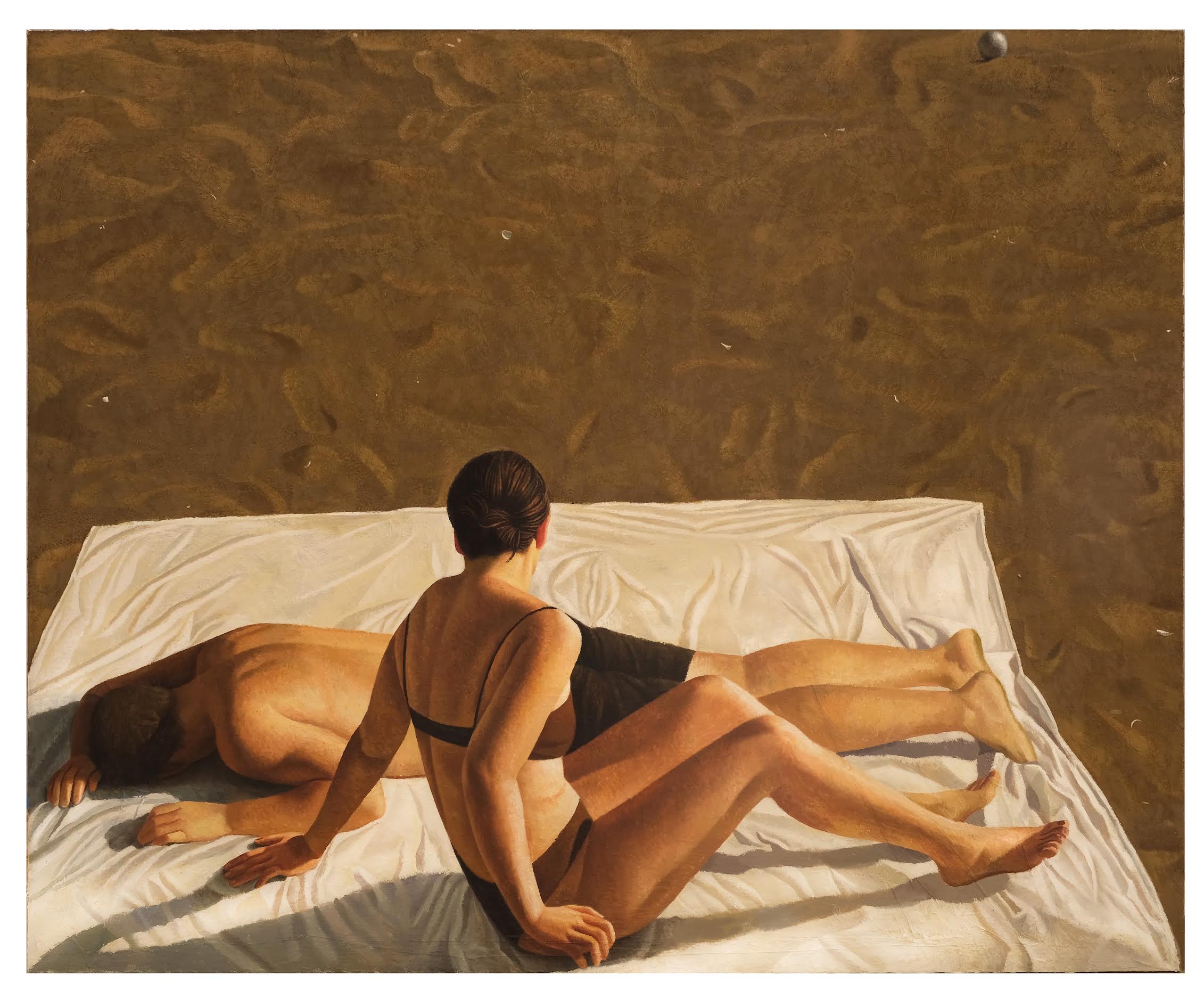
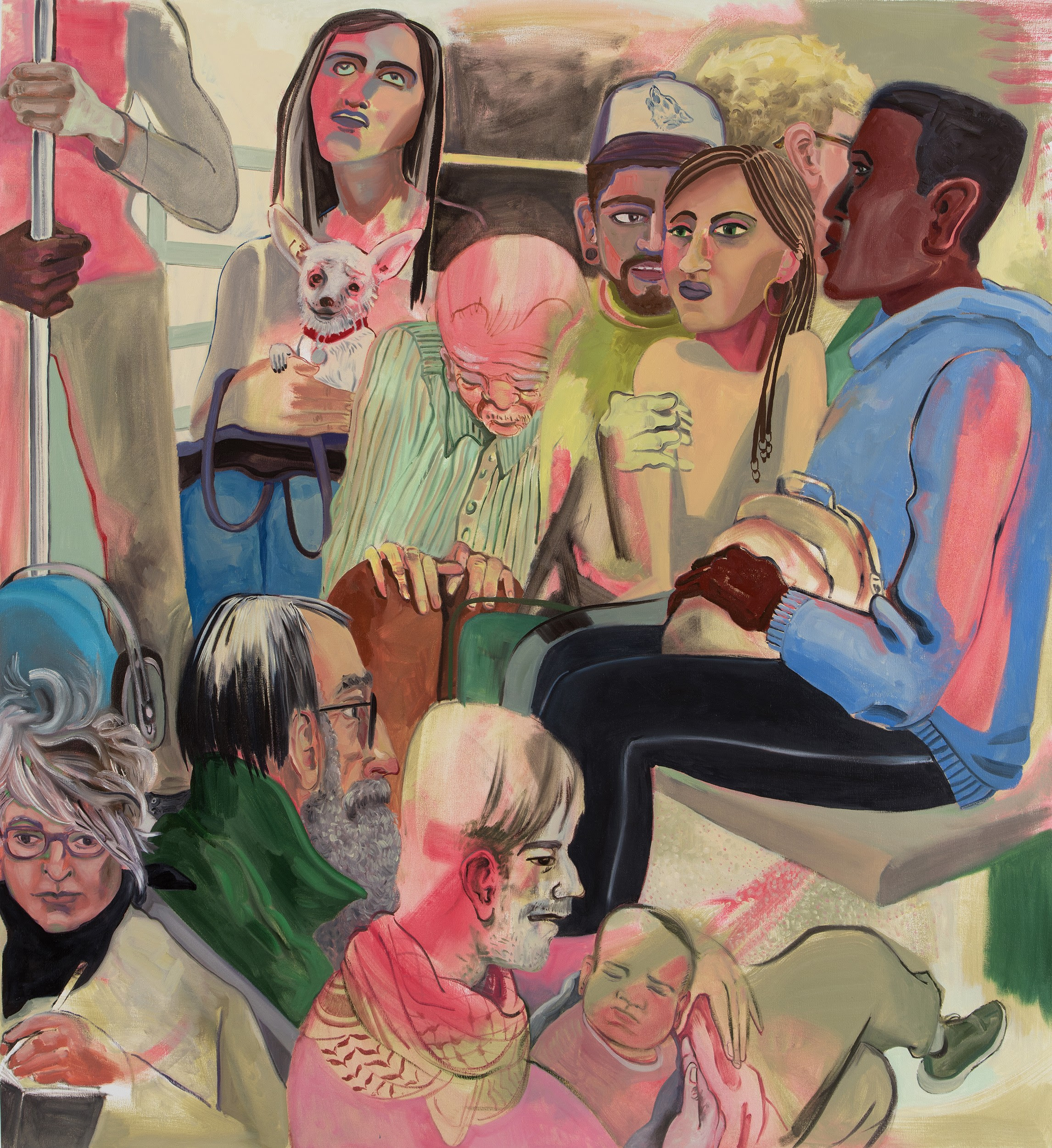
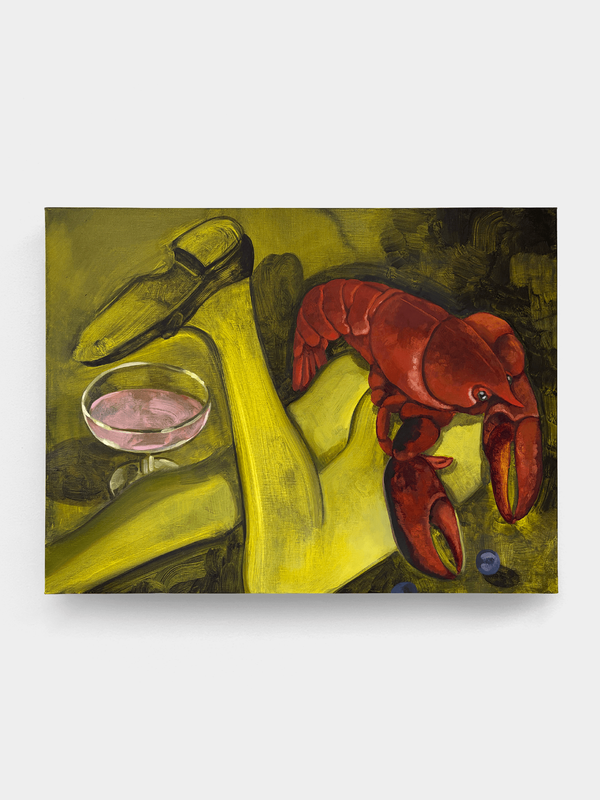
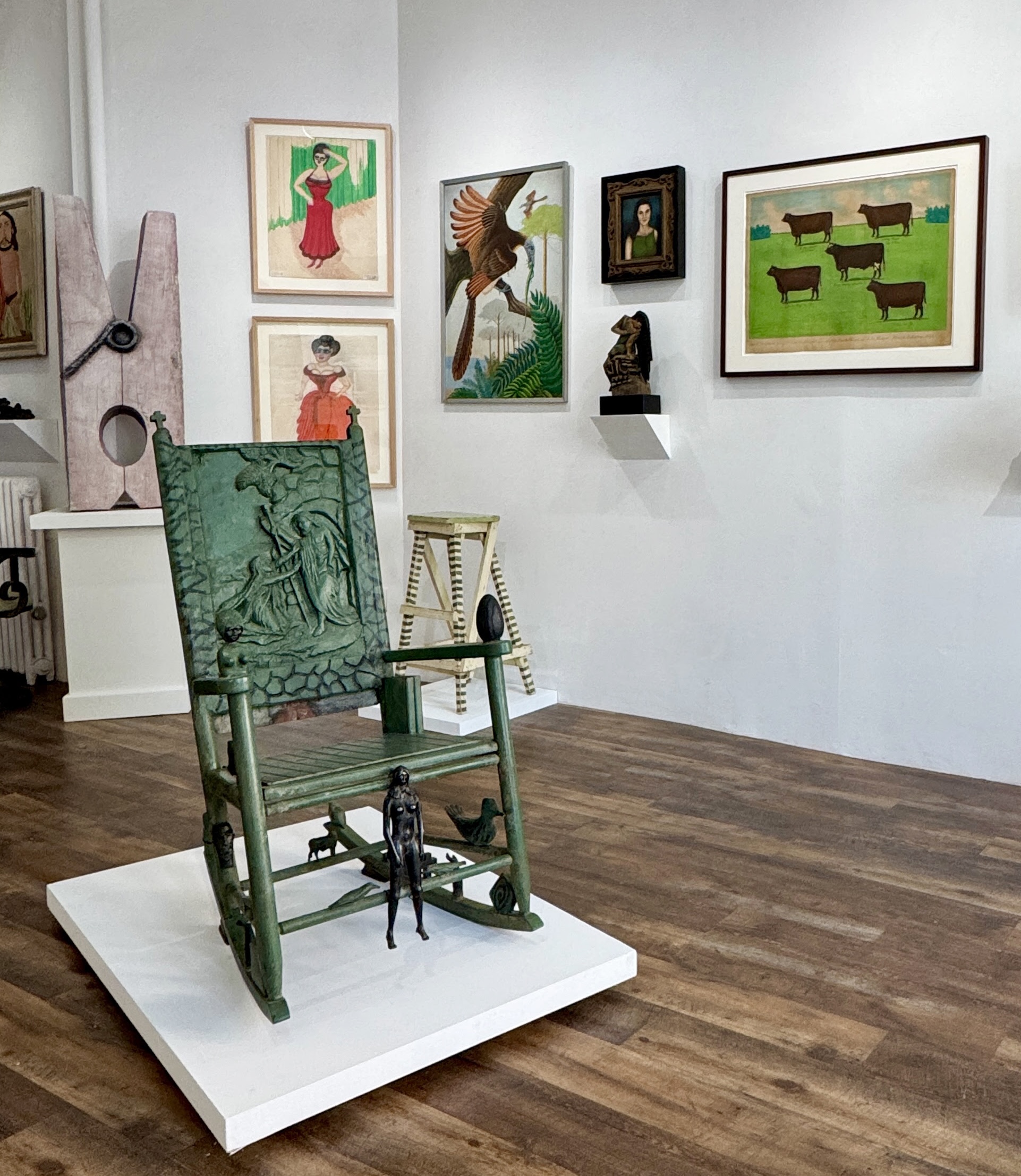
Working across painting, sculpture, digital collage, artificial intelligence, printmaking, textiles, and text, the artists in Beyond the Image treat representation not as a record to be recovered but as a process to be exposed. Their materials — family photographs, colonial archives, inherited visual traditions, political symbols, found letters and manipulated generative imagery — are shaped by memory, power, and omission. Beyond the Image asks what these materials reveal when they are fragmented, obscured, woven, or made strange, rather than smoothed into a single legible picture.
That question turns first on visibility itself. To be seen can mean to be recognized, but it can also mean to be categorized, surveilled, or reduced to a familiar type. The exhibition's opening works hold both possibilities at once. Ridikkuluz's tightly cropped portrait of an Arab American claims an intimacy that resists ethnographic distance: against a vivid blue background, the keffiyeh and agal appear alongside faces and gazes placed at the center of each composition. The portrait complicates straightforward legibility; additional eyes give the painting an unsettling sense that any single image gives a stable or complete view of its subject.
Nouf Alojaway's Ancestral Seeds takes the same question into the machinery of recognition itself. Generated with StyleGAN3 from a dataset drawn partly from photographs associated with British colonial administrator Gertrude Bell, the series exposes how colonial archives continue to train contemporary AI's image of Middle Eastern people, and how that training resurfaces as the misreading of ordinary images through associations with war and terrorism. Alojaway's response is subtractive: she removes the human figures from her generated scenes and replaces them with light. The resulting silhouettes evoke absent elders and eroded family histories while withholding their subjects from the systems, and viewers, that would otherwise define them.
If Alojaway shows what technology does to memory, Noel Magh and Aya Krisht show what time and violence do to it. Magh braids family portraits into pixelated textile surfaces, interlacing generations so that some figures emerge from the weave while others dissolve into it. The distortion itself becomes evidence of how fragile an archive is. Aya's monochromatic prints put the body under comparable pressure: saturated fields of red register urgency and loss without supplying the generalized, consumable imagery through which Middle Eastern violence is often packaged for outside viewers. In both practices, the image doesn't recover from rupture, it centralizes it.
Language undergoes the same treatment. Layal Srouji breaks Arabic found letters into fragments and redistributes them across muted compositions, treating text as a visual inheritance that can be dismantled and reassembled rather than simply read. Iyad Abou Gaida works in the opposite direction, toward density rather than dispersal: adapting the scale and narrative structure of fifteenth-century Persian, Mughal, and Islamic miniature painting, he fills digital collages with masked fighters, guns, the Zulfiqar sword, and national symbols, using text and recognizable imagery with a directness that confronts how naming and labeling shape the politics of war. Between them, the two artists mark the range available for handling language under pressure: dispersing it until new structures appear, or wielding it plainly enough to make its political stakes impossible to miss. Drawing upon similar text-based iconography, Sabri Sundos uses lithography to impose repeating loops and x's upon a series of floating heads. Sundos' work emphasizes the human nature of creation, drawing upon his Palestinian heritage and themes of time and labor, to create intricate abstractions constructing delicate commentaries of labor.
Parham Ghalamdar's sculptures push this same instability into physical form. A ceramic object resembling an airplane is worked over until its material identity blurs — weapon, fossil, relic, alien body all at once — as if the machinery of aerial violence had already entered the historical record as artifact. His engraved aluminum plates make the mechanism more explicit: inclined geometries read simultaneously as ascent and descent, aircraft rising and ordnance falling, fixing in metal the unequal structure of who watches from above and who is watched from below.
Turning to her own familial history and archives, Umber Majeed reimagines her uncle's failed tourism company, Trans-Pakistan, as the fictional Trans-Pakistan Adventure Services. Drawing on this speculative framework, Majeed interrogates the intersecting histories of tourism, nationalism, environmental collapse, and cultural identity through a series of double-sided works that require viewers to physically navigate between opposing perspectives. On the double-sided pieces, Majeed stages one side with the iconography of climate catastrophe and public warning—icebergs, recycling symbols, caution signs—within distorted, faintly absurd landscapes, while the reverse presents intertwined hands arranged in cyclical formations that simultaneously suggest solidarity, entrapment, and interdependence. By compelling viewers to move between the two surfaces, Majeed extends the works' above/below asymmetry into broader environmental and social terms. Absurdity becomes not an escape from catastrophe but an honest register for how catastrophe is experienced and communicated: disorienting, recursive, and perpetually unresolved.
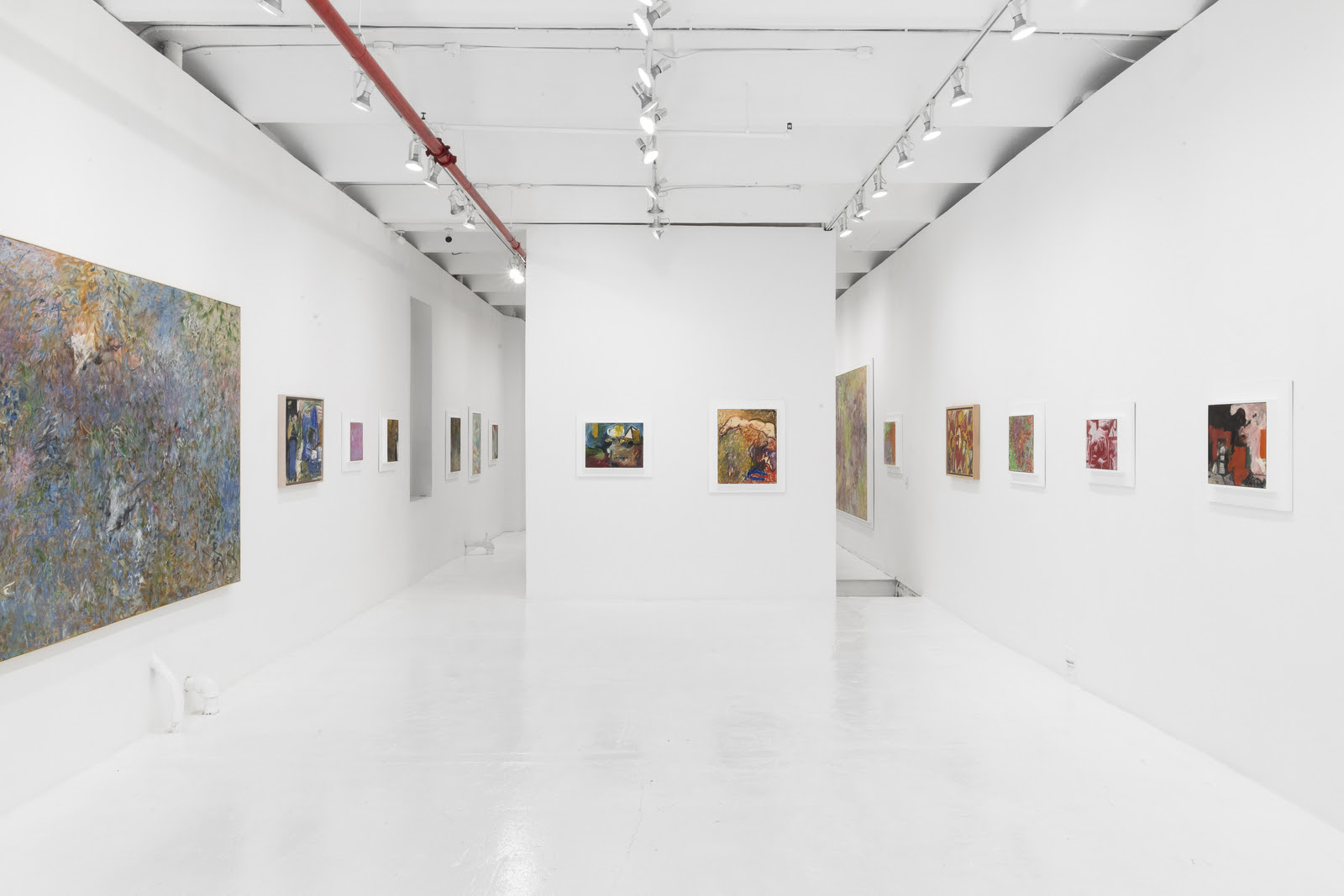
Ali Godli's paintings mark a shift in register: where the preceding artists work from specific archives, photographs, and political symbols, his practice turns inward, seeking to channel a higher frequency through abstraction. His paintings draw from no fixed source material, allowing vivid lines to curve and collide against neutral grounds without stable referents. In Bridge of Creation, that abstraction begins to resolve into figuration, with Arabic script hovering above the image of a small animal. Positioned at the end of the exhibition, Godli's work suggests that reconstruction is not only an act of recovering history but also of tuning into forms of knowledge, spirituality, and connection that exist beyond documentation.
Kamal. Since 2014, Kamal has created intimate gouache drawings rooted in observations of the natural world. For Kamal, the act of painting is itself a meditative practice, using repetition and careful attention as a means of quiet reflection. While Godli channels an unseen frequency through gestural abstraction, Kamal arrives at a similar spiritual register through sustained engagement with nature, inviting viewers into a space where contemplation becomes a form of connection that transcends language, geography, and borders.
Across eleven practices and as many materials, Beyond the Image resists a single expectation: that an image should give uncomplicated access to a person, a place, or a history. Faces stay intimate but partly unreadable. Archives illuminate and erase in the same gesture. Technologies sold as new turn out to inherit old habits of looking. The exhibition treats this not as representation's failure but as its actual condition, and proposes that the way through it is not a clearer picture, but a more honest account of what any picture leaves out.