Ended Jul 11
Hugo Wilson
Coincidental Truths
May 2 – Jul 11, 2020
More from Hugo Wilson on Gallop
[Please scroll down for German version / Für Deutsch bitte scrollen Sie nach unten]
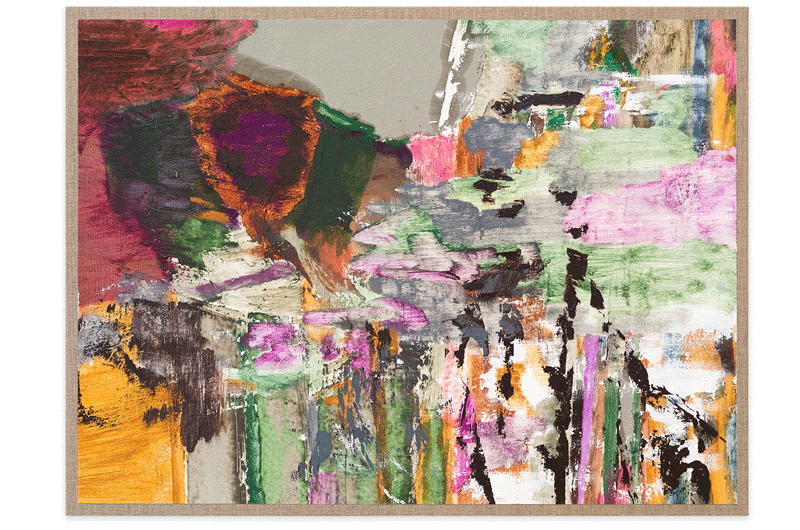
The most recent works by British artist Hugo Wilson (*1982), all created between 2018 and 2020, playfully make use of three media: Wilson’s stylistic and thematic stringency extends across 17 oil paintings, large-format charcoal drawings, and sculptures in bronze and ceramics.
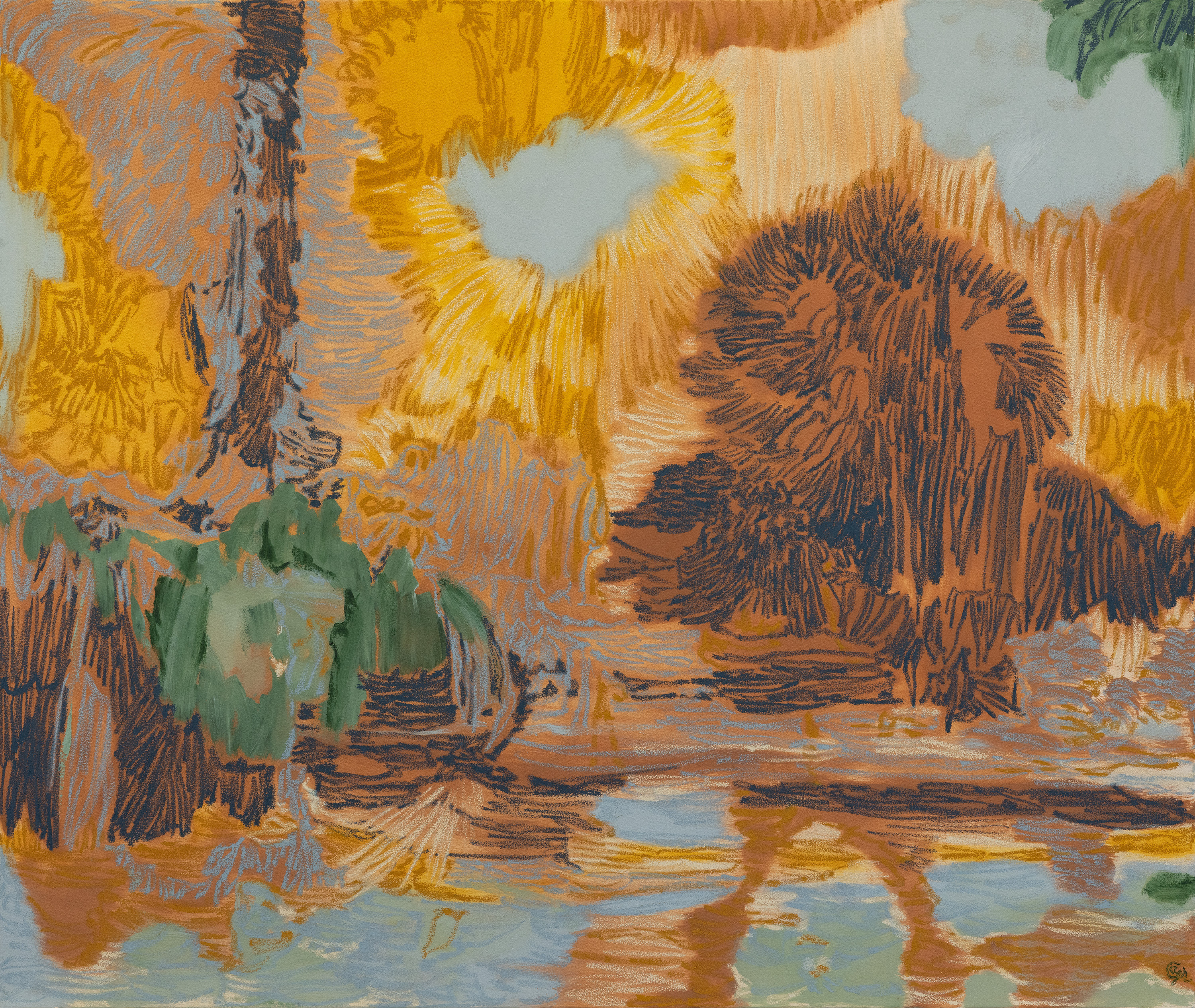
In all three media, we witness an exciting tightrope walk between past and present: In the manner of the Old Masters—whose technique, coloration, deployment of light and composition Wilson adapts with great ease—highly abstracted, amorphous objects merge into powerful, dynamic movements, most of which are catapulted almost centrifugally from the center of the picture. In a twofold way, these works play with our collective visual memory and anticipation. First of all, Wilson’s dramatic compositions particularly invoke the art of the Dutch and Italian Baroque periods, i.e. the era that is today considered to be almost emblematic of the European painting tradition. In addition, Wilson’s agglomerates trigger numerous figurative associations. In most cases, Wilson deliberately evokes such notions by hiding eyes and extremities, feathers and furs, pearls and branches in his color swirls—presenting them as a starting point for our search for further concrete pictorial content. But regardless of whether we try to trace the composition back to a specific art-historical source or whether we are enticed into identifying a distinctive figurative feature: In the end, both trails prove to be fruitless. Wilson’s pictorial inventions elude definition. It is precisely this game with our expectations that the artist is interested in, as he aims at revealing our desire for unambiguity—for those “truths” mentioned in the title.
In fact, the painting Guru, with which the artist shatters the uniformity of this body of works, also pursues this concern. It is a realistic portrait of an Indian guru who, under the name of Sathya Sai Baba, caused an international sensation. In 1950 he founded an ashram, which soon became a refuge for many Indians and a place of aspiration for sense-seeking Europeans and Americans. Those who could not travel to the promised land themselves, bought their participation from afar. The donations in part funded major charitable projects, turning Sathya Sai Baba into an actual savior. At the same time, criticism was voiced against the wealthy sect—and from the 1970s onwards, accusations of abuse were levelled against the guru. However, such allegations did little to harm his reputation. The sect continued to prosper and today has branches in more than a hundred countries. With this painting, Wilson has captured the contradictory reception of Sathya Sai Baba: His guru can be both a menace and a promise of salvation. This ambivalence has an autobiographical background. In the 1990s, Wilson’s father was briefly a follower of the guru. His receptiveness to varying ideologies repeatedly put family life to a severe test. Through this painting, Wilson has made his peace with that part of his family’s history. He has not made any judgement on the subject of the portrait, but has created a projection surface that allows for both perspectives. Wilson’s Guru thus becomes an autobiographical epilogue of his title-lending search for coincidental truths.
*****
Die jüngsten Werke des britischen Künstlers Hugo Wilson (*1982), allesamt zwischen 2018 und 2020 entstanden, spielen leichtfüßig über die Bande dreier Medien: Wilsons stilistische und motivische Stringenz erstreckt sich über 17 Ölgemälde, großformatige Kohlezeichnungen und Skulpturen aus Bronze und Keramik.
In allen drei Medien werden wir Zeuge einer spannungsreichen Gratwanderung zwischen Vergangenheit und Gegenwart: In der Manier der Alten Meister – deren Technik, Kolorit, Lichteinsatz und Bildaufbau Wilson mit Leichtigkeit zu adaptieren weiß – verbinden sich stark abstrahierte, amorphe Gebilde zu kraftvollen, dynamischen Bewegungsverläufen, die zumeist geradezu zentrifugal aus der Bildmitte geschleudert werden. Auf doppelte Weise spielen diese Werke mit unserem kollektiven Bildgedächtnis und Erwartungshorizont. Zunächst zitieren Wilsons dramatische Kompositionen insbesondere die Kunst der holländischen and italienischen Barockzeit, also jener Zeit, die heute als geradezu sinnbildlich für die europäische Malereitradition gilt. Daneben lösen Wilsons Agglomerate zahlreiche gegenständliche Assoziationen aus. Zumeist ruft Wilson derartige Vorstellungen ganz bewusst hervor, indem er etwa Augen und Extremitäten, Federn und Fell, Perlen und Geäst in seinen Farbstrudeln versteckt und als Ausgangspunkt unserer Suche nach weiteren konkreten Bildinhalten feilbietet. Doch ganz gleich, ob wir nun versuchen, den Bildaufbau auf ein konkretes kunsthistorisches Vorbild zurückzuführen oder uns dazu verleiten lassen, einen eindeutigen figurativen Bildinhalt auszumachen: Letztlich erweisen sich beide Fährten als aussichtslos. Wilsons Bildfindungen lassen sich nicht festlegen. Genau um dieses Spiel mit unseren Erwartungen geht es dem Künstler, der damit unser Bedürfnis nach Eindeutigkeit – nach jenen im Titel benannten Wahrheiten – offenlegen möchte.
Tatsächlich verfolgt auch das Gemälde Guru, mit dem der Künstler die Einheitlichkeit seiner Werkgruppe sprengt, dieses Anliegen. Es ist ein realitätsnahes Porträt eines indischen Gurus, der unter dem Namen Sathya Sai Baba international für Furore sorgte. 1950 hatte er einen Ashram gegründet, der alsbald zum Zufluchtsort zahlreicher Inder und zum Sehnsuchtsort sinnsuchender Europäer und US-Amerikaner wurde. Wer nicht selbst ins gelobte Land reisen konnte, erkaufte sich die Teilhabe kurzerhand aus der Ferne. Mit den Spendengeldern wurden auch beeindruckende karitative Großprojekte finanziert, durch die Sathya Sai Baba zum tatsächlichen Heilsbringer wurde. Parallel wurde Kritik an der gut situierten Sekte laut – und ab den 1970er Jahren auch Missbrauchsvorwürfe gegen den Guru. Seiner Reputation konnten derartige Vorwürfe allerdings wenig anhaben. Die Sekte florierte weiter und kann heute Ableger in mehr als hundert Ländern vorweisen. Mit seinem Gemälde hat Wilson die widersprüchliche Rezeption von Sathya Sai Baba ins Bild gesetzt: Von seinem Guru kann gleichermaßen eine Bedrohung und ein Heilsversprechen ausgehen. Diese Ambivalenz ist autobiografischen Ursprungs. In den 1990er Jahren gehörte Wilsons Vater kurzzeitig zu den Anhängern des Gurus. Seine Empfänglichkeit für wechselnde Ideologien stellte das Familienleben wiederholt auf eine schwere Probe. Mit dem Gemälde hat Wilson nun seinen Frieden mit seiner Familiengeschichte geschlossen. Er hat keine Wertung des Portraitierten vorgenommen, sondern eine Projektionsfläche geschaffen, die beide Sichtweisen zulässt. Wilsons Guru wird somit zum autobiografischen Epilog seiner titelgebenden Suche nach parallelen Wahrheiten.