Ended Dec 2
Raymond Pettibon
Nov 6 – Dec 2, 2020
More from Raymond Pettibon on Gallop
“All I am really asking is for you to look at Gumby with the same kind of respect that you would if it was some historical figure or Greek statue” [1]
Pettibon is particularly drawn to books—pages, paragraphs, sentences, phrases, words—while his character, Gumby, can walk into and out of any book and page, with his pony pal Pokey, too, who is royally “bred in the purple” in the piece No Title (Bred in the...), 2020. As Raymond states, ”if you‘ve got a heart, then Gumby’s a part of you. Gumby’s mission is to play, really. His mission is to play and have fun.” However, Gumbys are also agents of change.
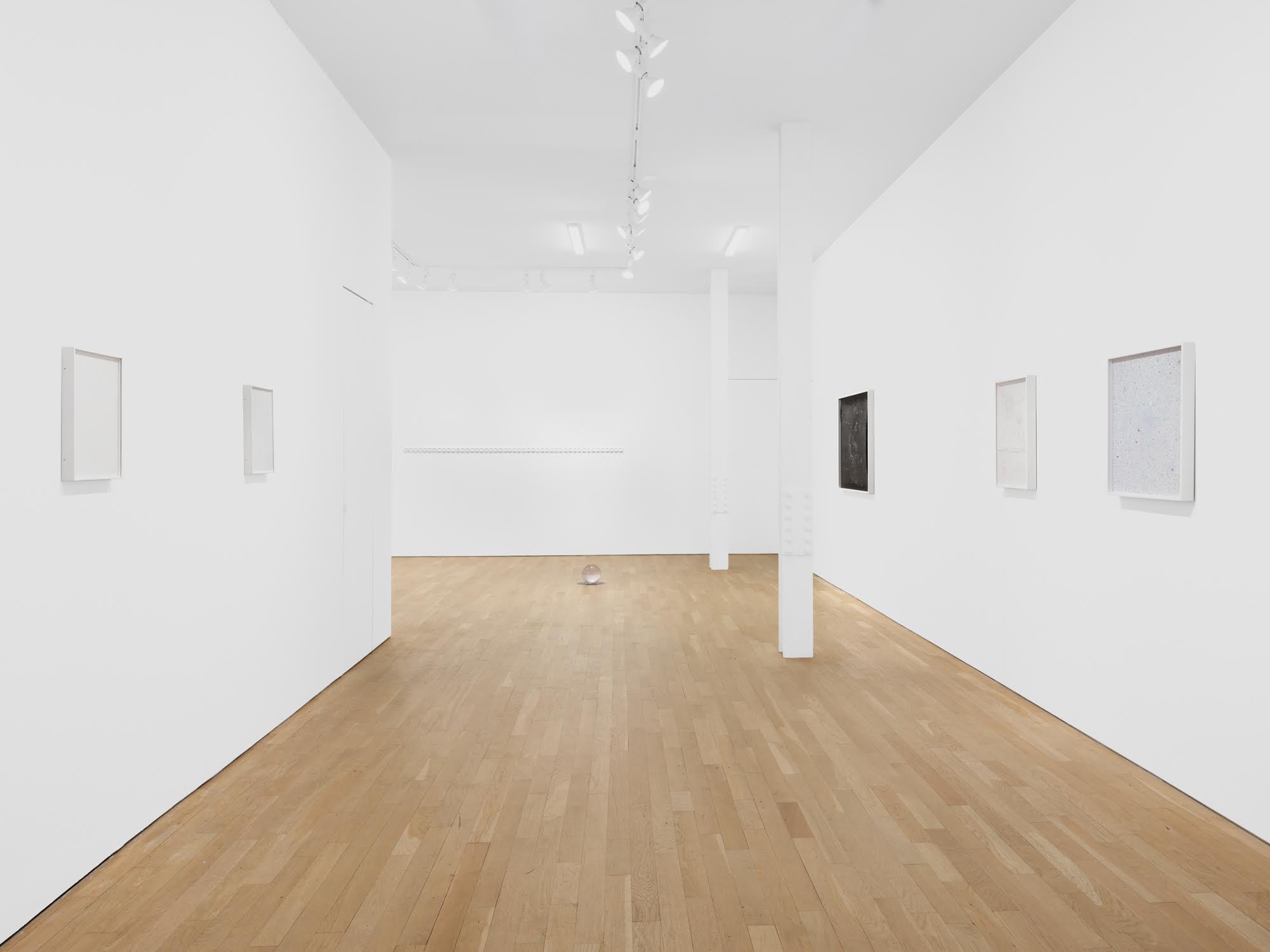
The exhibition features two book-smart Gumby pieces, No Title (We have read...), 2020 and No Title (At the instant...), 2020, that attempt to “read fine” history when they are in the mood and a Gumby wall painting with a Pettibon motif, the cover of the Bible, used here as a reminder that the supreme court shouldn’t always judge by the book.
In Pettibon’s work sometimes Gumby does change history, or as Raymond says “he becomes a part or an agent of historical change for the better. I don’t know if Gumby ultimately actually changes things, that would be kind of like interventionism as it’s practiced. Of course. I would go back in time if I could. If I was Gumby and could rewrite history, I‘d end slavery and do obvious things that were there before…” [2, 3]
Raymond Pettibon’s (b. 1957) influential oeuvre engages a wide spectrum of American iconography variously pulled from literature, art history, philosophy, religion, politics, sports, and alternative youth culture, among other sources. Intermixing image and text, his drawings engage the visual rhetorics of pop and commercial culture while incorporating language from mass media as well as classic texts by writers such as William Blake, Marcel Proust, John Ruskin, and Walt Whitman. Through his exploration of the visual and critical potential of drawing, Pettibon’s practice harkens back to the traditions of satire and social critique in the work of eighteenth- and nineteenth-century artists and caricaturists such as William Hogarth, Gustave Doré, and Honoré Daumier, while reinforcing the importance of the medium within contemporary art and culture today.
Pettibon lives and works in New York, New York.
Curated by Sozita Goudouna
1 - Raymond Pettibon in conversation with Benjamin H. D. Buchloh, May, 2008.
2 - Raymond Pettibon: Homo Americanus, Deichtorhallen Hamburg – Sammlung Falckenberg, David Zwirner Books, 2016.
3 - Excerpt from “Raymond Pettibon and The Soft Clay of our Generation” by Sozita Goudouna, written on occasion of this exhibition.