Ended Mar 16
Nicolas Bermeo
Playing in Reality
Feb 12 – Mar 16, 2025
More from Nicolas Bermeo on Gallop
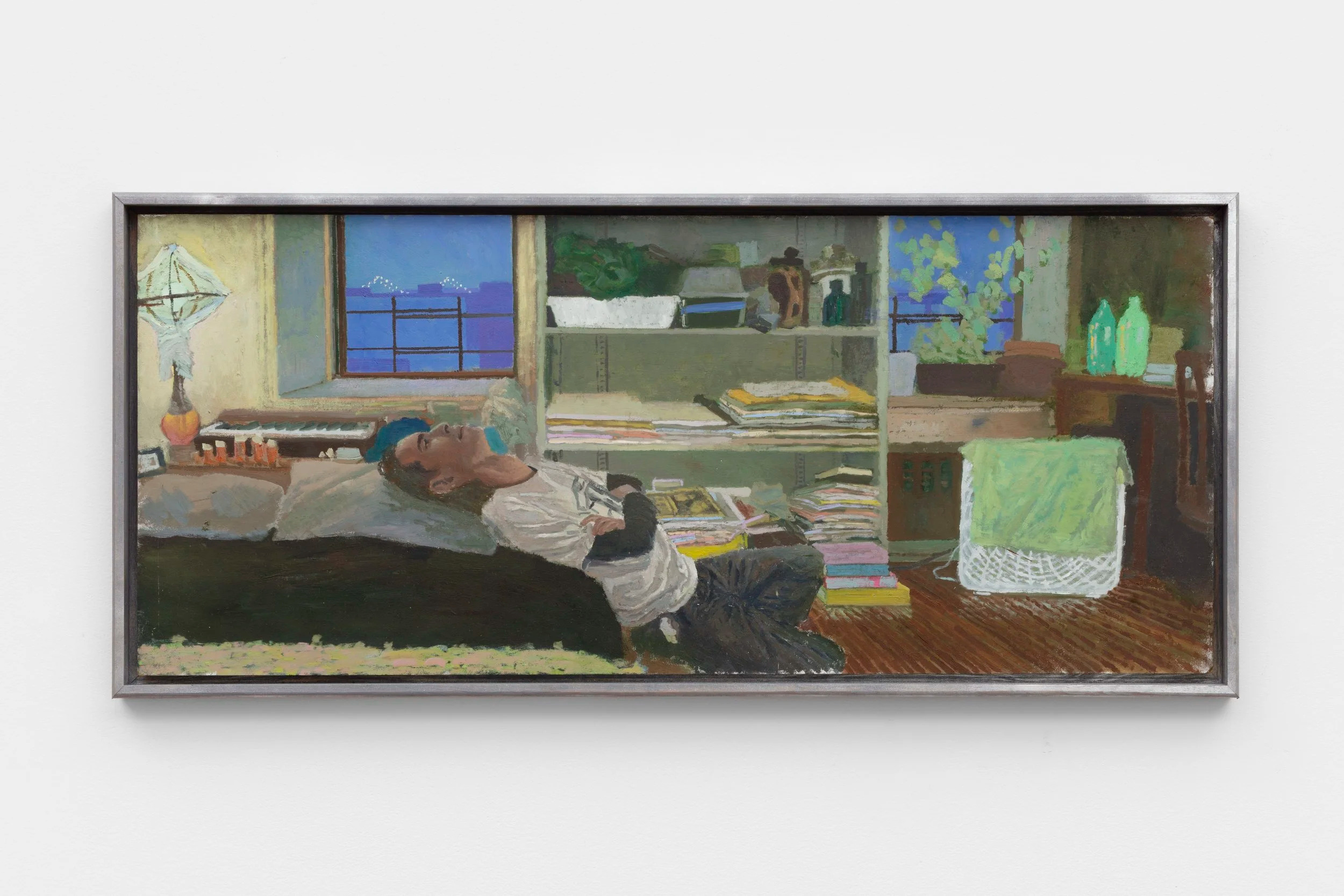
Swarming under the surface of this soil, from which these flowers grow are "sticky roots" that "wallow in darkness." I am dancing to DMX. I am listening to a lecture on the brutalist architects, Peter and Alison Smithson. I am wondering what sort of urgency Hans Fallada must have felt in those 24 days, in that German autumn of 1946, when he wrote his last novel, Every Man Dies Alone. I am holding these separate threads as if they were wires to a bomb. The clock is ticking.
In the life and work of Hans Fallada, timing was everything. At age 18, he and his secret lover, Hanns Dietrich von Necker, staged a duel to mask their joint suicides. Fallada shot first and killed von Necker. But von Necker missed. Fallada lived his remaining life with the guilt of killing his first love.
In Every Man Dies Alone, based on an actual Gestapo file, a working-class German couple, whose son died fighting for Hitler, decides to start leaving handmade anti-Nazi postcards across Berlin. Although Otto and Anna Quangel strategize obsessively about when and where to drop the postcards, they knew that it was only a matter of time before they would get caught. As Otto Quangel is sentenced to death, his Nazi judge mocks him pointing out that nearly all the "poorly spelt" and "clumsily expressed" postcards had either been destroyed or confiscated. From the judge's point of view, the Quangels' flaccid insurrection had been fought in vain. Yet, what Otto Quangel knew, and the judge did not, was that writing those postcards, with the love of his life, gave Quangel a reason to live.
It is hard to not draw parallels between the Quangels and the author himself. Shattered by the war and his own personal history, Hans Fallada died shortly after completing Every Man Dies Alone.
As Otto Hampel, the real life Otto Quangel, was making bombs and dropping postcards in Berlin, the Smithsons were studying architecture and falling in love in Northern England. The unfortunate truth is that the Nazi bombing of England created an unprecedented need for a new architectural identity. Brutalism was intended to be Britain's future. But when the critics first saw brutalist architecture, many of them accused the new style of resembling the piles of rubble and the bomb shelters that haunted the country's past. From a psychological perspective, it would only make sense that the Smithsons would appropriate the aesthetics of their trauma. The bombs of their youth left shadows on their dreams. Time could not erase what they had seen.
When listening to DMX, it is hard to not think about the traumas of his childhood. His mom was a mentally ill Jehovah's Witness who believed that her son was possessed by the devil. He would escape nightly beatings by sleeping in clothing donation bins outside a Goodwill Center. He felt so unable to connect with others that he committed robberies unmasked, because he wanted his victims to see his face. In the 9th grade, he set his own school on fire from the inside. The title of DMX's 4x platinum album, It's Dark and Hell is Hot, was not a metaphor. He believed that he was chosen by God to speak from Hell.
Holding these threads together, imagining they are wires to a bomb, I recite to myself the words of the filmmaker Douglas Sirk: "You can't make films about something, you can only make films with something, with people, with light, with flowers, with mirrors, with blood, with all these crazy things that make it worthwhile." So with that in mind, I rub these wires together to see what happens.
—Nicolas Bermeo
Nicolas Bermeo (b. 1989) lives and works in New York. This is his debut exhibition.