Ended Aug 13
Blake Daniels
Triumph of the Southern Suburbs
Jul 8 – Aug 13, 2022
More from Blake Daniels on Gallop
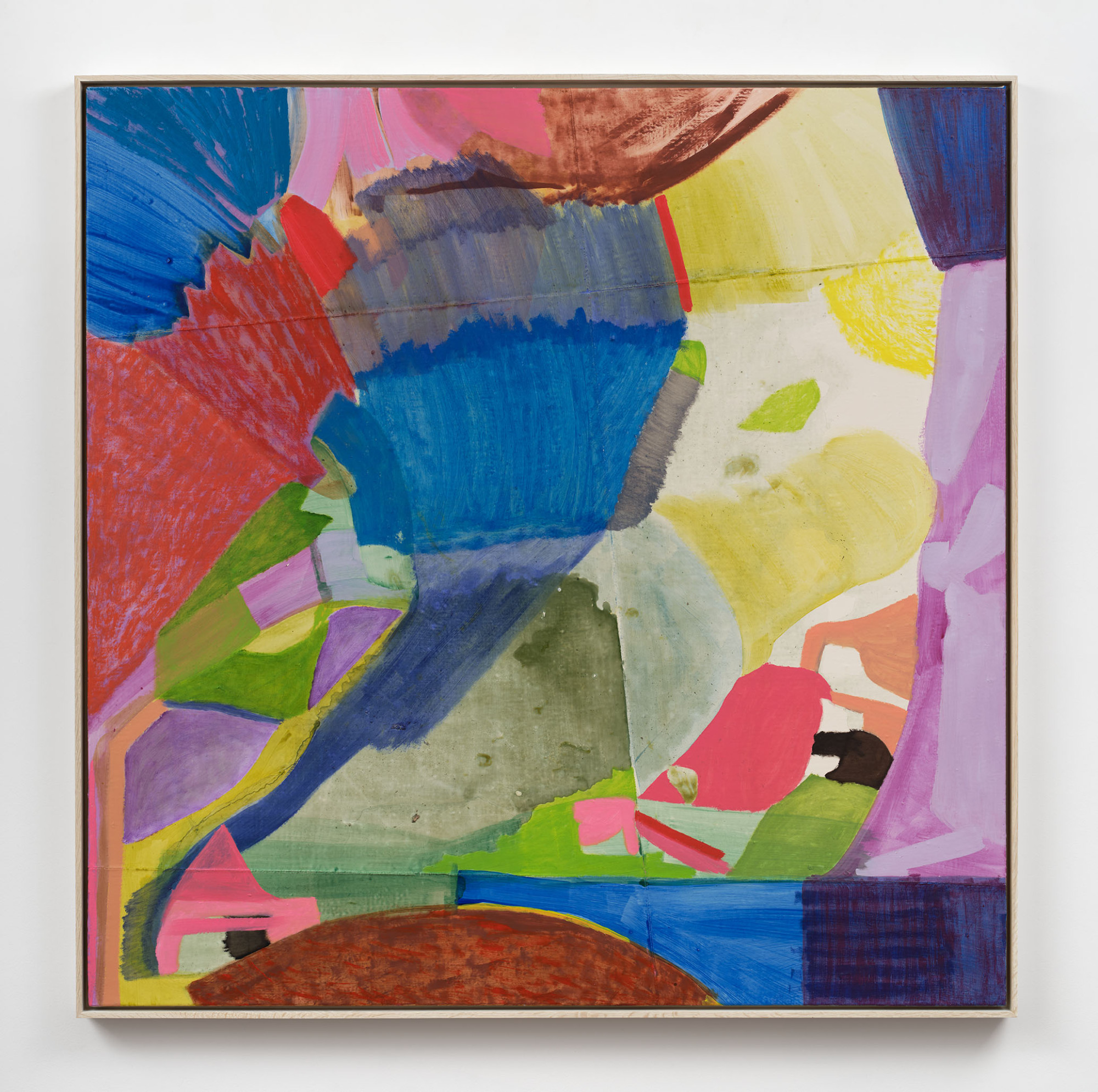
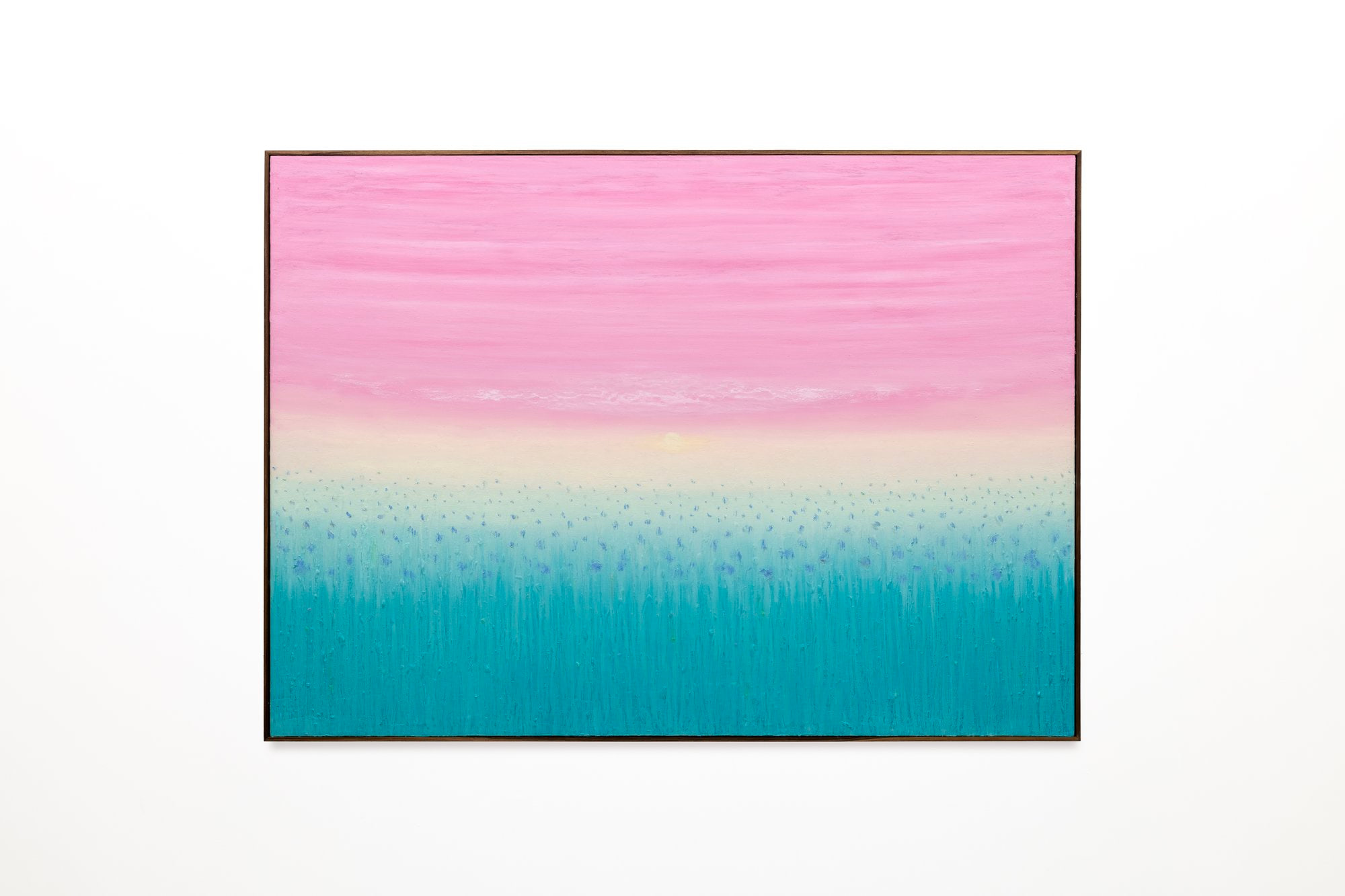
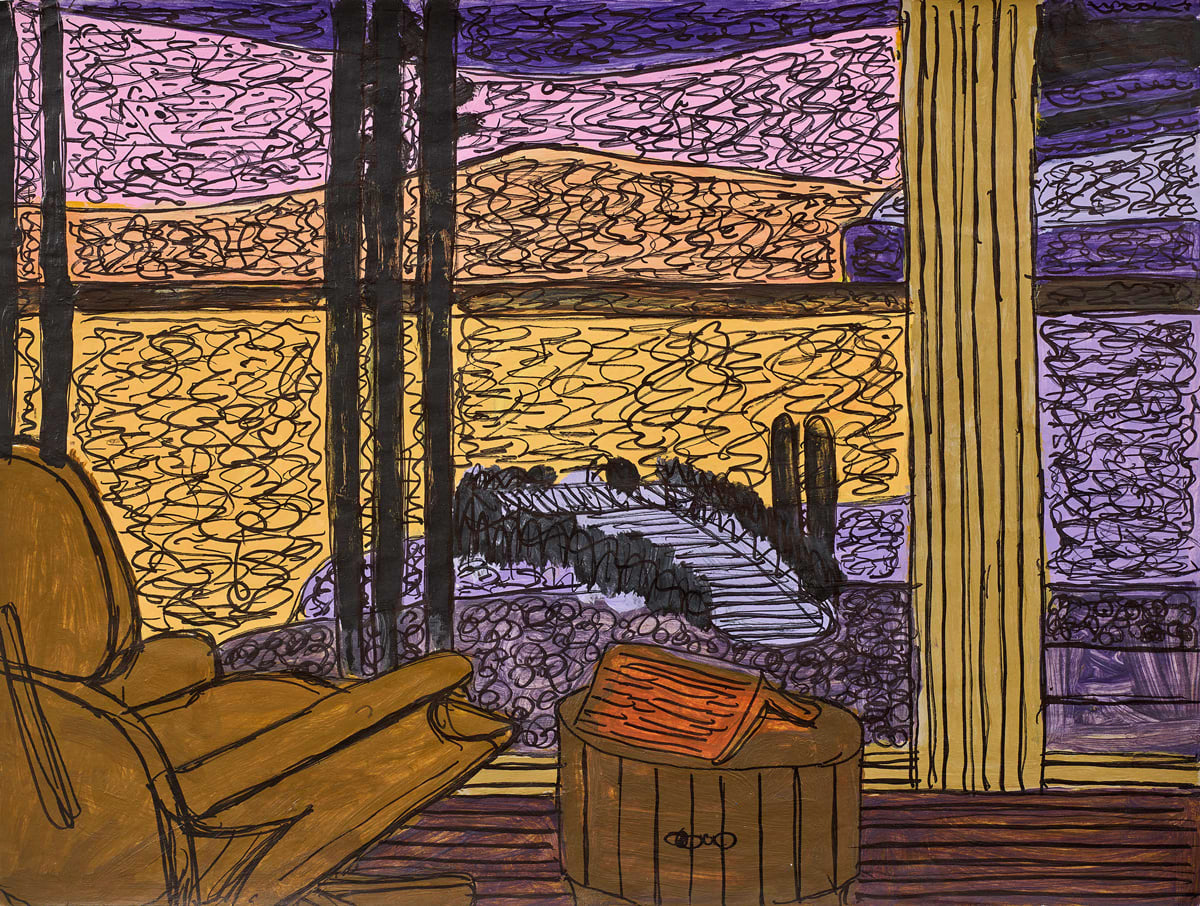
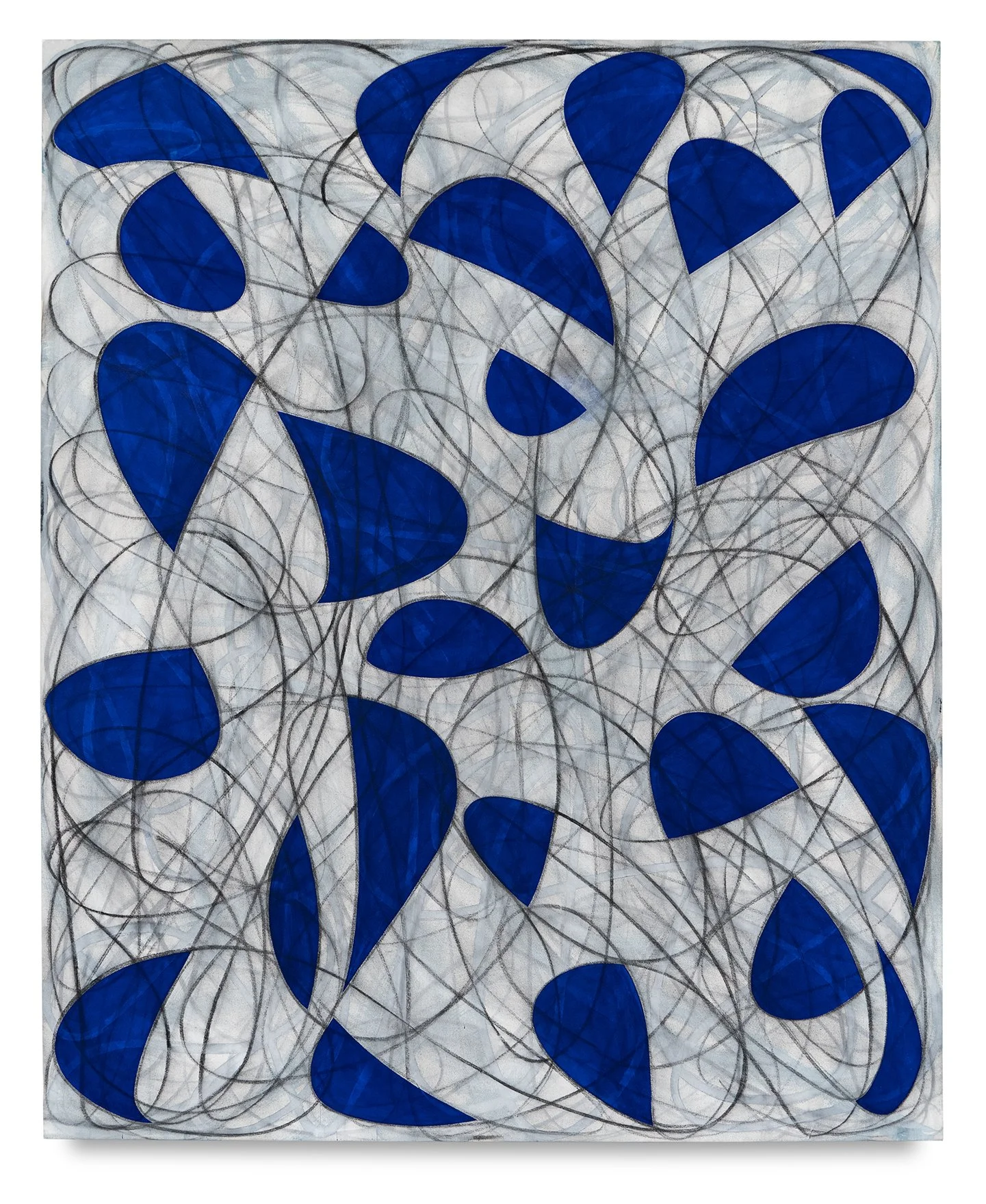
Matthew Brown is pleased to present Triumph of the Southern Suburbs, a solo exhibition of paintings, drawings and etchings by Blake Daniels. The paintings vibrate with animated color and dynamic marks, thick surfaces give way to create dreamlike and expressive compositions, pictorial plains which examine the private interior and socio-political conditions under which we establish, form and adapt our identities. Living and working between the United States and South Africa, their work draws inspiration from traditions of storytelling, queer cultural practices, art history and personal memories, coalescing into divergent perspectives upon our social and political landscapes.
Daniels subject matter revolves largely around Johannesburg and its subversive queer communities, weaving together vibrant irreducible narratives as a means of exploring the generative ways in which we mourn, heal and conjure life within the seemingly improbable worlds’ we inhabit together. The exhibition is Daniels inaugural solo exhibition with Matthew Brown and is accompanied with text written by Dr. Nosipho Mngomezulu.
—
I sit behind Daniels in a studio in Upstate New York and watch them work. Training my ethnographic eye on their movements on and off the linen, I pay attention to their attention.
There is something improbable about us being here: nothing in our given phenotypes, genders and nationalities would suggest that this is a world we would inhabit together. We mirror and refract each other, two magnets traversing epistemic minefields, more tender still because what is at stake is greater than the sum of our paths that brought us here. Can our world be possible?
Perhaps this is a triumph, however, we’re not sure. We have after all seen what makes this world cheer.
Over four days and three nights, we muse over things the eye can’t see: whether failure is the truest queer art? Whether representation is a foolhardy road? How do we live with grief? What it means to remember? When is safety and home for queer kids like us?
We tell each other stories about stories, our memories like Daniels’ paintings replete with the play of drama, hyperbole, absurdity and tenderness. For us in this third place, history and location is never past. Like Michel-Rolph Trouillot, we recognise that “nothing is inherently over there or here. In that sense, the past has no content. The past—or, more accurately, pastness—is a position. Thus, in no way can we identify the past as past.” Daniels paintings dare to work through the ideological imaginary of pastness, to imagine that we are indeed possible.
There is something sacred about watching an artist create. Two months before the show, I watch Daniels conjure in a language I have no fluency in. It would be foolhardy for me to pretend that I understand the genealogy of their scumbling and deft work with texture; but I do understand the way I feel when opacity meets translucence to produce something more than legibility.
When the Kenyan literary giant, Binyavanga Wainaina, told us “how not to write about Africa”, he was railing against the pervasive desire to render Africa, thus Africans, legible in frames which constrain meaning of our complex lives into digestible single stories. This flattening of complexity of reality is precisely the Archimedean cue from which Daniels’ work emerges.
In the title piece for their show, “Triumph of the Southern Suburbs” I see our friend in what first appears to be a nightclub Daniels and I had some misadventures, then slowly changing form into garden and suburban walled street. Beatific, yes, gods: not so much. You see, when Africans are blown up into these life size figures as Daniels has done, it is all too easy to pretend that there is a mythical transcendence at work. Yet, there, the former president’s portrait hangs off centre to the right, shadowing a sexy fem-masculine figure being watched with adoration. Daniels wants us to look, because nothing is hidden, even in nude rendering nothing is exposed. In this and other works, there are no “Easter eggs”, but a patient invitation to look from multiple vantage points.
See the men behind the curtain? See the dog sunning as red ants evict people? I am reminded of WH. Auden’s “Musee des Beaux Arts” when he notices in Pieter Brueghel’s figures “how everything turns away, Quite leisurely from the disaster”. Like Auden and Brueghel, Daniels work dares us to bear witness.
The “otherworldly” quality to our friends, these life sized figures, is not attributed to a fantastical force, but this queering of Christian motifs is magical none the less. Reminiscent of El Greco, Daniel’s mysticism is precisely the stuff of this corporeal plane, something our friends make with sheer force of will, they triumph in spaces we were told we would die. And some of us do indeed die. In Daniels’ work, we are also mournable.
As I watch Daniels work on the beatific rendering of those whom we bear witness to, and who in turn bear witness upon us, I think of Mongane Wale Serote’s “Hell, Well, Heaven”
“I do not know where I have been,
But Brother,
I know I’m coming.
I do not know where I have been,
But Brother,
I know I heard the call.”
This exhibition could have easily been named, have you heard from Johannesburg? Or Gisenyi? Or Sebokeng? Or Kentucky? In Daniels work, place functions as a central organizing principle, as much a character as the life size figures rendered in their work. But you don’t have to recognise the topographical references or even the familiar faces. What moves me, is the way Daniels work never falls into metaphorical abstraction.
Traversing spaces they have lived, loved and mourned in, the question is not “where” Daniels is calling from, which might suggest that there is a territoriality being examined in their work. To be sure, some of that is going on, but there is something else I see when I step back and pay attention to how Daniels thinks about the relationship between places and bodies. Specifically, the figures and perspectives within their work are friends, lovers and most importantly, Daniels themselves.
Daniels is IN place, but neither them nor the people they represent are rendered OF place. This subtle move, renders place more than a location, but creates space. The forgotten people and places take shape in the space Daniels creates through a deliberate working with light and proportion. The sheer scale, makes this space undeniable, though rendered invisible, unspeakable, in Daniels work I find a language for emplacement that isn’t territorially bound.
The question thus is not where Daniels is calling from but rather “how”: Daniels is calling us from a magical-realist dreamscape. An invitation to run with the references they wear on their sleeve.
Bringing their former art studio neighbour David Koloane’s ghost like “Street Dogs 10” (2005) in conversation with Gustave Doré’s “Triumph of Christianity over Paganism” (1899) via Mamma Anderson’s filmic register in their works ‘Johannesburg Street Dogs or the Assumption of Lerato’. Teaming with a world building project, Daniels’ work offers a visceral and delicate language to an aesthetic of memory and place. Their figures, are friends and lovers, intimate relationships blown up to attempt an approximation of proportion, a means to mark their significance to the artist’s memory making process.
The “how” of Daniel’s show is precisely what makes our world possible. A triumph indeed.
—Dr. Nosipho Mngomezulu
Blake Daniels (b. 1990, Cincinnati) lives and works in Brooklyn, New York and Johannesburg, South Africa. They are the recipient of the Edward L. Ryerson Fellowship from the School of the Art Institute of Chicago where they received their BA Fine Arts (2013) and received a Master in Fine Arts from The University of the Witwatersrand, Johannesburg (2017).
Recent solo and two person exhibitions include City Without a Sun, with Dorothee Kreutzfeldt, blank projects, Cape Town (2018); Tales of Here and Later, Room Gallery, Johannesburg (2017); Nothing More?, The Bag Factory, Johannesburg (2015); Leisure, with Blair Whiteford, Fresh Exhibitions, Savannah (2014).
Recent group exhibitions include Friends and Strangers, OTI, Hong Kong (2021); Del Segno, Y2K Group, New York (2021); A Continuous Unknowing, Assembly Room, New York (2019); Bricks & Sticks, Canwood Gallery, Herefordshire (2017); Foundations, The Bag Factory, Johannesburg (2016); Fantasy of Representation, Beers London, London (2015); Mapping the Abstract, Beers Contemporary, London (2014); Isnt it Enough?, Sullivan Gallery, Chicago (2013); The Other City, Carousel Projects, Chicago (2012).
Daniels was included in the critical survey 100 Painters of Tomorrow published through Thames & Hudson (2014).