
Ended
Alex McAdoo & Silvia Muleo
Refraction
Feb 16 – Mar 30, 2024
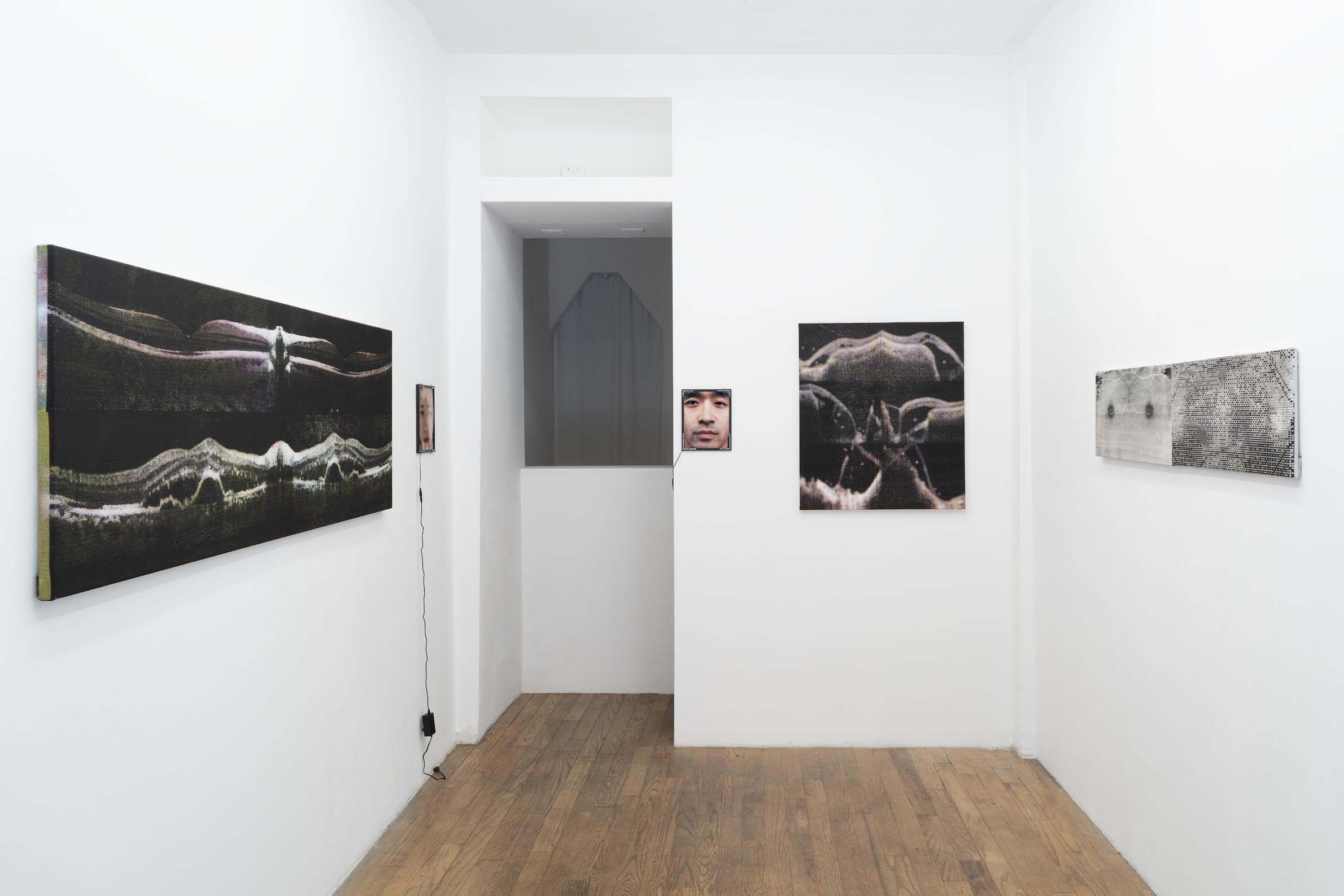
New Collectors is pleased to present Refraction, an exhibition that explores the interplay between light, color, and perception through the works of two painters, Alex McAdoo and Silvia Muleo.
Alex McAdoo and Silvia Muleo are both interested in technical and aesthetic shifts in art through the manipulation of light, specifically the refraction of light and its ability to distort an image. Through the lens of history, they each forge a unique aesthetic path for themselves, McAdoo with bold colors and gestural brushstrokes, and Muleo with a low-contrast palate and meticulous touch.
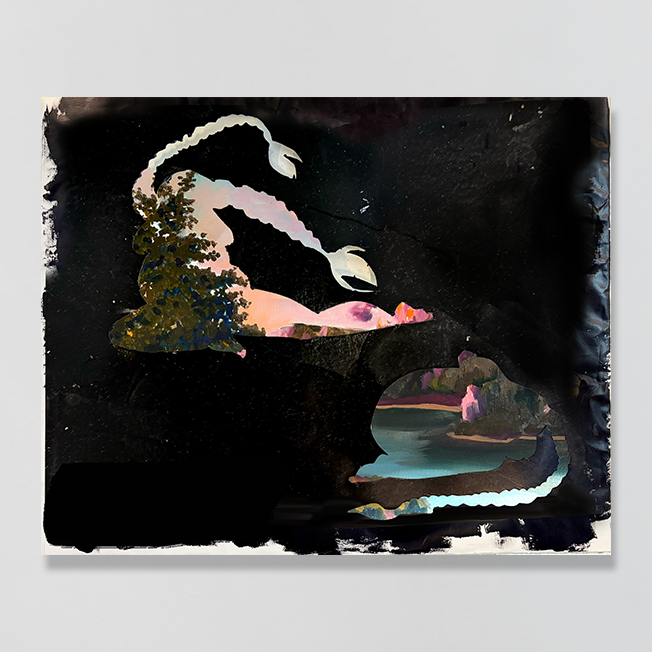
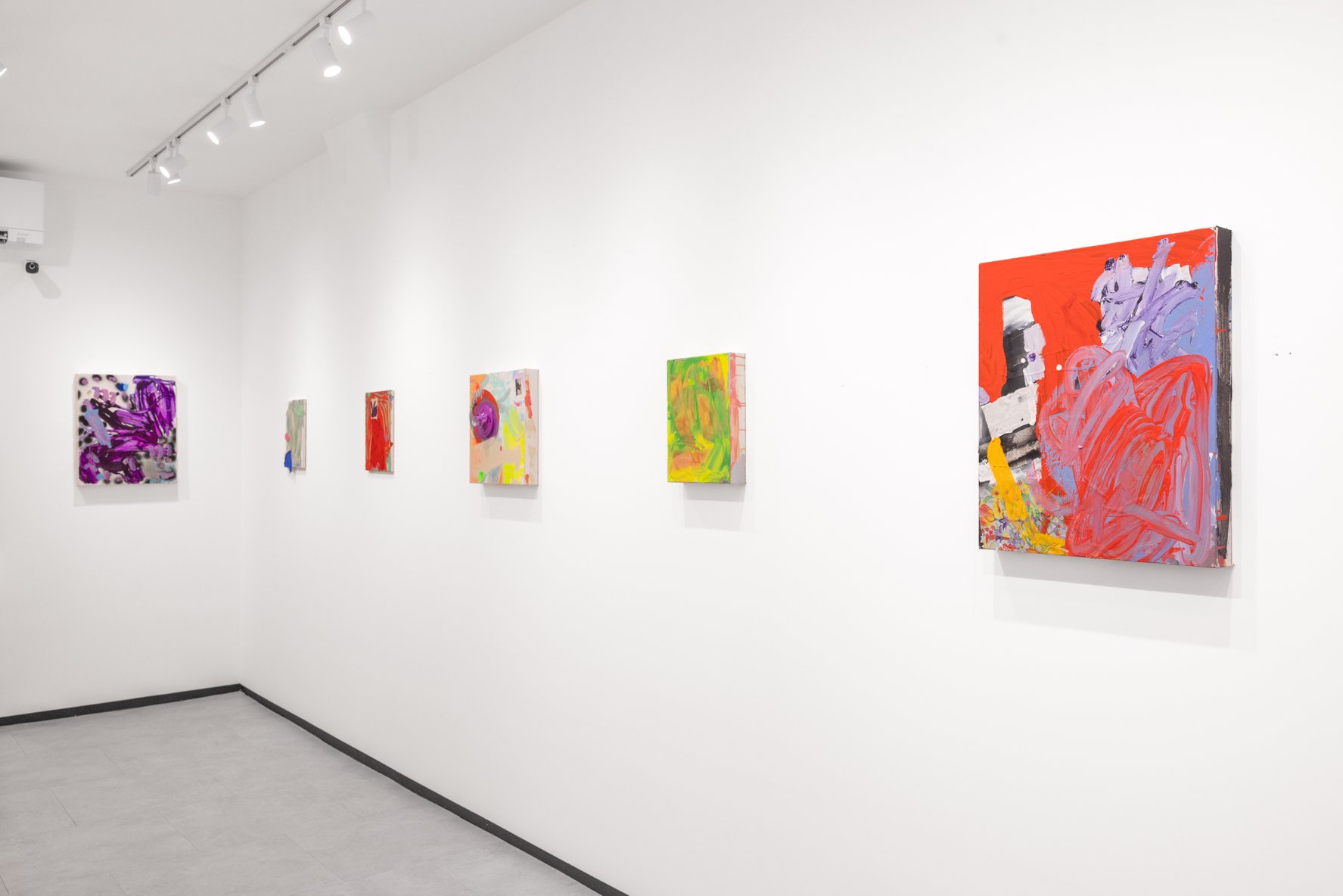
Alex McAdoo’s quest for belonging as a multiracial person in American society led him to a storied past of Asian and Middle Eastern influences in Western culture and art. His colorful and hallucinogenic landscape paintings, inspired by long road trips and hikes across the US, are visual and conceptual explorations of the history of art and science. The understanding and use of the number zero, introduced by the Indian mathematician, Brahmagupta, had immense implications in art, although not initially accepted by Europeans. The development of perspective in Renaissance art relied on the mathematical concept of zero and enabled artists to create the illusion of depth and space on a two-dimensional surface.
The circle, or zero, in each of McAdoo’s paintings, acts as a vanishing point, although instead of creating accurate perspective, he distorts and bends the image to fit around the circle. This distortion mimics the refraction of light, suggesting that the circles might be a lens or otherwise different medium that bends our perception of the image. Again we can trace the history of optics outside of Europe, to an Arab scientist named Alhazan, who developed the first pinhole camera and camera obscura. These two inventions further allowed Renaissance artists to copy scale and perspective in painting accurately.
As a person of color navigating the realm of European painting within the United States, McAdoo recognizes the importance of acknowledging the contributions of non-European thinkers and scholars to the enduring influence and dominance of European art. Through his work, he seeks to shed light on the diverse and interconnected history of artistic and scientific achievements, challenging conventional narratives and forging a path for himself within the artistic landscape.
Advances in art are not limited to technical tools and skills; philosophical and cultural shifts are also necessary for major shifts in aesthetics. Silvia Muleo was born in Pisa and studied art in Florence, the birthplace of the Renaissance. The resurfacing of Plato and Aristotle's texts during the Renaissance forced many to question their relationship with God and the church, searching for truth through the observation of nature in and beyond art. In this spirit, Muleo also questions what is reality today - can we trust what we see right in front of us?
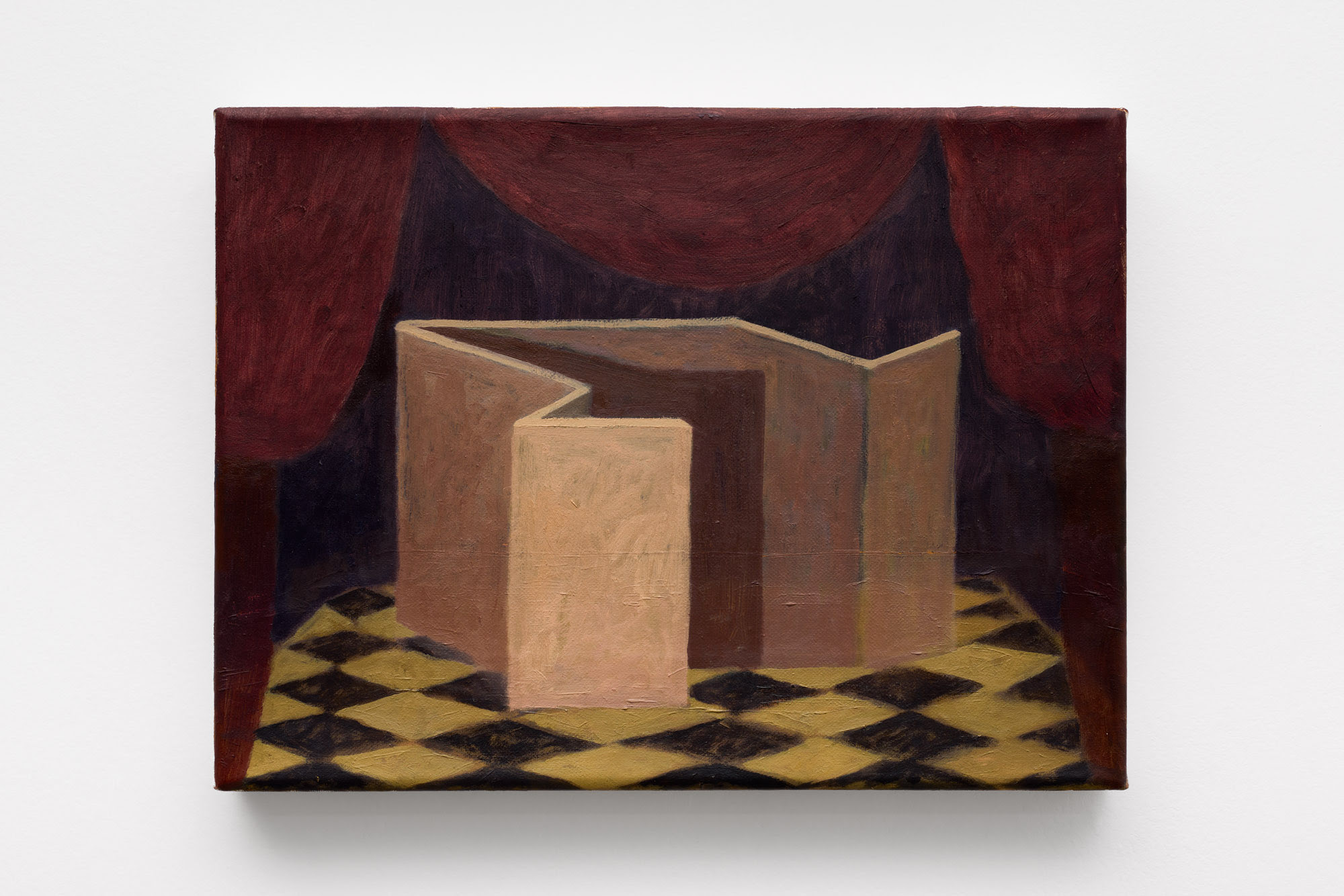
Using thin layers of oil paint on fine Italian cotton canvas, Muleo explores the refraction of light going through various transparent materials. The distortion created by these filters challenges our understanding of space, opening up questions of reality and perception. Influenced by phone screen aesthetics, and the blurred border between physical and digital, she plays with our expectations of where the edge of a painting starts and ends. The rectangles are both windows and geometric planes tilting, intersecting, and ultimately disobeying the canvas.
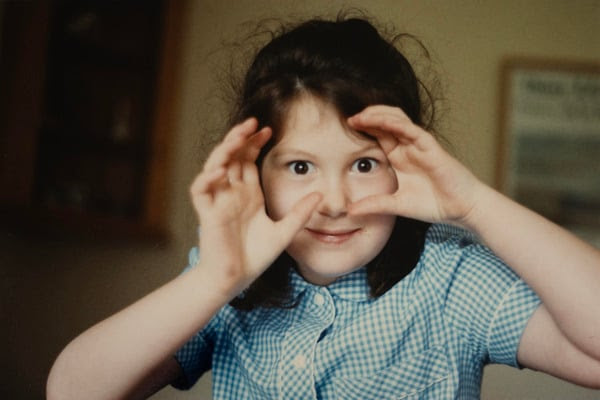
In this body of work, Muleo focuses on our relationship with our hands, possibly our most intimate and exposed body parts. She is particularly intrigued by the recent advancements in tactile technology, such as touch screens and software enabling rapid image manipulation, which have granted our hands the ability to reshape reality or, at the very least, our perception of it. Using hands as a point of reference, Muleo accentuates any distortions, allowing viewers to establish a direct connection between their own bodies and the depicted imagery. Muleo also finds inspiration in the ubiquitous phenomenon of viral social media content, particularly the mesmerizing allure of slime videos. This fascination manifests in her experimental use of clear slime as a medium to distort and manipulate the portrayal of hands.
Alex McAdoo and Silvia Muleo’s paintings converge upon a shared fascination with the refraction of light and its transformative potential in distorting reality. Their respective explorations delve into the historical, cultural, and philosophical dimensions of art, and relate to their personal experiences learning and working within art institutions both in the US and abroad. As they navigate the interplay between the tangible and the intangible, McAdoo and Muleo provoke contemplation on the malleability of perception and the fluidity of truth.
Alex McAdoo was born in 1987 in Bellingham, WA, and currently resides in Los Angeles, CA. He received his BFA in graphic design from The University of Utah in 2013 and his MFA in painting from The Rhode Island School of Design in 2019. McAdoo has mounted recent solo exhibitions at Martha’s Austin in Austin, TX (2023); and Calderón Gallery in New York City, NY (2022). His recent group exhibitions include Poetics of Relatability at Aicon Contemporary (2024); LA Dreams 3: Light Touch at CFHILL, Stockholm (2022); Silver Daze at Shin Haus, New York City, NY (2021); and We’re Just Havin’ Fun at Bill Brady Gallery, Los Angeles, CA (2021).
Silvia Muleo was born in Pisa, Italy, in 1998. She got an MFA at the School of Visual Arts after completing a BFA in Painting at the Academy of Fine Arts in Florence. Her work derives from her experience of growing up online and offline, cultivating relationships and identities in these merging realities. Muleo has participated in several exhibitions in commercial and non-profit spaces in the U.S. and Italy, including group shows at Ki Smith Gallery (New York, 2023), New Collectors (New York, 2022), and Centro Expò Comuni (Florence Regional Palace, 2021).