
Ended
Frank Auerbach
Starting Again
Apr 1 – Jun 28, 2024
To make an appointment, please visit:
tinyurl.com/2kthzj8z
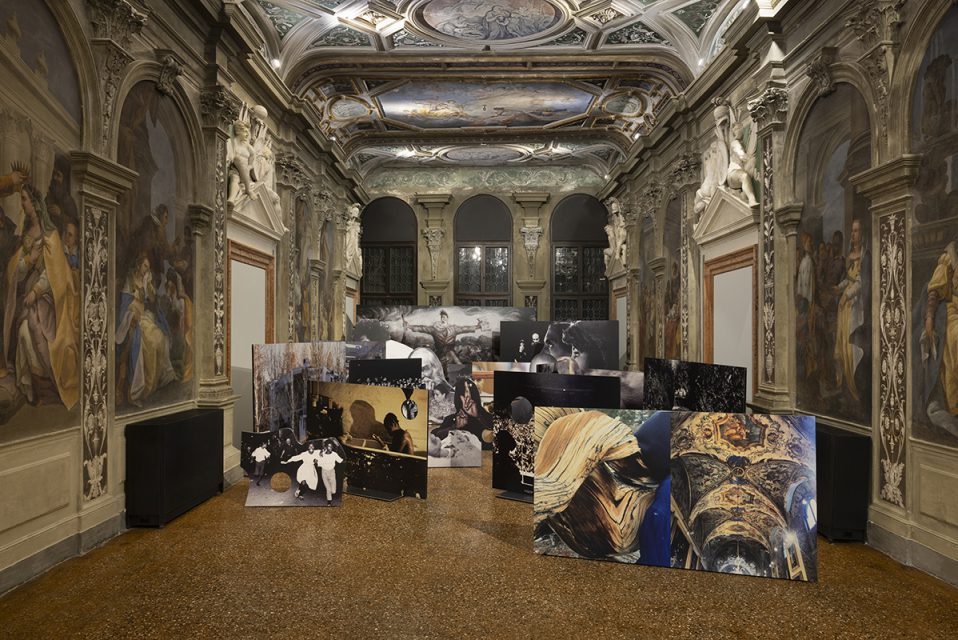
Max Levai is pleased to present Frank Auerbach: Starting Again, a comprehensive exhibition of the acclaimed British-German artist in Venice, Italy. The show marks a return to the city in which Auerbach won the Golden Lion at the Biennale in 1986. For the first time since that watershed presentation, work from over five decades of the artist’s creative production will be on display in the city. The exhibition will span two levels of the historic Palazzo da Mosto—built by architect Antonio da Ponte at the end of the 16th century, just around the corner from where he would go on to design the famed Rialto Bridge.
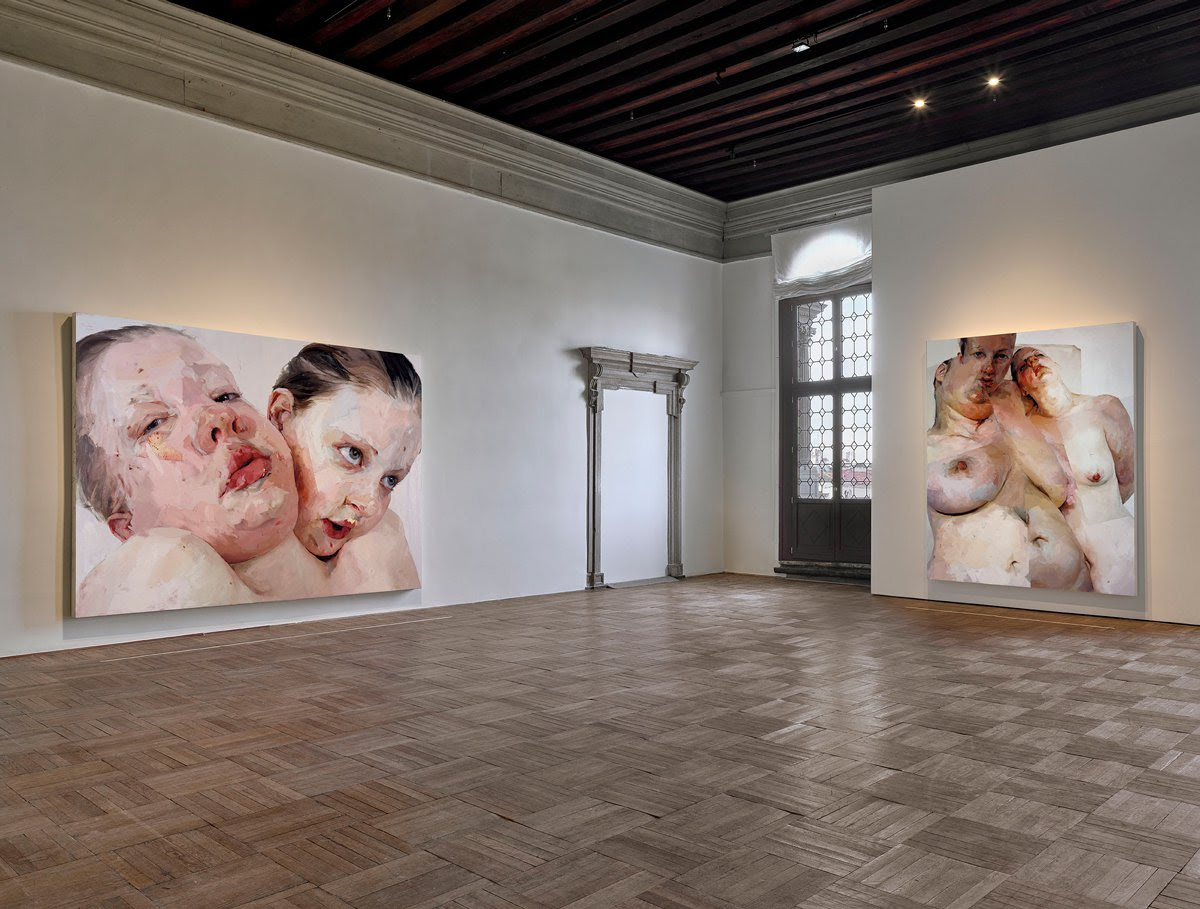
Uniting eleven seldom exhibited oil paintings made between 1969 and 2016, the exhibition focuses on Auerbach’s critical subjects: portraits of favored sitters and landscapes of the vistas he observes daily from his studio in London. By extension, the imagery which populates his paintings with near obsessive recursion is circumscribed to a handful of countenances of those same subjects he routinely depicts and the various sight lines just outside his studio in London. These are, however, relational worlds constructed through repeated returns—a reflection of the artist’s deep connection to his surroundings, those figures, faces, and forms he deems vital to his creative process. The exhibition unveils the expansive complexity of Auerbach’s seemingly hermetic practice, turning personal intimacy and feverish work in solitary environments into universally resonant ruminations on the human condition and the entanglement of visuality and interpersonal understanding.
To this point, Auerbach’s paintings are typically named after the depicted subject, attesting to his conception of the subject and their shifting images over the portrait process as the content of his work. These visages are encountered across the exhibition: Julia Yardly Briggs Mills (JYM) was a contemporary he met at art school; a professional art model and close friend, JYM who sat for Auerbach twice weekly for over forty years. Another subject in the show, Paula Eyles appears in paintings from a protracted four year period, a dialogue which resulted in seismic pictorial advances for the artist. Throughout his career, Auerbach has also rendered those closest to him, including his son Jake—always portrayed in an upright position. Portraits of his beloved wife Julia, however, are invariably horizontally oriented. Sitting for Auerbach requires the understanding that paintings will be reworked, scraped down and re-layered until they are finished.
Each Auerbach painting extends a prismatic viewfinder onto a concentrated mode of making. Following from obduracy and experimentation, these attitudes wrap around his portraits (perhaps more accurately monumental, cocked heads than likenesses) and drive his architectonic landscapes (angular infrastructures that impart thick air, cloistered cities, and psycho-geographic vibration). As Auerbach confessed in a recent interview, his iterative practice is one which works, reworks, erases, and remakes—“I shall go on with that process for as long as it takes.” The agonism of painting is intonated by the finished works, where strident gesture lends a structural fragmentation that aligns with constant compositional reconfiguration. Each line quivers with a tentative touch that conveys the ephemerality of feeling and perception, an apprehension towards totality and resolution.
The exhibition is accompanied by an essay on the artist by the Pulitzer Prize winning writer and critic Hilton Als. In this text, Als approaches Auerbach by way of the British-American poet W. H. Auden, whose own meditations on texture and landscape in and around London afford new insights into the lineages and resonances of Auerbach. Situating the painter within this poetic framework, Als enlivens the centrality of London, place, environment, and surface to the work of each. Illuminating the plausible dialogue between these two documentarians of British life, Als also attends to the crucial significance of staging an exhibition within a “vanishing city,” limning themes of impermanence and the provisional and contemplating the implications of these works in a space built of limestone, what Als calls “soft rock,” and surrounded by water. These shape-shifting dynamics come to the fore in relation to Auerbach’s fugitive imagery.
A supplementary essay on the history of Palazzo da Mosto by architect Francesco da Mosto will also be published on the occasion of the exhibition. Like Auerbach’s paintings, the Palazzo offers a metaphor of layered histories that start with the Muti’s, a family of silk merchants from Bergamo who purchased a row of houses to make way for the palazzo as Venice became a trade center and crucial point of distribution with the East. After the Muti family were forced to sell the palazzo in 1669, the Acquisiti family undertook renovations, but ultimately sold the property soon after to Francesco Vezzi, who had obtained secrets to making porcelain from the Stolzen porcelain factory in Vienna. From this point forward the house changed hands several times during the 17th century until it was purchased by the Baglioni family, who specialized in the production of religious books and are responsible for the plasterwork, interior detailing, commissioned frescoes, and design that remain in the palazzo to this day.