
Ended
A Cherished Haunting
Jan 5 – Feb 11, 2024
Emily Clayton
Linnéa Gad
Jessica Frances Grégoire Lancaster
Christine Rebhuhn
Michael Thompson
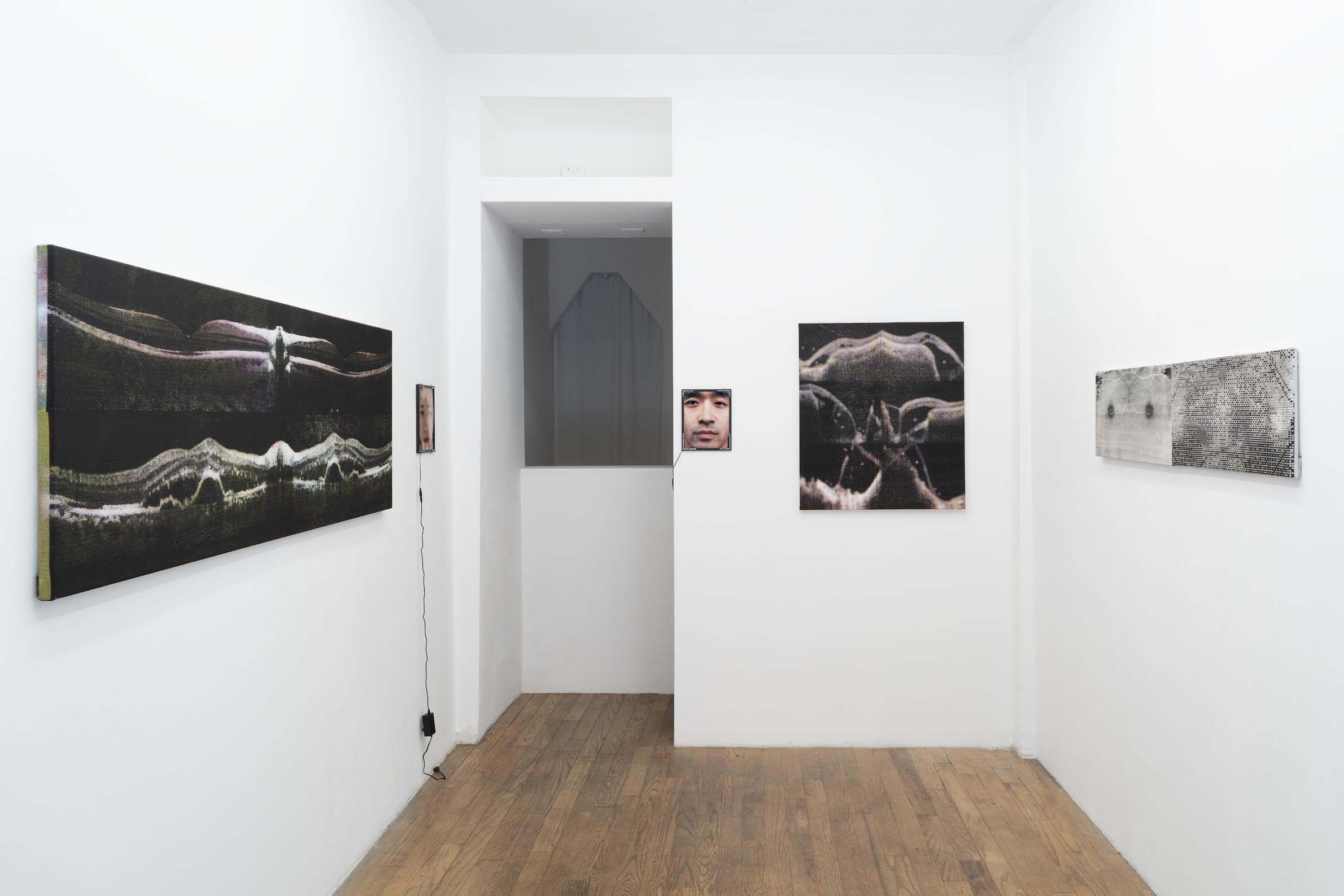
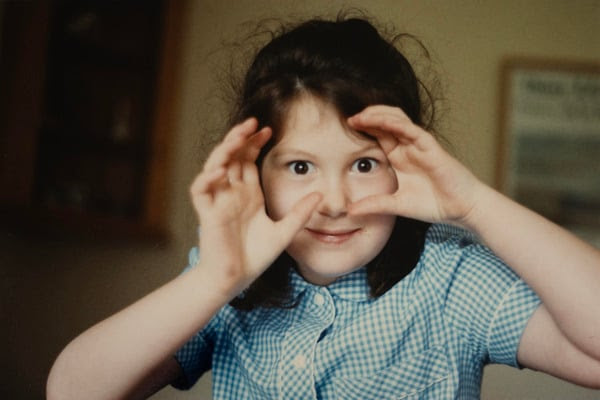
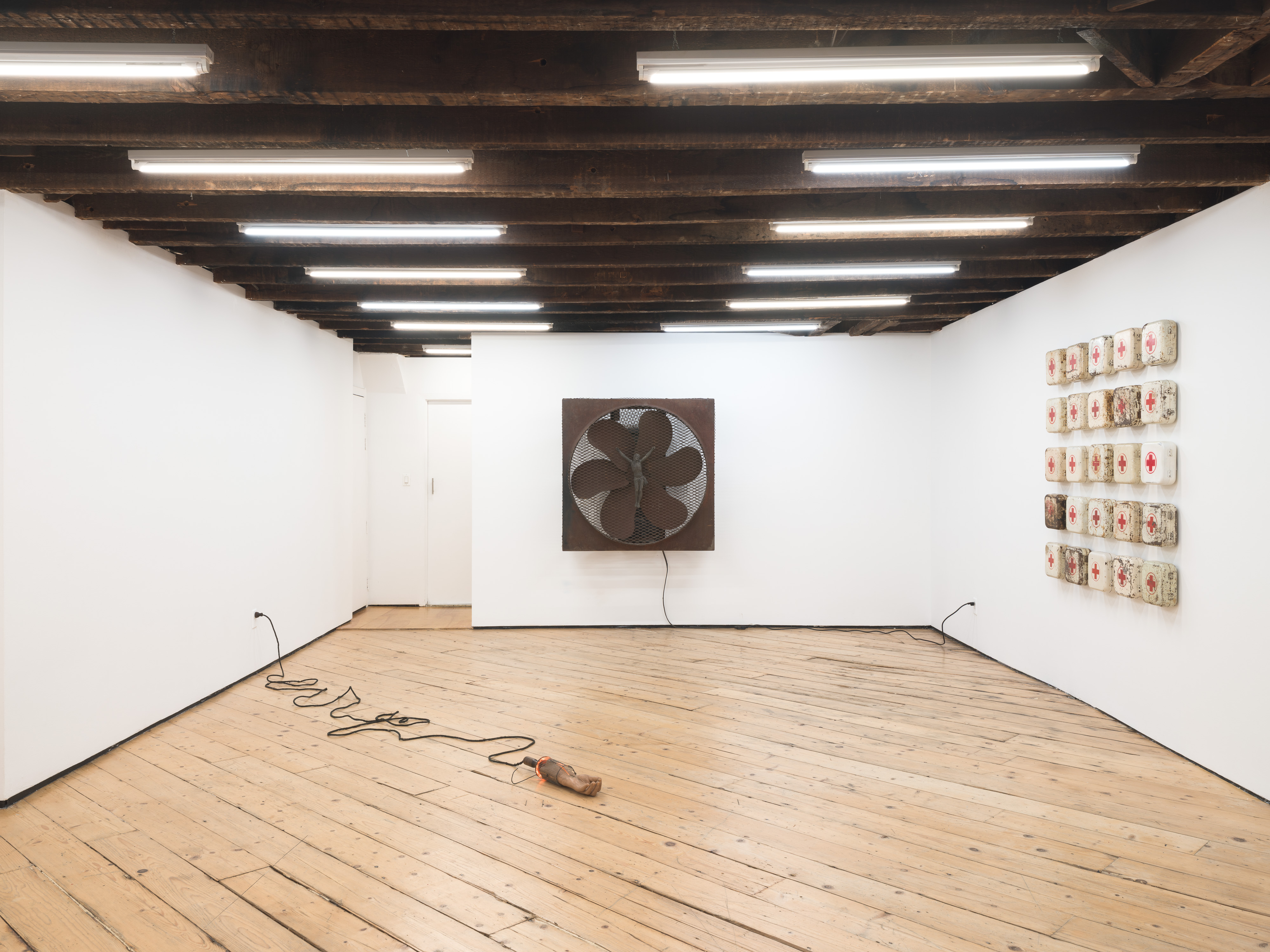
New Collectors is pleased to present A Cherished Haunting, a group exhibition featuring five domestic and international artists working across the mediums of painting, mixed media, sculpture and film. Starting from the vantage point of vernacular photography, or quotidian images that are produced and consumed outside the realm of fine art such as family snapshots or found periodicals, these artists repurpose and expose our nostalgic ties to the past. As each physical record is transformed and re-contextualized into new mediums by each artist, collective notions of desire and greatness become hazier, exposing a more tangled picture along the way.
Christine Rebhuhn’s sculpture Say When serves as a foundational underpinning for the show. Featuring the underside of a gray monochromatic wooden dining table propped and leaning against the wall, ornate leaves and branches sit atop the structural bridge while a faded black, white and red Life magazine is situated in the opposite corner. In a clever repetition of gesture and metaphor, the table mirrors the physical object and motion presented - that of a dog eared black lab retriever. Beyond the playful wordplay reveals a poetic implication - the kitchen table, a lynchpin of domestic comfort has been exposed. While seemingly neutral and flawless, it contains precarious and worn down facets - you only need to look underneath to see. Life magazine, once one of America’s most popular publications known for its groundbreaking photography, ceased publishing in 2007.
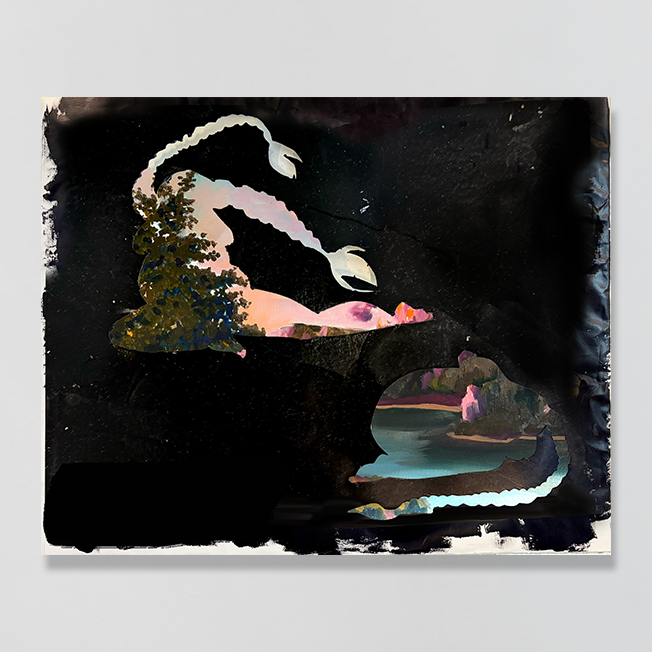
On the opposing wall stands Emily Clayton’s piece, Caeretan Hydria, a mixed media work combining an archival photograph from the The Courier, the Tennessee newspaper from the artist's hometown of Savannah, and a silkscreened Greek vase along with a few drops of red dye. While the greek vase depicts a historical scene from the Hercules-Hydra myth in which Hercules vanquishes the multi snake-headed monster, Hydra, the photograph documents a middle aged man proudly holding up a large lifeless snake. Two thousand years may separate the two portraits yet the act of killing a snake reveals a strikingly common conviction of power and pageantry. Not only does the archival photo serve as a visual historical record of the rural, southern White American community at the time but it also documents a most basic sentiment of splendor. Depending on the vantage point, the work questions: can the same act be considered an act of valor or a savage immorality?
Similarly, in the middle of the gallery, Jessica Frances Grégoire Lancaster, explores the notion of dignity and longing in her glass oil paintings, Apex and May 26, 2019 (Maggie). Both paintings feature the reverse painting style Lancaster has perfected in which she first layers precise intricate details before adding broader paint strokes. Apex, inspired by a vintage photograph purchased on Etsy, features a young couple standing erect and proud at a formal event, perhaps a high school prom, as the woman holds a trophy and sports a tiara. In the literal sense, the image acts as a record of time, by means of social caste and dress, however in a more nuanced sense, the image illustrates what mattered most—a homecoming king and queen, or a quintessential encapsulation of American notions of power, celebrity, and glory.
In contrast May 26, 2019 (Maggie), from a larger series of paintings titled, Fifteen Seconds, features a domestic tranquil scene Lancaster pulled from a friend’s Instagram page and recreated in exact 9:16 proportions. Painted during the covid lockdown of 2020, Lancaster’s bittersweet moment depicts a somber suburban sunset with a protruding American flag and red porch light. In the lower half of the painting, a single window is illuminated indicating a familiar closeness while remaining detached. The work acts as a voyage between mediums. From the screen of an iPhone to oil paint on a glass panel, the technology and presentation shifts yet it operates as a conduit for recording and sharing a nostalgic moment.
In a similar transference of mediums, Michael Thompson surveys the intricacies of discarded workwear in his black and white oil painting, Suit. Starting from a curious image of crumpled coveralls in an ebay listing, Thompson turns the jumbled fabric into a technical investigation of material using only shades of black and white. Referencing the physical medium of analog photography and film in which pieces of celluloid are physically spliced together to create a larger narrative, this piece is similarly dissected in two parts. Thompson and his father, both having worked in automobile plants, tie the garment to its biographical utilitarian history. Given that the factory Thompson Jr’s father worked at has since closed down gives the piece (and original sale listing) a somber poignancy.
Linnéa Gad’s video piece, Luster Pit, documents the artist’s pursuit of chasing light and glimmer in the dark winter landscape of her native Sweden. Recorded on cell phone cameras from the mid-2000s, Gad was drawn to the camera's inability to capture motion and elusive lighting conditions. Rather than a traditional informative scene, viewers are left with glitchy landscapes made even more ethereal with a score by composer Will Epstein. The imagery is familiar but like an impressionistic painting, the closer you look, the less you understand as the pixels fall apart. In her work across other mediums such as paintings, printmaking, sculpture, and writing, Gad is devoted to glitter, which can catch your attention and open portals for further inquiry. In her text, Glitter manifesto, she proposes that glitter, as a dynamic force, traverses time, carrying enigmatic clues from both the past and the future. It serves not merely as an aesthetic element but as a profound connector, weaving threads of history and potential into the fabric of her artistic exploration.
A Cherished Haunting brings together a diverse array of artistic mediums to highlight the transformative power of reframing vernacular photography and technology. From Rebhuhn's witty undressing of the domestic space to Clayton's juxtaposition of historical myth and small town news, each artist questions the sincerity of surface level ideals. Lancaster's commanding glass paintings combined with Thompson's meticulous examination of discarded attire highlight the potency of the clothes we choose to wear and what gets left behind when we take it off. Gad’s film underscores this sentiment by providing a glimpse of wistful potential, while still unmasking the structural limits present within the medium. In that sense, the exhibition acts as a meditation on the malleability of collective memory and the inherently unreliable stories embedded in the act of reimagining the familiar. A Cherished Haunting leaves an enduring suspicion, prompting reflection on the ever-shifting tapestry of our shared human experience.
—Eric Lawton