Ended Jun 10
Hugo Wilson
Thierleben
Apr 28 – Jun 10, 2017
More from Hugo Wilson on Gallop
[Please scroll down for German version / Für Deutsch bitte scrollen Sie nach unten]
More than 150 years ago, the German zoologist Alfred Brehm cast a new light on the animal kingdom with his several-volume work Thierleben. His work was compelling not only due to his new findings about global fauna, but also as a result of its poetic quality of the descriptions. Translated into many languages, Brehms Thierleben reached an enormous international audience, and especially in Germany could be found in virtually every middle class home. The book thus shaped our view of animal wildlife over generations. But despite his groundbreaking observations, Brehm also narrowed our perspective by imputing human motives to animals and their interactions: indeed, this is precisely what contributed to the book’s enormous success. And despite ever-increasing scientific findings our desire to project human characteristics and social structures onto animal behavior has continued and intensified to this day. Just think of kung-fu-fighting panda bears and all the other talking animals in computer-animated films—not to mention virile cat videos on YouTube!
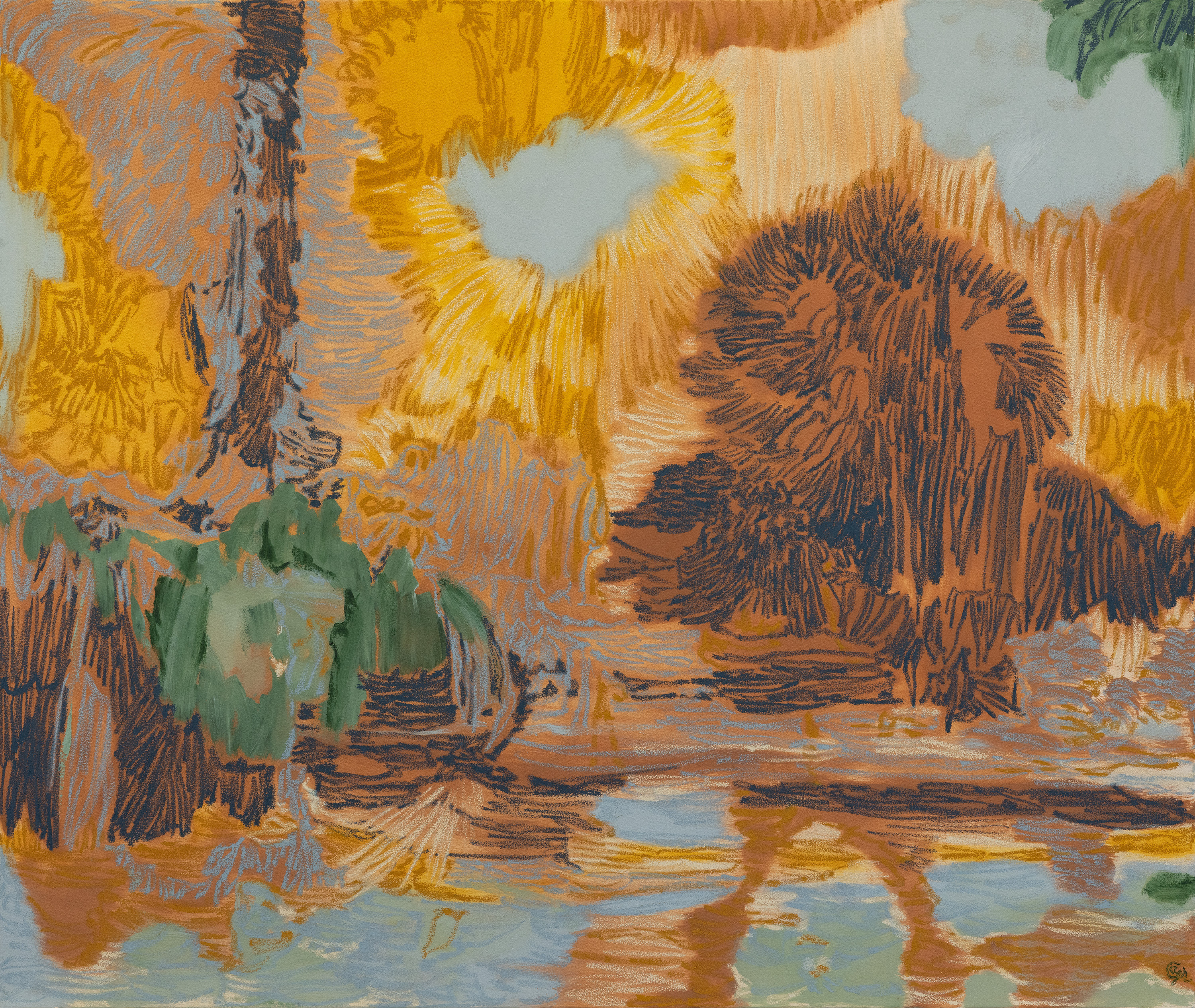
With his first exhibition at Galerie Judin, Hugo Wilson (b. 1982) explores this phenomenon, known as anthropomorphism. In the spirit of Alfred Brehm, the paintings, all created last year, explore animal groupings as a reflection of human society. But Wilson’s paintings do not depict peaceful coexistence, but pecking orders and food chains. These are complex visual arrangements that the artist initially develops as digital collages and then executes in Old Master style onto wooden panels. Not only Wilson’s technique, but also some motivic elements can be traced back to European art history. Von Max Out for example, a spectacular cluster of Simian species, alludes to the German painter Gabriel von Max, who created numerous portraits of monkeys as an artistic execution of Charles Darwin’s theories of evolution. But not all of Wilson’s references are so evident. The background of Untitled (Octopus), hides an inconspicuous art historical quote: the group of figures from Peter Paul Rubens’ The Rape of the Daughters of Leucippus can be made out as an amorphous formal element. Wilson’s motifs not only play with collective visual memory and recognition (actual or supposed), but also with the truth content of today’s visual events. The painting I Get It is based on a photograph that shows a weasel clasping onto a woodpecker in full flight. It became an internet phenomenon, and the cause for heated debates on real and false images in the digital age.
In light of his manifold concern with art history, it comes as no surprise that Wilson’s first Berlin exhibition was ignited by the encounter with a group of watercolours from the gallery’s holdings of works by Charles-Frédéric Soehnée (1789—1878), who created an astounding universe of anthropomorphic animals and monsters that predated the Fantasy genre by more than a century. Wilson ultimately chose Soehnée as an artistic partner in conversation for both the exhibition and the catalogue.
*****
Vor mehr als 150 Jahren eröffnete der deutsche Zoologe Alfred Brehm mit seinem mehrbändigen Buch Thierleben eine ganz neue Sicht auf die Tierwelt. Sein Werk überzeugte nicht nur mit neuen Erkenntnissen über die globale Fauna, sondern auch durch eine poetische Sprachgewalt. In zahllosen Übersetzungen erreichte Brehms Thierleben ein enormes internationales Publikum – insbesondere in Deutschland fehlte es wohl in keinem bürgerlichen Haushalt. Über Generationen prägte das Buch so unseren Blick auf die Tierwelt. Doch trotz bahnbrechender Beobachtungen verengte Brehm zugleich die Perspektive, indem er menschliche Verhaltensweisen und Strukturen auf die Tierwelt übertrug. Sicherlich trug aber genau dies zum Erfolg des Buches bei. Seither ist unser Verlangen, menschliche Eigenschaften und soziale Strukturen auf die Tierwelt zu übertragen, ungebrochen. Im Zeitalter animierter Trickfilme oder viraler Katzenvideos hat es sogar ganz neue Ausmaße erreicht.
Mit seiner ersten Ausstellung in der Galerie Judin ist Hugo Wilson (*1982) eben diesem als Anthropomorphismus bezeichneten Phänomen auf der Spur. Ganz im Sinne Alfred Brehms thematisieren seine Gemälde, die allesamt im letzten Jahr entstanden, tierische Gruppen als Spiegelbild der menschlichen Gesellschaft. Wilson hat jedoch zumeist keine friedvollen Koexistenzen, sondern Hackordnungen und Nahrungsketten ins Bild gesetzt. Es sind komplexe Bildgefüge, die der Künstler zunächst als digitale Collagen entwickelt und dann in altmeisterlicher Manier auf Holztafeln umsetzt. Doch nicht nur Wilsons Technik, sondern auch manches Motivelement ist auf die europäische Kunstgeschichte zurückzuführen: so spielt beispielsweise das größte Werk der Ausstellung Von Max Out auf den deutschen Maler Gabriel von Max an, der zahlreiche Affenporträts als künstlerische Umsetzung der Evolutionstheorien von Charles Darwin schuf. Doch nur selten fallen Wilsons Bezugnahmen so eindeutig aus. So versteckt sich beispielsweise im Hintergrund von Untitled (Octopus) ebenfalls eine kunsthistorische Anspielung: als amorphes Formelement ist hier die Figurengruppe von Peter Paul Rubens Der Raub der Töchter des Leukippos auszumachen. Wilsons Motive spielen aber nicht nur mit unserem gesellschaftlichen Bildgedächtnis sowie tatsächlichen oder vermeintlichen Wiedererkennungswerten, sondern auch mit dem Wahrheitsgehalt heutiger Bildereignisse: so geht das Gemälde I Get It auf ein Foto zurück, dass ein Wiesel bei einem Ritt auf einem Grünspecht zeigt. Es wurde zu einem Internetphänomen – und zum Anlass für erhitzte Diskussionen über echte und falsche Bildmeldungen im digitalen Zeitalter.
Ob seiner vielfältigen motivischen und technischen Bezugnahmen auf die Alten Meister überrascht es nicht, dass auch Wilsons Berliner Ausstellung auf eine solche Auseinandersetzung zurückzuführen ist. So entstanden die Gemälde und Plastiken in Folge seiner Begegnung mit dem Galeriebestand der Werke von Charles-Frédéric Soehnée, den sich Wilson letztlich auch als künstlerischen Gesprächspartner für die Ausstellung und den Katalog erwählte.