Ended Jun 16
Julio Le Parc & Heinz Mack
Parallel inventions
May 9 – Jun 16, 2023
More from Julio Le Parc & Heinz Mack on Gallop
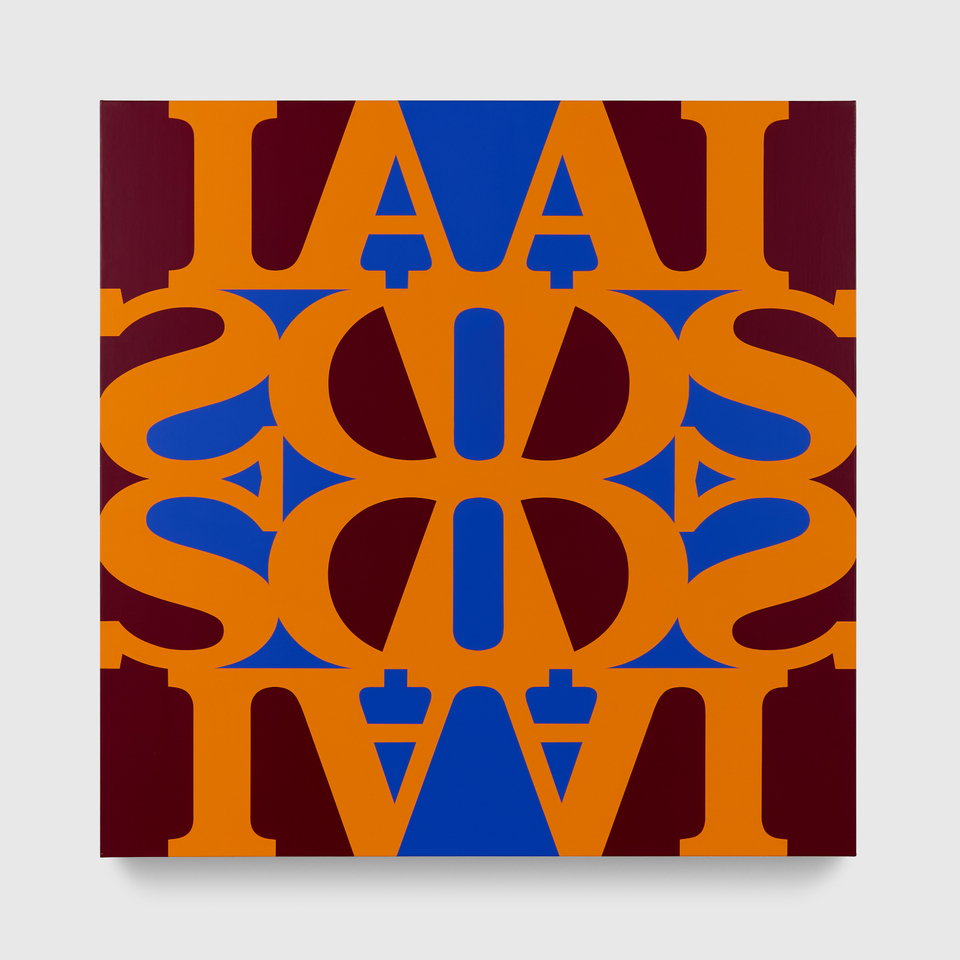
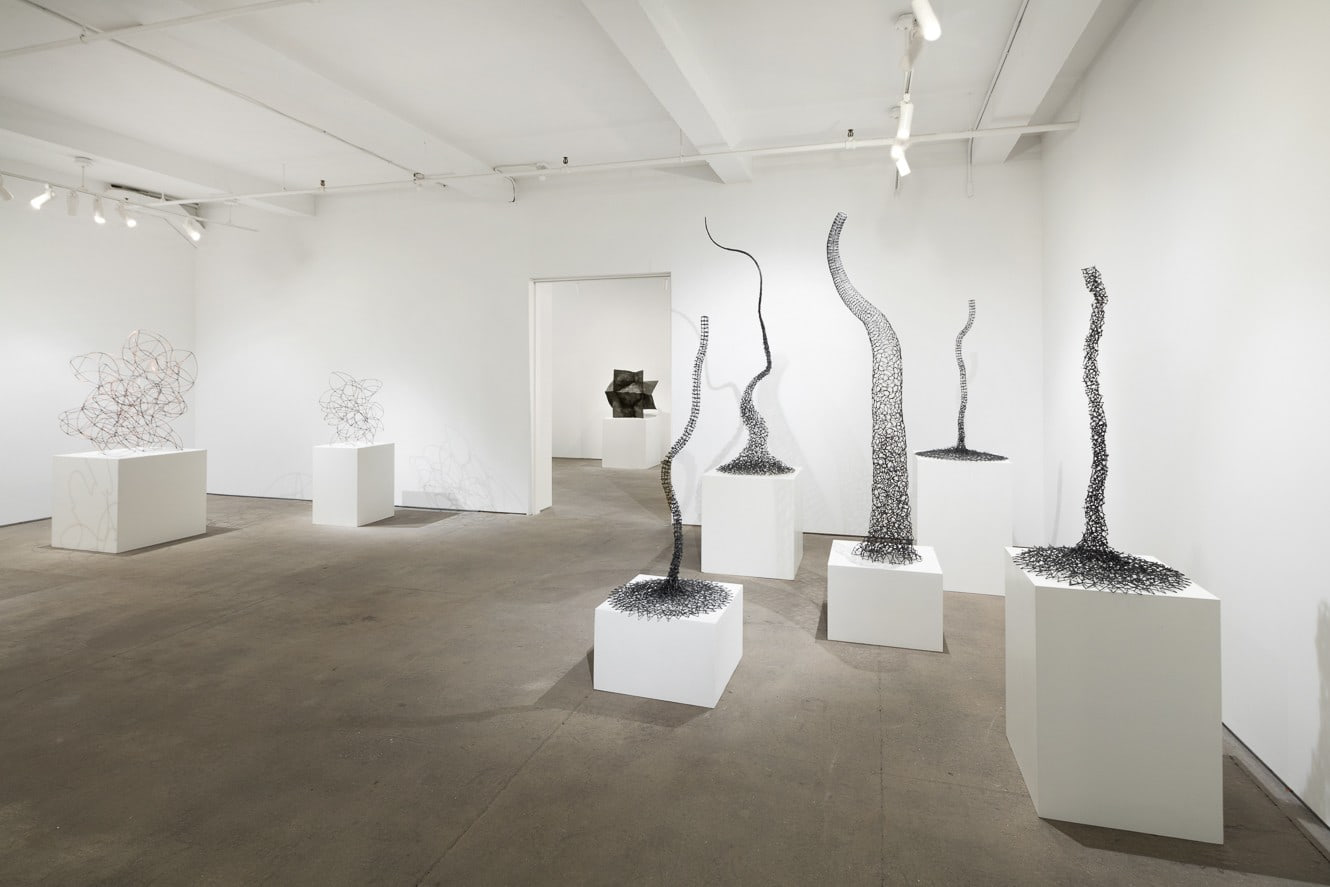
Nara Roesler is pleased to present the exhibition Parallel Inventions: Julio Le Parc & Heinz Mack, curated by Luis Pérez-Oramas, bringing together about 25 historical and recent works by both artists, central figures of Kinetic and Op Art, who have explored light and movement in their artistic practices. The exhibition includes iconic works from all the phases of their production, from 1955 to today. Albeit through different artistic approaches, Le Parc and Mack have developed throughout their careers a production centered on the search for light, color, and movement.
The exhibition takes ground on that fact, unfolding from connections and differences between their art throughout the last 60 years. However similar at some points in their successful and accomplished careers, the works of Heinz Mack (b. 1931) and Julio Le Parc (b. 1928) feature significant differences that contribute to defining a signature character for each one: whereas both artists have never stopped delving into light, Le Parc has developed an entire repertoire based on anamorphic reflections, while Mack has stressed topological refraction.
The word ‘genius’ proceeds from and shares etymology with the Italian term ‘ingenio’. Often found in ancient treaties of art, notably painting, ‘ingenio’ refers to the notion of ‘invention’, to the faculty of imagining new things, unedited artistic paths, new worlds. More specifically, humanists in the Renaissance used the term ‘ingenio’ in visual arts to signify the instance of composition, the mental staging that leads to the creation of a work of art. As ancient rhetoricians conceived speech in three steps—inventio, dispositio, elocutio— (meaning inception, distribution of words, and utterance) humanist theory of painting translated them into ingenio, compositio, and reception of light or color.
Abstraction in the visual arts—a flawed term that does not embrace the complexity of its true meaning—has never stopped inventing, composing and chromatically enlightening figures and forms. Abstract figures and forms are not referential or imitative; they do not point to the representation of reality. But abstract forms and figures unveil a different dimension of reality, one beyond or before representation, and certainly one that overcomes verbal discourse. Modern Abstraction has, among other effects, emancipated visual arts from the logocentric and the verbal. That is the genius of abstraction.
Julio Le Parc and Heinz Mack have, without knowing each other or working together, each one in a different way, produced abstract works that are similarly transformational of our understanding of the visual realm. Both of them were instrumental figures in the foundation and activity of two of the most influential and transformative avant-garde groups mid last Century in Europe: Mack was one of the founders (with Otto Piene and Gunther Uecker) of Grupo Zero in 1958 whereas Le Parc set, with a large ensemble of contemporaries, the Groupe de recherche d’art visuel—GRAV—in 1960. Parallel inventions, their works have played an unavoidable and leading role in the landscape of Western optical abstraction. This exhibition takes ground on that fact, unfolding from connections and differences between their art throughout the last 60 years.
‘Resemblance’—Claude Lévi-Strauss famously stated—‘does not exist in itself. Resemblance is a specific case of difference where difference tends towards zero.’ However similar at some points in their successful and accomplished careers, the works of Heinz Mack and Julio Le Parc feature significant differences that contribute to defining a signature character for each one: whereas both artists have never stopped delving into light, Le Parc has developed an entire repertoire based on anamorphic reflections while Mack has stressed topological refraction. Light in Le Parc tends towards color; it blossoms as pure quality often unfolding into mirror-like effects in Mack’s works. Le Parc’s work stresses optical seriality. Mack’s is a masterful example of texture and repetition. Le Parc’s work often functions as an optical partition. Mack’s as a seismographic record. Le Parc’s is euphonic, Mack’s is tectonic.
These two geniuses of modern abstraction are very much active nowadays. Movement and stasis, ground and void, repetition and texture, veils and mirrors, are elements that both artists continue to use in order to induce unlimited aesthetic effects. Their most recent production is a testament to the fact that the greatest artists achieve the peak of their art at their most venerable and experienced maturity. Like old Titian, like old Picasso, their current work has an effect of total restitution as if the fruitfulness of age was the ceaseless infancy of genius.
—Luis Pérez-Oramas
Julio Le Parc (b. 1928, Mendoza, Argentina) is internationally recognized as one of the leading names in Optical and Kinetic art. Over the course of six decades, he has performed groundbreaking experiments on light, movement and color, seeking to promote new possibilities for the relationship between art and society from a utopian perspective. The artist's canvases, sculptures, and installations challenge the traditional Art Historical definition of paintings: he uses mediums that pertain to pictorial tradition, such as acrylic on canvas, while incorporating formal kinetic processes in the assemblages and apparatus he employs.
Julio Le Parc was a co-founder of Groupe de Recherche d’Art Visuel (1960–68), a collective of optical-kinetic artists who set out to encourage the participation of viewers in their art, in order to enhance their abilities to perceive and act. In keeping with these premises, and more generally with the then quite disseminated aspiration to a dematerialized art, an art indifferent to market demands, the group showed in alternative venues and even on the street. Julio Le Parc’s works and installations, which were made from nothing other than the interplay of light and shadow, were a direct result of that context, where the production of a fleeting, unsellable art had a clear socio-political undertone.
Throughout his career, Heinz Mack (b. 1931, Lollar, Germany) has continuously carved a pioneering artistic production marked by investigations on light, temporality and movement, which have taken the form of major installations, as well as sculptures, paintings and works on paper. Mack began his career in the 1950s, famously founding the Group Zero (1957-1966) alongside Otto Piene in 1957, later also joining forces with Gunther Uecker in 1961, with the aim of creating a space devoid of pre-existing structures for new possibilities and beginnings to emerge. Mack was also in close contact with artist Yves Klein, with whom he developed a great friendship and collaborated on numerous occasions, and who introduced him to Jean Tinguely, discovering a universe of experimentations that informed his own search for aesthetic purity, striving for an essential, unmediated work. Mack notably wrote, "The goal is to achieve pure, grand, objective clarity, free of romantic, arbitrarily individual expression. In my work I explore and strive for structural phenomena, whose strict logic I interrupt or expand by means of aleatoric interventions, that is, chance events."
Heinz Mack's oeuvre is characterized by disruptive engagements with light, and ways in which it affects and is affected by movement, space, and color. With this idea forming the core of his practice, the artist has rigorously and shrewdly developed a multi-faceted body of work that has recurrently opened new horizons for the realm of art.