
Ended
Sheyla Baykal
Dearly Loved Friends: Photographs by Sheyla Baykal, 1965-1990
Apr 3 – May 10, 2025
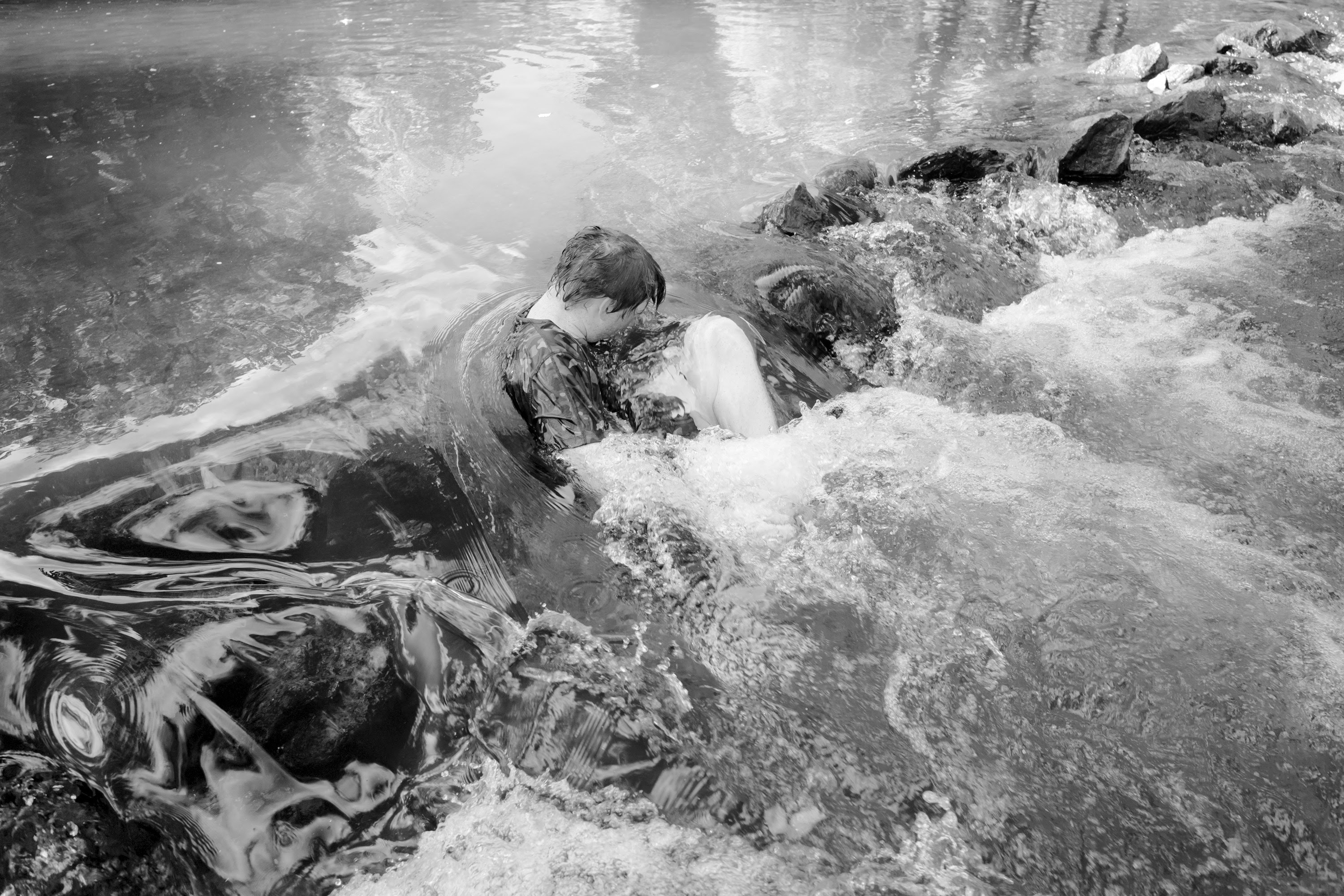
Soft Network is honored to present dearly Loved friends: Photographs by Sheyla Baykal, 1965-1990 curated by Marcelo Gabriel Yáñez with Penny Arcade. The exhibition serves as an introduction to the life and photographic practice of Turkish-American artist Sheyla Baykal (1944-1997) and is composed of a mixture of black and white prints, projections of 35mm color slide photography and super 8mm films, and archival material from the artist’s estate. Taking its title from a folder of obituaries for deceased friends that Baykal kept between the 1960s and 1990s, the exhibition emphasizes her community-based approach to portraiture. Recurring subjects include John Eric Broaddus, Jackie Curtis, Candy Darling, John Heys, Peter Hujar, Agosto Machado, Cookie Mueller, Jack Smith, and Paul Thek. While well-known within her lifetime among a tight-knit coterie of East Village artists, Baykal’s work was rarely printed or shown.
This exhibition, which marks the first six months of the Estate of Sheyla Baykal as Soft Network’s 2025-2027 Archive in Residence, is also Baykal’s first solo exhibition since 1993.
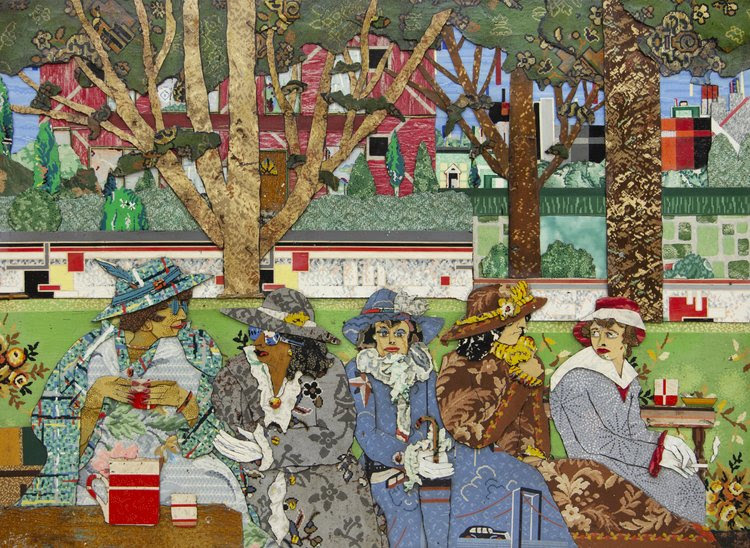
Throughout the mid to late 1960s, Baykal straddled two axes of the Downtown New York art world. At one end, she was enmeshed in the New York School of artists and poets through a family connection to Elaine De Kooning and a brief marriage to Frank Lima — she would be immortalized as part of the circle in two Alex Katz works, Cocktail Party (1965) and One Flight Up (1968). At the other-end, she was becoming integral to an East Village queer counterculture through her friendship with photographer Peter Hujar, as well as an “open-door” urban commune experiment she was running in her East Third Street apartment where she welcomed many from the Off-Off Broadway theatre scene. During these years, she funded the commune experiment by working as a haute couture model for the Ford Agency and was photographed for editorials by Richard Avedon, Hiro, and others. Baykal’s photographs from this period range from self-portraiture to street photography, to portraits of her artist peers. Many of her early subjects were from and adjacent to the New York School, including Ted Berrigan, Elaine and Willem De Kooning, John Giorno, Alex Katz, Joan Mitchell, Frank O’Hara, and Anne Waldman. Portraits included in the exhibition, such as those of the critic and artist Scott Burton or Baykal’s husband, the poet Frank Lima, are characterized by their frontality, close-framing, and shallow depth-of-field. Often alongside Hujar, she also photographed more public events such as drag balls in Harlem and anti-war protests in New York and Washington DC.
By Spring 1968, Baykal had decided to quit modeling and leave New York, wanting to return to Turkey, her home from ages three to eleven. She took a Portuguese shipping freighter to Europe alone and hitchhiked and photographed along the Hippie Trail, the famed overland journey that stretched from Europe into South and West Asia. During her time away, she kept herself tethered to her East Village community by mailing negatives and prints from her travels to Hujar and his lover Steve Lawrence for publication in the experimental tabloid, Newspaper. These photographs showed a development in her confidence and command as a photographer as she moved away from close-framing to more firmly placing her subjects in their environment. Portraits of children, shepherds, and fishermen all were published in Newspaper alongside peers like Diane Arbus, Richard Avedon, Peter Beard, and Billy Name, among many others. Contact sheets from the period also illustrate a growing interest in photographing wildlife and landscapes.
Baykal returned to New York in November 1971 and stayed with Hujar and Lawrence at their shared apartment on 188 Second Avenue. After seeing the San Francisco-based genderfuck troupe the Cockettes perform that month at the Anderson Theatre, Baykal sought out the group’s founder, Hibiscus (né George Harris III). Baykal was interested in getting involved with The Angels of Light, the new splinter-group Hibiscus recently formed with his parents, siblings, and lover Angel Jack (né Jack Coe). They welcomed her, christening her as Angel Shala Butterfly, and she went on to produce numerous Angels shows in New York. Her involvement with the group changed the course of her career, dawning an unwavering commitment to experimental Off-Off Broadway as producer, director, and documentarian that would continue over the next two decades.
By Spring 1973, the Angels productions became rife with in-fighting and Baykal left the group. She decided to establish a new outlet that could become a showcase for autonomous, rather than strictly collective, talents. Baykal’s Palm Casino Revue began at the Palm Casino Theatre on East Fourth Street with an initial cast of around fifty that included Jackie Curtis and Agosto Machado, as well as Wilhelmina of Hot Peaches, ex-members of the Cockettes and the Angels, and ex-members of John Vacaro’s Theater of the Ridiculous. After one performance, the theatre’s landlord kicked them out: as Baykal would write, “fifty pansexual street freaks wandering around in bras, girdles, and stockings,” was too much for him. The Revue moved to the Bouwerie Lane Theatre for the rest of its run. Baykal’s photographs from the Palm Casino Revue range from documentation of performances to scenes of performers backstage to formal studio portraits of individual cast members. After a year of performances, Palm Casino came to an end when Baykal was hospitalized with complications from Hodgkin’s Lymphoma. She retreated after the hospitalization to the secluded community of Oakleyville on Fire Island to spend most of the next two years, favoring landscapes and still-lives in color as her subjects.
Throughout the late 1970s and into the mid 1990s, Baykal dedicated herself exclusively to portraiture, with an emphasis on performers as her subjects. Seeing her photography as a mode of social practice, she established a storefront studio along East Third Street and photographed friends and strangers for several years in the 1980s. By the mid-1980s when HIV began to significantly ravage life Downtown, Baykal tasked herself with photographing as many friends as she possibly could. Her subjects during this period were in the hundreds. With very little money to formally print her work, she would turn to laminated color Xerox and laser prints as well as slide shows as a means of exhibition. Her late portraiture became an elegy to her disappearing Bohemia and her role as caretaker to friends like John Eric Broaddus and Paul Thek as they suffered from complications due to HIV/AIDS.
In 1996, Baykal was diagnosed with end-stage cervical cancer and given nine months to live. She approached the artist Penny Arcade and asked her to reprise the role she had played for the artist Jack Smith at the end of his life, a role Arcade had termed "Death Mother." Just as in early life a mother fosters the well-being and needs of an infant, Arcade saw the need for someone to help carry someone else's death, ensuring that their goals and wishes were protected, facilitated, and manifested. Baykal gifted Arcade her entire body of work and archive, including all her negatives, slides, and prints. This exhibition represents three years of collaborative archiving and caretaking between Arcade and Yáñez and the next phase of bringing Baykal’s work to the public in partnership with Soft Network.
Soft Network and curators Penny Arcade and Marcelo Gabriel Yáñez would like to thank Darling Green for the exhibition design, and Pablo Eguía for the exhibition graphics. We are grateful for additional contributions by Allen Frame, Emilio Garcia, John Edward Heys, Michael Gillespie, Andrew Jarman, Lower East Side Biography Project, Agosto Machado, Olivia McCall, Gary Schneider, Hedi Sorger, The Peter Hujar Foundation, James Walsh, and Steve Zehentner.
Soft Network’s programs are supported with funding from Hauser & Wirth Institute, Teiger Foundation and individual donors.