Ended Dec 23
Tomie Ohtake
Visible Persistence
Nov 4 – Dec 23, 2021
More from Tomie Ohtake on Gallop
Visible Persistence: Tomie Ohtake (1957–2014), curated by Luis Pérez-Oramas, presents a selection of works by artist Tomie Ohtake (b. 1913, in Kyoto, Japan—d. 2015, in São Paulo, Brazil), that traces the artist's fundamental artistic phases, stressing the significance of her contributions to modern art throughout over 50 years of production.
A paramount figure in Brazilian art during the second half of the 20th and the first decades of the 21st centuries, Tomie Ohtake is known for having produced one the most compelling body of works in late modern art in the Americas, embracing painting, sculpture, print-making, drawing, collage, theater staging, and monumental civic-scaled works. After a seminal period under the influence of lyrical abstraction and ‘tachism’, her work developed into a daring investigation on the density of painting that contrasted vis-à-vis the constructive-geometric and rational concrete art trending in Brazil during the 1950s and 1960s. Ohtake produced paintings notably made while blinding her eyes that feature rich textural surfaces.
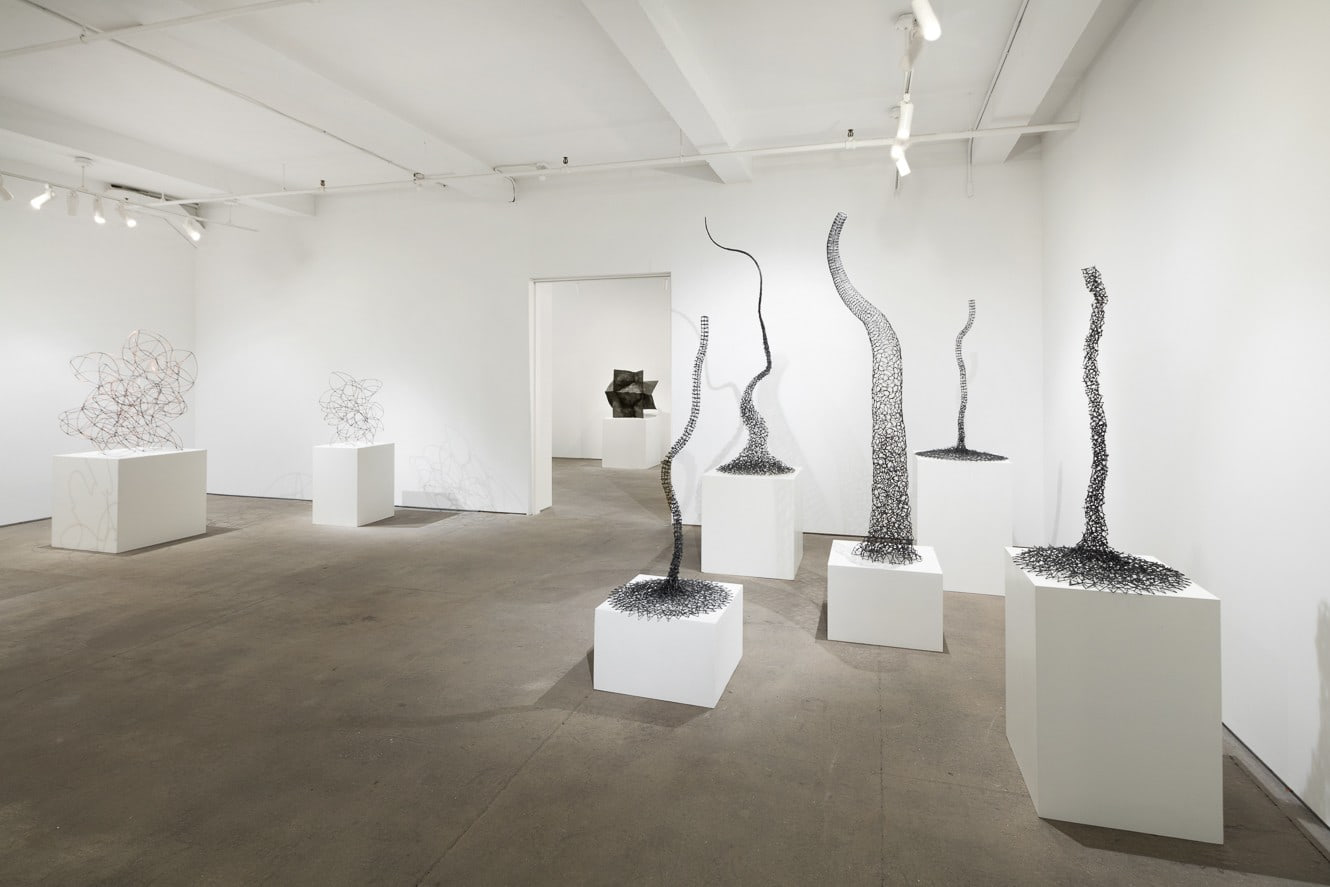
These striking ‘blind paintings’ are of monumental historical significance in the Americas as they emphasize a corporeal density, contrasting against the backdrop of schematic concrete art, and proposing a bold phenomenological standpoint that affirms the whole human body—and not only its eyes—at the root of visual art. During the 1970s and 1980s, Ohtake produced an exceptional series of paintings featuring a color-field, organic-driven figural version of abstraction. These works, unique for their beauty and masterful execution, and a peak within that period, can be linked to the whole tradition of vernacular modernism that took place in Brazil starting in the 1920s with the work of artists such as Tarsila do Amaral and Emiliano di Cavalcanti. They depict abstract bodies masterfully embedded in subtle variations of monochromatic fields. Drawing from her Japanese upbringing and her understanding of visual art as a topological experience, she later pursued her work as a painter, theater-stage designer, and sculptor, which beautifully manifested in her late tubular structures and paintings of impeccable textural whiteness, created as she was approaching 102 years old.
With works pertaining to each of these fundamental periods, Visible Persistence: Tomie Ohtake (1957–2014) foregrounds the marked phases of the artist’s career, celebrating every stage in its distinction, but also stressing Ohtake’s drive to capture the density of space, color as a generative force, and the corporal experience of form. The exhibition proposes a selection of key works, which together punctuate the defining phases in the artist's career, offering a succinct retrospective
of her oeuvre.
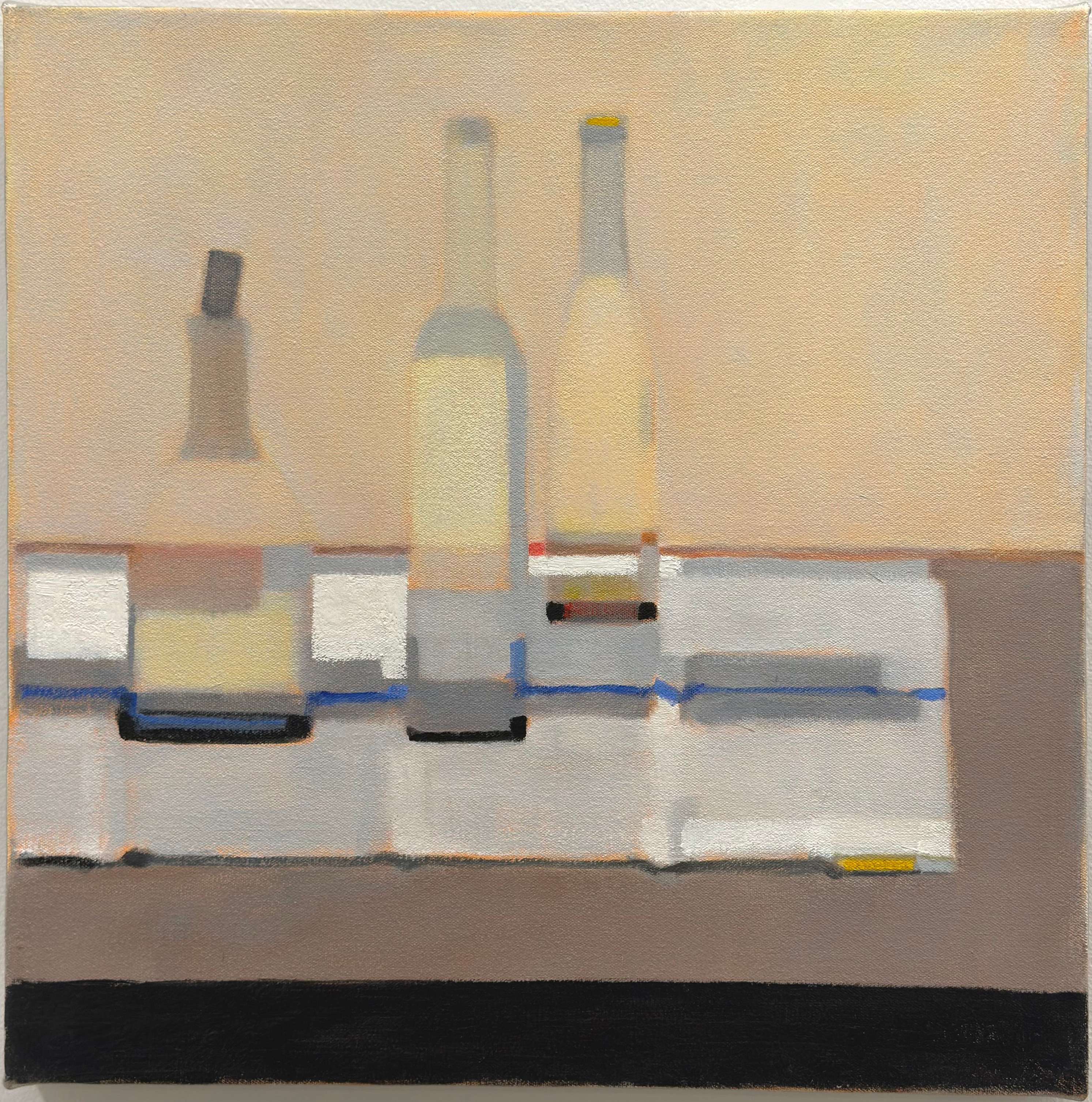
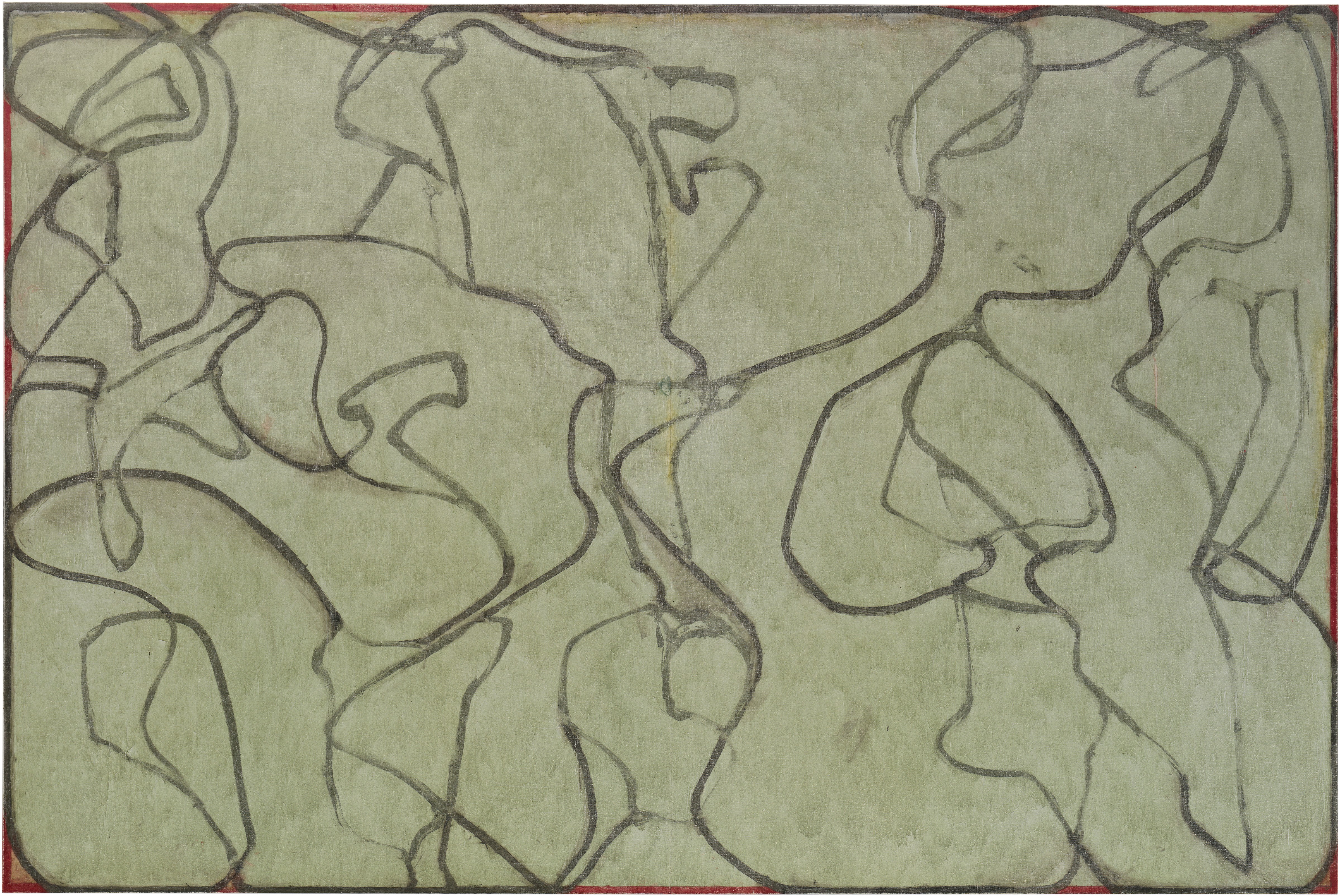
These two paintings, both dated from 1957, were included in Tomie Ohtake’s first retrospective, held that very same year at the Museum of Modern Art, São Paulo, thanks to the initiative of paramount Brazilian Twentieth Century art critic and philosopher Mario Pedrosa. Among the very few extant examples of Tomie’s seminal abstract production, they already feature a masterful treatment of color and form, embedded in the thickness of painting fields. Related to ‘tachism’ and anticipating Ohtake’s major achievement as an artist interested in non-programmatic painting, as her ‘blind paintings’ from the early 1960s will make explicit, they stand out for their tectonic beauty, embodying Ohtake’s conviction that painting’s crucial issue lies on the treatment of its literal, non-illusionistic depth.
A peak in Tomie Ohtake’s oeuvre, and a pioneering achievement within the context of modern painting during the 1960’s, these works belong to a handful set of abstract paintings made by the artists while she blinded her eyes. Labeled by Paulo Herkenhoff as the ‘Blind paintings’, they embody a paramount moment within the history of abstraction and, notably vis-à-vis its formless tendencies rising during those years. ‘Informel art’ was a concept tokened by French art critic Michel Tapié in a referential book titled ‘Art of Another Kind’ (Un art autre, 1952): it was defined as a form of art devoid of any preconception regarding the result of a work, meaning an art without plan, idea, or program. Ohtake’s blind paintings represent the ultimate example of such a proposition. More importantly, they bear witness of the persistence of the visible beyond compositional will as much as they represent a radical standpoint highlighting visual art as the result of body actions and chance-based gestural marking, stressing the utmost physicality of perception, beyond any optical constraints.
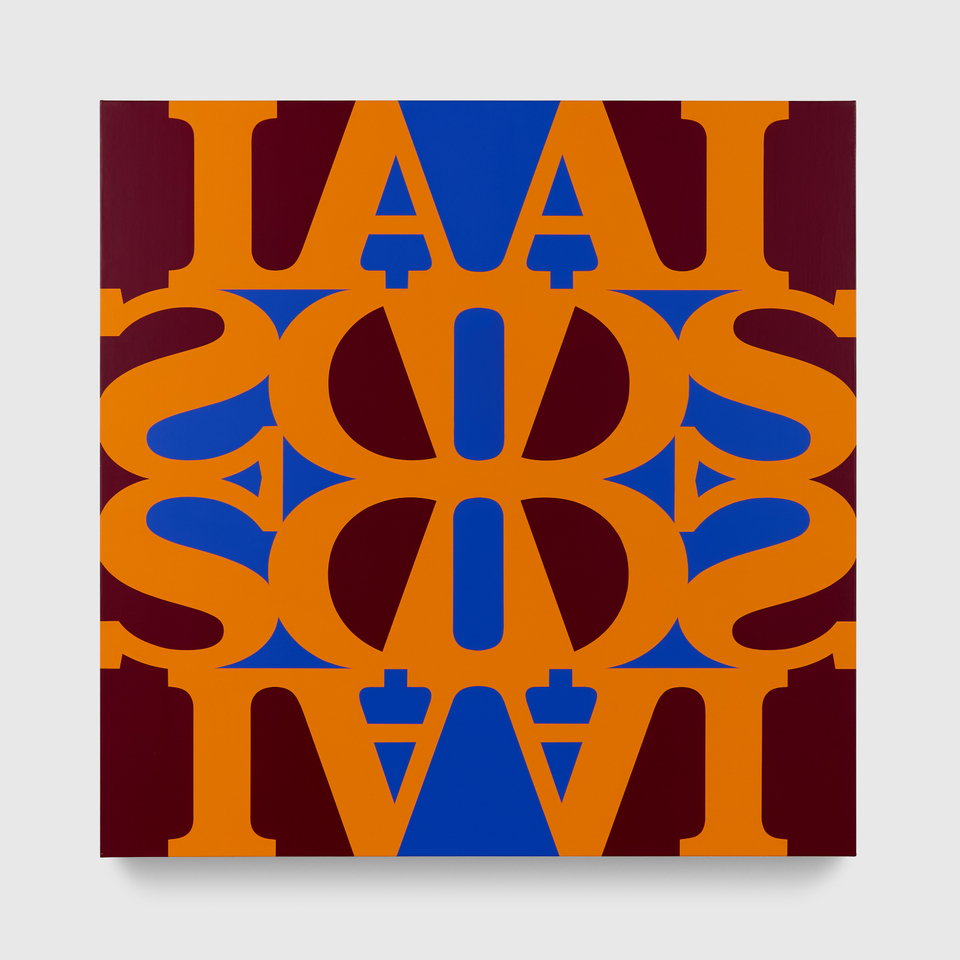
Arguably among the most original achievements of Tomie Ohtake are her paintings made from the mid-1970’s through the 1980’s. She accomplished her own, unique, unparalleled signature of figural abstraction through these magnificent paintings where round, organic volumes embracing the totality of the visual field are treated through subtle hue gradations and monochromatic expansions. The nameless, primary shapes that surface within these masterfully executed paintings are a landmark example of color-field mastery, brilliantly kept in a neutralizing standpoint between figuration and abstraction. This remarkable body of works embody a striking example of neo-avantgarde abstraction, by transforming the legacy of Brazilian modernity into one of the most eloquent repertoires of late-modern painting in the Americas. It is at this moment that Ohtake’s oeuvre fully achieves a cosmic dimension that will drive her production towards sculpture and real space.
One of the main representatives of abstract art in Brazil, Tomie Ohtake was born in Kyoto in 1913 and moved to Brazil in 1936. Her career as an artist began at the age of 37 when she became a member of the Seibi group, which brought together artists of Japanese descent. In the late 1950s, when she left behind an initial phase of figurative studies in painting, she immersed herself in abstract explorations. In this phase, she performed a series of paintings which became known as blind paintings, where she would blindfold herself in experiments that challenged the ideas which grounded the Brazilian Neo-concrete movement, also bringing sensibility and intuition to the fore of her practice.
In 1957, invited by critic Mário Pedrosa, she presented her first solo exhibition at the Museu de Arte Moderna in São Paulo, which was followed by her participation in the São Paulo Biennial in 1961. Ohtake began to experiment with various printmaking methods during the 1970s and, beginning in the late 1980s, she undertook large-scale sculptural projects and public works in São Paulo and neighboring cities. Having worked until very late in life, Tomie Ohtake passed away in 2015, when she was 101 years old.