Ended Feb 18
Ilya Lipkin
Jan 12 – Feb 18, 2018
More from Ilya Lipkin on Gallop
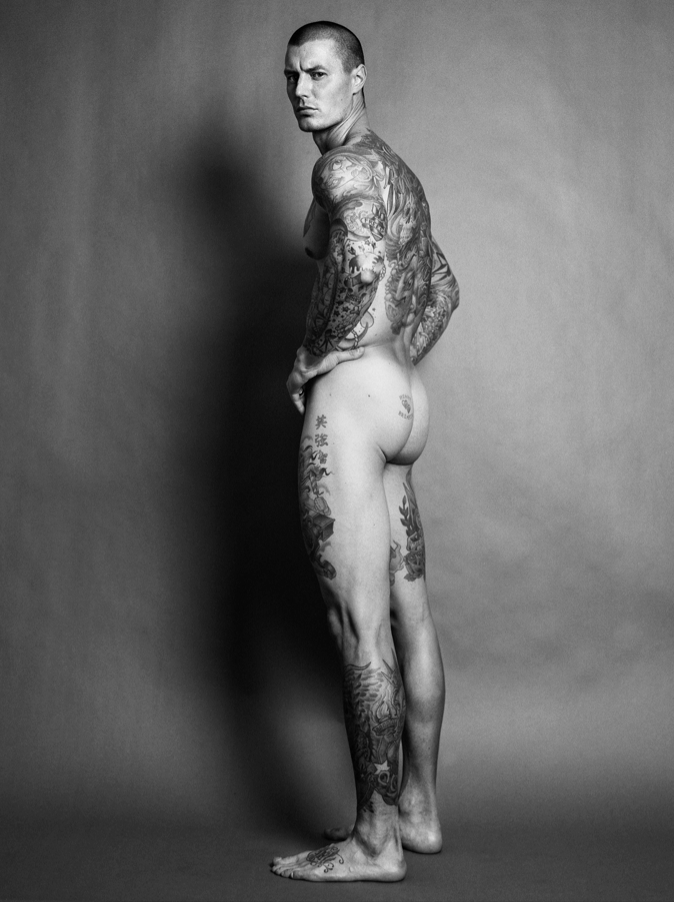
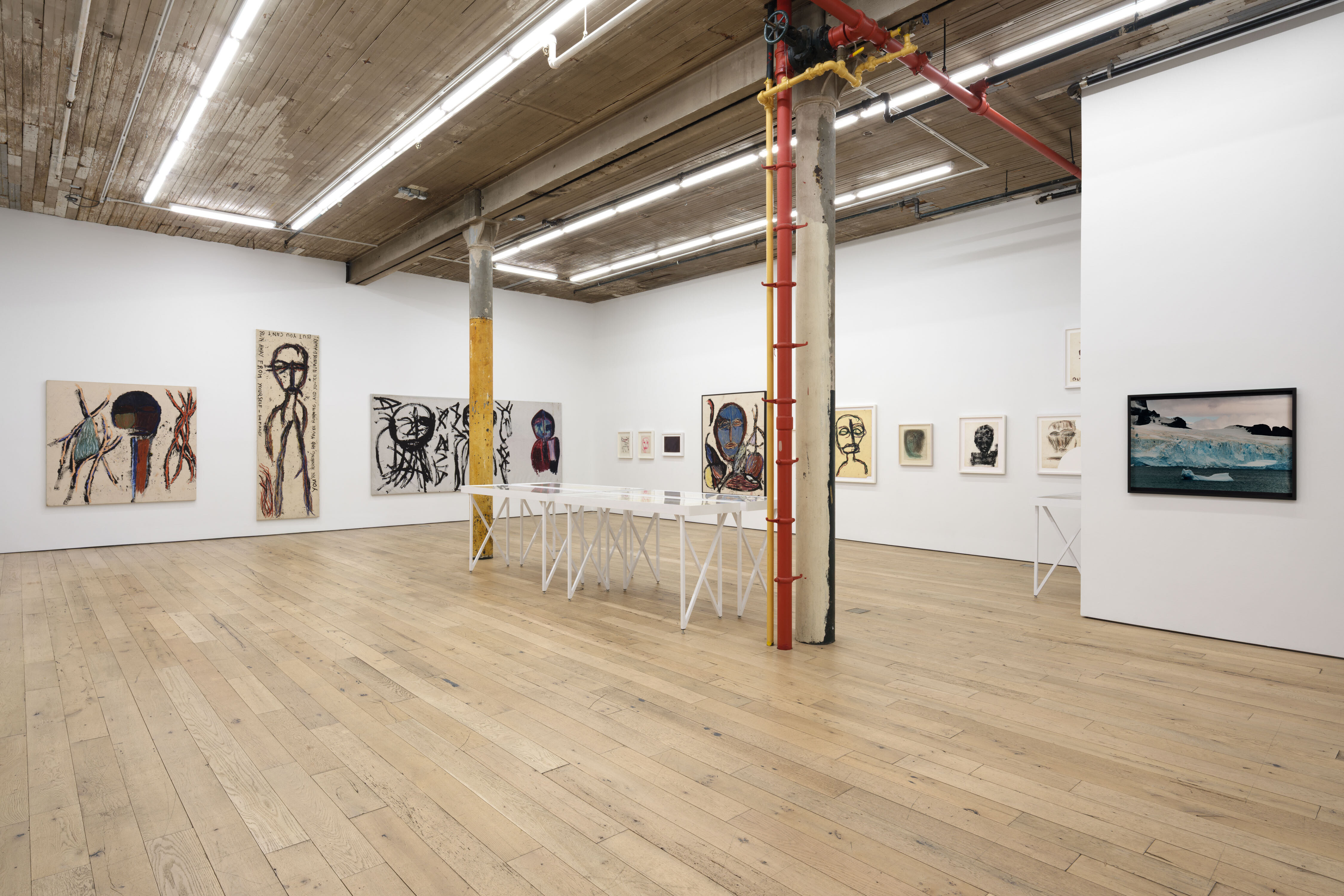
This winter, Svetlana presents the work of Ilya Lipkin, a Berlin-based Riga-born photographer raised in NYC. While his practice – both artistic and commercial – can be characterized by its reflection of everyday life, Lipkin specifically emphasizes a panoptic, Kino eye vérité for this show. Notably, all constituent images were shot in Germany this past year, which, as in the US, was marked by right-wing nationalism gaining significant visibility.
An aside: historically, photography has been differentiated from other forms of art making by its supposed rationality – its capacity to index, ostensibly without bias, the physical world. This is to say that the camera, contra the painter’s brush, could sufficiently mediate the author/artist’s will, functioning as a forensic tool, a producer of “evidence,” a backer of “fact.”
An update: our time is one of 2.3 billion mobile smart devices hyper-connected by photo-centric social media. It is also a time when photographic information is no longer self-evidently legible. In part, this is because of the mutability of digital imaging, but moreover it is because “truth” is no longer seen as inherent to the image. Rather, the picture’s “truth” or “fact” is now a quality that is attributed to it by its majority viewership, who collectively arrive at a common interpretation of the image’s codes.
Here is a shot of several women sitting curbside surrounded by shopping bags from Primark, a major fast fashion retailer. They are all white and generally young – or young enough to adopt mass cultural trends (chunky shoes on one, a red puffer jacket and elastic skinny jeans on the next, yoga pants on another).
Here is a crowd shot of adult men applauding. They are also all Caucasian. Their style is not aspirational; they are average-seeming, working or middle class. On one man’s grey wool V-neck, there’s a promotional sticker for Ficken brandy. “Ficken” is German for “fuck.”
Here is a bar stool and a bunch of empty drinks – cans of Coke and Diet Coke, Red Bull, bottled water, an empty glass coated with the residual pulp of a tropical cocktail; then, red carpet, toes, feet, legs, a pleather micro-skirt, a bare female midriff, a woman’s extended finger, a white acrylic nail.
These images are loaded with signs but are open in their reading. Who are these women and these men and what truths are told by what they consume? Does meaning change when it’s made explicit that the men are at Venus (an adult entertainment convention) and that the women are at Alexanderplatz (a central public space in the city’s former East)? Does it change again when one associates performative heteronormative dress and behavior (men at a porn convention, women shopping) with the aesthetics of right-wing politics? Is that extrapolation taking assumed “truths” too far? What’s more vulgar, the scar tissue visible under one subject’s augmented breast or the assumptions viewers will make about this subject’s class and political leanings?
We know that signs are brilliantly volatile today. Today, X is true not because it is, but because we read X according to how we are programmed or how we desire to be seen. We cannot help but to interface with the word according to personal analogy. And in fact, cutting a path through the semiotic landscape according to the meta-language of one’s own tribe has become required labor for entry into many social groups. Increasingly, it’s even the basis of how new social groups are formed. Cue swarms of proto alt-right online users making their derive across the Net, mining both the “progressive” boulevards of Silicon Valley and janky back allies of Drudge and InfoWars for materials to redeploy in meme-form within the aesthetic and political paradigm of imageboard culture (4chan, 8chan, etc.).
In the case of this show, Lipkin is testing the threshold of assumption. The vérité effect – candid gazes, unexpected croppings, key information revealed only in the deeper ground – here lends supposed credibility to what is being portrayed. The gaze is as seemingly impartial as the general lens of big-data capture. And yet, we know we cannot trust the algorithm to always differentiate what’s “true.” Were Google to read Lipkin’s images – taking into account geo-location and facial recognition – could it “correctly” articulate one’s profile? After all, humans can choose to lie.
What a photograph does do exceptionally well is fix a constellation of temporarily-bound signs in one frame, so that the passage of time can bring the image’s real truths to light. In the meantime, we might take a cue from Kaja Silverman, who in her 2016 book, The Miracle of Analogy, writes: “Not only is the photographic image an analogy, rather than a representation or an index, but analogy is also the fluid in which it develops.”
– Caroline Busta