Ended Dec 12
Richard Hawkins
New Work
Oct 24 – Dec 12, 2015
More from Richard Hawkins on Gallop
A two-venue exhibition, also at Jenny’s, Los Angeles.
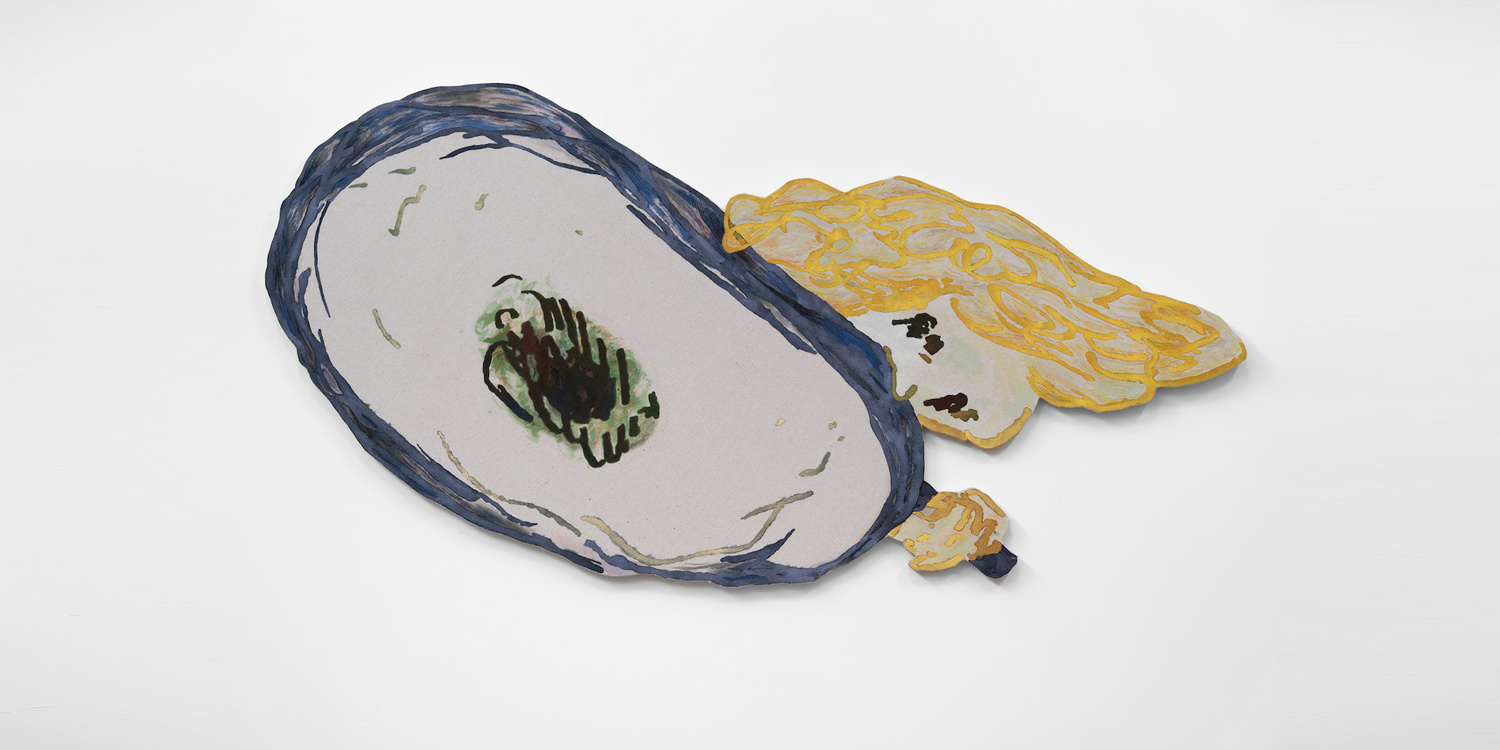
In a new series of polychromed ceramics and mixed media collages, Richard Hawkins mines the post-electroshock drawings of Antonin Artaud for imagery and evidence of a mind set free to wander into the darkly erotic domain of the preternatural. Witchy shamans, gynandromorphic idols, shitting plague-rats, acephalic succubi and “daughters of the heart, unborn” populate a body of shrine-like wall works which rework and compound Artaudian interplays between the primitive, the sacred, the execrable and the hallucinatory.
The writings of Antonin Artaud have been seminal academic fodder since at least the 70s, yet his drawings, though having been the subject of several major exhibitions, remain anomalous and very little studied. In fact, little has been written on the subject of the drawings themselves outside of providing dates and circumstances as well the commentaries Artaud himself provided for a very few of them. After studying the symbols and iconography of the asylum drawings for over a year, Richard Hawkins has come up with what he believes are several keys for beginning to understand these works and how they fit in within the larger corpus of Artaud’s oeuvre.
Of particular note are the facts that Artaud’s “Heliogabale” (1934) - ostensibly a biography of the Roman boy emperor but, in the author’s hands, more a treatise on alternate versions of monotheism, sun worship and orgiastic rites - was the last major project before the author began plans for his infamous trip to Mexico (1936). The essays that make up his report of that trip though were finished much later, after severe breakdowns and subsequent institutionalization, in “Voyage to the Land of the Tarahumara” in 1946 – and directly coincide with the production of such eccentric and otherwise hermetic drawings such as “The Sexual Awkwardness of God” and “Theater of Cruelty."
By examining 3 things in tandem: the Heliogabalus text as catalyst to the Mexican journey, anthropological texts on the Indians of the Sierra Madre from researchers who preceded Artaud’s trip by a mere 3 years and the individual asylum drawings themselves, it becomes clear that quite a number of the symbols are directly traceable to the rites and cultural icons of the Tarahumara region. Among them is a reoccurring form which can be recognized as a traditional Tarahumara circular Christian cross, a personification of the native solar deity, a representation of the peyote button itself as well as an image of particular importance to the author’s essays and poems of the period, the perpetually violated anus of Artaud himself.
Hawkins’s process is one of expansion and syncretic elaboration and, while obviously informed by ongoing research, the objects and pictures in the exhibition amplify more than illustrate. The major departure from Artaud’s own drawings is within the medium itself. In Hawkins’s own words “If a doctor’s going to give his patient a fireplace poker and a butcher block, as Ferdière did with Artaud, to pound out his anger but then only some flimsy paper and brittle crayons and pencils as a little experiment in art therapy … why wouldn't he just give him hunks of clay and say ‘have a field day’?”.