
Ended
Ken Lum
The Yellow Man
May 7 – Jun 20, 2026
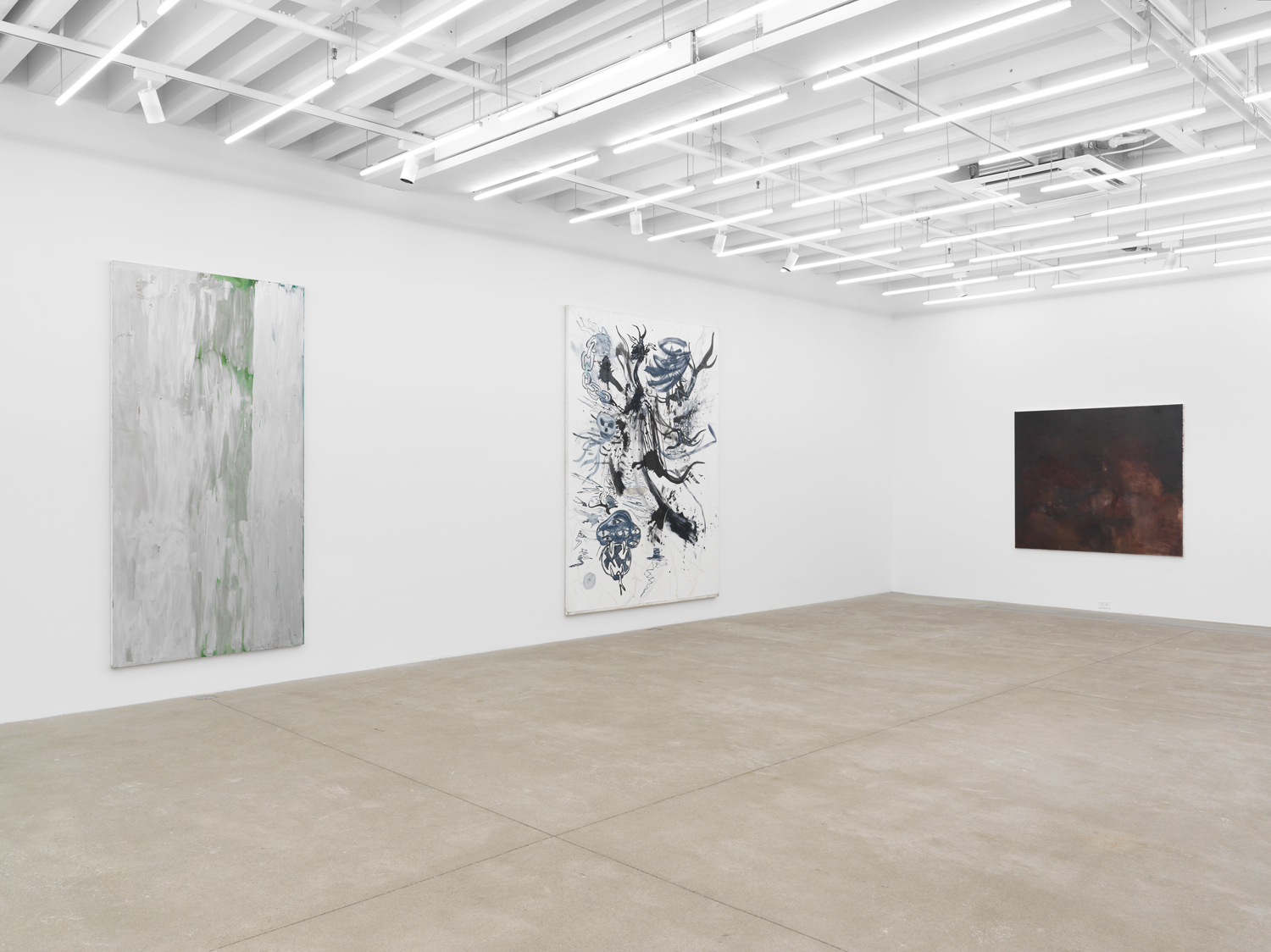
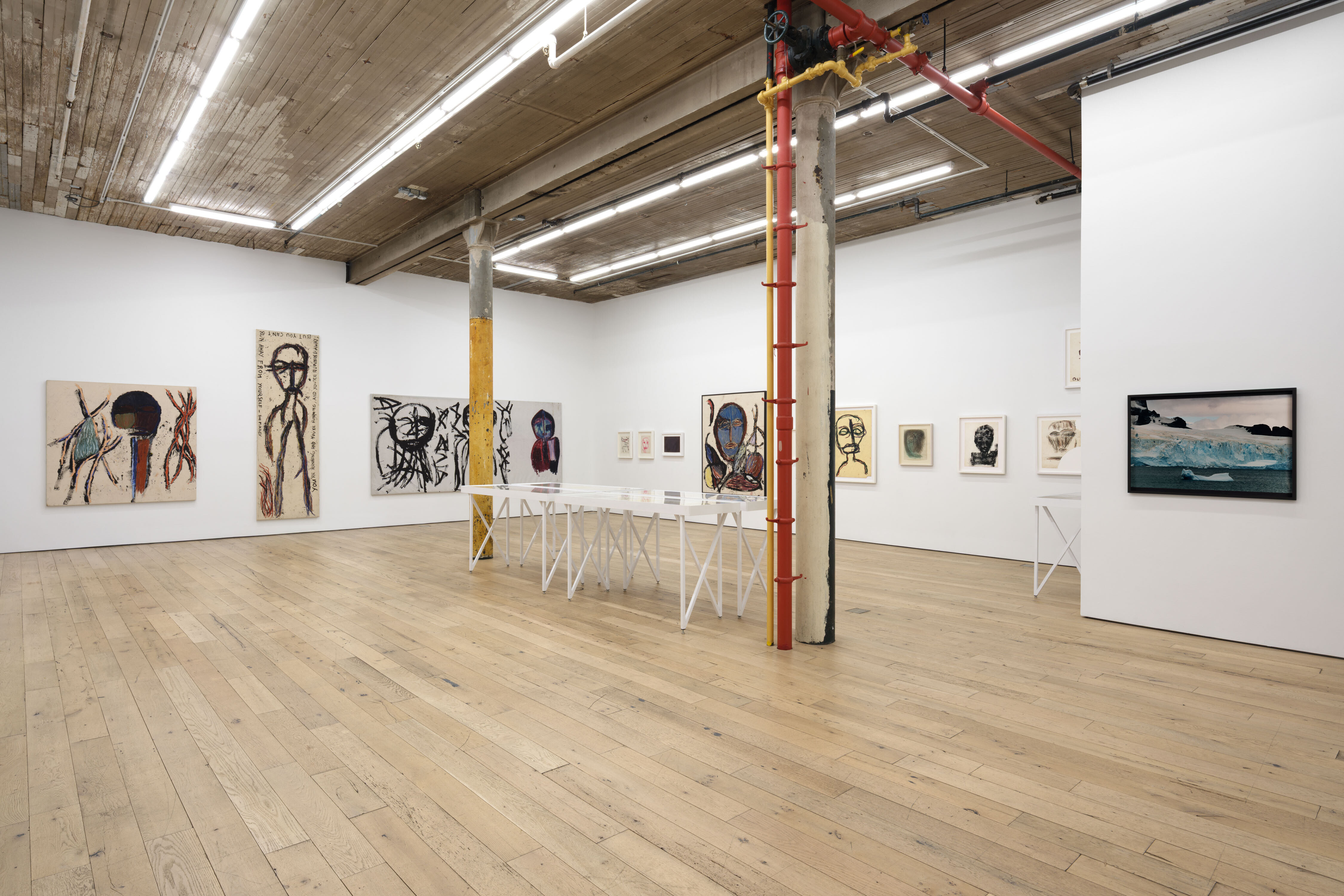
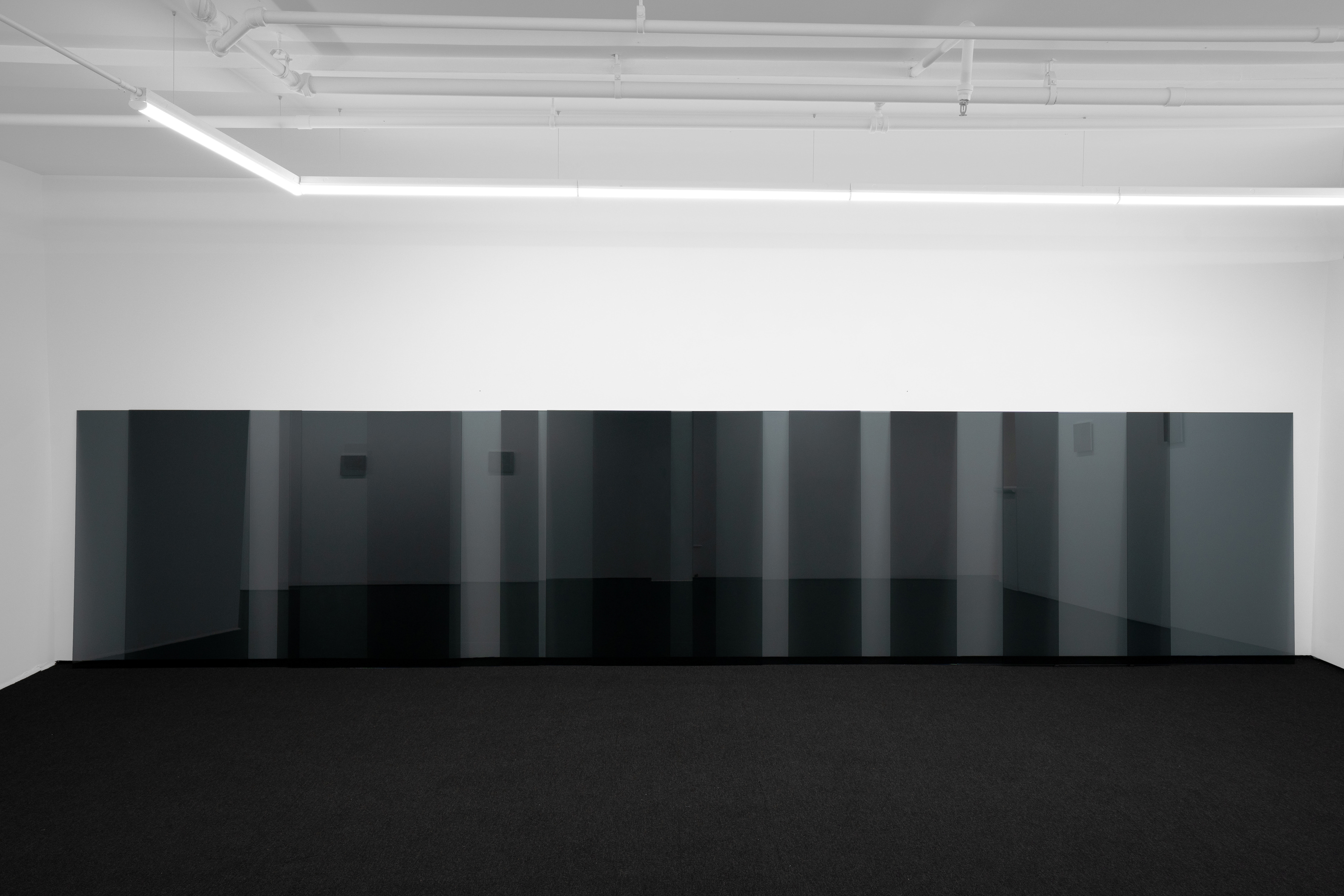
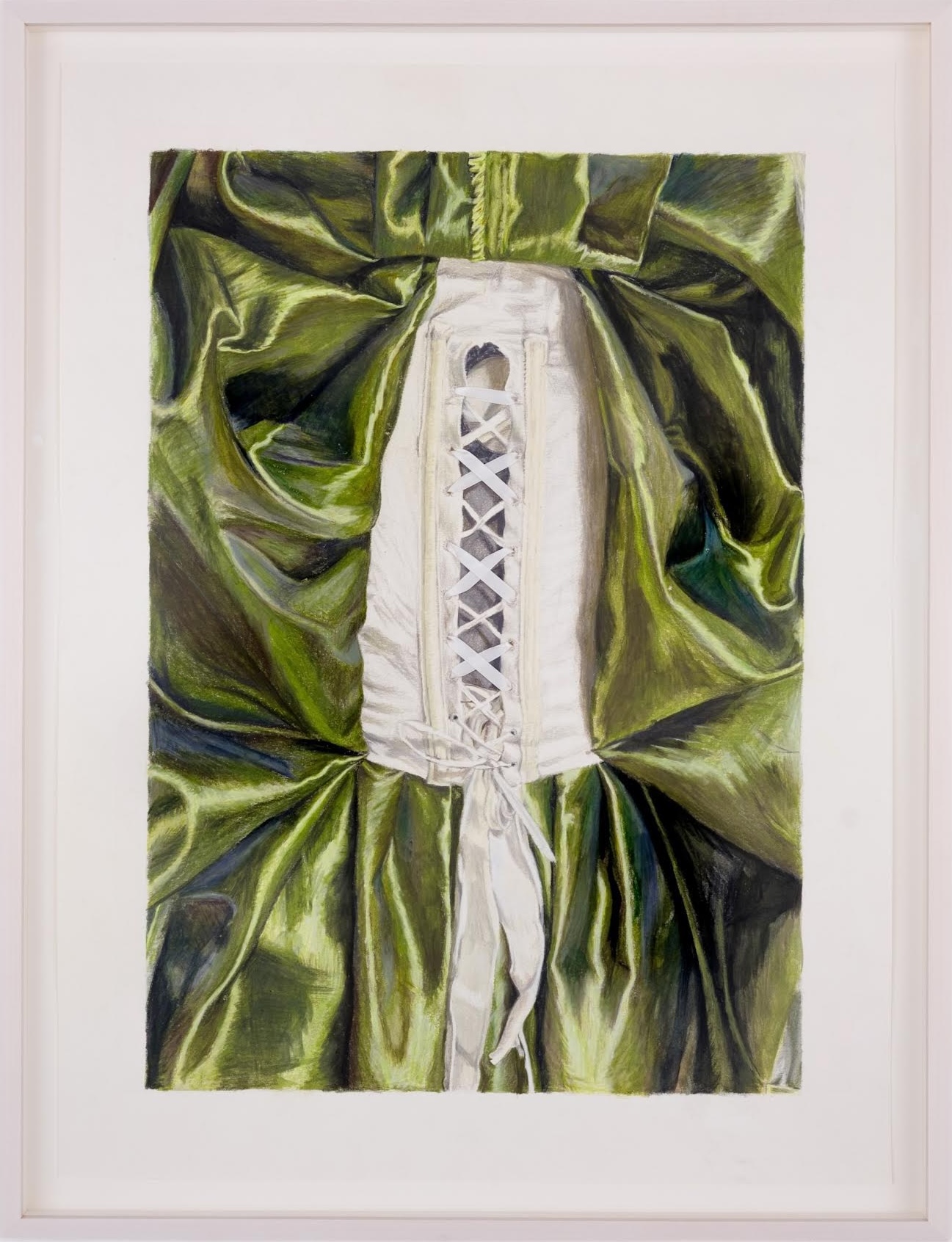
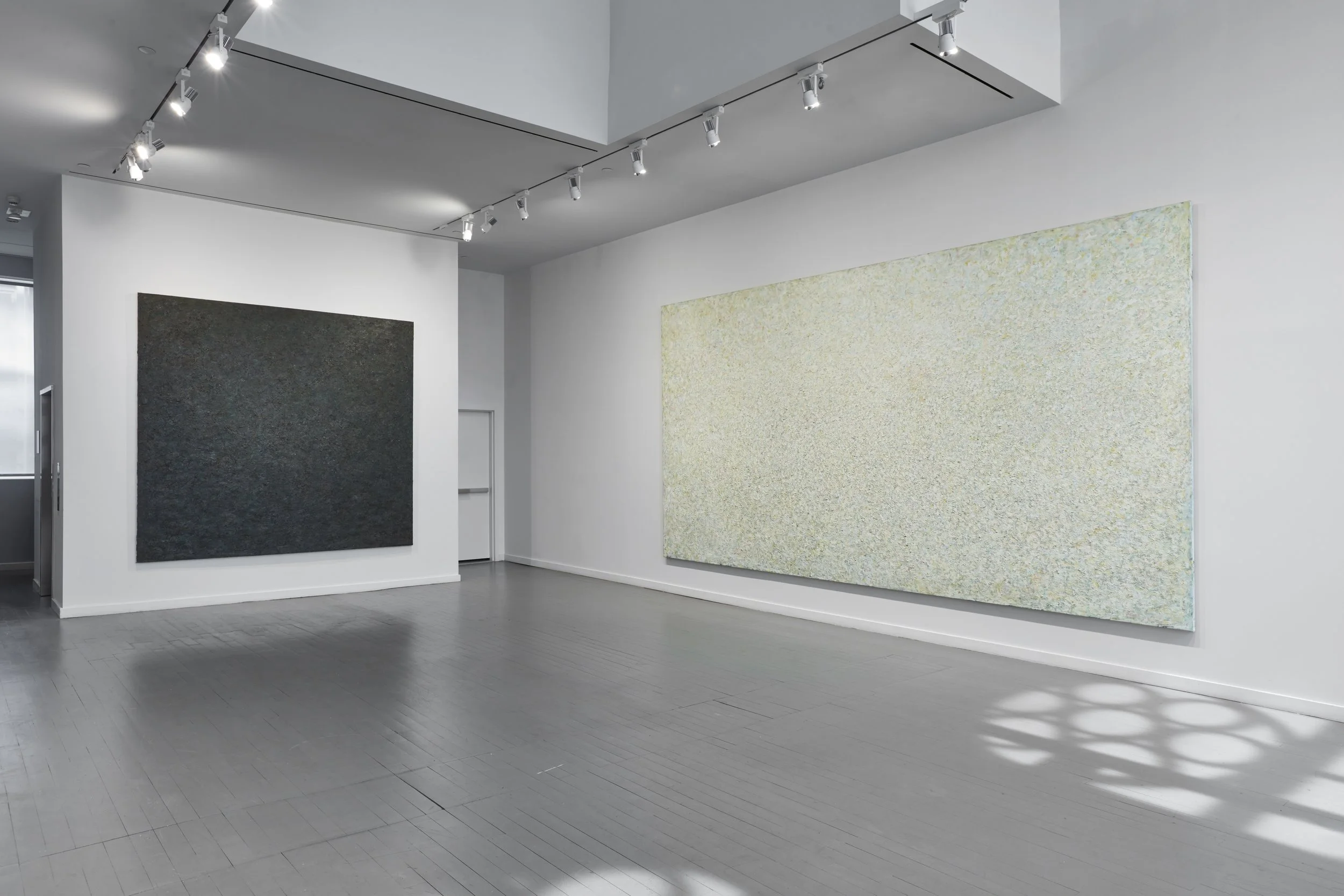
Magenta Plains is pleased to present The Yellow Man, a solo exhibition of new acrylic and enamel paintings on panel by Ken Lum. The exhibition marks the latest development in Lum’s long-running Language Paintings series. In these new works, Lum turns to pre-alphabetic forms and a mode of graphic abstraction informed by his early training as a commercial sign painter. These paintings continue his investigation of language and sign systems, exploring identity, culture, and social hierarchy through a deliberate destabilization of legibility. While the compositions initially appear readable, their elements quickly dissolve into unfamiliar configurations, frustrating attempts at comprehension.
For this exhibition, Lum draws on his own familial relationships as a central point of reference. In The Plenitude of Linnea (2026), one of a few paintings which reference the artist’s ten-year-old daughter, a swirling orb of metallic grey and black is set against a feathery charcoal ground. Linnea, who is autistic, is non-verbal and communicates using a speech-generating device. Their relationship unfolds largely outside of spoken language, shaping Lum’s understanding of communication as something that exceeds linguistic structure. The “plenitude” of the title reflects the richness of this shared, non-verbal space. This is one of several paintings in the exhibition referencing Lum’s family relationships, with works dedicated to his wife, Paloma, and his son Linus, as well as Linnea.
Additionally, some works in the exhibition address Lum’s specific positionality. In The Yellow Man (2026), the exhibition’s title appears in capitalized block letters across a field of shimmering gold. Here, Lum adopts an unusually direct approach, referencing himself in relation to the shifting meanings of Asian identity in contemporary American society—at once a model citizen and a potential threat. In this context, language becomes inseparable from power: the ability to be understood, or misunderstood, carries social and political consequences. Linguistic alienation becomes a position of vulnerability.
Lum’s Language Paintings originated as deliberately nonsensical commercial-style signs, composed of jumbled letters rendered in the visual language of advertising. These works evoke the disorientation of encountering an unfamiliar written system—the frustration and confusion of navigating a place where one cannot read the signs. Although their structure suggests meaning, the texts themselves remain illegible. The paintings in The Yellow Man extend this approach further, moving along a continuum from script-like forms to full abstraction. Amoeba-like shapes and meandering, fluid lines replace letterforms, expanding the visual vocabulary of the series.
By moving away from recognizable language, Lum foregrounds both the possibilities and the limits of communication. These works suggest that language not only enables expression but also constrains it, defining what can be said and how it can be understood, and in doing so, excluding what falls outside its reach. In contrast, the non-verbal space explored throughout the exhibition offers an alternative mode of relation—one that resists fixed meanings and opens onto more fluid, indeterminate forms of exchange.
Ken Lum (b. 1956, Vancouver, BC) is an artist best known for his post-conceptual art employing various media—primarily photography, sculpture, film and site-specific installations. Lum’s art is concerned with how meanings are assigned to images, texts, and objects throughout everyday life. Lum’s playfully politically-oriented practice takes an acerbic but humorous tone as an entry to a myriad of issues including identity, immigration, language, and spatial politics.
Lum has an extensive art exhibition record that includes Documenta 11, the Venice Biennale, Sao Paolo Biennial, Shanghai Biennale, Carnegie Triennial, Sydney Biennale, Liverpool Biennial, Gwangju Biennale and the Whitney Biennial. Solo exhibitions include Scotiabank Photography Award: Ken Lum at The Image Centre in Toronto, CA; Ken Lum at Magenta Plains, New York, NY; Death and Furniture at the Remai Modern, Saskatoon, CA and the Art Gallery of Ontario in Toronto, CA, among many others. In 2023, Lum was the recipient of the 13th annual Scotiabank Photography Award and the subject of a published book distributed worldwide by Steidl.
Lum’s work is included in permanent collections of Tate, London, UK; Moderna Museet, Stockholm, SE; RISD Museum, Rhode Island, RI; Museum moderner Kunst stiftung ludwig, Vienna, AT; Helga de Alvear Collection, Madrid, ES; Musée d’art Moderne et Contemporain, Geneva, CH; Lilac Milne, Vancouver, CA; FRAC Nord Pas de Calais, Dunkirk, FR; Centro Galego de Arte Contemporanea, Santiago de Compostela, ES; FRAC Haute Normandie, Rouen, FR; BMO Collection, Toronto, CA; Arco Foundation Collection, Madrid, ES; M+ Museum of Visual Culture, Hong Kong, HK; National Gallery of Canada, Ottawa, CA; Fundación AMMA Amparo y Manuel, Mexico City, MX; Winnipeg Art Gallery, Winnipeg, CA; Joanneumsviertel Neue Galerie, Graz, AT; Vancouver Art Gallery, Vancouver, CA; Städtische Galerie im Lenbachhaus und Kunstbau, Munich, DE; Kunstmuseum Luzern, Lucerne, CH; Walter A Bechtler Foundation, Zurich, CH; Museum Boijmans van-Beuningen, Rotterdam, NL; Witte de With Center for Contemporary Art, Rotterdam, NL; Museum Volkenkunde, Leiden, NL; Musée d’Art Contemporain, Montreal, CA; Centro de Arte Contemporáneo De Huarte, Navarro, ES; Laumeier Sculpture Park, St Louis, US; Long March Space, Beijing, CN; FRAC Ile de France, le Plateau, Paris, FR; Tang Contemporary Art, Beijing, CN; RBC Collection, Toronto, CA.