Ended Oct 25
Scott Lyall
Black Glass
Sep 12 – Oct 25, 2015
More from Scott Lyall on Gallop
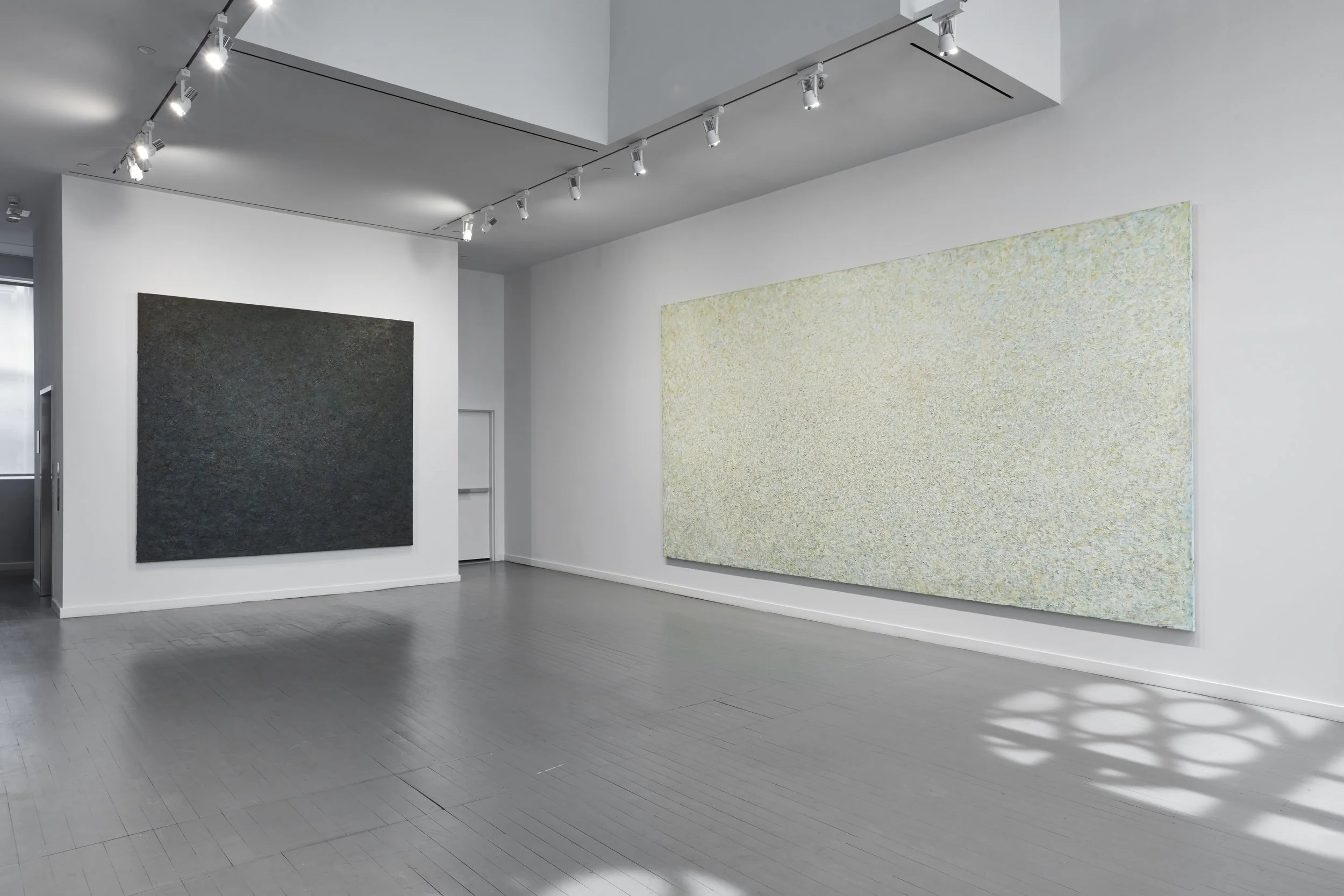
Miguel Abreu Gallery is pleased to announce Black Glass, Scott Lyall’s fourth solo exhibition at the gallery.
In the myth of Daedalus, all things veer from the straight line. Daedalus is an inventor. He conjures statues that seem alive, military robots to guard Crete, and ancient genetic engineering enabling the birth of the Minotaur—for whom he builds the labyrinth, and from which via another apparatus he escapes. Daedalus the inventor is said to have conceived of sails made of canvas, glue, and joined corners. Now imagine Daedalus as a photographer/painter who has tired of the routines of image production,
“the predictable use of light to fix the ‘subject’ or whatever other objects were before him. Imagine that (this photographer/painter) was crazy enough to want to fix the light as light. If so, this would not be the light from distant stars, but a light without stars, without source no matter how distant or hidden, a light inaccessible to the camera. Should the photographer abandon his technique and find another? Or should he generalize his technique across the forms of the darkroom, the white cube, and the camera obscura in order to proliferate the angles, the frames, the perspectives, the openings and shutters used to capture (or perhaps to seduce) the light itself?” (Francois Laruelle, The Concept of Non-Photography).
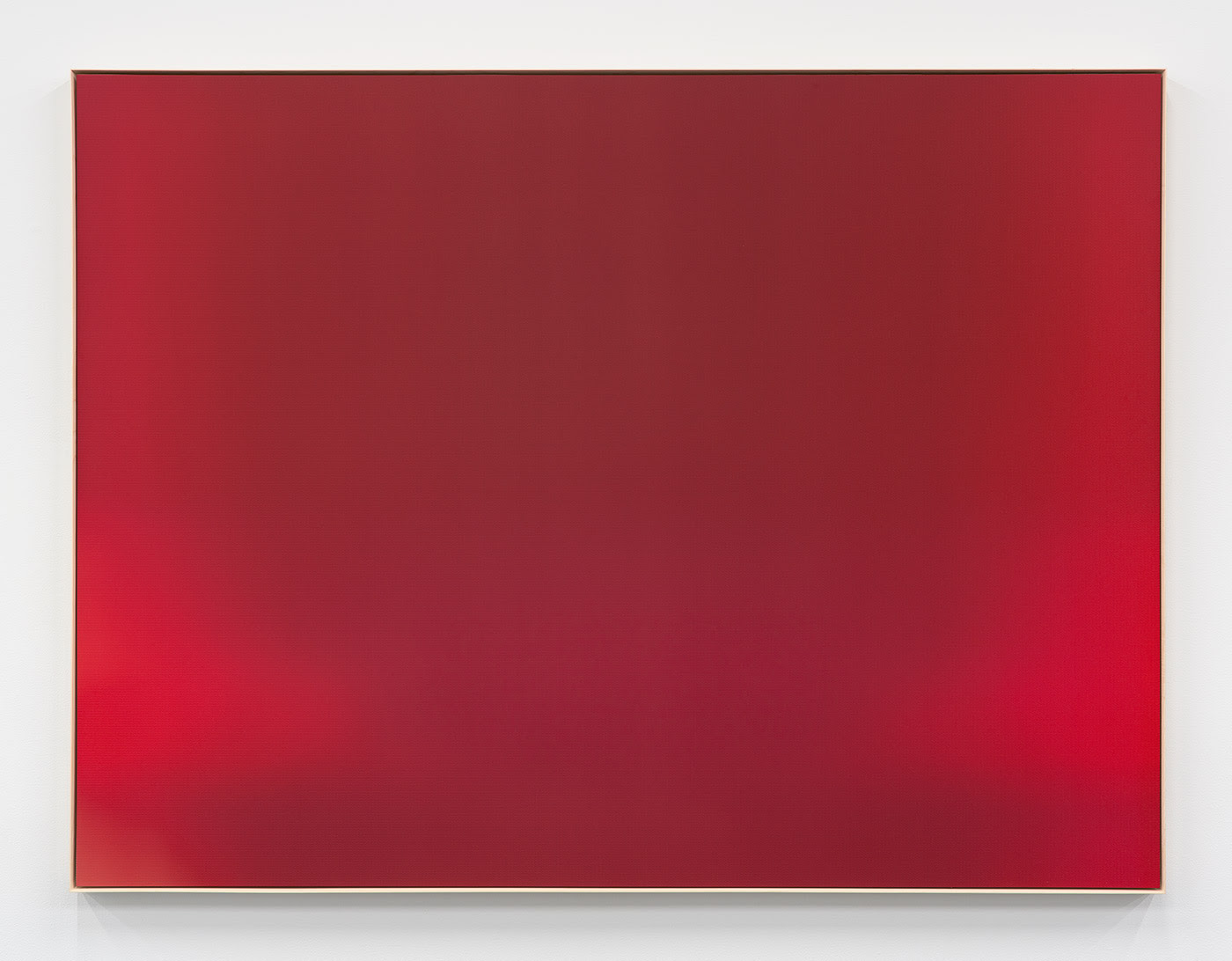
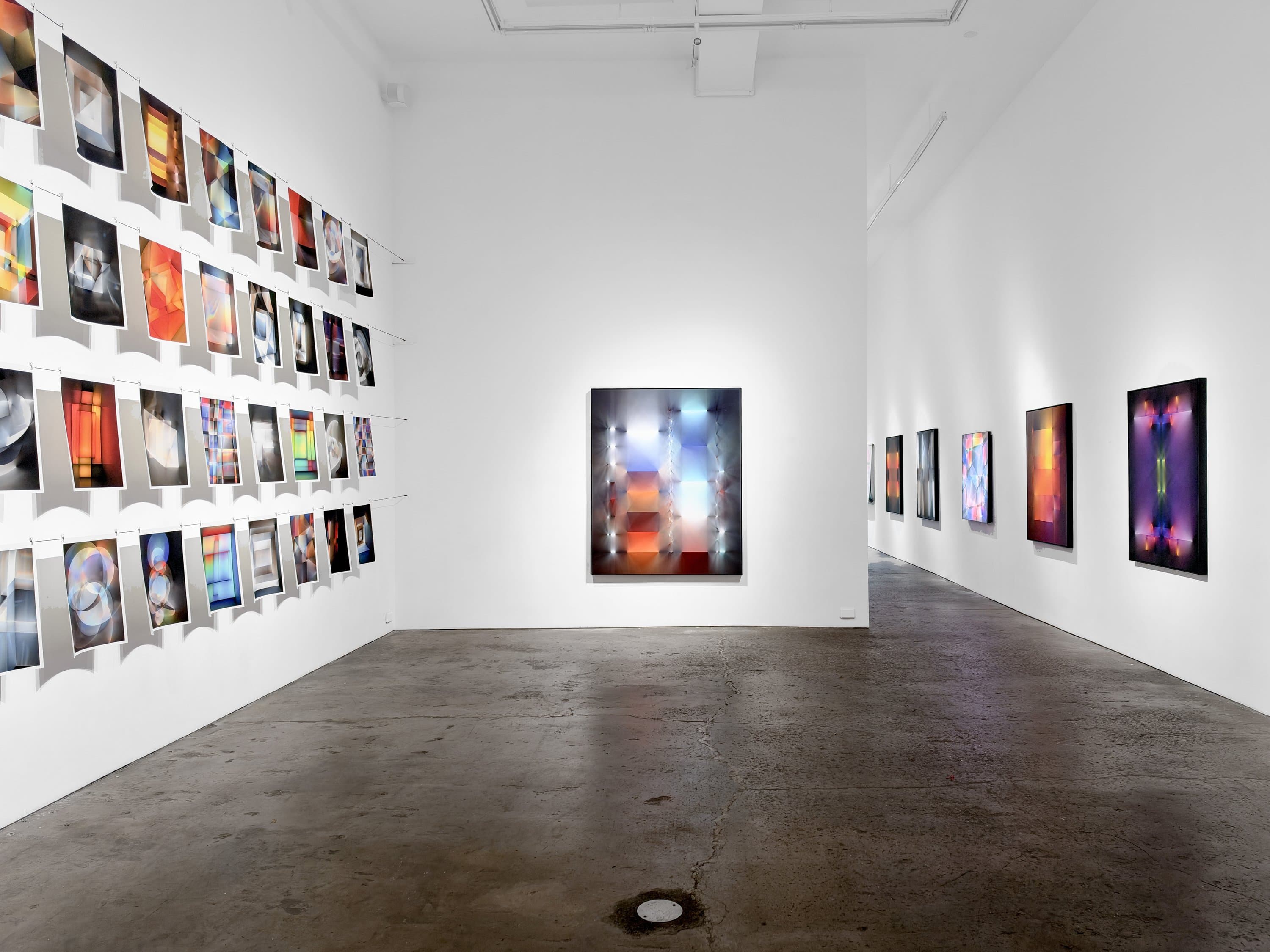
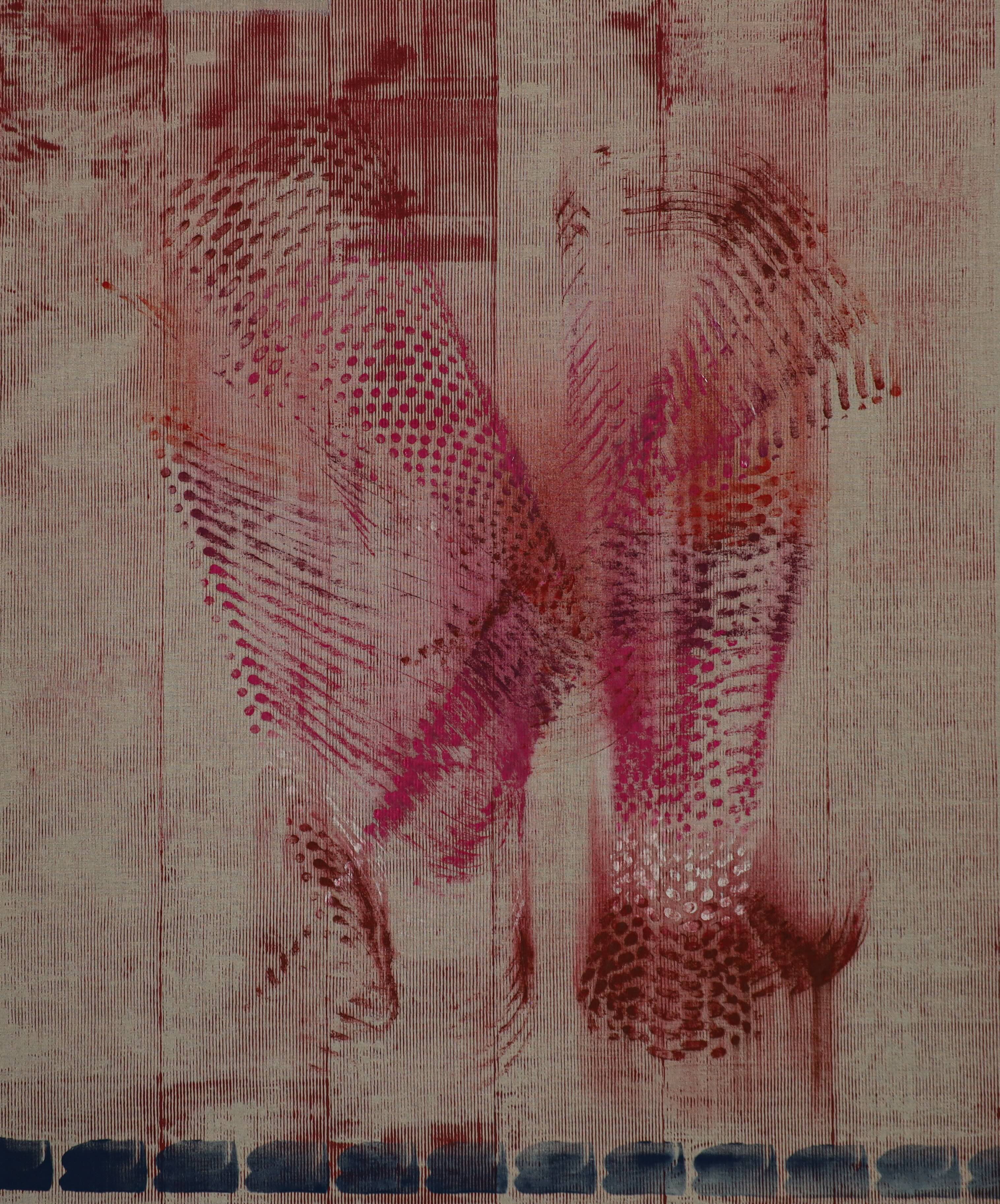
In Scott Lyall’s collection of Black Glass works, ink infused glue is injected between two identical panes of “museum glass” to stain and enclose the interior. Then, a thick layer of ink is applied to the back, to render the front of the glass surface a black mirror. Finally, a layer of pale, sheer color is printed onto the outward facing surface of the mirror. This has the value of a thin, textured veil. The mirror’s reflectance is canceled by this veil, while the color is overwhelmed and absorbed by the darkness. The “image” is thus reduced to a grain-like texture. The latter can be compared to both the halides in a photograph and the glazing layers used in a traditional oil painting. Light haunts this image, but no refractions or shadows can be seen. The works are supported by graphite stained frames which effectively sets them into drawing’s milieu.
The pixel is given to a process that depends on its material, rather than representational, value: some light passes through the veil of ink because its sheerness acts as a partial filter. The light that “makes it through” is then reflected in the mirror and returned in the direction of the surface of the glass. But only some reflection passes outward through the surface. The same outer surface that functioned as a filter again filters the reflectance as it returns to the world. This is a real, material capture of energy, and not a picturization of color-and-light effects. A decomposing remainder of electron particles bounces back and forth between the panes of glass, in perpetuity.
Because of its capture and cancelling of light, the diagrammatic arrangement of these Black Glass works seems to bring to mind an entirely unexpected entity. Never at rest and relentless, this entity is related to a technical economy of images based on constant navigation and processing speed. The work must literally keep on working (filtering, refracting, trapping, and absorbing the light) to maintain its negatropic hold.
"The color that eclipses both photography and painting has emerged from the adventure of a different kind of night: a night without days, a real depth of concealment. It’s a night that is enfolded in compression and collapse. And it attracts light— captures it, consumes it, seduces it—as if the light were lured toward its surfaces like a moth. The colors we call “pixels” are just as eternal. They are not the different colors of the perishable body. They come when they are called, and neither die nor survive" (Lyall, citing A.N. Whitehead, in a note).
The suspended particle energy in the interior of the Glass meets a perceptual situation whose content relies on a question of methodological proof—we are literally called into perception via the canceled mirror. Our image’s redaction has appeared as a prerequisite of the particle turmoil that continues in the Glass; and it is only because of the veil’s cancellation of the mirror that we see this space of turmoil as potential and nothing else. If, as Bruno Latour suggests, our current era is characterized by the abolition of the material support of the image, then Black Glass functions paradoxically to materialize this estrangement by rendering the condition of digital transference sensible, and more importantly, in constant process. Our new habit of navigating back and forth through datascapes without stopping at either end point (neither origin nor terminus) is effectively “mirrored” in the depthless Black Glass, not as image but as darkness ... oddly sensuously revealed.
The Black Glass is accompanied by a set of images that “reflect on” its shifting and developing themes. They are either an interpretive support or a dream board. Among these are three small nanofoil works which capture probe images of redshift light—ghosts from the edges of our expanding universe that testify to a heaven just about to disappear.
— Christine Davis, from a forthcoming issue of PUBLIC Journal, No. 51, Colour
Scott Lyall was born in Toronto in 1964, and currently lives and works in Toronto and New York. He earned his MFA from the California Institute of the Art in 1993. His solo and two-person exhibitions include Totality (Phantom Eclipse) at Susan Hobbs, Toronto, οἴνοπα πόντον [Winedark Sea] at Campoli Presti, London (2014), Indiscretion at Miguel Abreu Gallery (2013), The Color Ball at The Power Plant in Toronto (2008), An Immigrant Affection at Miguel Abreu Gallery (2010), the little contemporaries at Sculpture Center (2007), among others. In 2012, he participated in Anti- Establishment, curated by Johanna Burton, at the CCS Bard Hessel Museum. Previously Lyall’s work was included in group shows internationally such as Schnitte im Raum, Museum Morsbroich, Leverkusen (2011); Tentation d’Hazard, The Montreal Biennial (2011); New York to London and Back: The Medium of Contingency, Thomas Dane Gallery, London (2011); Collatéral, Le Confort Moderne, Poitiers (2009); The Lining of Forgetting, curated by Xandra Eden, Austin Museum of Art, Weatherspoon Art Museum; and SITE Santa Fe, 7th International Biennial (2008).