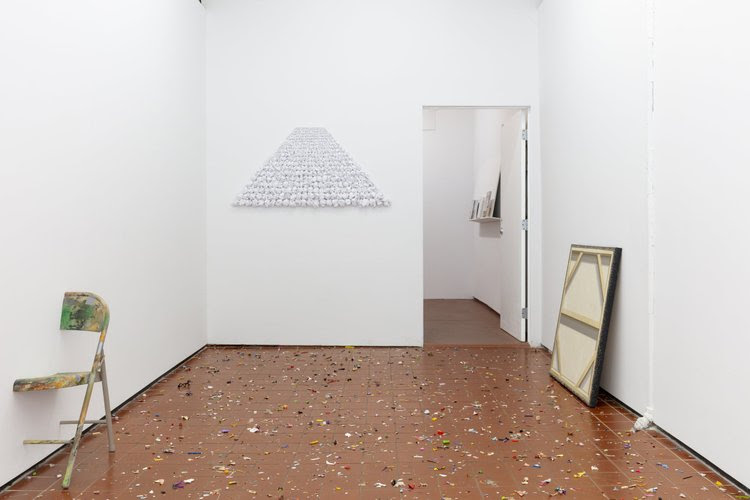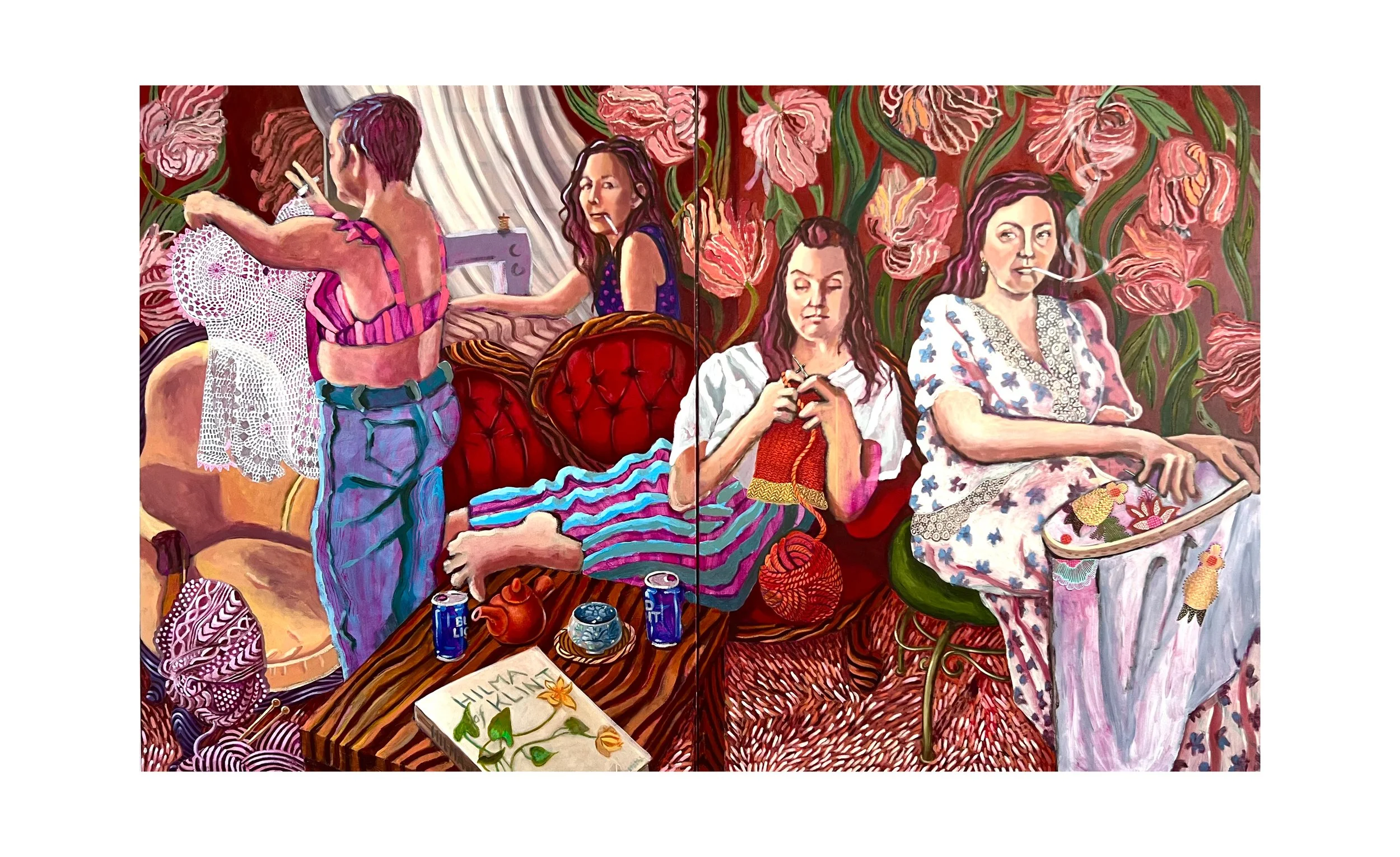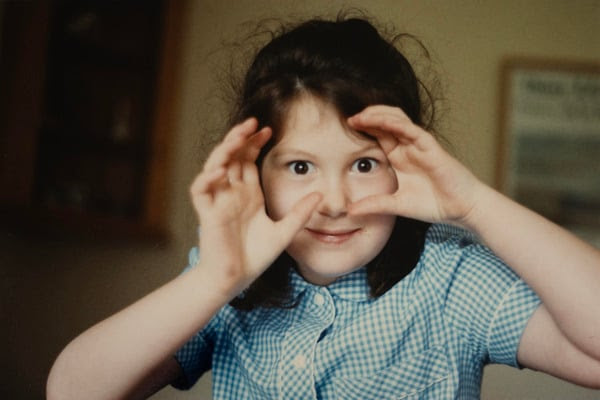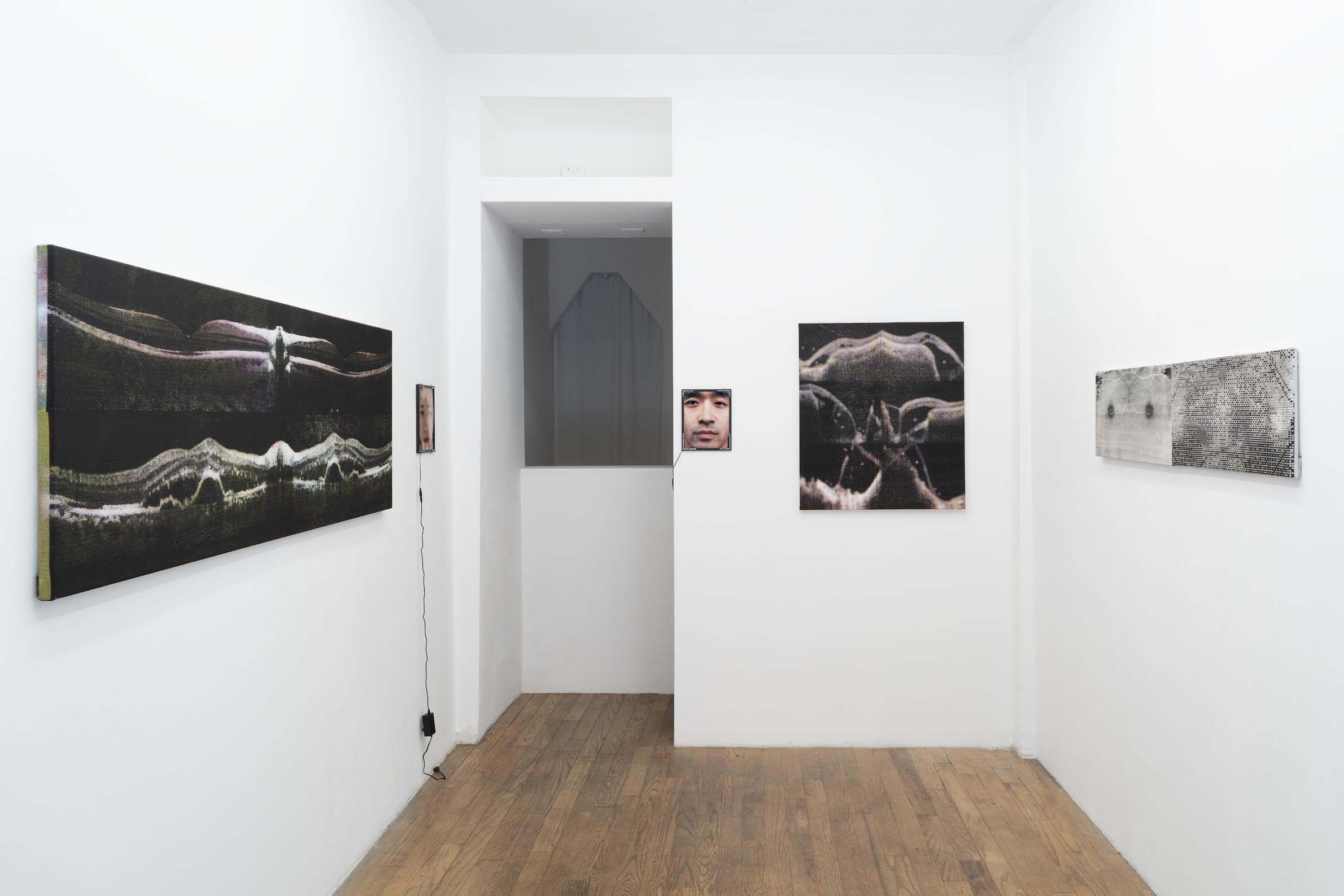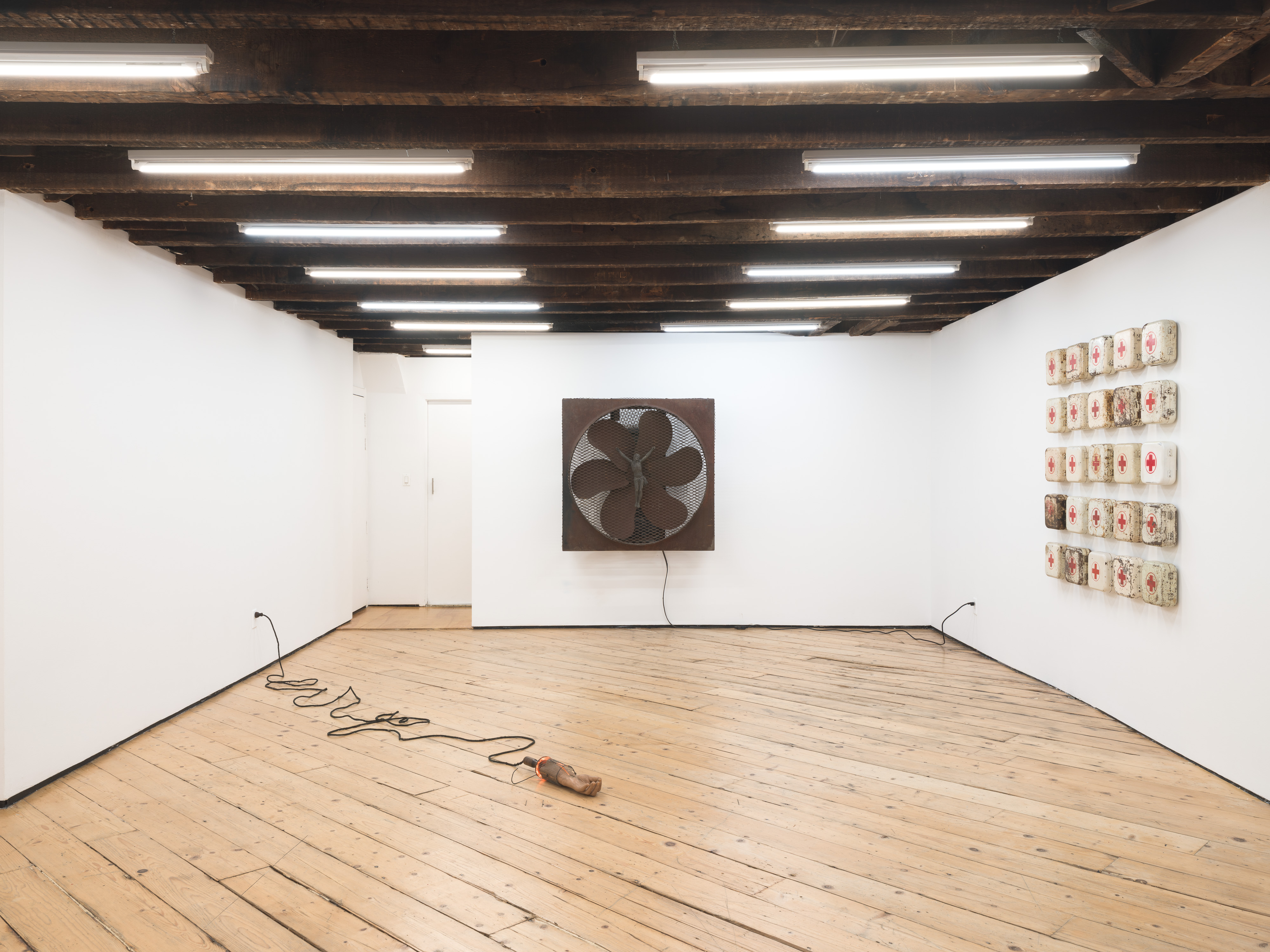

Ended
Faina Brodsky
Privately Owned Public Space
Feb 7 – Mar 29, 2020
I
A POPS (privately owned public space) is a publicly accessible space provided by the private sector through bonuses and other mechanisms. The concept of granting property owners the right to construct floor area above the normally permitted maximum if they set aside public open space on their private property was first introduced with the adoption of the comprehensive zoning overhaul of 1961. The most common type of POPS in North America is the corporate-controlled plaza, park or atrium provided in exchange for a floor area ratio (FAR) bonus. Nowhere in America is there more POPS then in New York, and nowhere in New York are there more POPS then Midtown Manhattan, and nowhere in Midtown Manhattan is there a more magnificent POPS the on fifth avenue inbetween Tiffany’s and Bonwitt Teller.
When *__ walked through it’s golden arched revolving doors on January 16, 1995, she was overwhelmed with indescrible wonder at the aesthetics of it’s splendor. A doorman stood outside next to a sign that read: Atrium open every day from 8am to 10pm, greeting prospective entrees. Her mother nodded at him as they passed into the bright and airy passage leading to the escalators. *__ stopped walking to stare at him. The oversized brass buttons on his uniform and his immaculate white gloves reminded her of a person in an old movie or a cartoon, wordlessly discouraging unwanted guests through the authority his implied status. He smiled at her and mouthed through the glass: Hello. She smiled back.
Her mother had been planning on going to Tiffany’s, but decided at the last moment to go to the Waterfall Cafe instead. That morning she had carefully began to prepare for this trip from her apartment in Central Queens to Midtown Manhattan. She applied blue eyeshadow, carefully sweeping upward instead of sideways. Then she had taken a tweezer and plucked the small hairs from her formally thick eyebrows, away from what was now two thin, elegant arches. Her brow was very small and there was virtually no hood over the eyes, making them appear enormous even without makeup. Two heavily notched nostrils that curved downward in a strongly defined tip had generated certain comparisons to Sophia Loren, but her overall physical presence was so nondescript she seemed to disintegrate within a crowd. Her platinum blonde hair had been modestly braided in past, but now she wore a contemporary, shoulder length style based off of a photo of Mariah Carey that she had cut out of magazine. Then she put on a pair of jeans from Levis, a white sweater with a swan knitted in mohair and a brand new pair of sneakers and the transformation was complete.
“Don’t do that. Walk next to me. This is the last time I am telling you this. I am fed up with looking for you everywhere” she said.
They stepped onto a glistening escalator, one of many that moved tourists and workers of the fifth avenue retail district among the different levels of the atrium, and descended down to the Waterfall Cafe. The space was massive, rising at least 30 feet or higher, with the waterfall taking up the bulk of attention. The entire aspace was covered in Breccia Perniche marble, but the vertical stacked stabs where the running water flowed downward to the pool seemed to glow with their own luminosity, like a constellation of stars. Smartly dressed couples, groups, and singles mingled inbetween small metal tables and ficus trees. Grandiose flower arrangements had been placed adventurously on the still on the waterfall’s pool and near the mouth of the escalator in imitation Chinese vases.
*__ ran to the edge of pool. Small pennies glittered beneath the rippling of moving water. Under the original 1961 regulations, many of the most basic amenities, such as trees, lighting, and seating, were prohibited within the plaza area. There were minimal requirements overseeing plaza location, configuration, and safety. Additionally, POPS could be utilized for loading, parking, vehicular circulation, trash removal and building maintenance activities. 166 plazas were constructed pursuant to the 1961 regulations before amendments were introduced in 1975, resulting in the production of what was essentially transient landscapes of concrete and asphalt isolated from public view. Post-reform spaces therefore thrived over their pre-reform compatriots like a phoenix rising from the ashes, with of such amenities such as bathrooms, lighting, food carts and cafés, art, seating and other design amenities encouraging use and integration.
The leaf of a handsomely manicured ficus tree was touching *__’s face. She reached over and touched it with the tip of her finger. Somewhere far away a song was playing, a gentle piano arrangement with cascading synths fading in and out of the background. In this unspeakably beautiful and mysterious place fertile with life and teeming with the potential of an infinite number of possibilities, she felt an subliminal joy fill her heart. This was the place she had been waiting to see her entire life and she had been given the privilege bestowed to very few: the privilege of being accepted as a guest. A small space in the heart of the Waterfall Cafe that had been allotted just for her- only as passive onlooker for now, but maybe in the future...
*__ did not notice immediately that her mother had left. When she did she began frantically looking at the different figures passing by, trying to locate the platinum blonde curls, or grey sweater and jeans, but she was really gone. She had made good on her promise: she was sick and tired of looking for her bratty kid. The sounds of the people suddenly intensified all around her and became overwhelming. Everything was changing so rapidly. People were everywhere: laughing, eating, taking photos, working, fighting over seating, thousands of bodies moving rapidly through the atrium with a million different desires and needs. There was no reason in ruining the mood with her sadness. She walked to the escalator and descended down to the basement level.
II
The last step opened up to another marbled hallway running parallel to the staircase to the right, to the retail entrance of a Tower Records; a large floor-to-wall mirror created a dead end adjacent to the left, and directly across two bathrooms had been built with open door archways that had little figurines bolted to the frame visually explaining their function to the prospective visitor. The quiet shuffle of loafers was the only sound as two girls with Tower Records shopping bags exited the bathrooms and immediately ascended back up to the plaza level.
The floral wallpaper inside was so old and washed out it was almost invisible.
By linking the retail space that circled the atrium to the protected fifth avenue subdistrict outside, the building was able receive a additional zoning bonus for 105,436 square feet. It had also received bonuses for building a mixed use building. The building has generated other ways to create it’s own money: In 1983, a state supreme court justice directed that New York City grant a multimillion dollar tax abatement to the building (this program was set up to facilitate the transformation of under-utilized property into low-income housing). The management and construction wing, owned by real estate developer of the property, collects an undisclosed sum in management every month. The commission from the sale of 42 luxury apartments has generated $11 million for his . By buying the air rights over Tiffany’s next door for $5 Million, these apartments are guaranteed to offer sweeping views of the Manhattan skyline.
To the left of the Tower Records was the entrance to a small, poorly lite descending staircase. It was clearly not part of the atrium and lacked any lighting, signage or marking to distinguish it or attract foot traffic. A plastic flower arrangement had been placed as an afterthought on the third of the cheap linoleum steps. This was the clearly the delineation point of the POPS, where the mediocrity of ordinary life began again.
III
It was in fact a lounge: probably once an after-hours spot, it had clearly been taken out of commission, possible for good until it was gutted. The odor of mold and water damage was immediately present. An old bar was directly next to the foot of the staircase had been stripped down to the skeleton; only the clear lucite barstools and black countertop remained, curving around the righthand corner to form a pseudo-triangle. The whole room was furnished in sculpted mauve carpeting in a floor-to-wall style covering in innumerable stains and discolorations. Recessed seating areas of the kind that had once been in vogue during the 70s pocketed the floor in random clusters like geometrically shaped craters, large underground squares with wood paneled floors descending downward a single carpeted step that also doubled as seating. The old green and yellow neon strip lights that snaked over the empty liqueur display were on despite the place having been abandoned years ago- it seemed they were connected to some other lightening system, and she shuddered to think that someone was unknowingly activating this deserted space everytime they turned on the lights in the retail or atrium.
Near the end of the right wall, a short podium held the only above ground seating: an series of puffy, water stained brown leather loveseats and a few of primitive side tables.
An old issue of playboy was shoved underneath a broken barstool. The base of the stool was pressed over a picture of Maria Scheinder, holding a wine glass as though to offer a prospective guest a drink. She had posed for the magazine in 1973. In the center of the room a horribly rusty metal chandelier had become a conduit for a slow drip of water. The janitor’s bucket that had been placed to catch the drops had long been filled and the stain under it was clearly spreading it all directions. Parts of the carpet on the ceiling had fallen off from water damage and were hanging in curled orange peel shapes like blossoming flower opening around the chandelier chain.
Next to the old hand operated POS system was the bare outline of a small service door, semi camouflaged by the pink carpeting. Inside a small bar kitchen, long out of service, was the clutter of metal chairs, plastic flower arrangements, and other items from the magnificent waterfall cafe.
IV
A hand written sign that read “ No exit - return upstairs” on old typewriter paper was taped to the door at the end. The translucent yellow cellulose was covered in little spots of mold. Thousands of dead insects created psychedelic light designs, stretched out in little cylinders and and dots on the walls and floor. The sound of a radio could be heard.
V
She opened the door. The room beneath it was enormous, at least 4 times larger then the previous floor, with a single abnormally high north facing window that was almost touching the ceiling. The rays of the setting sun barely provided enough light to bring the tops of the wood paneled walls into focus while a monstrous junk pile of material culture laid in almost total darkness. A yellowed plastic bubble chair with the seat cushion ripped out had been repurposed to store a garish golden candelabra covered with the disembodied wings and torsos of fat baby cherubs. An old blue shag carpet was dragged over the body of decorative japanese panel, a blown up image of Marilyn Monroe’s smiling face embossed over the front in black and white newsprint. The matted fibers had clung to the surface, staining her cheeks and lips green in some freak act of illicit chemistry.
Stacks of mirrors with imitation spanish frames leaned against retired Eames chairs, mushroom lamps and grandfather clocks, slicing and remixing reality with their vacant reflections. Clusters of decorative figurines in every variation were haphazardly stored on every available flat surface, from porcelain clowns to metal lions, stretching backwards into the recesses of the room until it became impossible to see how many there were in dark staring back at the entrance of their netherworld. A set of green melamine teacups and saucers were stacked on top of an ancient luxor wooden television set from the 1950s. It had become warped and hunchbacked with age, and the every nock and corner was encrusted with with a revolting layer of black dust so thick it looked like little tufts of fur. Despite this the set seemed seemed oddly suspended in motion, still usable, as though it was patiently waiting for someone to give it a good wipe down and the years could simply wash away, the old sights and sounds could come back again.
The excess of retired things seemed to stretch on indefinitely in every direction. Boxy record players that closed like briefcases for easy transportation, never used picture frames with old sample photos of John Lennon still inside, lifeless deflated macramé throw pillows, a heavily dusted snowglobe from the Met Cloisters with a barely visible unicorn inside, a cracked teapot pointed stoically at a small bronze figurine of the World Trade center, a Patrick Nagel print of a woman holding a black rabbit that said “Playboy March 1982” that looked like it was emitting silent scream. In the background, the invisible radio continued to play.
VI
A witch was sitting there, in almost complete darkness, illuminated only by the ambient glow of the north window. She was hunched over a recreation tudor style writing table, facing toward the west wall, polishing a red glass ball about the size of a orange. Only one of her hands moved, slowly pushing a tightly clenched rag back and forth across the ball’s surface with such force that it trembled. The sudden flood of cheap florescent light from the hallway exposed her, the skin of her arms and shoulders radiating like the smooth plastic of a mannequin while tiny diamond earring exploded aggressively into white fragments of light. The newly formed shadow of a massive mahogany armoire made contact with her face at the jawline, violently breaking her short wavy hair into two halves of black and reddish-brown. She was vaguely ugly in that special way only russian woman were ugly: her features were a fleshy, ageless blur, something meditterean or maybe caucasian or asiatic, as incomprehensible as the thousand year old contours of a phareonic statuette.
She stood up, her right hand remaining at the table, as the shadow of the armoire dropped down to her elbows. Her fingertips spread over the glass ball to hold it in place.
“ ...Today is January 16th, 1995. My opinion is that he will be from outer space. And he will be a creature, a powerful demon, scary to the human eye. Very very fearful. I believe he will either be from another galaxy, an invasion of earth from another planets, either in our galaxy or another galaxy, that the earth will be in captivity. It’ll be a time when even the most religious will say where is God?.... It was bad enough before this. But now the earth has been captivated by other aliens from other planets...“
She rolled the ball across the table until it reached the edge, reaching over with her other hand to catch it in her open palm. She then turned away from the door and began to walk into the receded shadows, vanishing behind a plastic art deco style mirror that doubled as a hanger for a crumbling fox pelt. The radio abruptly cut off.
*__ looked at the fox. It was the only thing in room with what could be called a face and it’s small mouth had rotted and collapsed into the downturned grimace of an old man waiting to die. The final embers of the sun colored the northern window and it’s old, deformed frame, igniting the old dusty flecks of peeling paint for the last time. If she had come here with her father maybe he would have come back. Maybe he would come for her and she could still go home.
The witch returned, her palms outstretched in front her, displaying a small hand mirror. She smiled and a gold crown on the left canine flickered. “I want to give you something”, she said. “Let tell you some things...”
VII
Let me tell you something:
This mirror doesn’t reflect people, with all their flaws and fatalities - only the exosomatic tools of our civilization. This mirror creates Apathy, Hypocrisy, and Self-Rightious Moralization. In this mirror you can see the movements and actions of human beings as they alter the world and it alters them in a circular, symbiotic relationship, but you will never have to experience them directly again. Even you can disappear - turn it towards
yourself and you will see the soul has been separated from the body.
Every human being is nothing more then a single cell in a body of millions, moving through the motions of a greater purpose, awesome forces invisible to them. Sadness, regret, loss, despair- these should be the fleeting emotions of only the most underdeveloped toddler at the very beginning of their life. But when I think about death
and see a woman’s beauty, like your mother’s, created by God in his own image, lying in the grave, ugly, abject, shriveled, it’s physical form destroyed- I am filled with unbearable grief. How have we been given over to this corruption?
Consider this:
You taught yourself how to speak with your own voice,
You taught yourself your name,
No one helped you.
Let me tell you something:
Your name could be Kristina, or as others say, Irina. Your name could be Yelena, or as others say, Svetlana. Your name could be Yulia. Your name could be Zoya. Your name could also Tamara, or as others say, Daria. Your name could be Viktoria, your name could be Nadezhda, or as some say, Natalia. Your name could Xenia, but your name could also be Dina. Your name could be Maya...You could be anyone. You could be love with anything...
Consider this:
You leveled this flattened, monocolored land
Etched in the pale ragged freckles,
Smoothed out the gray half moons under your black eyes,
You chiseled the red cracks of your bloodshot pupils,
Germinated the rows of waxy red hairs with your tears,
Crafted the twisted groves of green veins,
Sculpted the upturned piggish nose
Consider this:
Illuminated by the olive-yellow light of a single deformed star
A bare tree rises over the frost-molded tundra
a single rusty nail protrudes from it’s trunk,
a formless, colorless scrap of paper still hangs there
no leaves have grown there for many years
spiders have cultivated harvests of glistening dewdrops in between it’s limbs
No one can contaminate you with their lust
No one can subjugate you with their love
In this graveyard even the most feveront desire withers away
Even the most exceptional explorer eventually abandons ship
Consider This:
How old is this expanse? How has it changed over time?
Lethargy with be your weapon, Mediocrity will be your shield. No one will change you.
You’ll always stay the same
Beyond this day
January 16, 1995
Faina Brodsky is a New York-based artist working in drawing and visual narration. The cyclical nature of research, whereby the individual is altered by their attempt to dominant power structures through information, is the primary directing factor of her work. Previous group and solo shows include Issmag Gallery (RU), Money Gallery (RU), Underground Flower (AUS), Castor Gallery (NYC).